
Loading, please wait...
LOT 0360
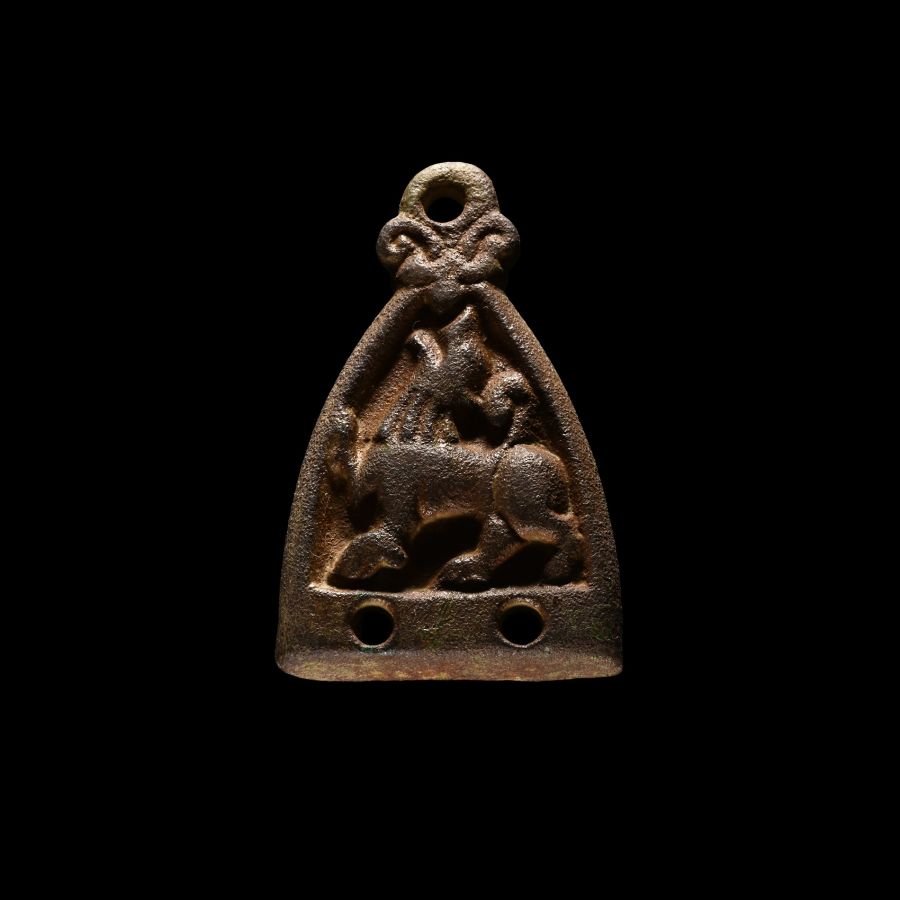
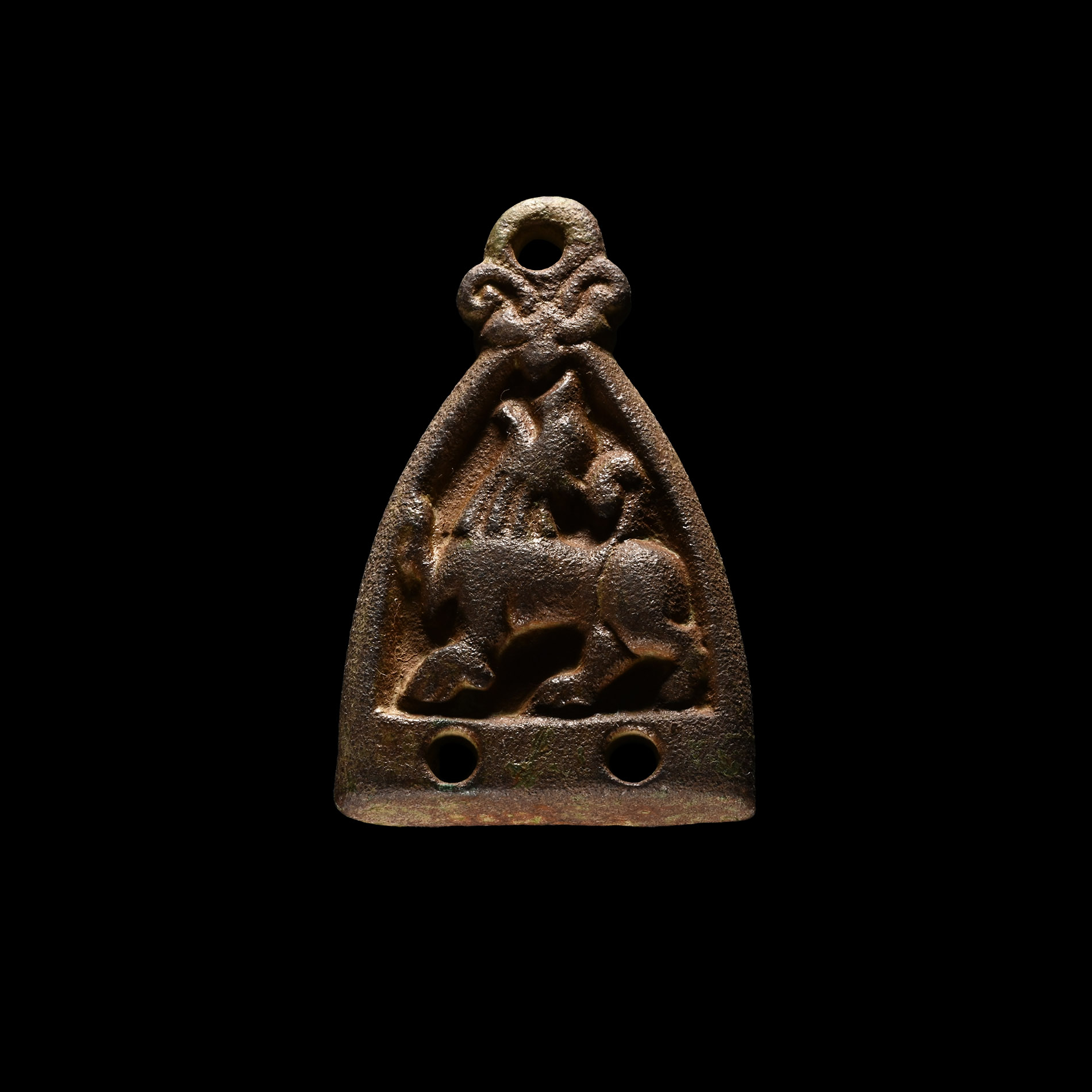
Anglo-Scandinavian Viking Bronze Howling Beast Stirrup Mount
CIRCA 11TH CENTURY A.D.
1 7/8 in. (26.2 grams, 48 mm).
Of Williams's Group 1 type 11C with raised frame, trefoil below the loop, high-relief wolf image, two holes to lower edge and ledge to the reverse.
ProvenanceAcquired on the UK art market in the 1990s.
Property of a Stowmarket, UK, gentleman.
Cf. Williams, D., Late Saxon Stirrup-Strap Mounts, York, 1997, items 275, 278.
CONDITIONTimeLine Auctions follows a vetting process to ensure the authenticity and legality of all items, reinforcing our commitment to integrity and responsible trading. Each antiquity, antique, and coin lot undergoes thorough examination by a vetting committee of at least ten external specialists, professional trade association members, scientists, and archaeologists: Our Vetting Process
AUCTIONS:
TimeLine is a leading auction house specialising in antiquities, ancient art, collectables, natural history, coins, medals, and books. Our auctions offer museums, collectors, historians, and enthusiasts the opportunity to acquire unique and historically significant pieces.
LOT 0360
Anglo-Scandinavian Viking Bronze Howling Beast Stirrup Mount
Sold for (Inc. bp): £481
-
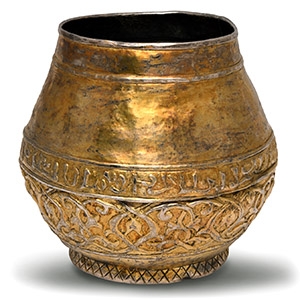
Viking Age Silver-Gilt Jar with Interlaced Design and Pseudo-Arabic Inscription
Circa 11th century A.D.Estimate: £8,000 - 10,000 (+bp*)
Opening Bid: £4,444
With later gilded outer face, globular body on a low splayed foot-ring, rolled rim; repoussé ornament comprising a circumferential ring below the neck, two parallel rings to the equator above a band of looped and interlaced tendrils with leaves and ring below, hatching to the foot-ring; median band with legend in Pseudo-Arabic script. 301 grams, 10.6 cm high
Fair condition.
In a private German collection since the 1980s. Property of a gentleman; acquired on the UK art market in 1998. This lot has been checked against the Interpol Database of stolen works of art and is accompanied by search certificate no.11007-181733. -
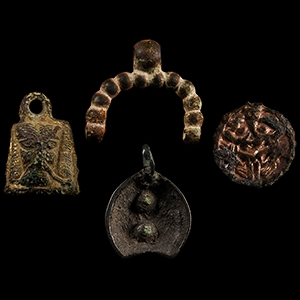
Viking Age Bronze Pendant Collection
9th-11th century A.D.Sold for (Inc. bp): £72
Comprising: a lunar pendant with segmented bar and suspension loop; a discoid plaque likely portraying Odin gripping ravens; pendant with domed body and vegetal motif, suspension loop above; a trapezoidal pendant with suspension loop, displaying an animal mask in relief featuring long, curled whiskers extending the height of the plaque. 18 grams total, 19-25 mm
From the collection of a North American gentleman, formed in the 1990s. -
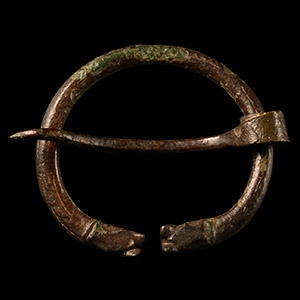
Viking Age Bronze Torc-Shaped Brooch with Beast Heads
Circa 9th-11th century A.D.Sold for (Inc. bp): £72
Of annular form with round cross-section, stylised animal-headed terminals and tapered pin. 2.85 grams, 29 mm
Acquired late 1980s-early 1990s. Ex private collection, Nottinghamshire, UK. Acquired on the UK art market in 2012. Property of a Kent lady collector.
