
Loading, please wait...
LOT 1411
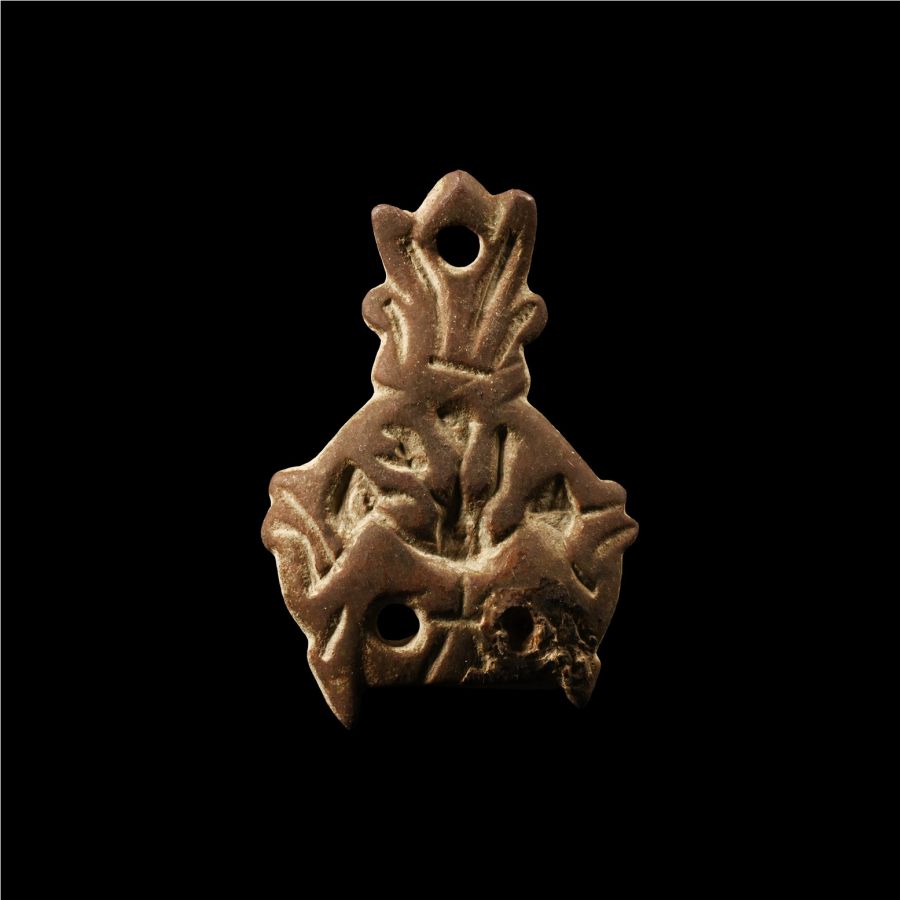
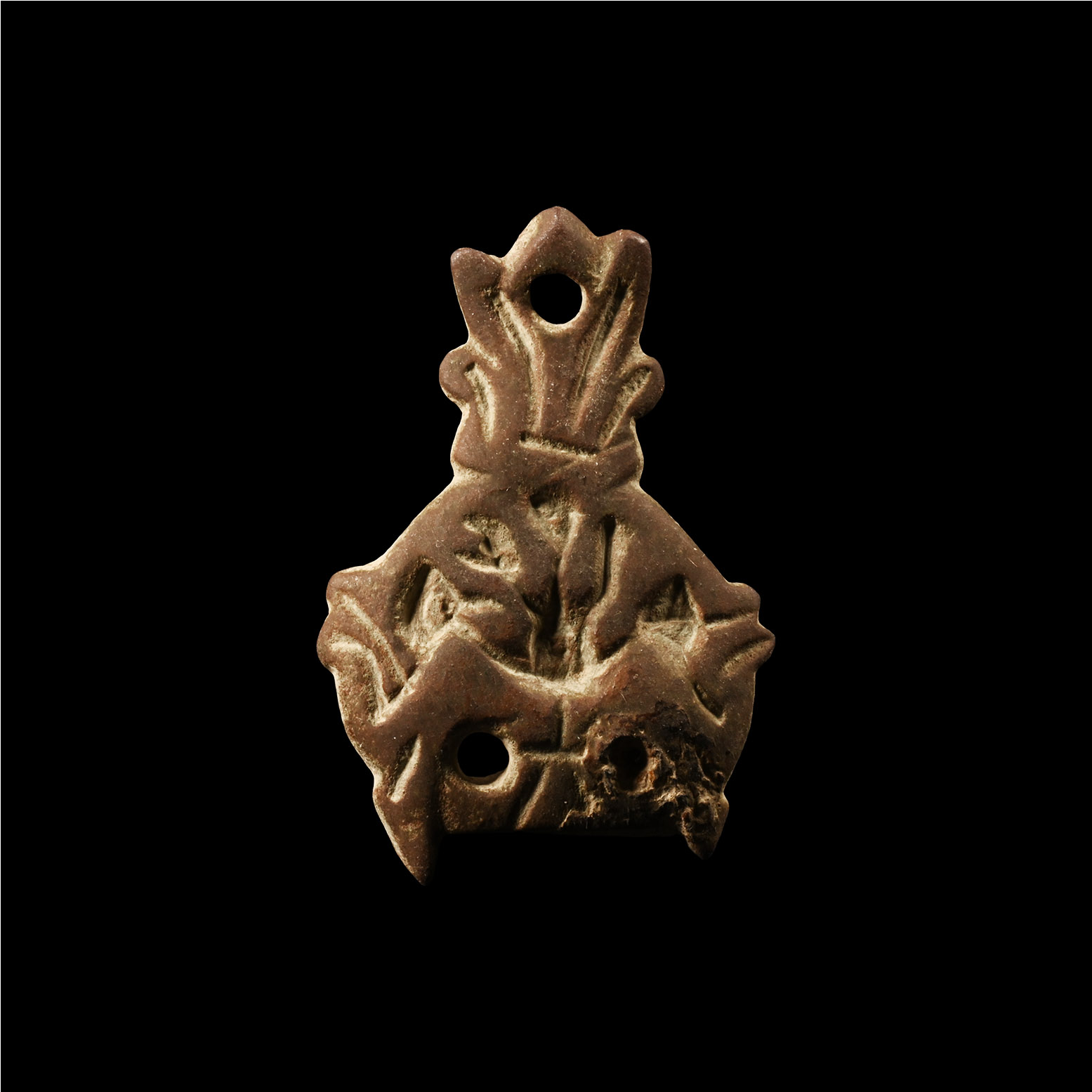
Anglo-Scandinavian Viking Bronze Apex Stirrup Mount
11TH CENTURY A.D.
1 7/8 in. (22.39 grams, 47 mm).
With pentagonal body bearing zoomorphic designs, pierced close to the apex for attachment to a stirrup-strap, with two holes close to the lower edge and ledge to the reverse; Williams's Class A Type 16.
ProvenanceFound Hampshire, UK.
LiteratureCf. Williams, D., Late Saxon Stirrup-Strap Mounts, York, 1997, item 361, for type.
FootnotesThis mount is not typical of the Class but the trilobe 'topknot' at the apex is clearly based on the design of Type 16 with a facing animal-head.
CONDITIONTimeLine Auctions follows a vetting process to ensure the authenticity and legality of all items, reinforcing our commitment to integrity and responsible trading. Each antiquity, antique, and coin lot undergoes thorough examination by a vetting committee of at least ten external specialists, professional trade association members, scientists, and archaeologists: Our Vetting Process
AUCTIONS:
TimeLine is a leading auction house specialising in antiquities, ancient art, collectables, natural history, coins, medals, and books. Our auctions offer museums, collectors, historians, and enthusiasts the opportunity to acquire unique and historically significant pieces.
LOT 1411
Anglo-Scandinavian Viking Bronze Apex Stirrup Mount
Estimate £100 - 140€120 - 160 (for guidance only)$140 - 190 (for guidance only)
-
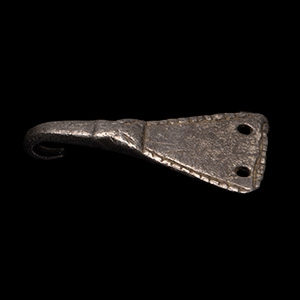
Viking Silver Zoomorphic Hook Fastener
9th-11th century A.D.Sold for (Inc. bp): £78
Of sub-triangular shape, incised segmented border; pierced. 2.24 grams, 31 mm
From the collection of a North American gentleman, formed in the 1990s. -
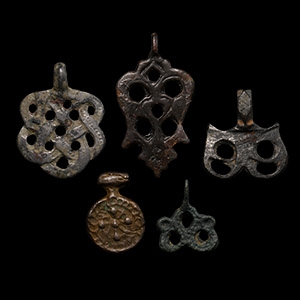
Viking Age Bronze Pendant Collection
9th-11th century A.D.Sold for (Inc. bp): £130
Mainly openwork plaques bird-shaped with voids and low-relief detailing. 17.2 grams total, 22-39 mm
From the collection of a North American gentleman, formed in the 1990s. -
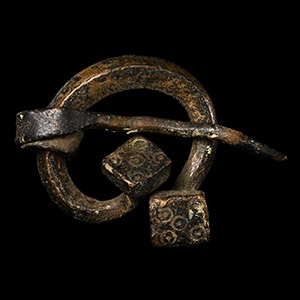
Viking Age Bronze Decorated Penannular Brooch
9th-11th century A.D.Sold for (Inc. bp): £85
With square-headed terminals decorated with punched ring-and-dot motifs, free-running pin, brooch body with carinated upper face. 13.1 grams, 38 mm
From the collection of a North American gentleman, formed in the 1990s.
