
Loading, please wait...
LOT 1536
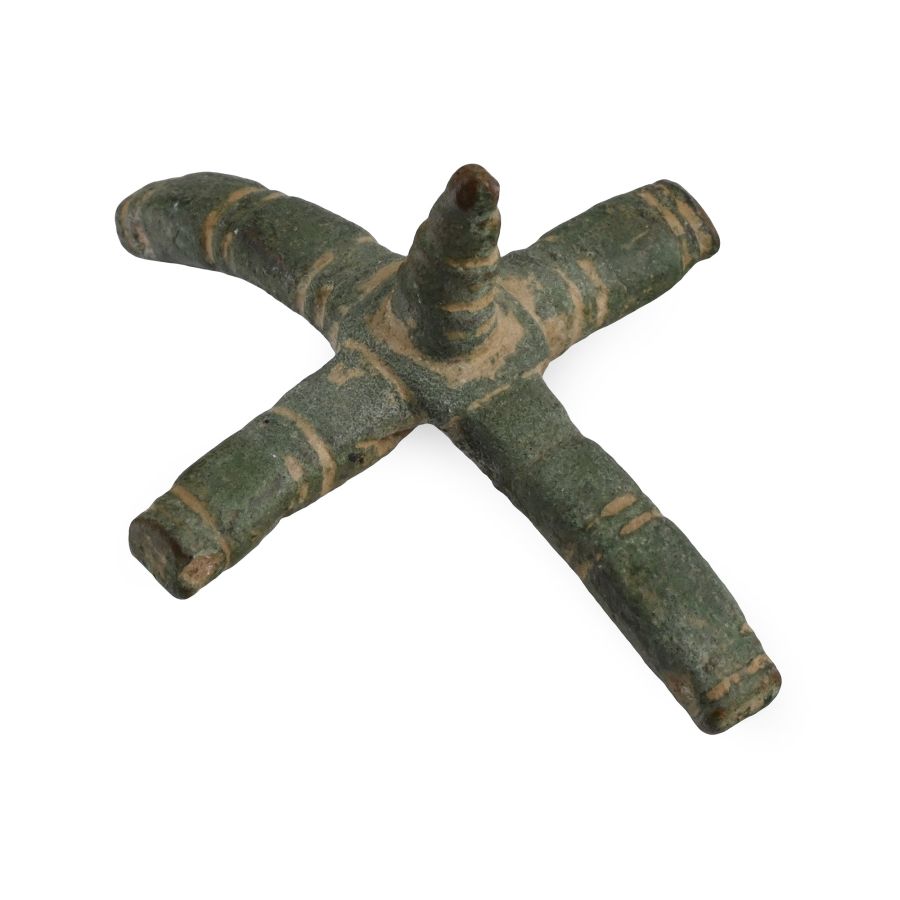
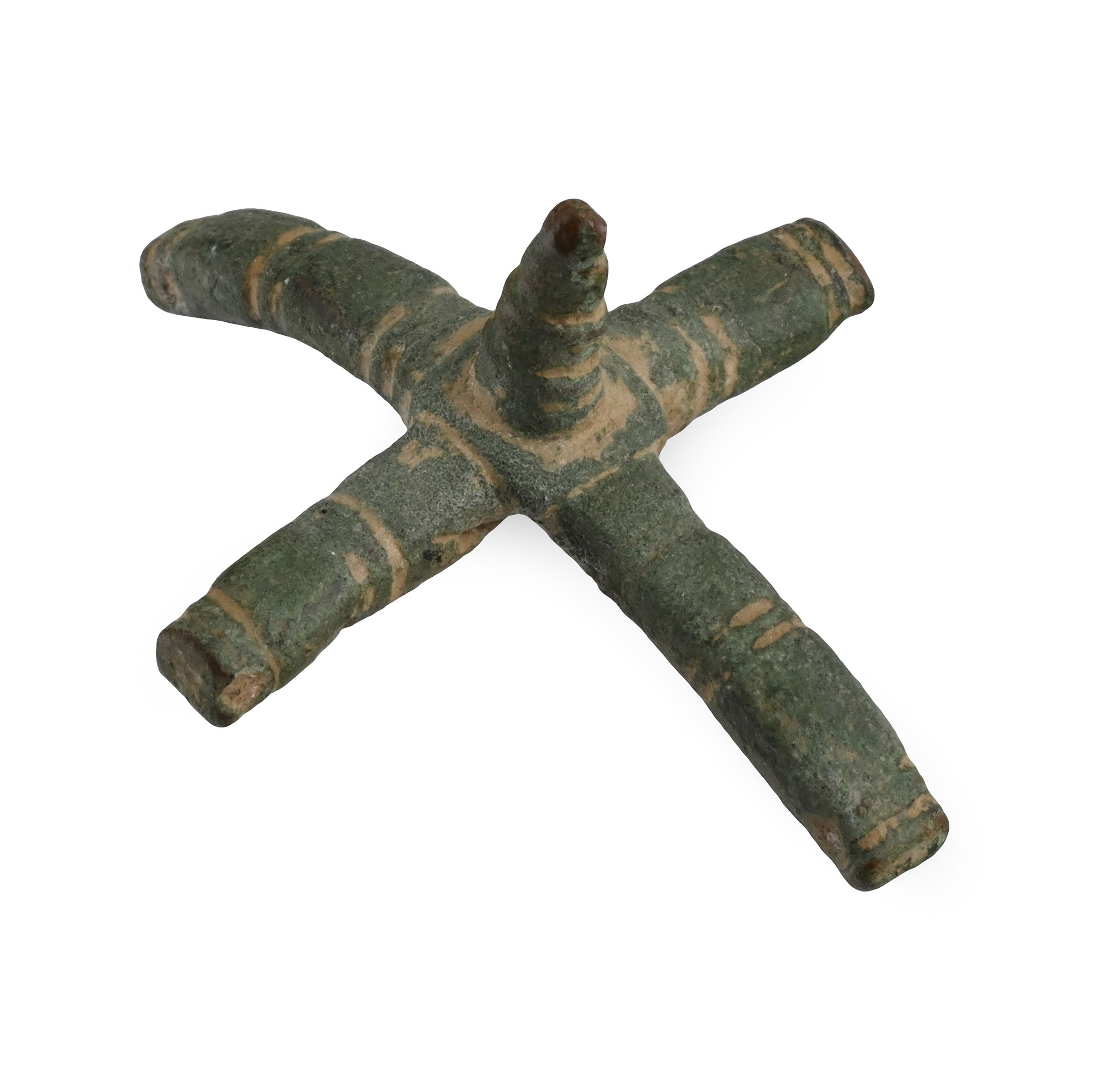
Anglo-Saxon Warrior's Bronze Prick Spur
LATE 8TH-9TH CENTURY A.D.
1 3/4 in. (13 grams, 47 mm).
Comprising a horizontal D-section curved bar with paired incuse lines, vertical extensions, conical spike at the junction. [No Reserve]
ProvenanceFound whilst searching with a metal detector near Bottisham, East Cambridgeshire, UK, on Thursday, 1st May 2025.
Accompanied by a copy of the British Museum's Portable Antiquities Scheme (PAS) report no.SF-CF48EC.
The Portable Antiquities Scheme states: 'This is a find of note and has been designated: Regional importance.'
CONDITIONTimeLine Auctions follows a vetting process to ensure the authenticity and legality of all items, reinforcing our commitment to integrity and responsible trading. Each antiquity, antique, and coin lot undergoes thorough examination by a vetting committee of at least ten external specialists, professional trade association members, scientists, and archaeologists: Our Vetting Process
AUCTIONS:
TimeLine is a leading auction house specialising in antiquities, ancient art, collectables, natural history, coins, medals, and books. Our auctions offer museums, collectors, historians, and enthusiasts the opportunity to acquire unique and historically significant pieces.
-
.jpg)
Luristan Bronze Dagger
13th century B.C.Estimate: £200 - 300 (+bp*)
Opening Bid: £100
With a lentoid-section blade, tongue-shaped in plan, with an integral tapering hilt with flared finial, lateral flanges to accept a panel of bone to each face forming the grip. 185 grams, 32.5 cm
Ex Abelita family collection, 1980s-2000s.
The art of Luristan can be described as the art of nomadic herdsmen and horsemen with an emphasis on the crafting of small, easily portable objects, among these a great number of bronze weapons. The rich and noble aristocrats of the Luristan, Elamites, Hurrians, Lullubians, Kutians, and Kassites went to battle splendidly equipped and wore magnificent bronze armour, using maces, spears and daggers as offensive weapons, alongside spears, bows and arrows. -
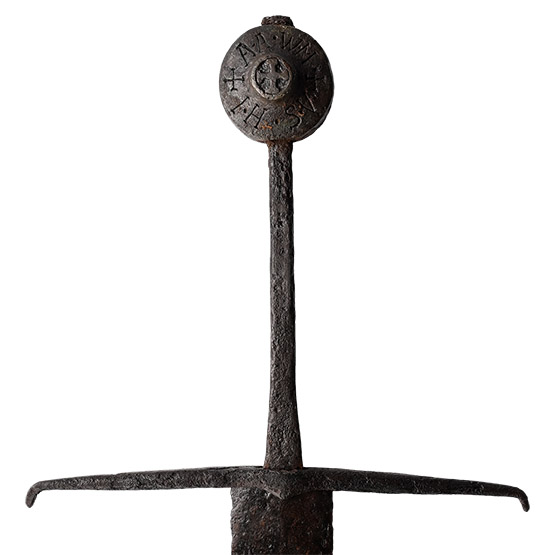
Medieval Knight's Iron Hand-and-a-Half Sword with Inscribed Bronze Pommel
Germany, 14th century A.D.Sold for (Inc. bp): £14,300
Longsword of Oakeshott's Type XVa, cross style 8, bronze pommel style J (recessed); strongly tapering, pointed blade of ‘flattened diamond’ section, cross style tapering gradually outward to sharply downturned tips; long grip with slight taper, disc pommel with chamfered edges and a potent cross in the centre surrounded by an inscription (on both sides) '+ IH SU + AAWM'. 1.25 kg, 113 cm
From the private family collection of a lady, UK; acquired in Germany mid 20th century. Accompanied by an academic report by Dr Raffaele D’Amato. This lot has been checked against the Interpol Database of stolen works of art and is accompanied by search certificate number no.13034-24799.
Some wheel pommels of this date have engraved, or inset roundels with armorial or devotional emblems, and a number of sword blades of this date bear religious inscriptions in the form of a prayer. The inscription on the pommel between the two potent crosses is intriguing. The letters 'IH SU' are a clear reference to the name of the Saviour, and can be translated as Ihesu-Jesus, or also Ihesu Merci (Jesus have mercy), a simple prayer for the person carrying the sword. The letters 'A.A. W.M.' could refer to the name of the owner of the sword (WM = Wilhelm) or the maker of the weapon. It is difficult to consider the letters as an abbreviation of the prayer ‘Ave Maria’, usually shortened in the German medieval inscriptions as A.M. -
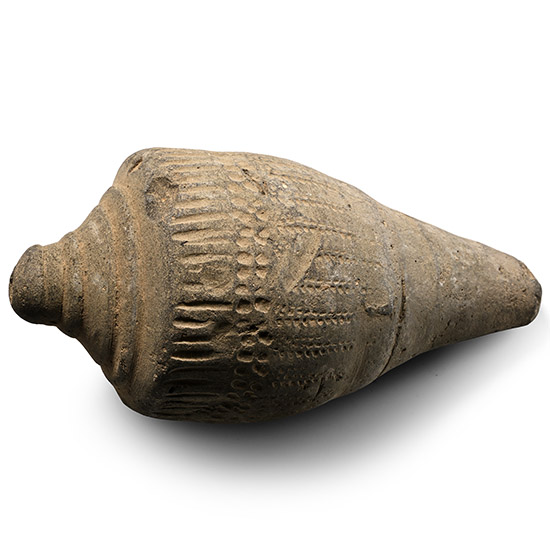
Turco-Mongol 'Greek Fire' Ceramic Bomb or Hand Grenade
14th-15th century A.D.Sold for (Inc. bp): £111
Piriform in profile with a domed mouth and a stepped neck, incised decoration; intended to be filled with explosive liquid and a wick, and used as a hand grenade. 460 grams, 16.5 cm
From a specialist collection, London, UK, 1990-2000s.
Apart from the use of siphons or manual flame-throwers called cheirosiphona, special corps of Roman soldiers employed terracotta grenades, in the form of small jars, abundantly evidenced in archaeological excavations. They were called μεσαία kακαβιά or κυτροκακάβια, where the former had a bulbous shape and the latter a more cylindrical form.
