
Loading, please wait...
LOT 2203
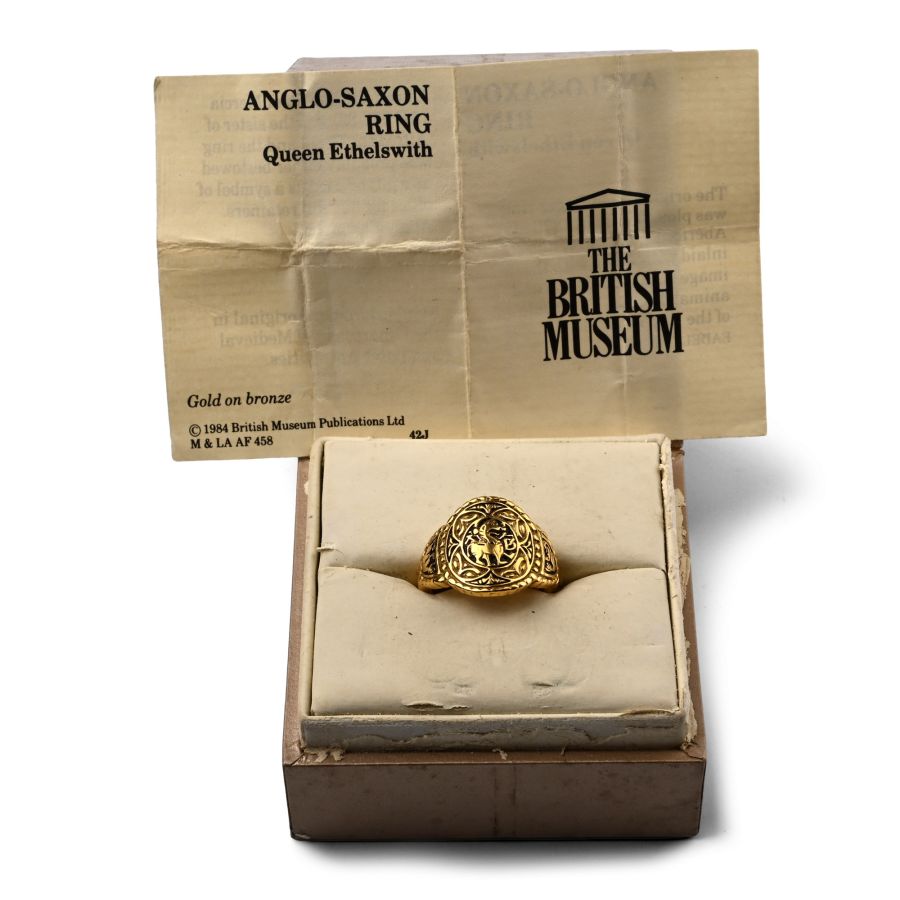
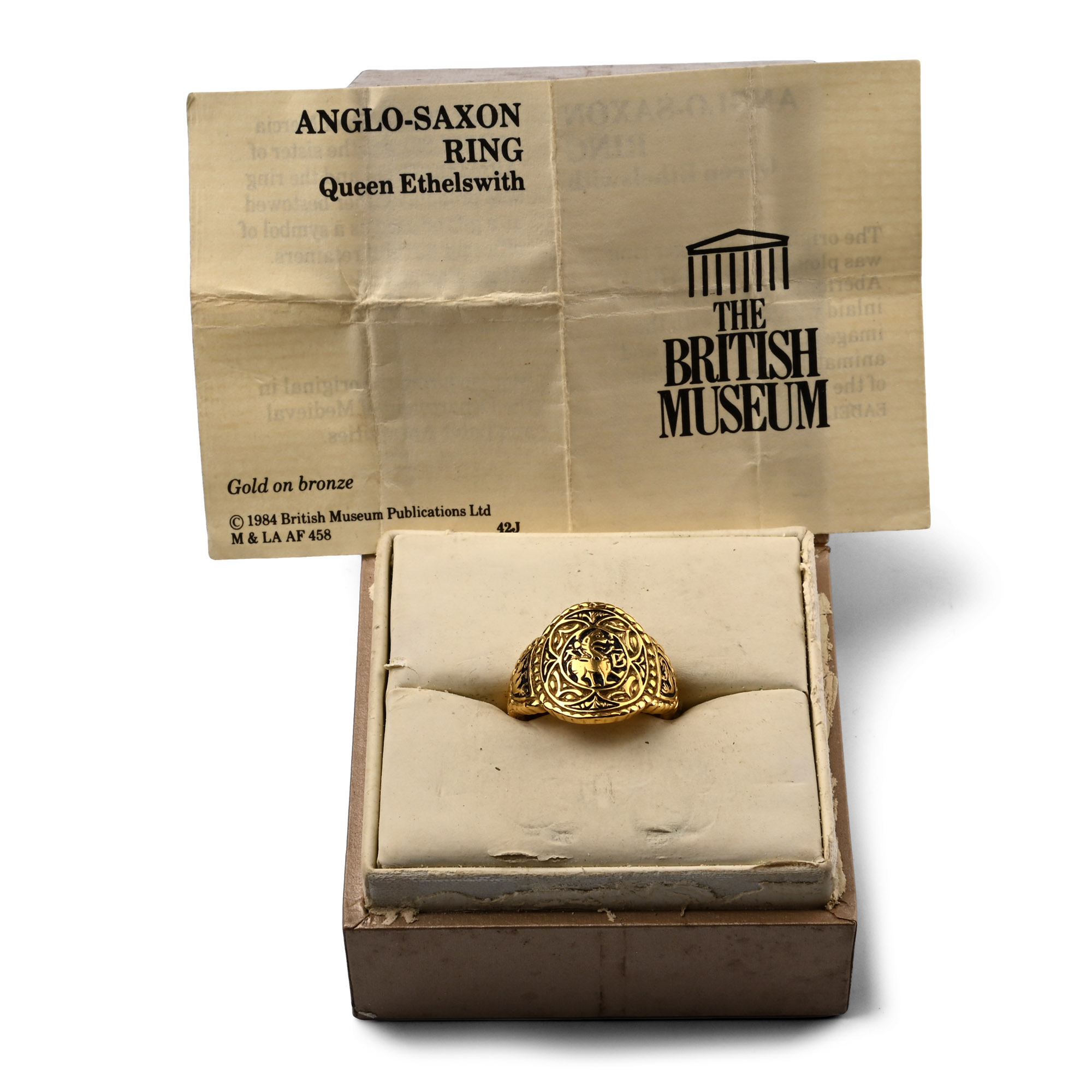
Anglo-Saxon Queen Ethelswith of Mercia Ring Replica
20TH CENTURY A.D.
7/8 in. (6.69 grams, 22.21 mm overall, 17.20 mm internal diameter (approximate size British N, USA 6 1/2, Europe 13.72, Japan 13)).
A gilt bronze finger ring moulded from the original in the British Museum, D-section hoop with expanding shoulders decorated with animal motifs, the central discoid plaque with Agnus Dei within foliate border, the underside inscribed with 'EADELSVID REGNA'. [No Reserve]
ProvenanceProperty of a gentleman; acquired in 1984.
Accompanied by the original 1984 British Museum information slip.
This lot is accompanied by an illustrated lot declaration signed by the Head of the Antiquities Department, Dr Raffaele D'Amato.
TimeLine Auctions follows a vetting process to ensure the authenticity and legality of all items, reinforcing our commitment to integrity and responsible trading. Each antiquity, antique, and coin lot undergoes thorough examination by a vetting committee of at least ten external specialists, professional trade association members, scientists, and archaeologists: Our Vetting Process
AUCTIONS:
TimeLine is a leading auction house specialising in antiquities, ancient art, collectables, natural history, coins, medals, and books. Our auctions offer museums, collectors, historians, and enthusiasts the opportunity to acquire unique and historically significant pieces.
-
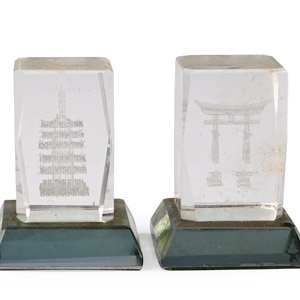
Laser-Engraved Architectural Paperweights
20th century A.D.Sold for (Inc. bp): £7
A pair of rectangular-section weights on stands, each with a laser-engraved Chinese architectural building. 80 grams total, 37 mm each
Property of a North West London, UK, lady. This lot is accompanied by an illustrated lot declaration signed by the Head of the Antiquities Department, Dr Raffaele D'Amato. -
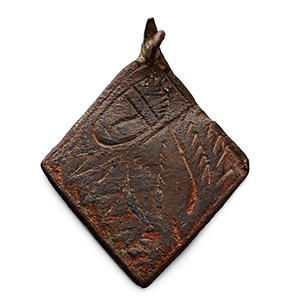
Medieval Knight's Bronze Heraldic Horse Harness Pendant
14th-15th century A.D.Sold for (Inc. bp): £33
Lozenge-shaped with integral loop; low-relief design of a squirrel with bushy tail. 12.6 grams, 47 mm
Found East Anglia, UK. This lot is accompanied by an illustrated lot declaration signed by the Head of the Antiquities Department, Dr Raffaele D'Amato. -
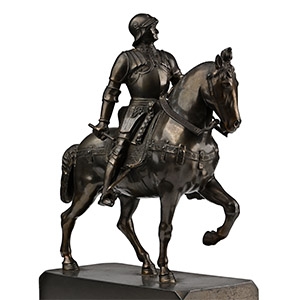
Bronze Grand Tour Spelter Bartolomeo Colleoni Statue
Italy, circa 1900 A.D.Sold for (Inc. bp): £338
Miniature statue based on Venetian Renaissance Captain General Bartolomeo Colleoni by Andrea del Verocchio; the figure in upright pose, seated astride his advancing horse; wearing a sallet and full harness with baton of command in his right hand, straight legs and feet thrust into the stirrups; the horse with minimal caparison and plume to the bridle, reins cast separately and attached with fine wire; mounted on a hollow-formed rectangular base. 2.44 kg, 26 cm
From the private collection of a S.W. London gentleman, acquired in the 1970s. This lot is accompanied by an illustrated lot declaration signed by the Head of the Antiquities Department, Dr Raffaele D'Amato.
The celebrated equestrian monument to the warlord Bartolomeo Colleoni is a bronze statue at a height of 395 cm, without the base, by Andrea del Verrocchio, made between 1480 and 1488 and located in Venice in the Campo San Zanipolo. It is only the third known equestrian statue of the Renaissance, after the monument to Gattamelata by Donatello in Padua, from 1446-1453 and the statue of Nicolò III d'Este by Leon Battista Alberti (1451). In 1479, the Republic of Venice decreed the construction of an equestrian monument for the leader Bartolomeo Colleoni, who died in 1475, to be placed in Campo Santi Giovanni e Paolo. In 1480, it entrusted the task to Andrea Verrocchio, who began the work in his workshop in Florence. In 1481, the wax model was sent to Venice, where the lost-wax casting of the bronze took place. Andrea died in 1488 with the work unfinished and in his will he had named the Florentine Lorenzo di Credi as heir and executor of the unfinished work, but the Venetian Signoria preferred Alessandro Leopardi, a local artist. The reassignment was justified due to the fact that Lorenzo was essentially a painter: it was customary in a multipurpose workshop like Verrocchio's for students to acquire practice in different artistic techniques. Although Venice officially prohibited personal commemorative monuments, an exception was made for Bartolomeo Colleoni, who left a sum of money to the Republic on condition that a monument should be erected to his memory.
