
Loading, please wait...
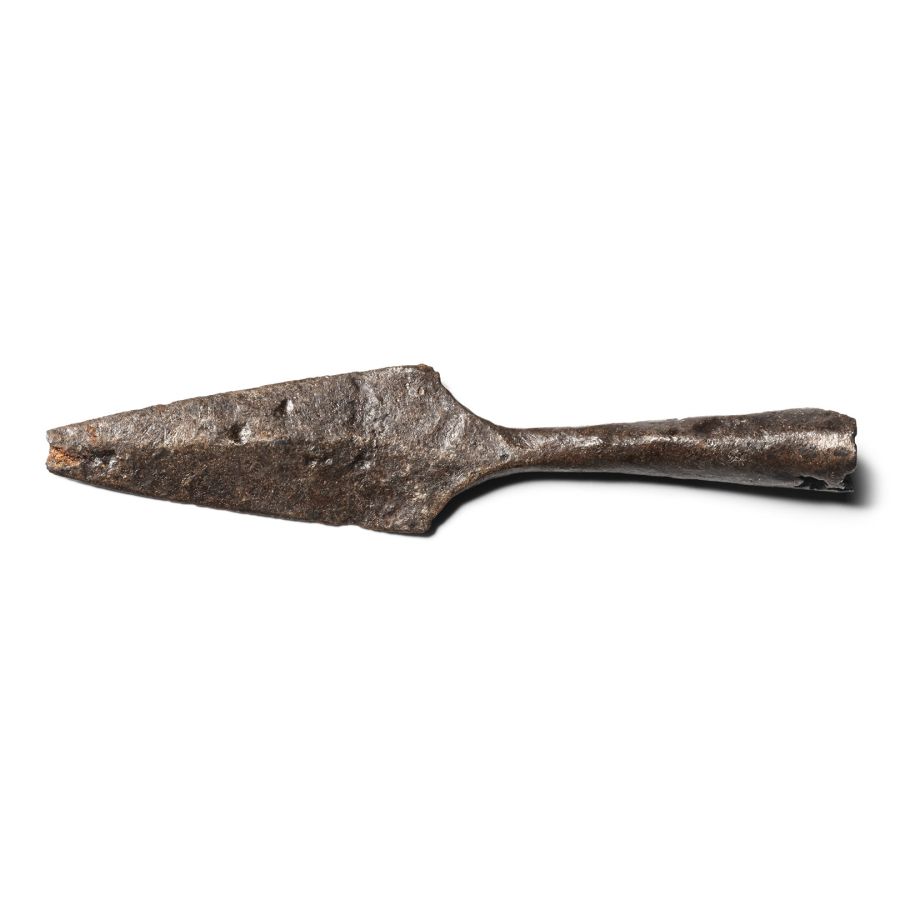
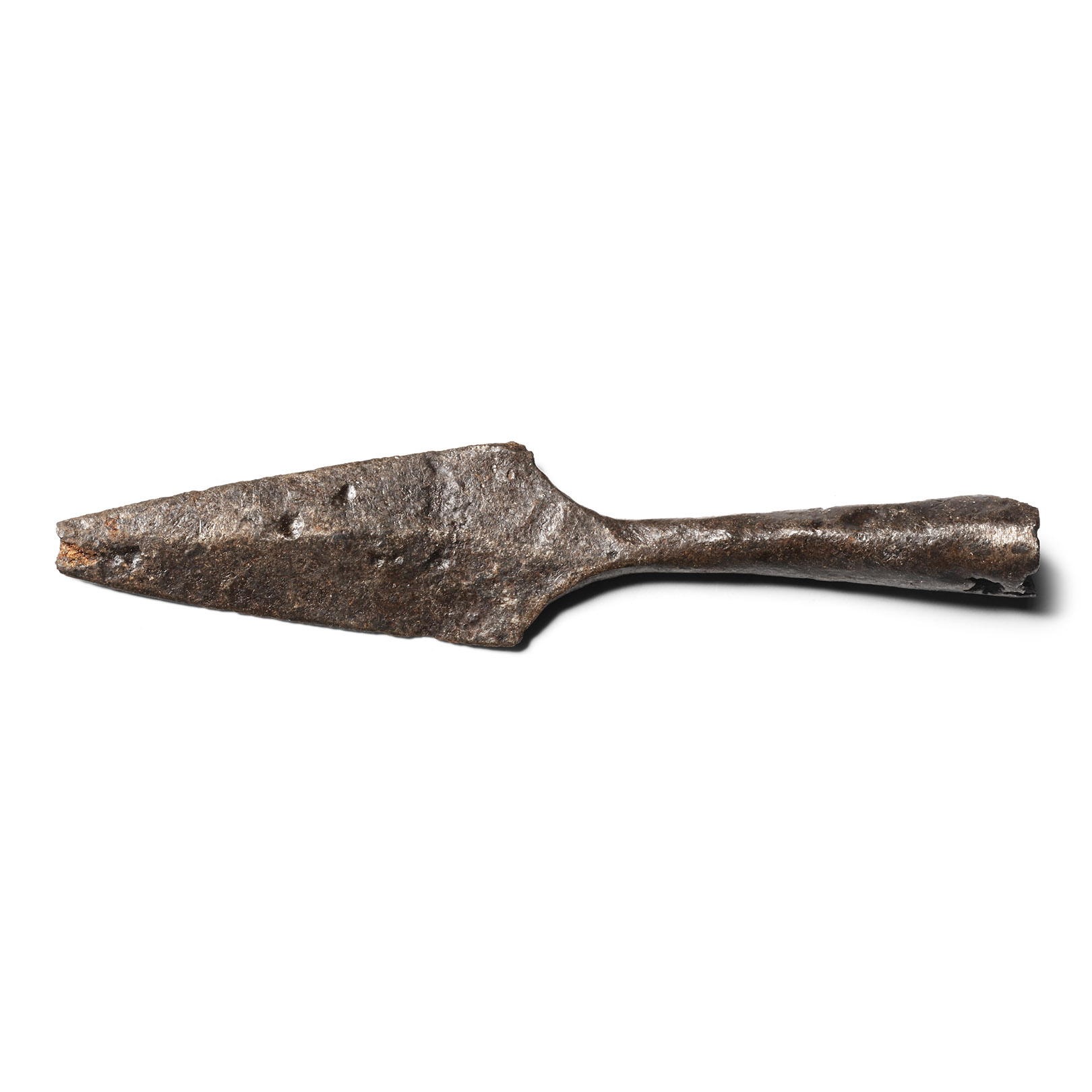
LOT 1055
Anglo-Saxon Iron Socketted Arrowhead
CIRCA 6TH-8TH CENTURY A.D.
3 1/2 in. (10 grams, 87 mm).
Comprising a triangular leaf-shaped blade with tapering socket. [No Reserve]
ProvenanceFound Cambridgeshire, UK.
CONDITIONTimeLine Auctions follows a vetting process to ensure the authenticity and legality of all items, reinforcing our commitment to integrity and responsible trading. Each antiquity, antique, and coin lot undergoes thorough examination by a vetting committee of at least ten external specialists, professional trade association members, scientists, and archaeologists: Our Vetting Process
AUCTIONS:
TimeLine is a leading auction house specialising in antiquities, ancient art, collectables, natural history, coins, medals, and books. Our auctions offer museums, collectors, historians, and enthusiasts the opportunity to acquire unique and historically significant pieces.
-
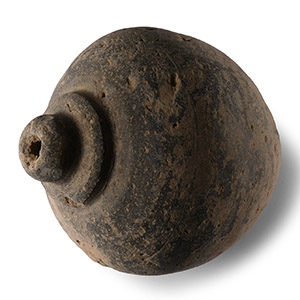
Byzantine 'Greek Fire' Ceramic Fire Bomb or Hand Grenade
Circa 11th-14th century A.D.Sold for (Inc. bp): £143
With a piriform body and domed mouth; intended to be filled with explosive liquid and wick, used as a hand grenade. 603 grams, 11.8 cm high
Acquired 1980-2015. Ex Abelita family collection. Accompanied by an academic paper by military specialist Dr Raffaele D'Amato, dated 15 July 2019 and titled 'Eastern Roman Empire - Greek Fire Bomb or Hand Grenade (μεσαίον kακάβιον) 9th-11th century AD'.
Apart from the use of siphons or manual flame-throwers called cheirosiphona, special Roman soldiers employed terracotta grenades, in the form of small jars, abundantly evidenced in archaeological excavations. Such were the γανωτα, vessels (sometimes also in bronze) used for Greek fire. They were called μεσαία kακαβιά or κυτροκακάβια where the former had a bulbous shape and the latter a more cylindrical form. -
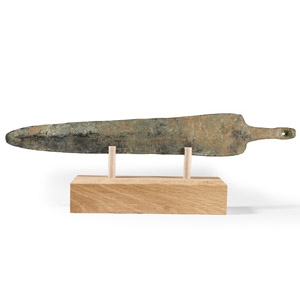
Luristan Short Sword Blade
Circa 13th-6th century B.C.Sold for (Inc. bp): £156
With a broad, lentoid-section blade and wide raised flange down centre, rounded tip, straight sides, well marked shoulders with narrow tang, one hole for rivet to attach an organic hilt; mounted on a custom-made stand. 880 grams total, 38 cm wide including stand
Acquired 1980-1990s. From the private collection of H.N., Milton Keynes, Bedfordshire, UK.
This kind of weapon was used in the early 2nd millennium B.C. in Mesopotamia and in Syria and as late as the mid-first millennium in Luristan. -
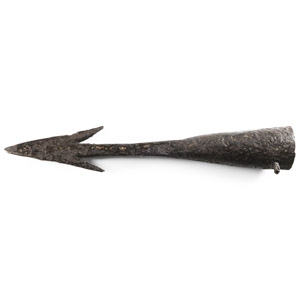
Late Roman Iron Socketted Javelin
4th-6th century A.D.Sold for (Inc. bp): £208
Fitted with a triangular blade with two barbs, expanding tubular socket. 213 grams, 23.5 cm
From the private collection of a London gentleman, from his grandfather's collection formed before the early 1970s.
Since the third century, Roman soldiers increasingly started to use long shafted socketed weapons with barbed heads. These weapons were called bebrae by Vegetius, according to whom they were able to cut heads with a single stroke. They first appeared in Northern Europe, as shown by numerous finds of barbed heads in graves and peat-bogs, especially Danish, and were introduced to the Roman army by Germanic mercenaries.
