
Loading, please wait...
_900x900.jpg "Anglo-Saxon Great Square-Headed Brooch")
_200x200.jpg "Anglo-Saxon Great Square-Headed Brooch")
.jpg "Anglo-Saxon Great Square-Headed Brooch")
LOT 0368
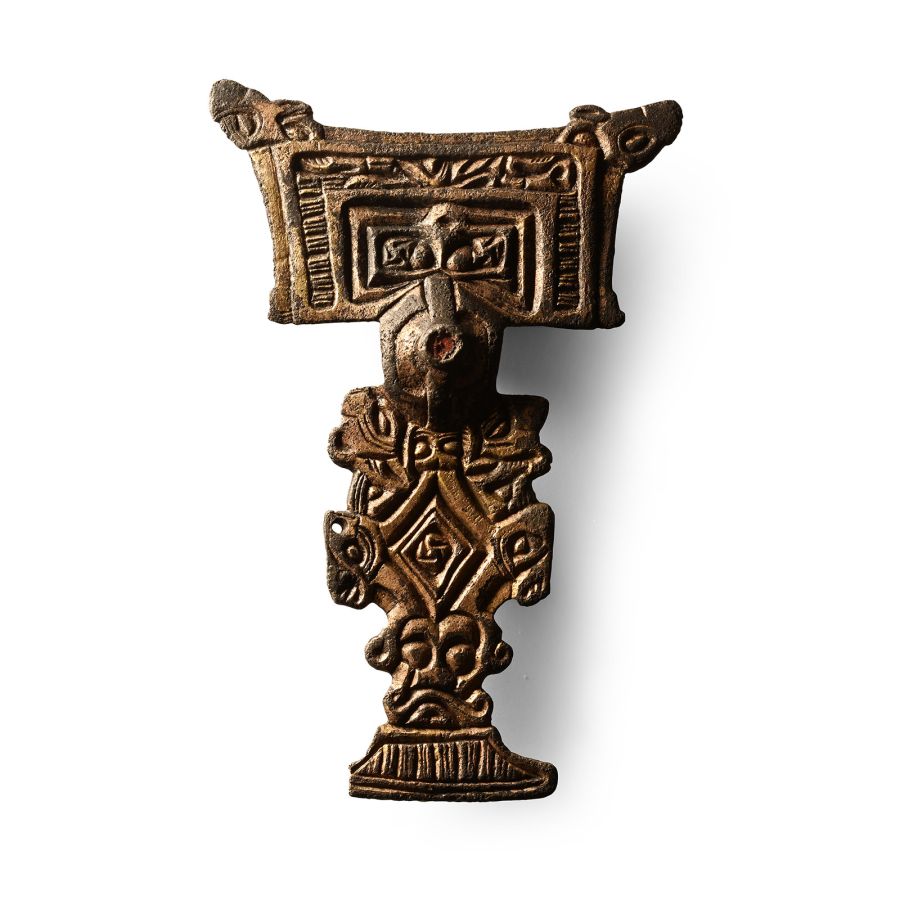
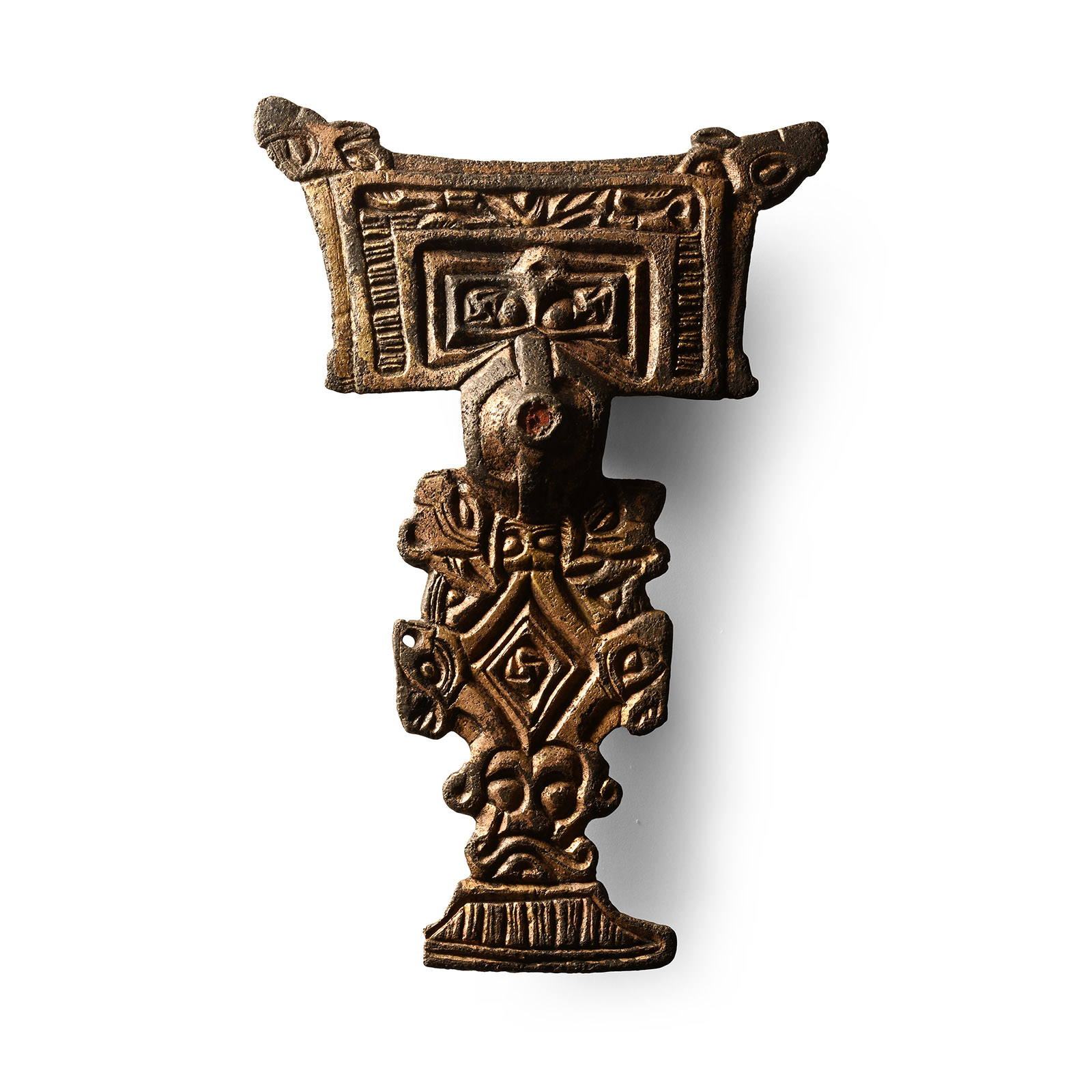
Anglo-Saxon Great Square-Headed Brooch
6TH CENTURY A.D.
4 1/2 in. (82 grams, 11.5 cm).
Comprising: trapezoidal headplate with beast-head spurs to the upper angles and concentric panels of Style I ornament; shallow bow with central cell and garnet insert; long footplate with lateral lappets and central lozenge; facing mask above a trapezoidal bar finial; pin-lugs and catch to the reverse. [No Reserve]
ProvenanceFound U.K.
British private collection, acquired by 2000.
Cf. Hines, J., A New Corpus of Anglo-Saxon Great Square-Headed Brooches, London, 1997, items 11(a) Linton Heath for headplate, 17(b) Rothley, for foot.
FootnotesThe meaning of the 'facing mask' motif is probably related to the profile masks so frequently used in Style I art, where the 'pellet' eye is enclosed by an arched frame: the 'facing mask' repeats this motif to produce a pair of eyes in a doubled 'bow'. An element of visual 'riddling' is no doubt present: the design is neither one thing nor the other, but includes elements of both.
Distribution of great square-headed brooches was initially concentrated along the valleys of the Rivers Trent, Thames and Severn, though it was later confined to the East Midlands and East Anglia (Hines, 1997, figs. 101, 102).
TimeLine Auctions follows a vetting process to ensure the authenticity and legality of all items, reinforcing our commitment to integrity and responsible trading. Each antiquity, antique, and coin lot undergoes thorough examination by a vetting committee of at least ten external specialists, professional trade association members, scientists, and archaeologists: Our Vetting Process
AUCTIONS:
TimeLine is a leading auction house specialising in antiquities, ancient art, collectables, natural history, coins, medals, and books. Our auctions offer museums, collectors, historians, and enthusiasts the opportunity to acquire unique and historically significant pieces.
-
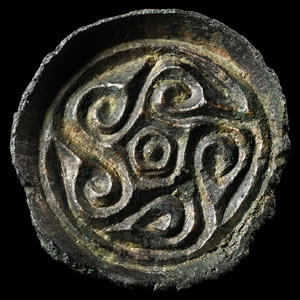
Anglo-Saxon Bronze Saucer Brooch with Running Spirals
6th century A.D.Sold for (Inc. bp): £176
Plaque with central pellet and raised pentagon developing to five running spirals; carinated ridge and flared lip; remains of catch and pin-lug to the reverse. 12.4 grams, 32 mm
Found Southern England. Acquired on the UK art market in the 1980s. From an East Anglian private collection. -
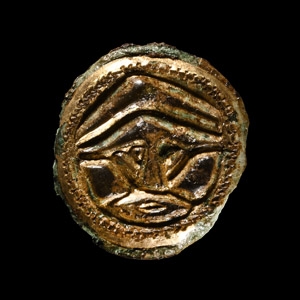
Anglo-Saxon Gilt Chip-Carved Button Brooch with Helmetted Warrior
5th-6th century A.D.Sold for (Inc. bp): £143
Class Ai; broad flange rim and circular frame enclosing a facing male mask with helmet detailing; pin-lug and catch to the reverse. 2.28 grams, 16 mm
Found Hampshire, UK. -
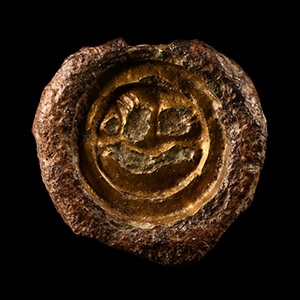
Anglo-Saxon Gilt Bronze Button Brooch with Face
Circa 6th-7th century A.D.Sold for (Inc. bp): £78
With raised border and chip-carved warrior mask motif. 3.31 grams, 19 mm
Ex David Winter collection, Kent, UK. Acquired on the UK art market in 2012. Property of a Kent lady collector.
