
Loading, please wait...
LOT 0279
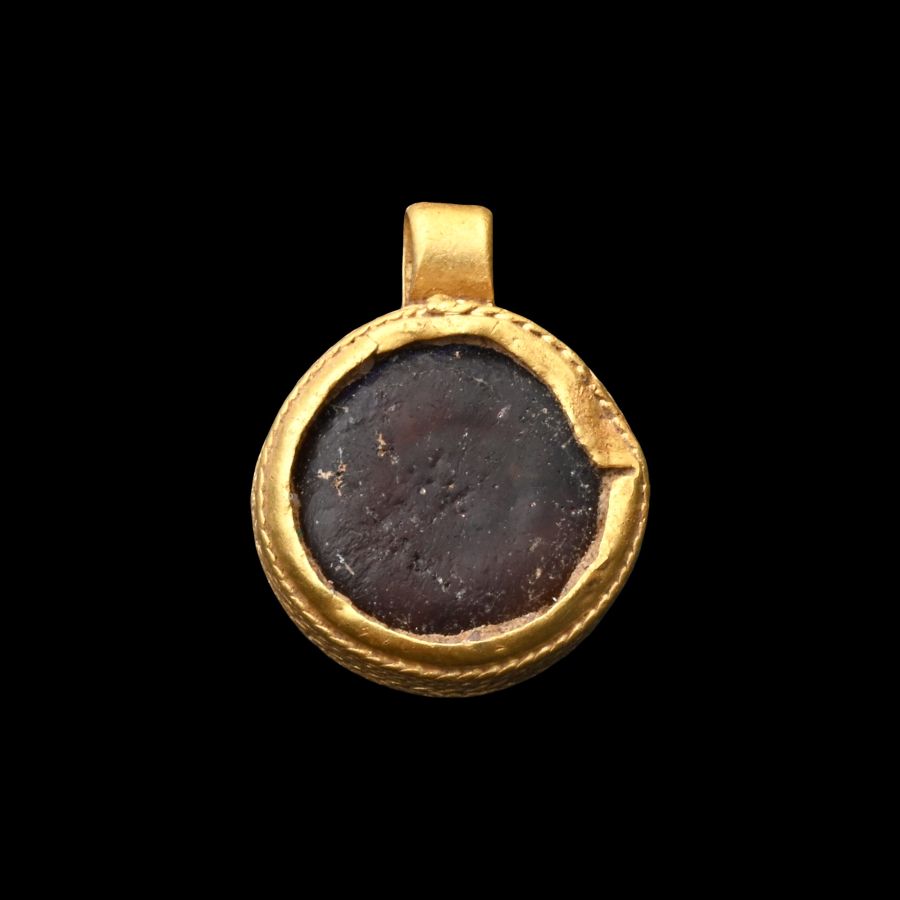
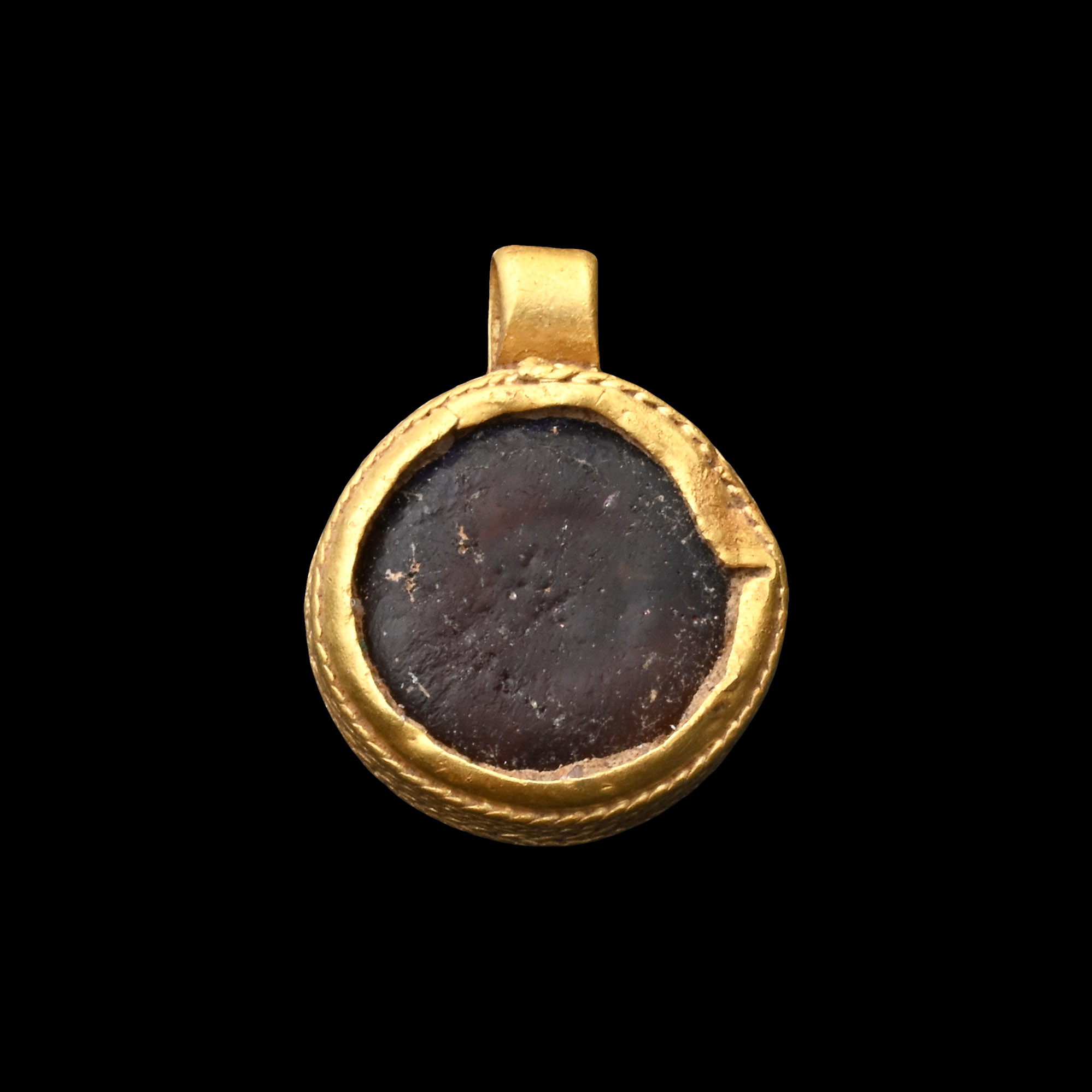
Anglo-Saxon Gold Necklace Pendant with Amber Cabochon
CIRCA 600-700 A.D.
1/2 in. (1.51 grams, 14 mm).
Circular in plan and comprising a thin sheet backing plate with applied tall sides set perpendicular to create a mount for the stone; the sides formed from six bands of twisted wire that are set at alternating directions to create a chevron pattern; the aperture of the mount made from flat and undecorated sheet metal that folded inwards to hold the stone in place, the setting a cabochon-cut red stone, believed to be amber.
ProvenanceFound whilst searching with a metal detector near Twyning, Tewkesbury, Gloucestershire, UK, on Sunday 17th August 2025 by Ben Williams; recorded as Treasure and disclaimed by the Crown with Treasure case tracking no.2025 T1597.
Accompanied by a copy of the British Museum's Portable Antiquities Scheme (PAS) report no.GLO-D25ABA.
TimeLine Auctions follows a vetting process to ensure the authenticity and legality of all items, reinforcing our commitment to integrity and responsible trading. Each antiquity, antique, and coin lot undergoes thorough examination by a vetting committee of at least ten external specialists, professional trade association members, scientists, and archaeologists: Our Vetting Process
AUCTIONS:
TimeLine is a leading auction house specialising in antiquities, ancient art, collectables, natural history, coins, medals, and books. Our auctions offer museums, collectors, historians, and enthusiasts the opportunity to acquire unique and historically significant pieces.
LOT 0279
Anglo-Saxon Gold Necklace Pendant with Amber Cabochon
Sold for (Inc. bp): £1,820
-
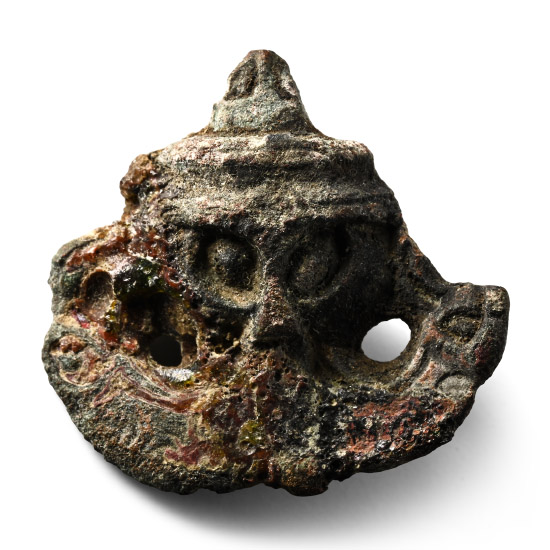
Anglo-Saxon Bronze Florid Brooch Terminal with Moustached Face
Circa 500-550 A.D.Sold for (Inc. bp): £46
Finial from the headplate of a cruciform brooch with plano-convex mask and crescent below; attachment lug to reverse. 4.34 grams, 21 mm
Found near Grimsby, North East Lincolnshire, UK. Property of an Essex, UK, gentleman. -
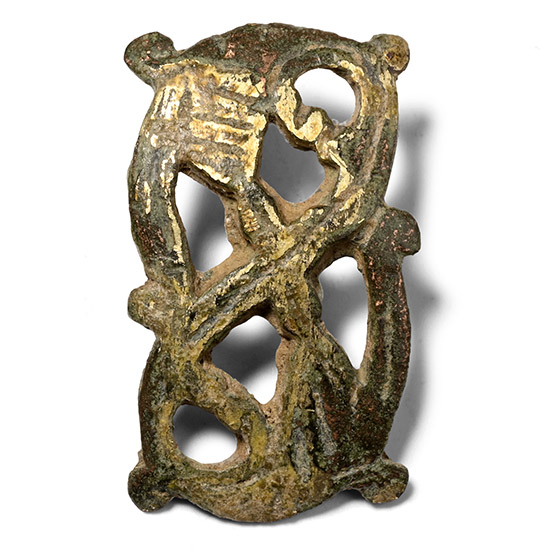
Late Anglo-Saxon Gilt Bronze Mount
Circa 10th-11th century A.D.Sold for (Inc. bp): £78
With curved profile, openwork design in Winchester Style, attachment lug to reverse. 6.47 grams, 30 mm
From the private collection of the late collection of Mr M., Waterlooville, Hampshire, UK, formed from the late 1980s to early 1990s.
The decoration shows influence from Scandinavian Ringerike Style. -
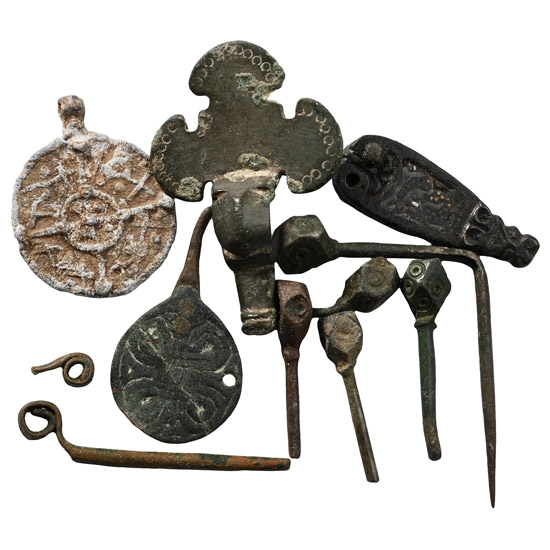
Anglo-Saxon Bronze and Lead Artefact Collection
Circa late 5th-9th century A.D.Sold for (Inc. bp): £52
Comprising: a pin with a ring-and-dot decorated finial; two brooch pin fragments; four pin finials with ring-and-dot decoration; a beast-head strap end; a large section of a trefoil-headed brooch; a lead pendant with cross motifs; a pin head with a quatrefoil. 47.7 grams total, 9-56 mm
Found Norfolk, Lincolshire and Yorkshire, UK. Acquired on the UK art market. Property of a Lancashire, UK, collector.
