
Loading, please wait...
LOT 1380
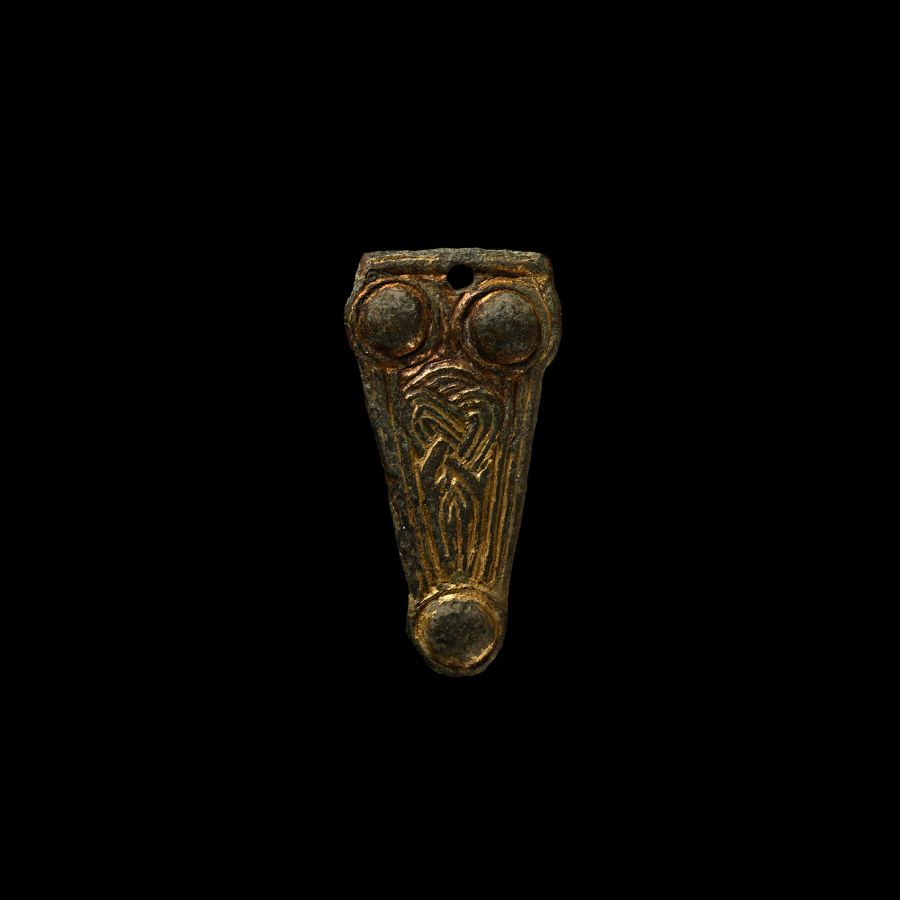
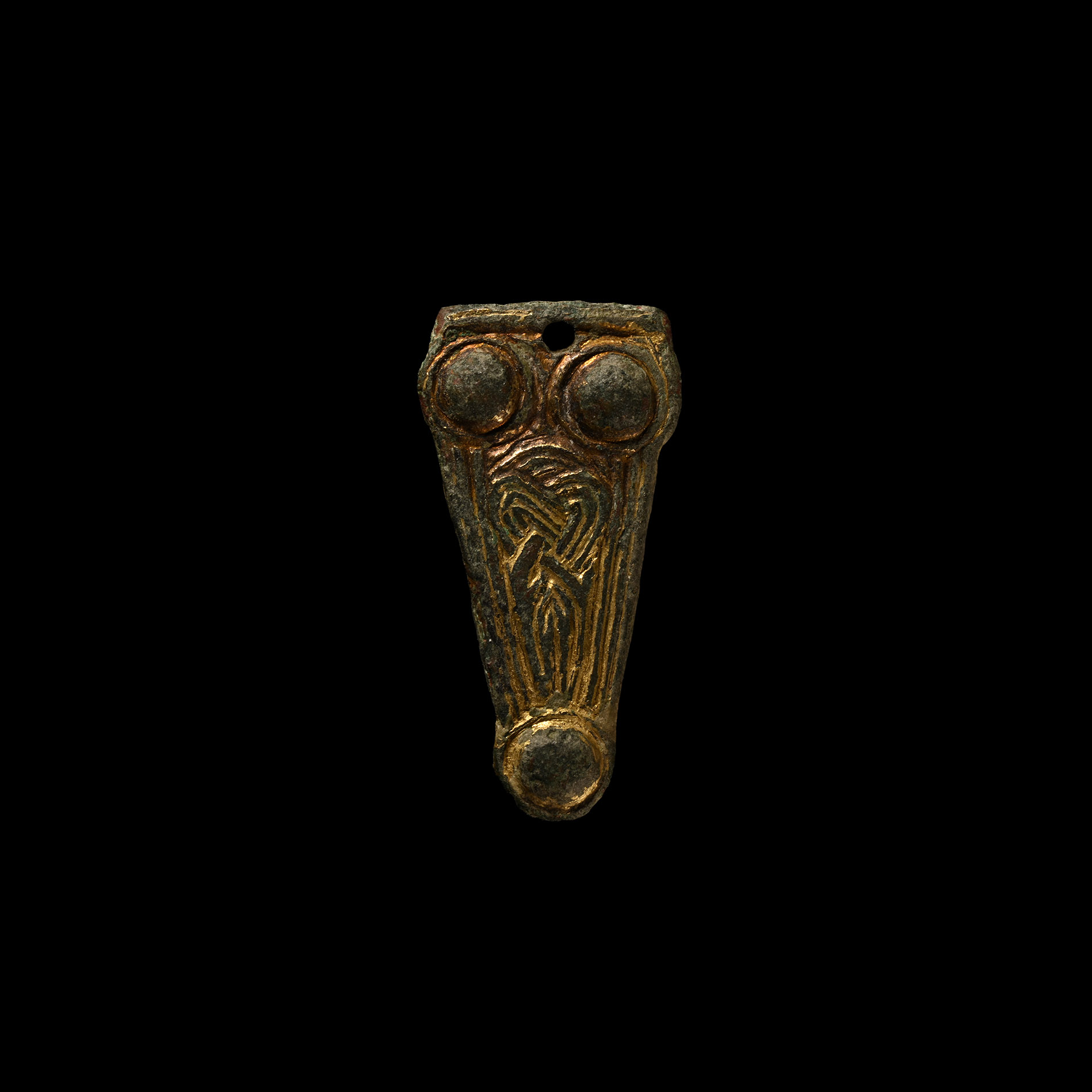
Anglo-Saxon Gold Chip-Carved Buckle Plate
6TH-9TH CENTURY A.D.
1 1/8 in. (5.5 grams, 30 mm).
Broadly triangular in form and retaining three fixing rivets, chip-carved interlace motif embellished with gilding; remains of fixing plate to reverse. [No Reserve]
ProvenanceAcquired on the UK market, 1990s.
Property of a retired academic.
TimeLine Auctions follows a vetting process to ensure the authenticity and legality of all items, reinforcing our commitment to integrity and responsible trading. Each antiquity, antique, and coin lot undergoes thorough examination by a vetting committee of at least ten external specialists, professional trade association members, scientists, and archaeologists: Our Vetting Process
AUCTIONS:
TimeLine is a leading auction house specialising in antiquities, ancient art, collectables, natural history, coins, medals, and books. Our auctions offer museums, collectors, historians, and enthusiasts the opportunity to acquire unique and historically significant pieces.
-
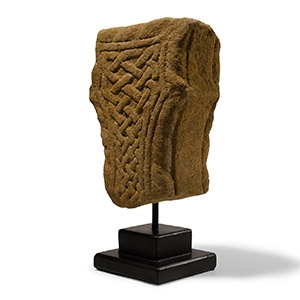
Anglo-Saxon Bifacial Limestone Monumental Cross Arm with Interlaced Panels
Circa 9th century A.D.Sold for (Inc. bp): £10,400
Portion of a lateral arm or head from a monumental cross of the Mercian Group with scoops at the junction with the shaft; Side A: a panel of dense knotwork within a raised border; Side B: a panel of coiled tendrils enmeshing the stems with vine-leaf finials; tooling and other marks to the undecorated faces; outer face (end): shallow incised cross. 5.67 kg total, 30 cm high including stand
Acquired in the 1980s. Ex S. Sherlock collection, Stoke-on-Trent, UK. This lot has been checked against the Interpol Database of stolen works of art and is accompanied by search certificate no.11891-205888.
The lateral scoops form a partial round hole, one of four which give these crosses their characteristic form. -
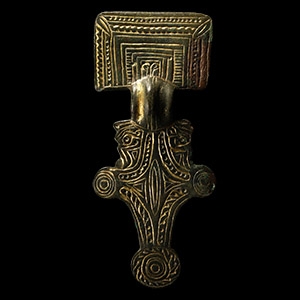
Anglo-Saxon Gilt Bronze Great Square-Headed Brooch
6th century A.D.Sold for (Inc. bp): £1,690
Of Hines's Group XX with square headplate bearing concentric bands of billets, undulating lines and punched points, with vesica motifs to the upper corners; thick shallow bow with central rib, isosceles triangle footplate with horse-head lappets and flanking lobes with concentric rings, ropework bands and central vesica, disc finial with ropework border; pin-lugs to the reverse and broad catch. 136 grams, 13.5 cm
Found near Grimsby, Humberside, UK, circa 2010.
The brooch shows a restrained use of low-relief detailing confined to largely geometric features other than the horse-heads at the shoulders and the single facing mask on the headplate above the junction with the bow. The bow itself is very thick and displays a prominent median rib with just a suggestion of outer ribs. The mineral deposits on the reverse bear the imprint of the textile to which the brooch was attached. -
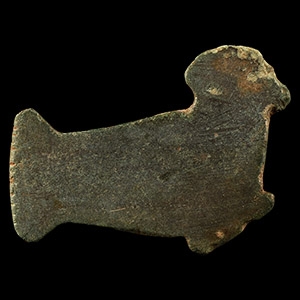
Anglo-Saxon Tinned Bronze Bird Brooch
5th-6th century A.D.Sold for (Inc. bp): £78
Displayed in profile facing right; remains of tinning; remains of pin lug and catchplate to reverse. 5.9 grams, 29 mm
Found Berkshire, UK. Accompanied by a copy of the British Museum's Portable Antiquities Scheme (PAS) report no.BERK-9B6095.
