
Loading, please wait...


LOT 0410
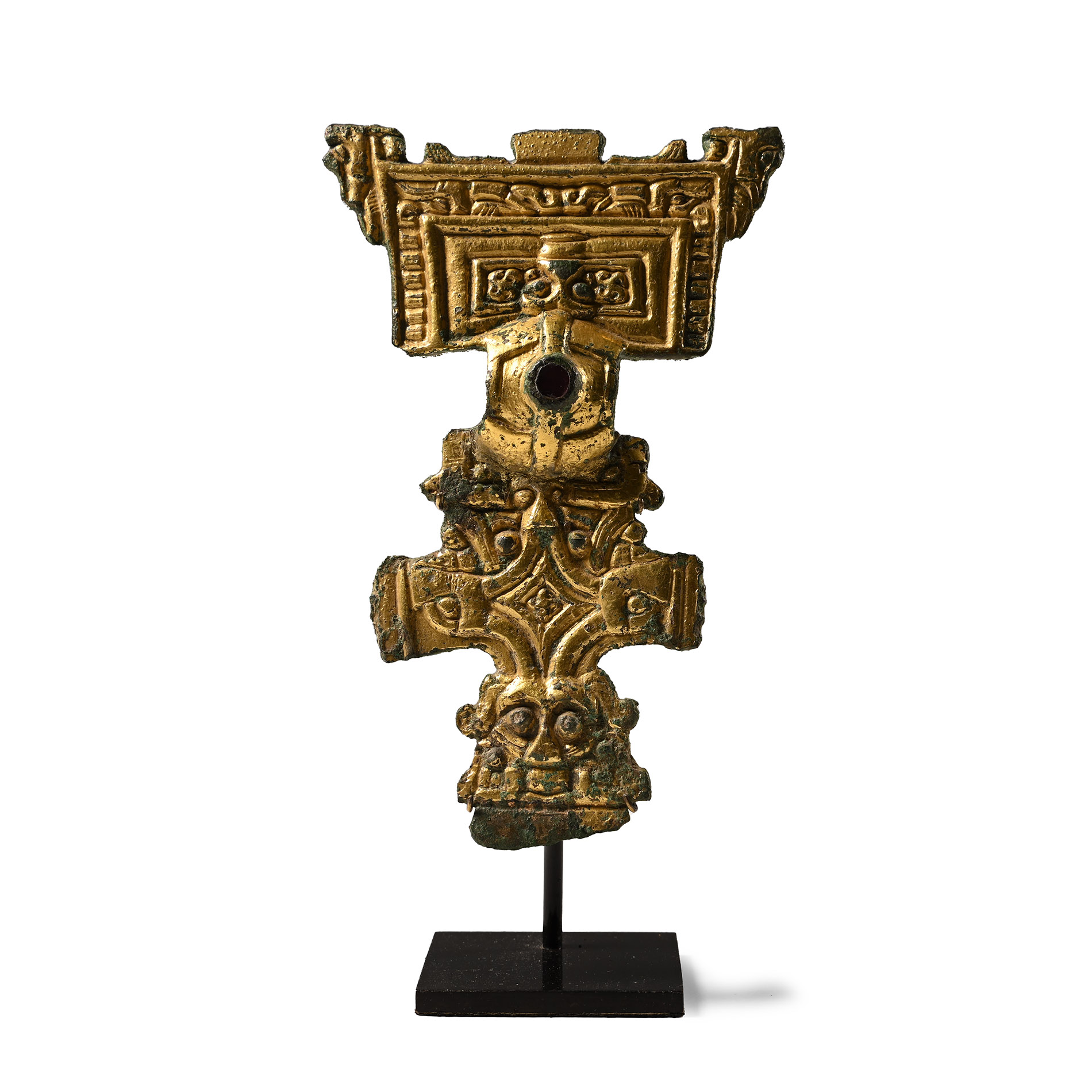
Anglo-Saxon Gilt Great Square-Headed Brooch with Garnet
6TH CENTURY A.D.
4 3/8 in. (5 1/8 in.) (74 grams, 11 cm (126 grams total, 13 cm high including stand)).
Comprising: trapezoidal headplate with beast-head spurs to the upper angles and concentric panels of Style I ornament with flanking billets; shallow bow with central cell and garnet cloison insert; short footplate with lateral lappets featuring profile masks and central lozenge; facing mask above a trapezoidal bar finial; pin-lugs and catch to the reverse; mounted on a custom-made stand.
Provenancewith ArtAncient Ltd.
Private collection, London.
This lot has been checked against the Interpol Database of stolen works of art and is accompanied by a search certificate number no.12440-226863.
Cf. Hines, J., A New Corpus of Anglo-Saxon Great Square-Headed Brooches, London, 1997, items 11(a) Linton Heath for headplate, 17(b) Rothley, for foot.
FootnotesThe meaning of the 'facing mask' motif on the footplate is probably related to the profile masks frequently used in Style I art, where the 'pellet' eye is enclosed by an arched frame: the 'facing mask' repeats this motif to produce a pair of eyes in a doubled 'bow'. An element of visual 'riddling' is no doubt present: the design is neither one thing nor the other, but includes elements of both.
Distribution of great square-headed brooches was initially concentrated along the valleys of the Rivers Trent, Thames and Severn, though it was later confined to the East Midlands and East Anglia (Hines, 1997, figs. 101, 102).
TimeLine Auctions follows a vetting process to ensure the authenticity and legality of all items, reinforcing our commitment to integrity and responsible trading. Each antiquity, antique, and coin lot undergoes thorough examination by a vetting committee of at least ten external specialists, professional trade association members, scientists, and archaeologists: Our Vetting Process
AUCTIONS:
TimeLine is a leading auction house specialising in antiquities, ancient art, collectables, natural history, coins, medals, and books. Our auctions offer museums, collectors, historians, and enthusiasts the opportunity to acquire unique and historically significant pieces.
LOT 0410
Anglo-Saxon Gilt Great Square-Headed Brooch with Garnet
Sold for (Inc. bp): £3,380
-
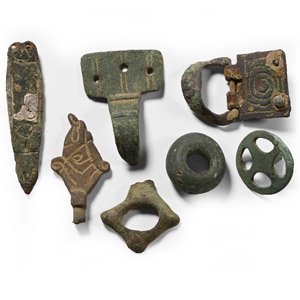
Anglo-Saxon and Viking Bronze Artefact Group
6th-11th century A.D.Sold for (Inc. bp): £104
Including small-long brooch, glass annular bead, bridle fitting and other items. 47 grams total, 20-51 mm
Ex Stocker collection, Kent, UK, 1955-early 2000s. -
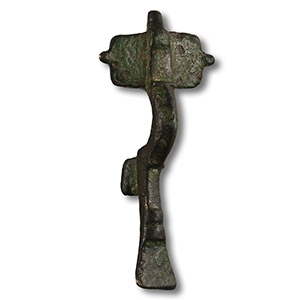
Anglo-Saxon Bronze Small-Long Brooch
6th century A.D.Sold for (Inc. bp): £46
With carinated bow and three radiating knops to the headplate. 10.3 grams, 64 mm
From a private Barnsley, UK, family collection. -
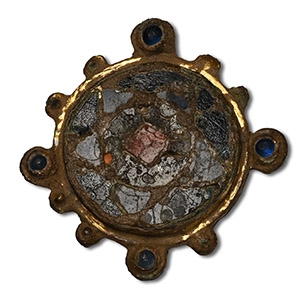
Late Saxon Enamelled Gilt Bronze Brooch
Circa 11th century A.D.Sold for (Inc. bp): £260
With circular frame enclosing a cloisonné enamel cinquefoil design in shades of blue and red, radiating lobes to the rim, each with an enamel fill. 6.29 grams, 29 mm
Acquired on the European art market since the early 2000s. From the private Northern Ireland collection of R.M.
