
Loading, please wait...
LOT 1200
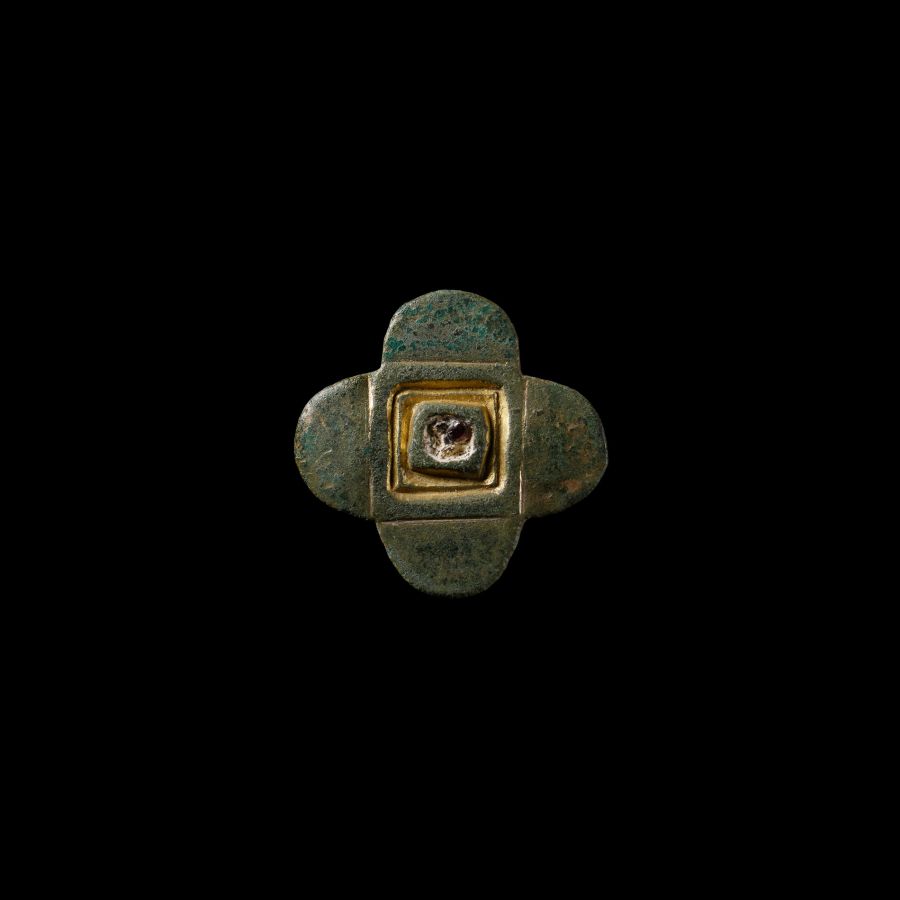
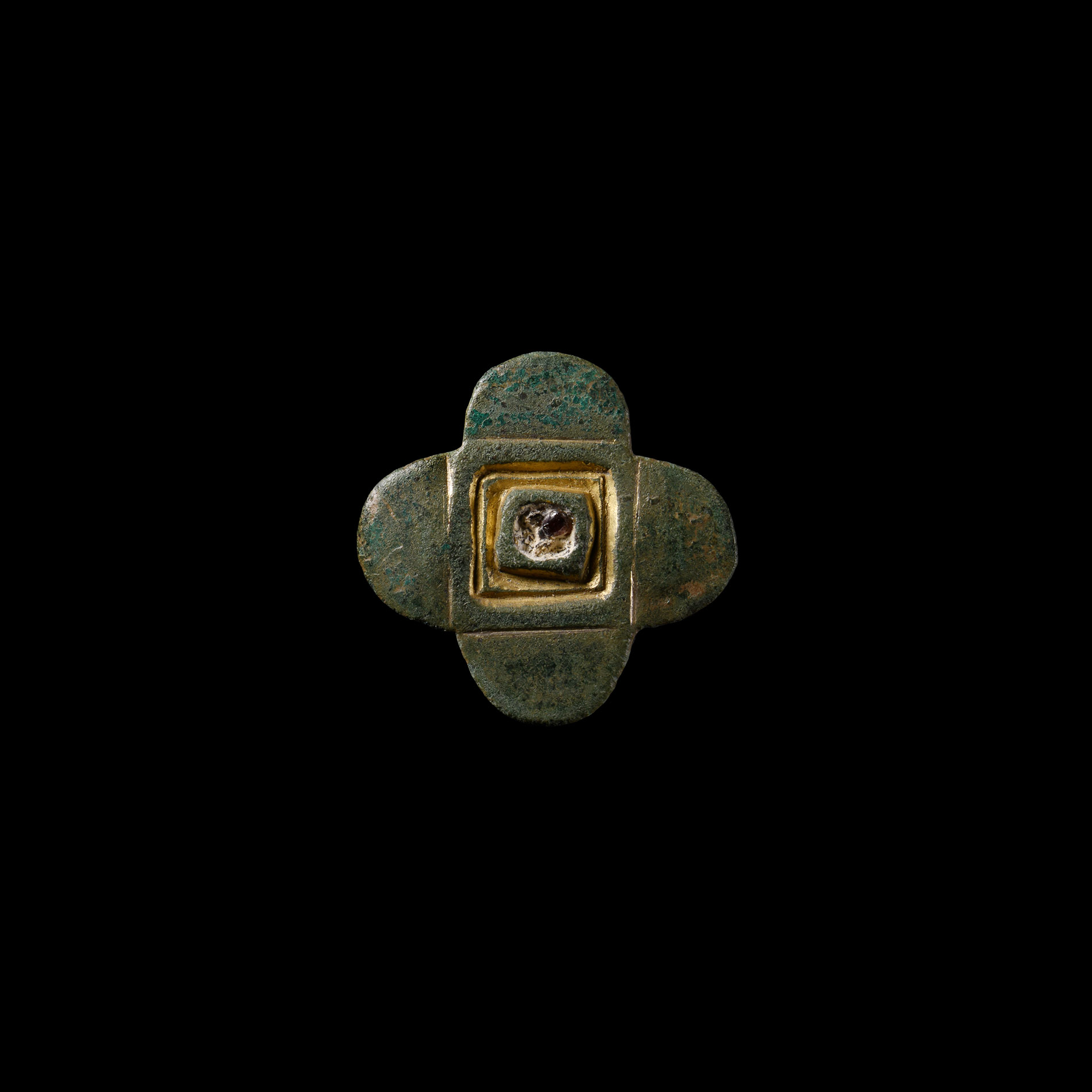
Anglo-Saxon Gilt Chip-Carved Quatrefoil Mount
CIRCA 6TH CENTURY A.D.
1 in. (4.6 grams, 26 mm).
A gilt copper-alloy quatrefoil mount with concentric ornamental gilt chip-carved squares to the central section, raised central cell containing a fragment of a polished garnet or other stone; two mounting lugs to the reverse, together with a collector's identification number: 'M5437'. [No Reserve]
ProvenanceFound UK.
Acquired in the 1990s.
From a North Yorkshire private collection, UK.
Cf. Hammond, B., British Artefacts vol.1 - Early Anglo-Saxon, Witham, 2009, for discussion; item 1.4.5-q, for similar juxtaposition of plain and detailed gilded surfaces; Pollington, S., Kerr, L. & Hammond, B., Wayland's Work: Anglo-Saxon Art, Myth & Material Culture from the 4th to 7th century, Ely, 2010, plate 29(b), for similar placement of garnet studs in gilt-bronze surfaces.
CONDITIONTimeLine Auctions follows a vetting process to ensure the authenticity and legality of all items, reinforcing our commitment to integrity and responsible trading. Each antiquity, antique, and coin lot undergoes thorough examination by a vetting committee of at least ten external specialists, professional trade association members, scientists, and archaeologists: Our Vetting Process
AUCTIONS:
TimeLine is a leading auction house specialising in antiquities, ancient art, collectables, natural history, coins, medals, and books. Our auctions offer museums, collectors, historians, and enthusiasts the opportunity to acquire unique and historically significant pieces.
-
.jpg)
Anglo-Saxon Gilt Chip-Carved Mount with Interlaced Panels
Circa 7th-8th century A.D.Sold for (Inc. bp): £6,240
A gilt copper-alloy mount composed of a broad annular body with slightly domed profile, the body quartered with each cell displaying a chip-carved interlace motif configured A:B:A:B; rim, edges and central cell with raised rim; rivet and flat-section mounting bar to reverse. 9.98 grams, 28 mm
Fine condition, usage wear to raised surfaces.
Found UK. Acquired in the 1990s. From a North Yorkshire private collection, UK.
The item was originally conceived as an appliqué with central cell probably containing a cabochon garnet or meerschaum disc. At some point later a bar was added across the reverse with the ends of the rivets interrupting the surface design. -
Anglo-Saxon Artefact Collection
Circa 6th-8th century A.D.Sold for (Inc. bp): £65
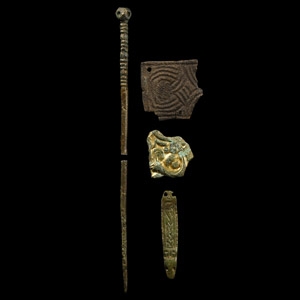
A mixed bronze group comprising: a narrow strap end with split upper edge, low-relief interlace motif, beast-head finial; a mount fragment with low-relief knotwork, pierced at one corner; a gilt chip-carved fragment probably of a cruciform brooch with high-relief Style I profile face; both parts of a dress pin with polyhedral head and ribbed upper section. 24 grams total, 2.1-13 cm
Pin repaired.
Found Roding's, Essex, UK. Acquired on the UK antiques market between 1974-1985. Albert Ward collection, Essex, UK. -
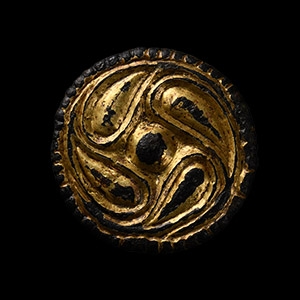
Anglo-Saxon Gilt Chip-Carved Bird's Wing-Whorl Mount
Circa 6th century A.D.Sold for (Inc. bp): £390
A gilt copper-alloy circular mount decorated with a chip-carved whorl composed of four stylised bird's wings radiating from a central knop; four mounting lugs to the reverse. 6.28 grams, 26 mm
Found UK. Acquired in the 1990s. From a North Yorkshire private collection, UK.
