
Loading, please wait...
LOT 0370
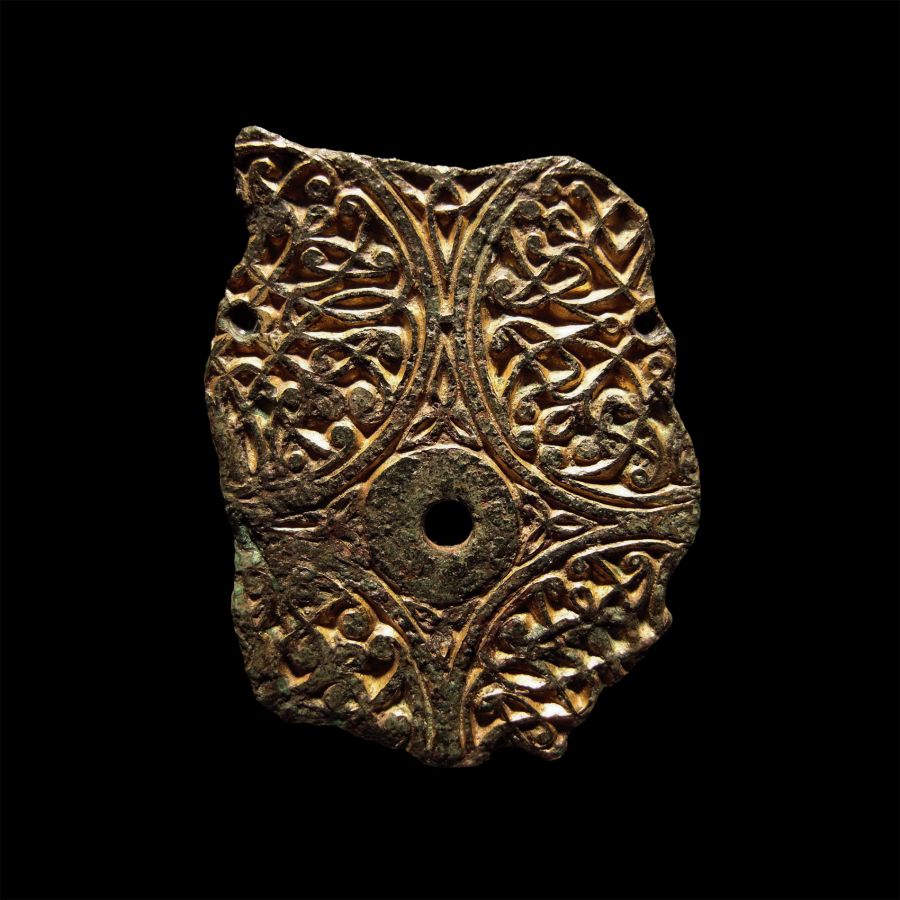
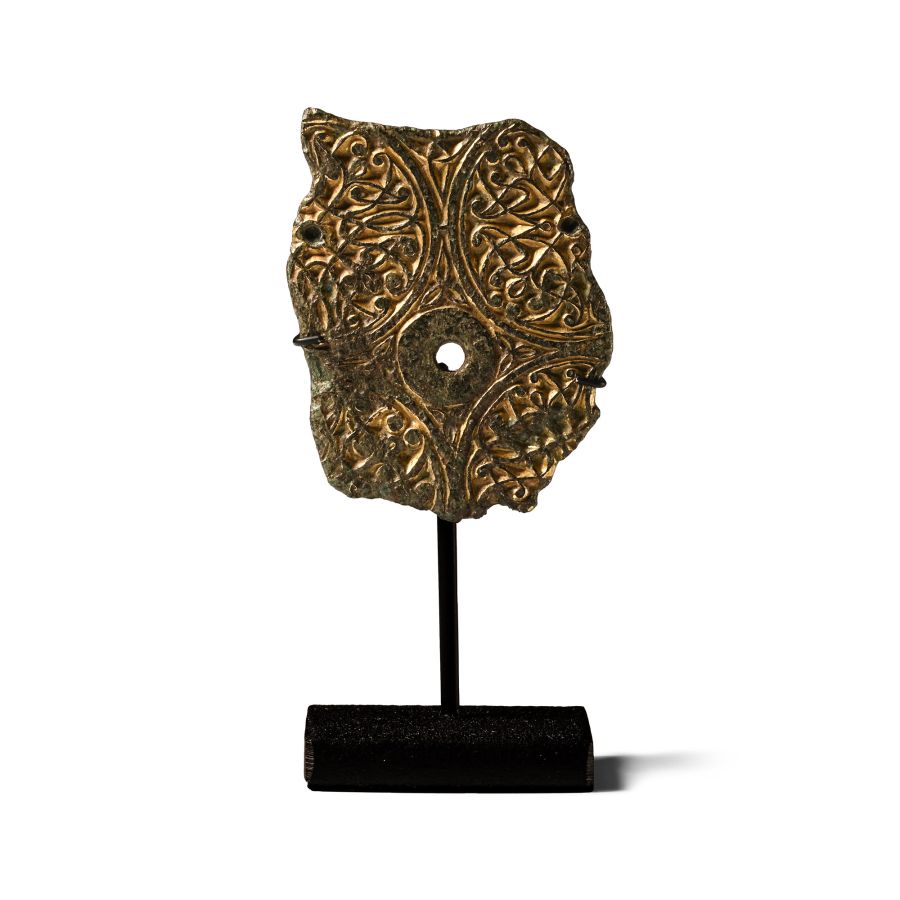
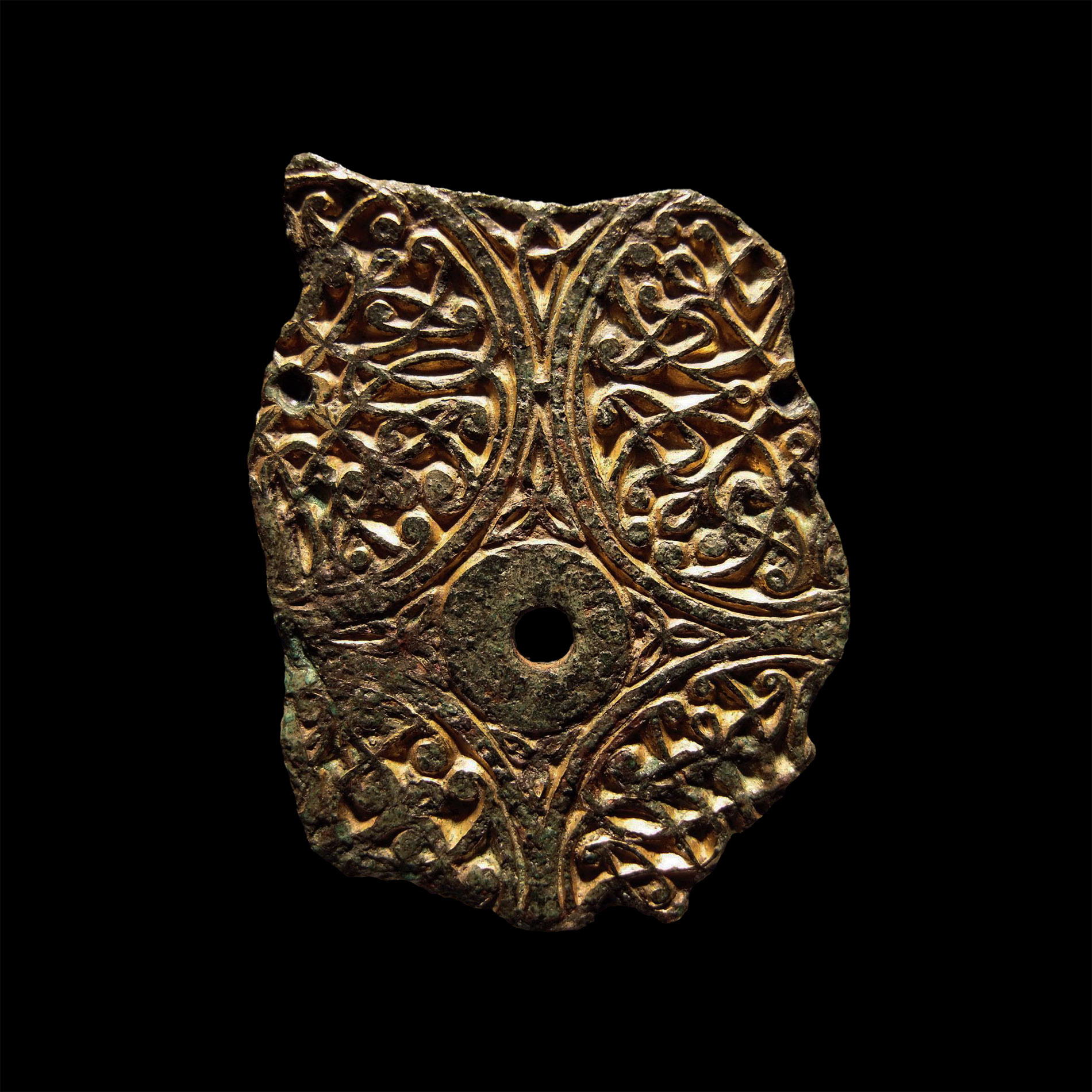
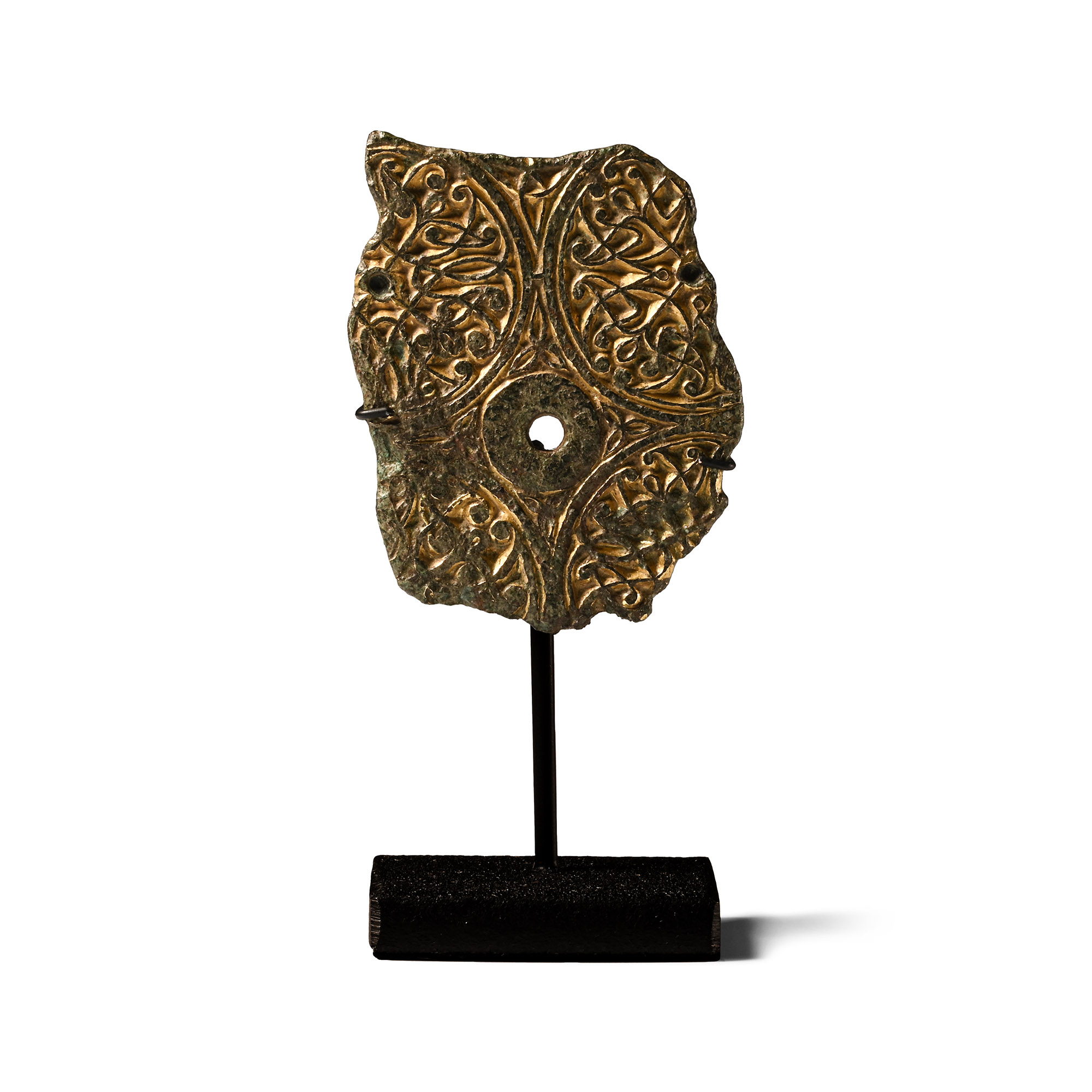
Anglo-Saxon Gilt Chip-Carved Bronze Mount
LATER 8TH-9TH CENTURY A.D.
1 3/4 in. (2 3/4 in.) (13.1 grams, 44 mm (50.4 grams total, 71 mm high including stand)).
Irregular fragment from a bronze casket mount formed with four discoid panels each filled with dense regularly-displayed foliage and tendrils with lobe finials; central pierced disc with triquetra motifs in the spandrels; accompanied by a custom-made display stand.
ProvenanceFound Saxmundham, Suffolk, in the 1980s.
From the collection of Dirk Kennis, Belgium.
Cf. Hammond, B., British Artefacts vol.2 - Middle Saxon & Viking, Witham, 2010; Webster, L. & Backhouse, J., The Making of England. Anglo-Saxon Art and Culture AD 600-900, London, 1991, item 138 (Gandersheim), 185.
FootnotesDetails of the decoration recall later 8th century items, such as the lobed tendrils and triquetra motifs on the Franks Casket; the regular disposition of elements recalls a shrine mount from Peterborough (Hammond, 1.12-d) and disc-headed pins (Hammond, 1.10-g, h). Recorded, studied, and determined by the Secretary of State’s Expert Adviser as an object of cultural interest. The Reviewing Committee on the Export of Works of Art and Objects of Cultural Interest (RCEWA) considered an application to export this object. The Committee concluded that the object satisfied the third Waverley criterion and is therefore currently not exportable.
CONDITIONTimeLine Auctions follows a vetting process to ensure the authenticity and legality of all items, reinforcing our commitment to integrity and responsible trading. Each antiquity, antique, and coin lot undergoes thorough examination by a vetting committee of at least ten external specialists, professional trade association members, scientists, and archaeologists: Our Vetting Process
AUCTIONS:
TimeLine is a leading auction house specialising in antiquities, ancient art, collectables, natural history, coins, medals, and books. Our auctions offer museums, collectors, historians, and enthusiasts the opportunity to acquire unique and historically significant pieces.
-
.jpg)
Anglo-Saxon Bronze Regardant Beast Disc Brooch
8th-9th century A.D.Sold for (Inc. bp): £46
Comprising a flat-section disc with reserved regardant beast within a pelletted border, catchplate to the reverse. 6.96 grams, 28.8 mm
Found Norfolk, Southern England. Acquired on the UK art market in the 1980s. From an East Anglian private collection. Accompanied by an old Norfolk Castle Museum record slip. -
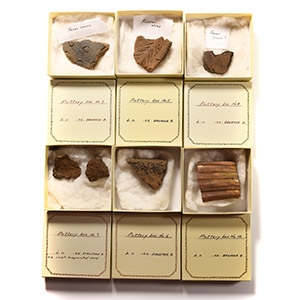
Anglo-Saxon Pottery Sherd Group
6th century A.D. and laterSold for (Inc. bp): £104
Group comprising six numbered and annotated card boxes each with a sherd from Bagmoor or Dialstone; each piece with inked reference number. 264 grams total, 36-48 mm
Found Bagmoor, Lincolnshire and Dialstone, near Stockport, UK. -
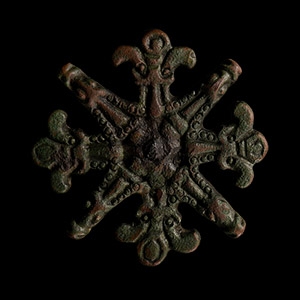
Anglo-Saxon Bronze Shield Mount with Animal Masks and Beast Heads
6th century A.D.Estimate: £600 - 800 (+bp*)
Opening Bid: £300
The eight arms arranged with alternating trefoil and tapering terminals, the trilobate arms formed as animal masks, the tapering arms as dragon-heads, all with stylised detailing in relief; punched circlets to the field; some remains of mounting lug to reverse centre. 68 grams, 54 mm
Found Norfolk, UK. From an East Anglian private collection.
