
Loading, please wait...
LOT 0369
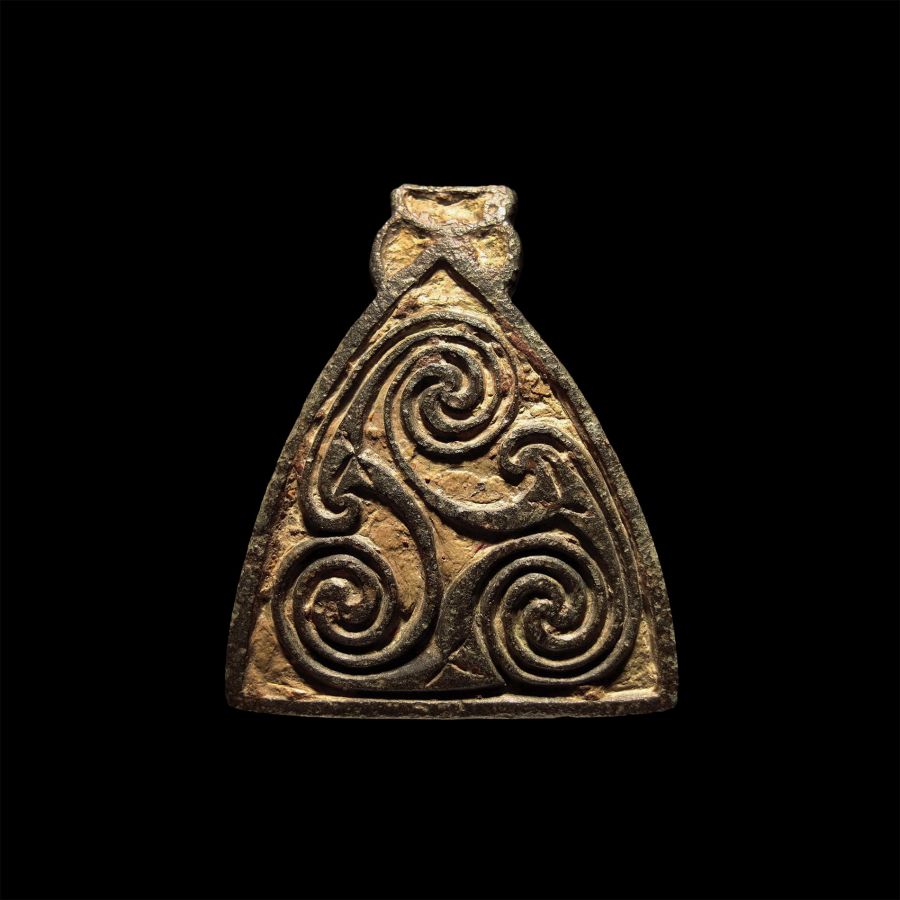
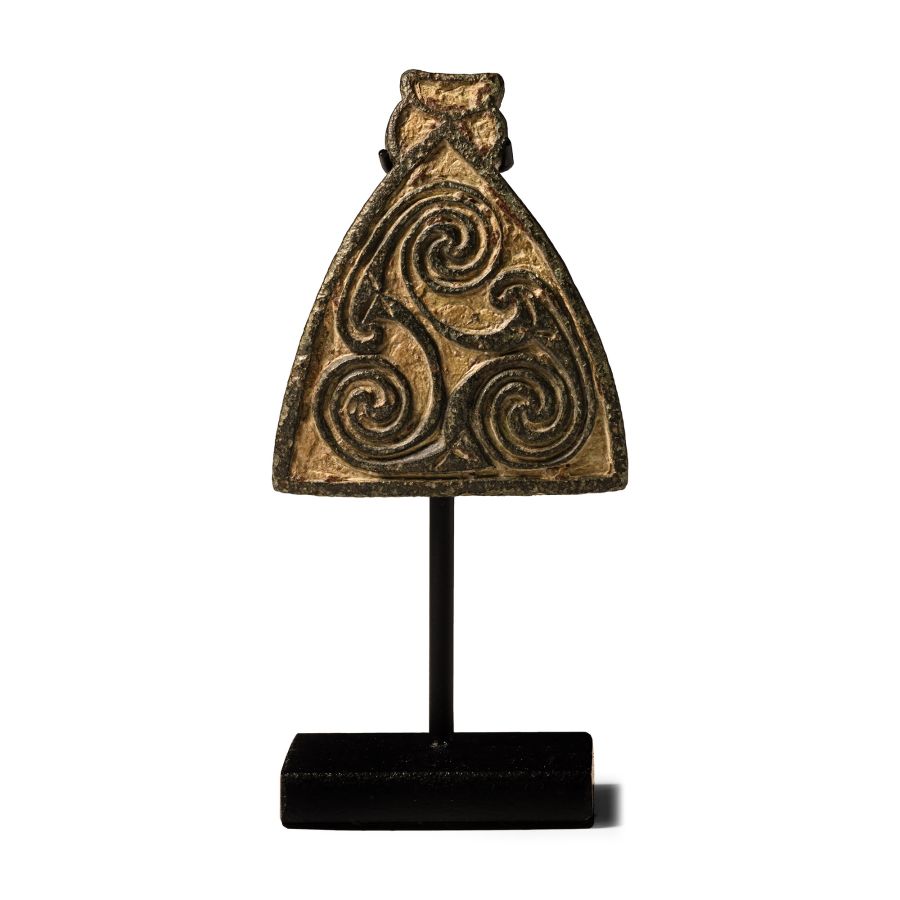
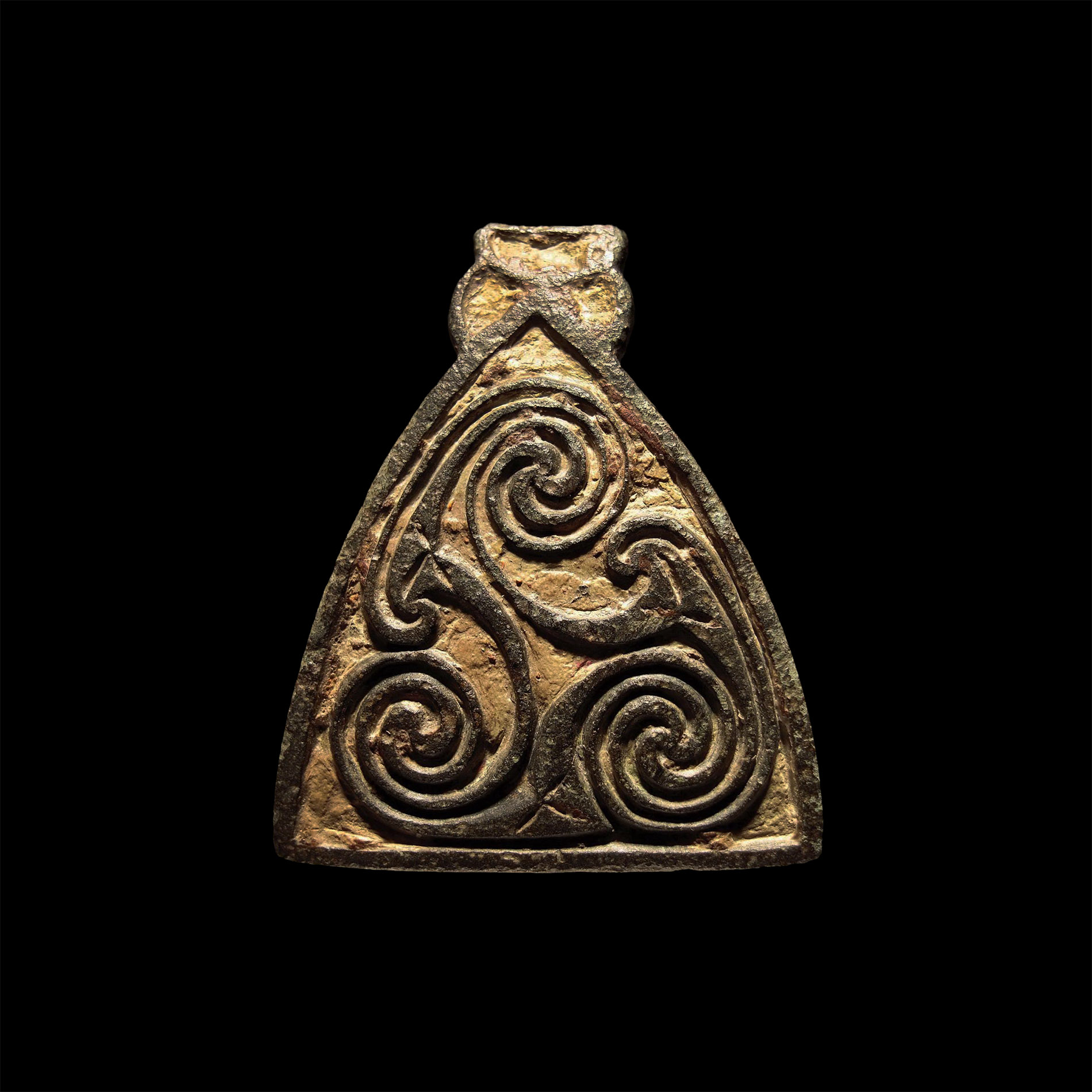
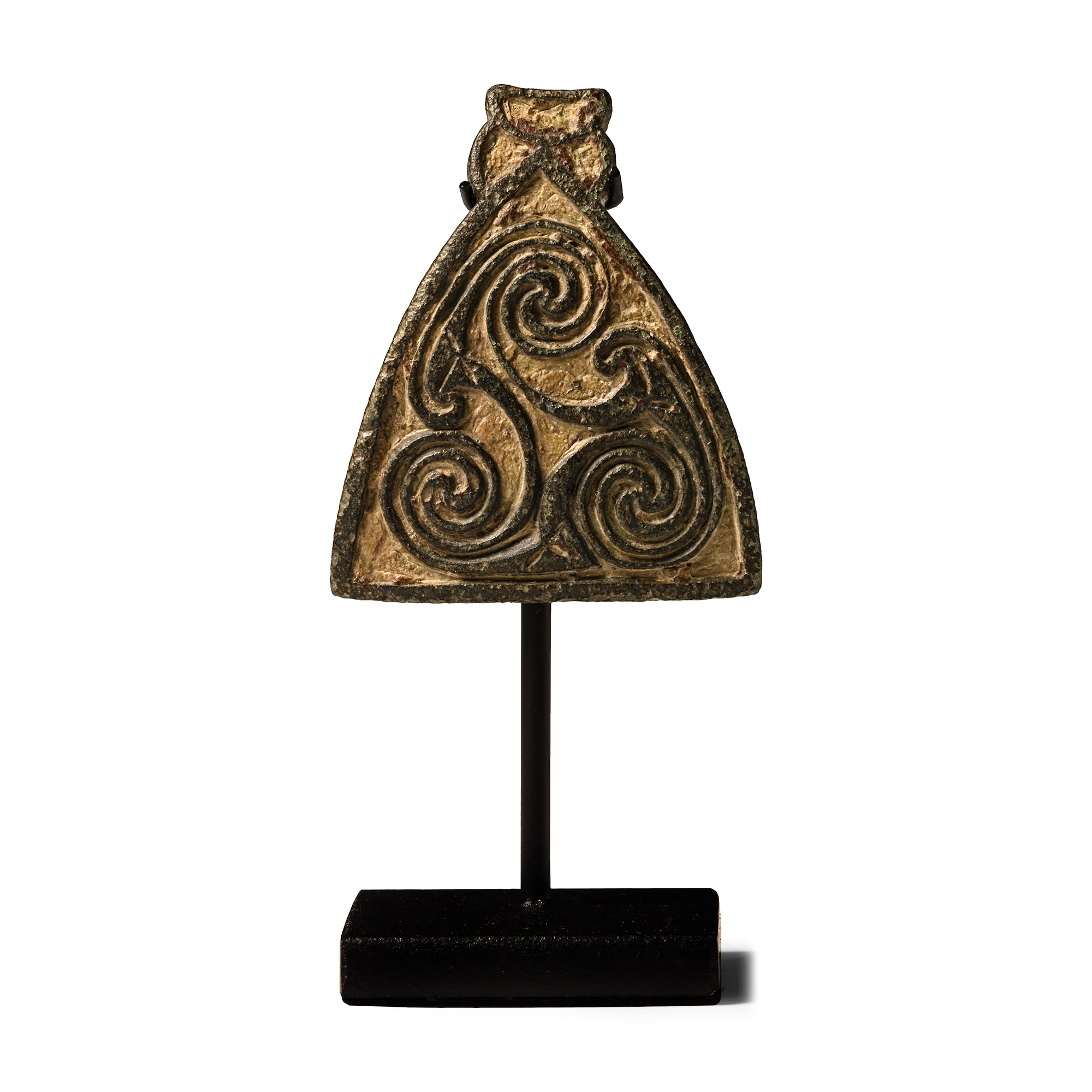
Anglo-Saxon Gilt Chip-Carved Bronze Hanging Bowl Mount
EARLY 9TH CENTURY A.D.
1 3/8 in. (2 3/8 in.) (9.11 grams, 34 mm (29.8 grams total, 59 mm including stand)).
Triangular mount with applied rim forming a cell and interlocking La Tène spirals to the face; hook to the apex with recesses; accompanied by a custom-made display stand.
ProvenanceFound Haddenham near Ely, Cambridgeshire, UK.
From the collection of Dirk Kennis, Belgium.
Cf. Youngs, S. (ed.), The Work of Angels. Masterpieces of Celtic Metalwork, 6th-9th centuries AD, London, 1989, item 183, a disc mount from the Brough of Birsay, Orkney with similar applied spiral motifs.
FootnotesThe cells on the mount were intended to be filled with coloured enamel to produce a rich polychrome effect. Recorded, studied, and determined by the Secretary of State’s Expert Adviser as an object of cultural interest. The Reviewing Committee on the Export of Works of Art and Objects of Cultural Interest (RCEWA) considered an application to export this object. The Committee concluded that the object satisfied the third Waverley criterion and is therefore currently not exportable.
CONDITIONTimeLine Auctions follows a vetting process to ensure the authenticity and legality of all items, reinforcing our commitment to integrity and responsible trading. Each antiquity, antique, and coin lot undergoes thorough examination by a vetting committee of at least ten external specialists, professional trade association members, scientists, and archaeologists: Our Vetting Process
AUCTIONS:
TimeLine is a leading auction house specialising in antiquities, ancient art, collectables, natural history, coins, medals, and books. Our auctions offer museums, collectors, historians, and enthusiasts the opportunity to acquire unique and historically significant pieces.
LOT 0369
Anglo-Saxon Gilt Chip-Carved Bronze Hanging Bowl Mount
Sold for (Inc. bp): £2,600
-
.jpg)
Saxon Period Iron Sceptre Head
8th-10th century A.D. or laterSold for (Inc. bp): £117
Composed of a cylindrical body, lobed neck, bulbous collar to handle with splayed square-section finial and a crescentic arm to the other end. 1.1 kg, 40 cm
Acquired 1990s-early 2000s. East Anglian private collection. -
.jpg)
Anglo-Saxon Bronze Girdle Hanger
Late 5th-early 6th century A.D.Sold for (Inc. bp): £65
A T-shaped 'key' consisting of a central stem with a flat, oval attachment loop at the upper end and a T-shaped or W-shaped terminal at the lower end, formed from two prongs. 19.6 grams, 10.3 cm
Found whilst searching with a metal detector near Garton, East Riding of Yorkshire, UK, circa 2019. Accompanied by a copy of the British Museum's Portable Antiquities Scheme (PAS) report no.YORYM-84E0BD. -
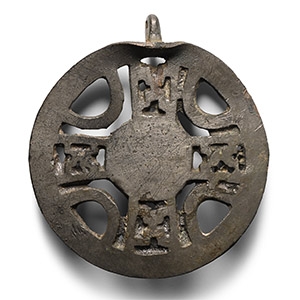
Anglo-Saxon Tinned Bronze Openwork Horse Harness Mount
Late 5th-early 6th century A.D.Sold for (Inc. bp): £234
Disc mount with four pierced lugs to the reverse, openwork design with four radiating U-shaped elements between the arms of a cross with T-shaped voids. 26.1 grams, 57 mm
Found Southern England. Acquired on the UK art market in the 1980s. From an East Anglian private collection.
The 'zoned' layout of the piece strongly recalls some of the design elements in Kentish disc brooches, where the cells contain inlaid garnets, millefiori glass, meerschaum and other materials (see Arrhenius, B., Merovingian Garnet Jewellery, Stockholm, 1985, figs. 188-193).
