
Loading, please wait...
LOT 0298
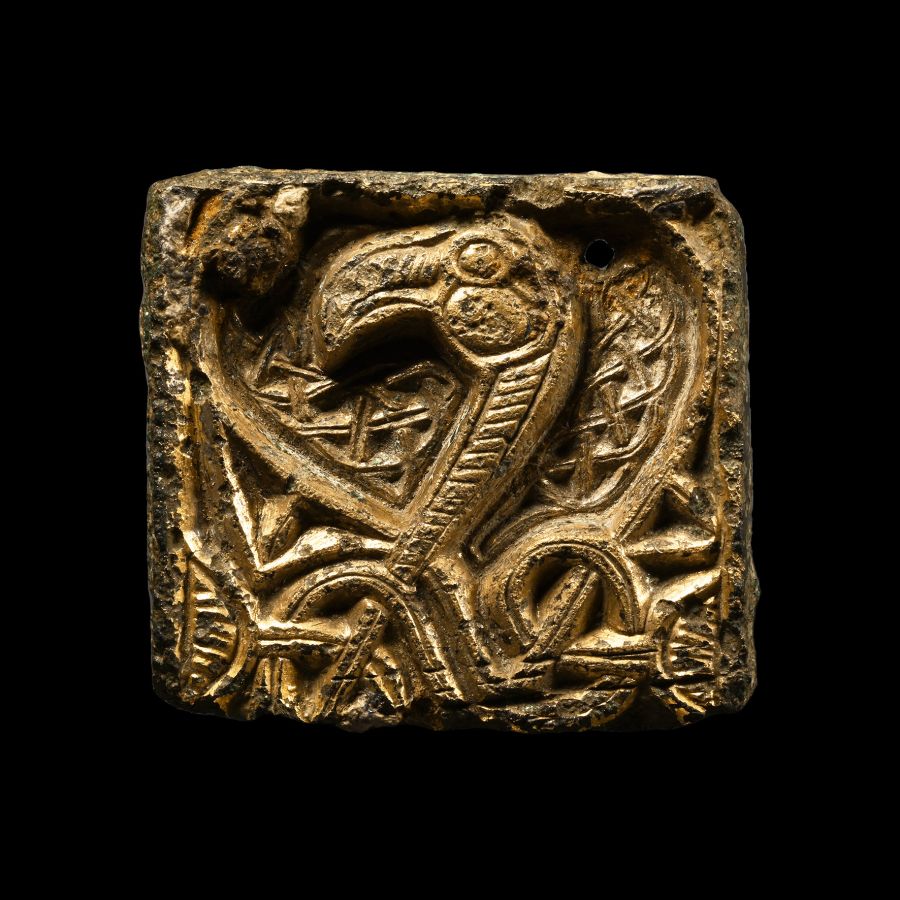
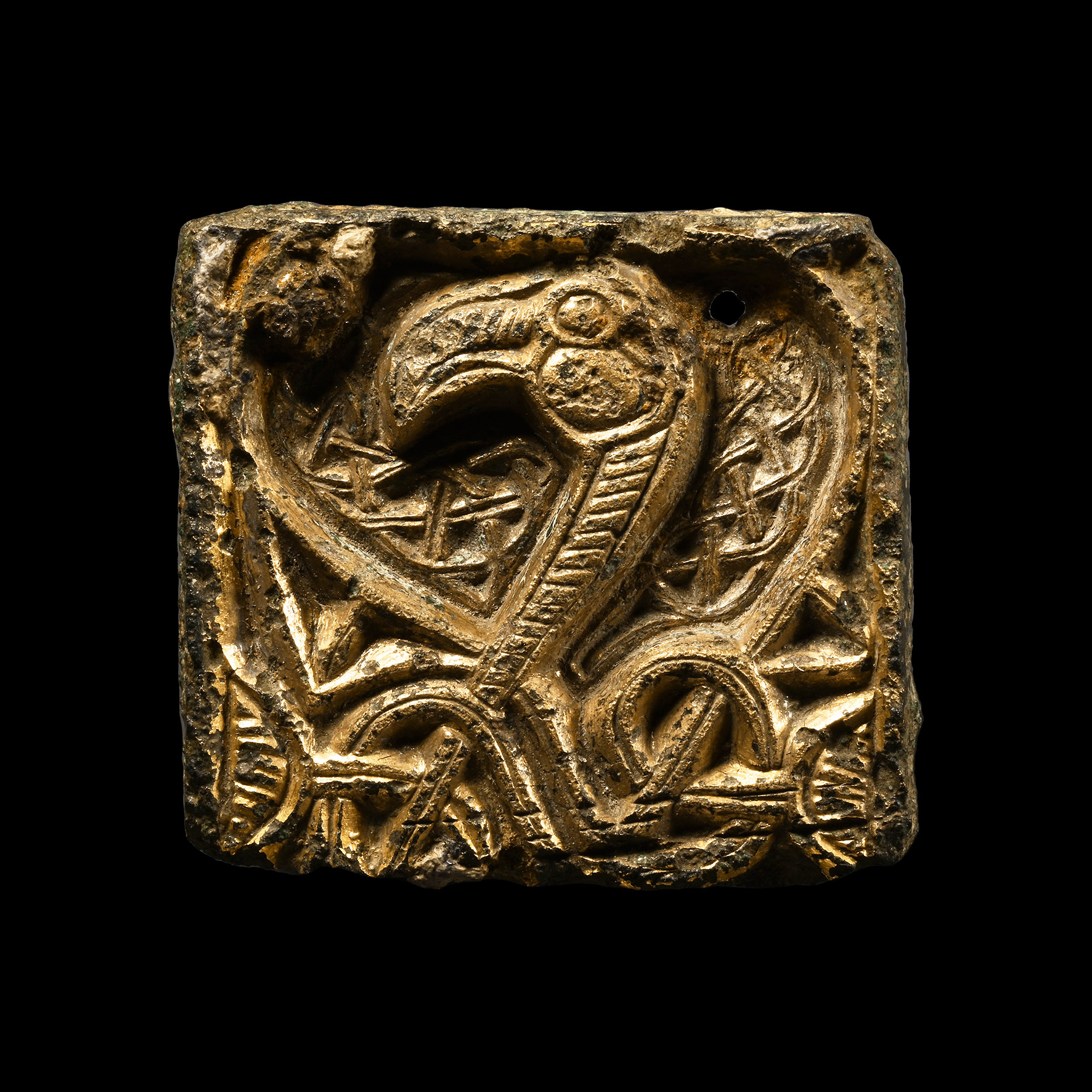
Anglo-Saxon Gilt Bronze Chip-Carved Beast Manuscript Mount
CIRCA 7TH-8TH CENTURY A.D.
1 1/4 in. (22.5 grams, 33 mm).
With high-relief aviform head and wings and looped ornamental swags, knotwork panels in the field; two holes for mounting; possibly a book-mount, Hiberno-Saxon workmanship.
ProvenanceFound East Anglia, UK.
This lot has been checked against the Interpol Database of stolen works of art and is accompanied by search certificate number no.11884-204955.
Cf. Webster, L. & Backhouse, J., The Making of England. Anglo-Saxon Art and Culture AD 600-900, London, 1991, items 102, 106(a), 107(a).
CONDITIONTimeLine Auctions follows a vetting process to ensure the authenticity and legality of all items, reinforcing our commitment to integrity and responsible trading. Each antiquity, antique, and coin lot undergoes thorough examination by a vetting committee of at least ten external specialists, professional trade association members, scientists, and archaeologists: Our Vetting Process
AUCTIONS:
TimeLine is a leading auction house specialising in antiquities, ancient art, collectables, natural history, coins, medals, and books. Our auctions offer museums, collectors, historians, and enthusiasts the opportunity to acquire unique and historically significant pieces.
LOT 0298
Anglo-Saxon Gilt Bronze Chip-Carved Beast Manuscript Mount
Sold for (Inc. bp): £3,380
-
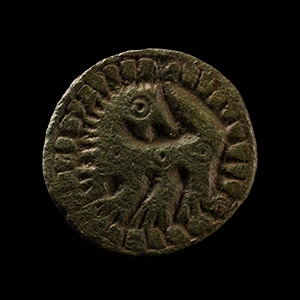
Anglo-Saxon Bronze Regardant Beast Brooch
8th-9th century A.D.Sold for (Inc. bp): £221
Comprising a flat-section disc with reserved regardant beast within a pelletted border, pin-lug and catchplate to the reverse. 8.2 grams, 29 mm
Acquired 1990s. From an East Anglian private collection. -
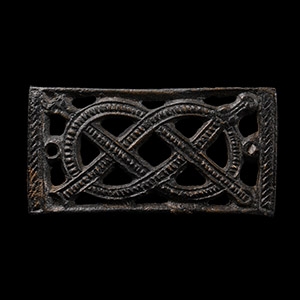
Anglo-Saxon Bronze Entwined Serpent Mount
6th-7th century A.D.Estimate: £300 - 400 (‡+bp*)
Opening Bid: £150
With openwork design of two serpents interlaced, each with billeted body and lentoid eyes, ropework border to the shorter sides; old collector's accession numbers to the underside '91.115' and '15871'. 10.9 grams, 46 mm
UK collection formed 1970s-1990s. Ex property of an English gentleman.
The decorative pattern of this mount is similar to what, according to S. West, is an Anglo-Saxon die found in Suffolk, where legless animal forms are represented lying head to tail, with beaded bodies within a beaded border. Also here the animals are showing interlaced jaws and headed bodies, all contained in a border. -
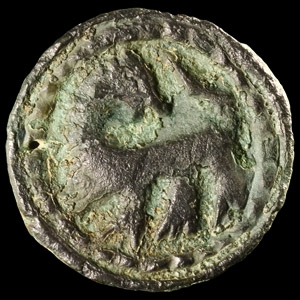
Late Anglo-Saxon 'The Rodings' Bronze Disc Brooch with Regardant Beast
10th-11th century A.D.Sold for (Inc. bp): £78
Comprising a flat-section disc with reserved regardant beast within a pelletted border, pin-lug and catchplate to the reverse. 9.7 grams, 30 mm
Found The Rodings, Essex, UK.
