
Loading, please wait...
LOT 1272
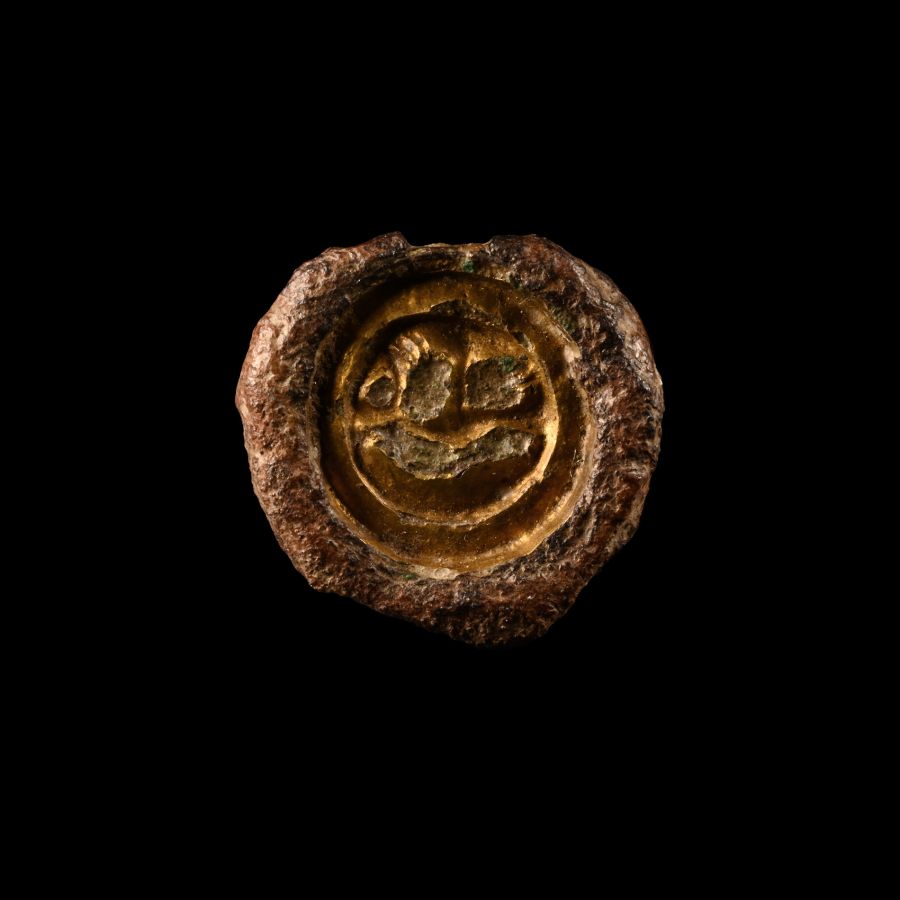
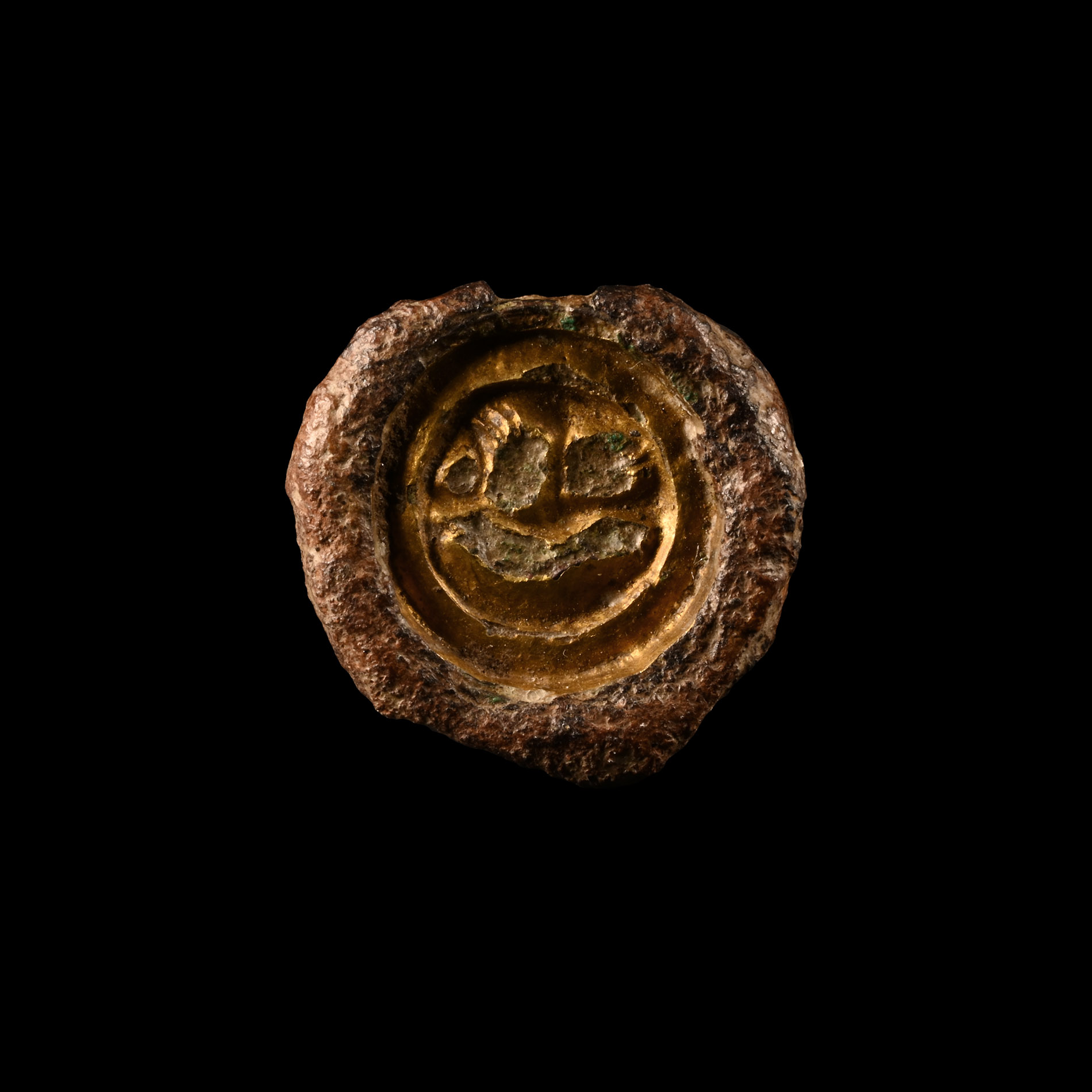
Anglo-Saxon Gilt Bronze Button Brooch with Face
CIRCA 6TH-7TH CENTURY A.D.
3/4 in. (3.31 grams, 19 mm).
With raised border and chip-carved warrior mask motif. [No Reserve]
ProvenanceEx David Winter collection, Kent, UK.
Acquired on the UK art market in 2012.
Property of a Kent lady collector.
TimeLine Auctions follows a vetting process to ensure the authenticity and legality of all items, reinforcing our commitment to integrity and responsible trading. Each antiquity, antique, and coin lot undergoes thorough examination by a vetting committee of at least ten external specialists, professional trade association members, scientists, and archaeologists: Our Vetting Process
AUCTIONS:
TimeLine is a leading auction house specialising in antiquities, ancient art, collectables, natural history, coins, medals, and books. Our auctions offer museums, collectors, historians, and enthusiasts the opportunity to acquire unique and historically significant pieces.
-
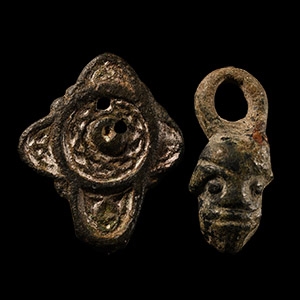
Anglo-Saxon Bronze Artefact Group
Circa 6th century A.D.Sold for (Inc. bp): £39
Comprising: a pendant formed as a stylised bearded face, large loop above; a cruciform mount with five recessed panels with interlace; pierced through twice. 14.2 grams total, 27-29 mm
From a 1990s English collection. Property of an Essex gentleman. -
Anglo-Saxon Gilt Bronze Stud with Profile Head
Circa 6th-7th century A.D.Sold for (Inc. bp): £111
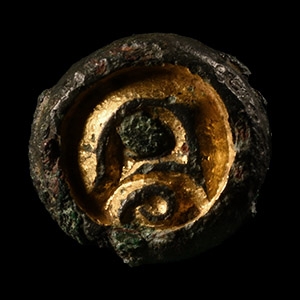
Discoid plate with rivet to the rear, chip-carved Style I head motif in profile. 2.8 grams, 13 mm
Ex David Winter collection, Kent, UK. Acquired on the UK art market in 2012. Property of a Kent lady collector. -

Anglo-Saxon Gilt Bronze Horse Harness Mount
6th-7th century A.D.Sold for (Inc. bp): £176
Composed of a pelta-shaped body with broad border, central panel of dense Style II ornament, three studs to the reverse. 6.4 grams, 35 mm
Ex property of a gentleman; acquired in the 1970s.
The pelta-shaped body could be a part of a circular decorative phalera usually attached to the breast of the horse, or to the muzzle of the horse's head, or decoration of the harness mount of antilina or strap-junction of the postilina (Fern, 2005, fig.5.18). It was usually positioned at the bottom of the phalera.
