
Loading, please wait...
LOT 1749
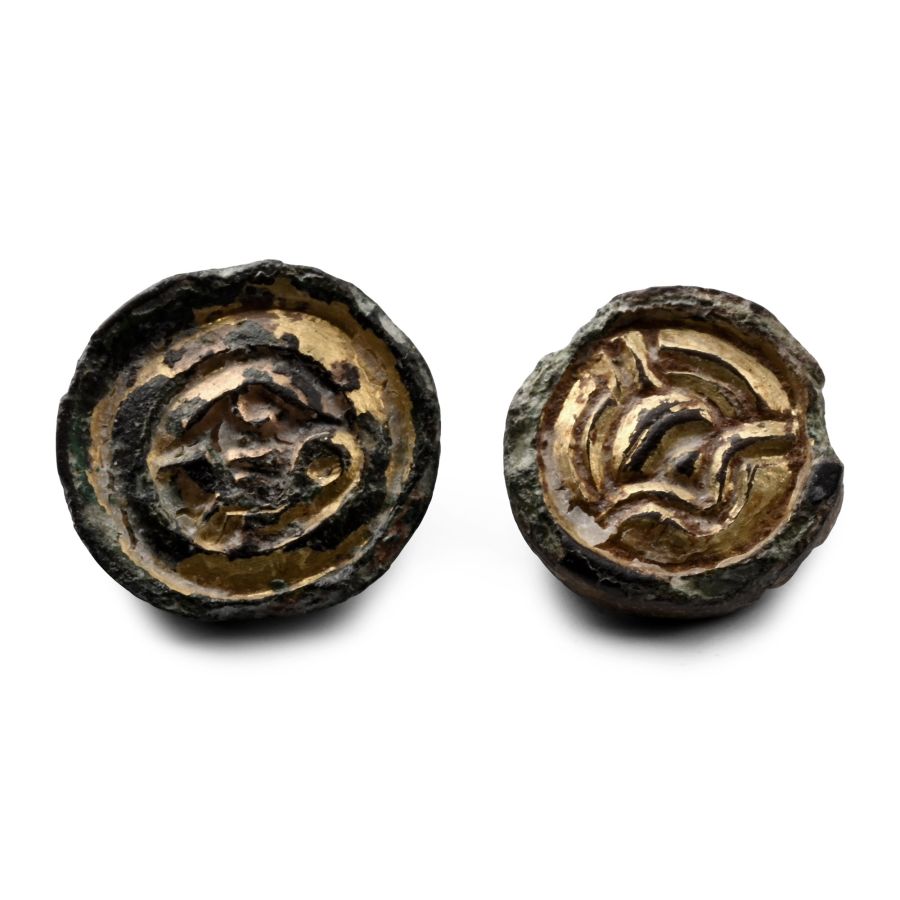
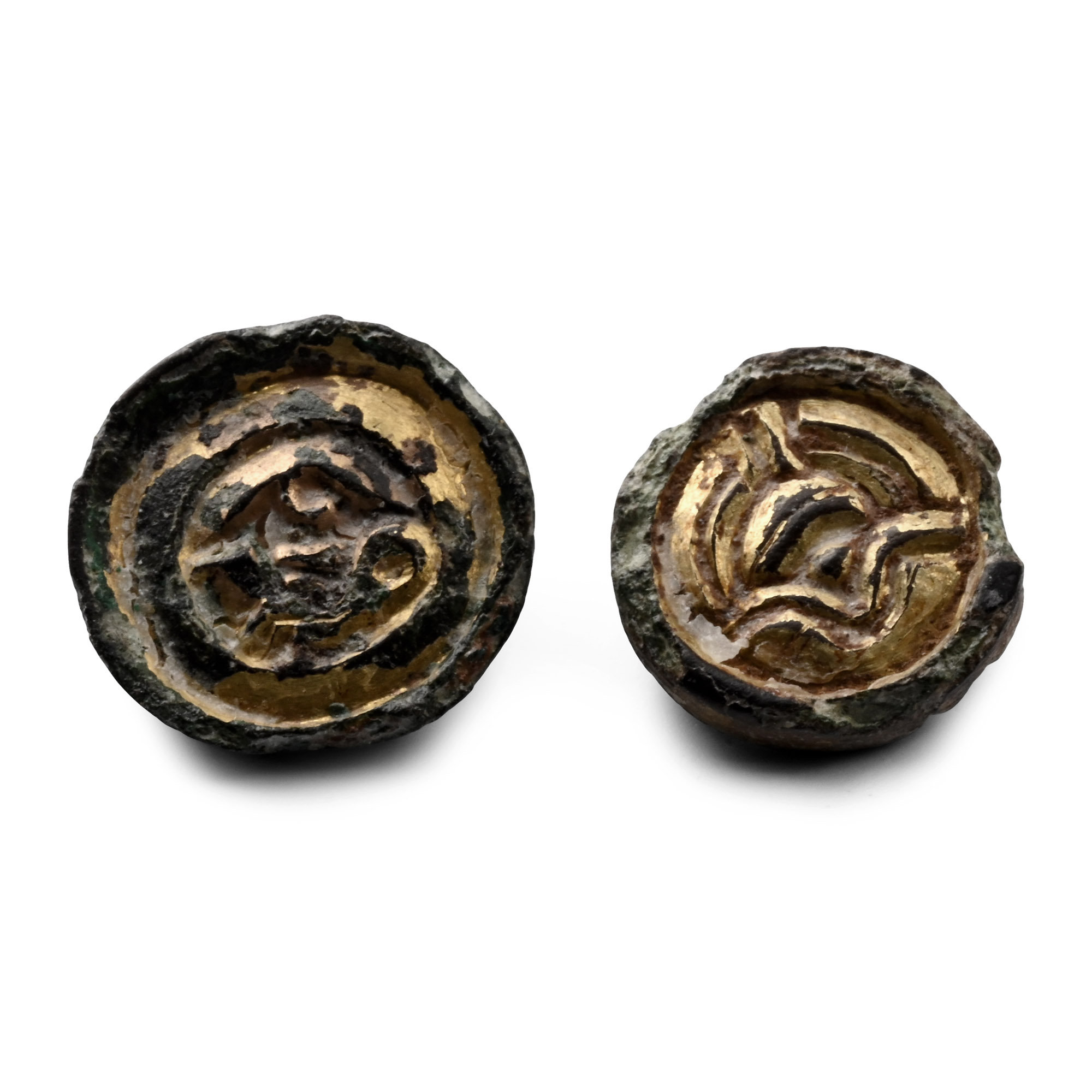
Anglo-Saxon Gilt Bronze Button Brooch Group
6TH CENTURY A.D.
1/2 - 5/8 in. (5.03 grams total, 13-15 mm).
Comprising: Avent's Class L with flange to the rim, inner collar, central helmetted mask with scaphoid mouth, remains of pin lug and catchplate to reverse; Avent's Class L with flange to the rim, inner collar, central mask with central 'eye', remains of pin lug and catchplate to reverse. [2, No Reserve]
ProvenanceFound East Anglia, UK.
This lot is accompanied by an illustrated lot declaration signed by the Head of the Antiquities Department, Dr Raffaele D'Amato.
Cf. Avent, R. & Evison, V.I., Anglo-Saxon Button Broochesin Archaeologia, vol.CVII, 1982.
FootnotesBrooches of Class L show a developed design in which the original mask has been transformed into a single 'eye' motif in a frame.
CONDITIONTimeLine Auctions follows a vetting process to ensure the authenticity and legality of all items, reinforcing our commitment to integrity and responsible trading. Each antiquity, antique, and coin lot undergoes thorough examination by a vetting committee of at least ten external specialists, professional trade association members, scientists, and archaeologists: Our Vetting Process
AUCTIONS:
TimeLine is a leading auction house specialising in antiquities, ancient art, collectables, natural history, coins, medals, and books. Our auctions offer museums, collectors, historians, and enthusiasts the opportunity to acquire unique and historically significant pieces.
-
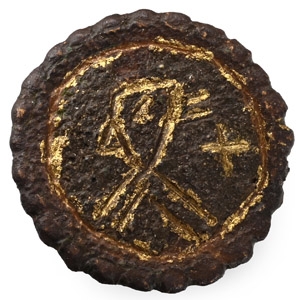
Anglo-Saxon Gilt Bronze Brooch with Bust
9th century A.D.Estimate: £100 - 140 (+bp*)
Opening Bid: £50
With dentilled rim and profile bust with cross in imitation of a coin design. 8.2 grams, 28 mm
Acquired on the UK art market in the early 2000s. This lot is accompanied by an illustrated lot declaration signed by the Head of the Antiquities Department, Dr Raffaele D'Amato. -
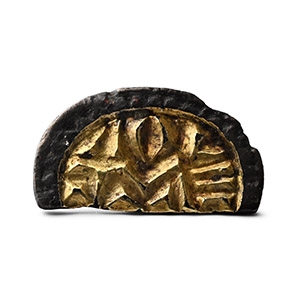
Saxon Silver-Gilt Mount
Circa 6th century A.D.Estimate: £100 - 140 (+bp*)
Opening Bid: £50
Discoid mount fragment with punched triangles to the rim, gilded Style I motif to the tondo, short stud to the reverse. 1.2 grams, 17 mm
From continental Europe. Acquired on the UK art market in the 1970s-1990s. Property of a Nottinghamshire, UK, gentleman. This lot is accompanied by an illustrated lot declaration signed by the Head of the Antiquities Department, Dr Raffaele D'Amato. -
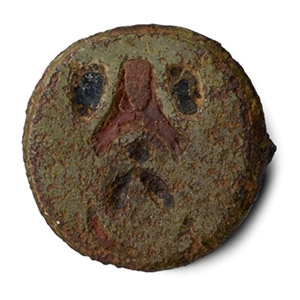
Anglo-Saxon Enamelled Bronze Brooch
11th century A.D.Sold for (Inc. bp): £20
Disc brooch with stepped rim, pin-lug and catch to reverse; enamelled foliage design to obverse. 6.42 grams, 25 mm
Found Little Saxham, Suffolk, UK. This lot is accompanied by an illustrated lot declaration signed by the Head of the Antiquities Department, Dr Raffaele D'Amato.
