
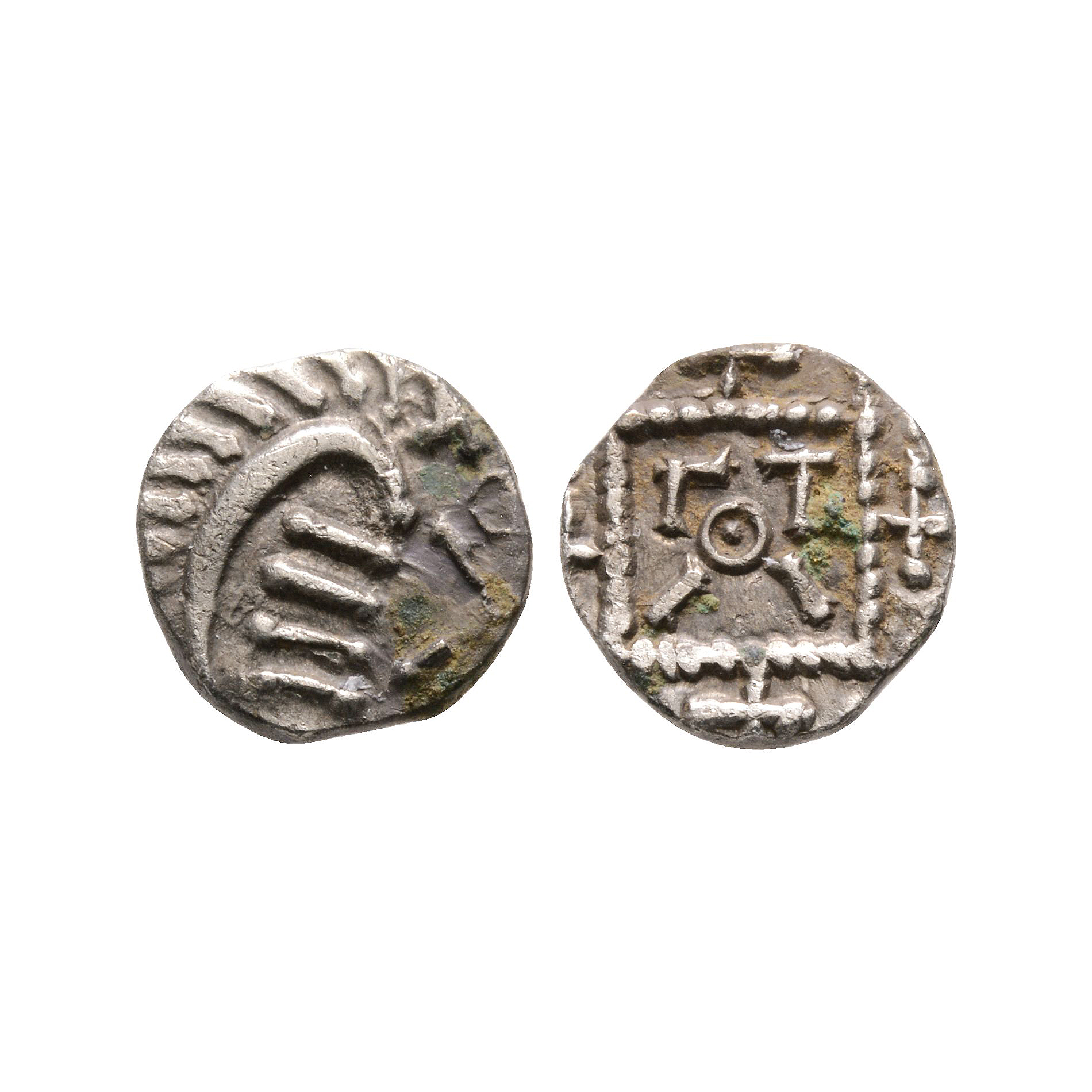
LOT 2534
Anglo-Saxon Coins - Continental Issues - Series E - Porcupine AR Sceatta 695-740 A.D.
Obv: degenerate 'porcupine' head. Rev: standard with TOTII inside and crosses around. Good very fine.(1.15 grams.). [No Reserve]
ProvenanceFound Berkshire, UK.
LiteratureS. 790; cf. Abr 94.
TimeLine Auctions follows a vetting process to ensure the authenticity and legality of all items, reinforcing our commitment to integrity and responsible trading. Each antiquity, antique, and coin lot undergoes thorough examination by a vetting committee of at least ten external specialists, professional trade association members, scientists, and archaeologists: Our Vetting Process
AUCTIONS:
TimeLine is a leading auction house specialising in antiquities, ancient art, collectables, natural history, coins, medals, and books. Our auctions offer museums, collectors, historians, and enthusiasts the opportunity to acquire unique and historically significant pieces.
LOT 2534
Anglo-Saxon Coins - Continental Issues - Series E - Porcupine AR Sceatta
Sold for (Inc. bp): £143
-
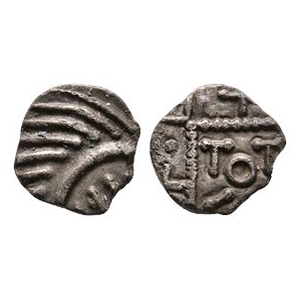
Anglo-Saxon Coins - Continental Issues - Series E - TOTII Porcupine AR Sceatta 695-740 A.D.
Sold for (Inc. bp): £59
Obv: degraded 'porcupine' bust. Rev: standard with TOTII within and crosses around. 0.90 grams.
Very fine.
Found Berkshire, UK. -
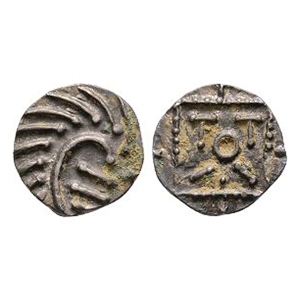
Anglo-Saxon Coins - Continental Issues - Series E - Porcupine TOTII AR Sceatta 695-740 A.D.
Sold for (Inc. bp): £124
Obv: degraded 'porcupine' head. Rev: standard with TOTII around annulet within and crosses or symbols around. 0.99 grams.
Very fine.
Found Berkshire, UK. -
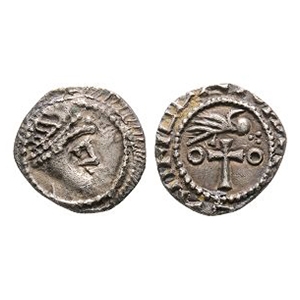
Anglo-Saxon Coins - Primary Phase - Series BIIIA, Type 27a - Bird on Cross AR Sceatta 680-710 A.D.
Sold for (Inc. bp): £286
Obv: diademed head right within serpent circle. Rev: linear bird on cross with trefoil before and annulet each side within beaded circle with blundered legend. 1.21 grams.
Good very fine.
Found Berkshire, UK.
