
Loading, please wait...
LOT 1471
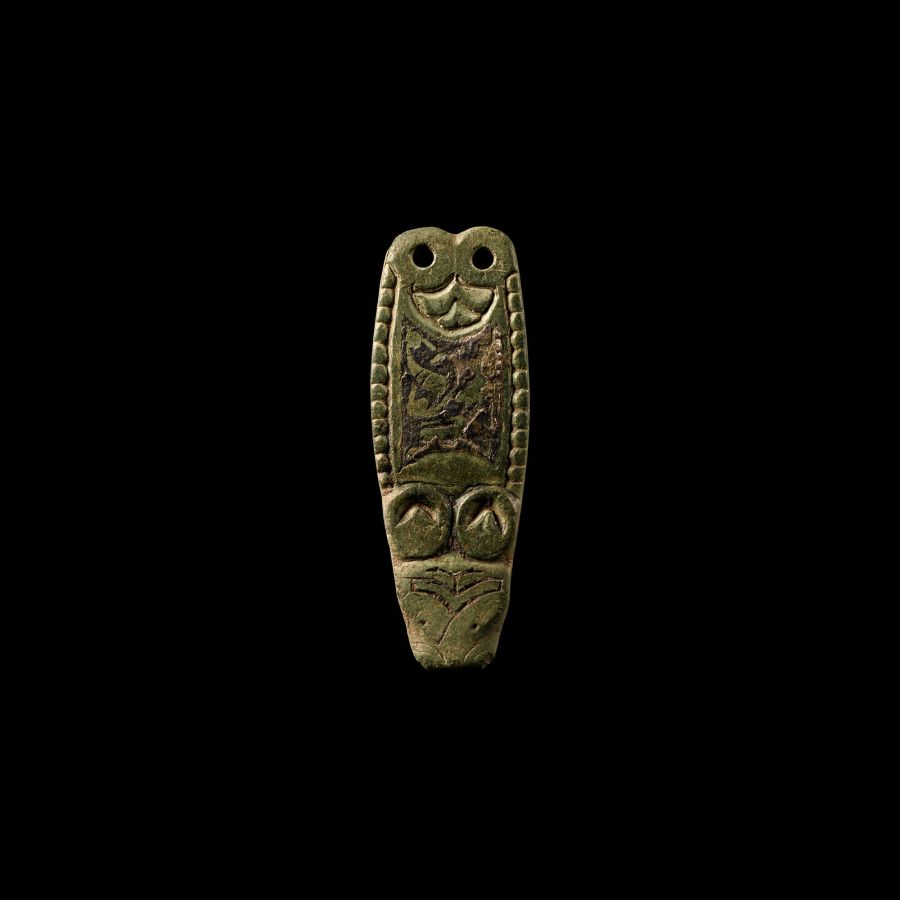
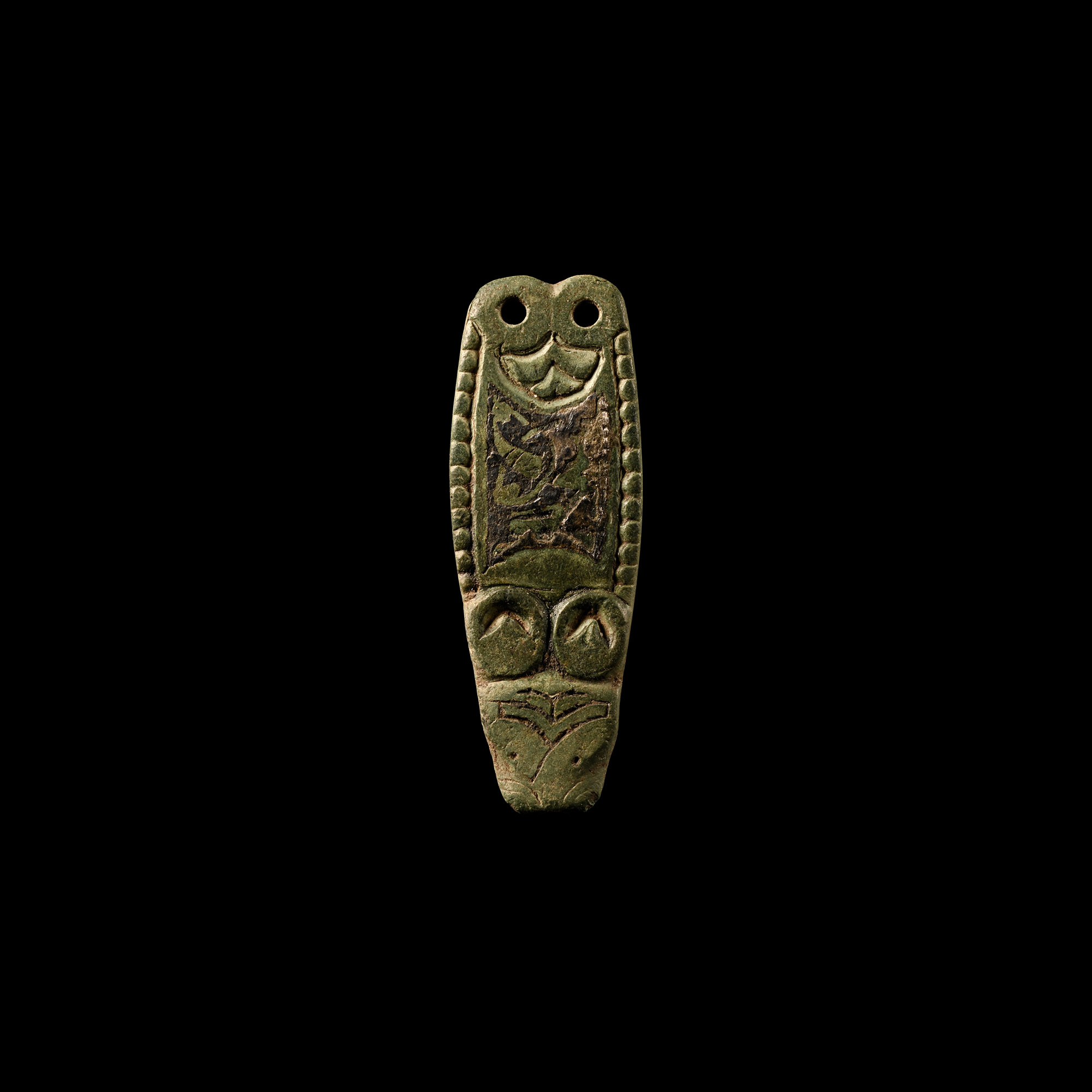
Anglo-Saxon Bronze Zoomorphic Strap End
CIRCA 9TH CENTURY A.D.
1 3/8 in. (4.5 grams, 36 mm).
Thomas Class A Type 1, broadly rectangular in plan with tapering arms; the decorative scheme is divided into three: the snout with pronounced ears; a central panel of Trewhiddle style interlaced beast with some remains of niello; the tail with two circular rivet holes. [No Reserve]
ProvenanceFound Berkshire, UK.
Accompanied by a copy of the British Museum's Portable Antiquities Scheme (PAS) report no.BERK-28A953.
TimeLine Auctions follows a vetting process to ensure the authenticity and legality of all items, reinforcing our commitment to integrity and responsible trading. Each antiquity, antique, and coin lot undergoes thorough examination by a vetting committee of at least ten external specialists, professional trade association members, scientists, and archaeologists: Our Vetting Process
AUCTIONS:
TimeLine is a leading auction house specialising in antiquities, ancient art, collectables, natural history, coins, medals, and books. Our auctions offer museums, collectors, historians, and enthusiasts the opportunity to acquire unique and historically significant pieces.
-
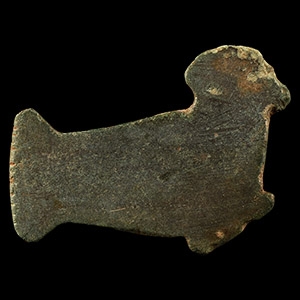
Anglo-Saxon Tinned Bronze Bird Brooch
5th-6th century A.D.Sold for (Inc. bp): £78
Displayed in profile facing right; remains of tinning; remains of pin lug and catchplate to reverse. 5.9 grams, 29 mm
Found Berkshire, UK. Accompanied by a copy of the British Museum's Portable Antiquities Scheme (PAS) report no.BERK-9B6095. -
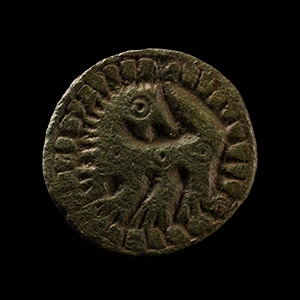
Anglo-Saxon Bronze Regardant Beast Brooch
8th-9th century A.D.Sold for (Inc. bp): £221
Comprising a flat-section disc with reserved regardant beast within a pelletted border, pin-lug and catchplate to the reverse. 8.2 grams, 29 mm
Acquired 1990s. From an East Anglian private collection. -
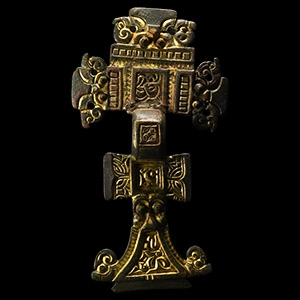
'The Scampton' Published Anglo-Saxon Gilt Bronze Florid Cruciform Brooch
6th century A.D.Sold for (Inc. bp): £11,050
Of Martin's Group 4 with rectangular headplate and florid face-masks to the three edges and conical eyes, deep bow with with square central panel, footplate with square lateral lappets, triangular face-mask finial with conical eyes; pin-lug and catchplate to the reverse; gilded surface abraded. 182 grams, 17 cm
Found Scampton, Lincolnshire, UK. From the private collection of Alan Harrison, circa 2000. This lot has been checked against the Interpol Database of stolen works of art and is accompanied by search certificate no.11898-204375.
The florid type of cruciform brooch stands at the end of the series and probably dates to the middle of the 6th century according to the most recent discussion (Martin, 2015). The present example has a close parallel in the find from Duston, Northamptonshire, which Martin assigns to his Type 4.7.1, among the very last (or most fully developed) group in the seriation. The headplate, bow and footplate each have a square panel of Style I zoomorphic ornament within a thick frame; the headplate features blocks of billeting to three edges and punched triangular ornament on the frame, which also appears on the lateral edges of the finial. The conical eyes on the facing masks are an unusual and very distinctive feature which would have made casting the brooch a technical challenge. There is some evidence for silvering on the flat rectangular surfaces (T-shaped on the headplate and rectangular on the lappets and finial). The openwork masks on the headplate develop into profile bird-heads. This brooch was recovered by a metal-detectorist in several pieces over a period of some years, and re-assembled. It was published by Leahy in his authoritative work on the Kingdom of Lindsey.
