
Loading, please wait...
LOT 1487
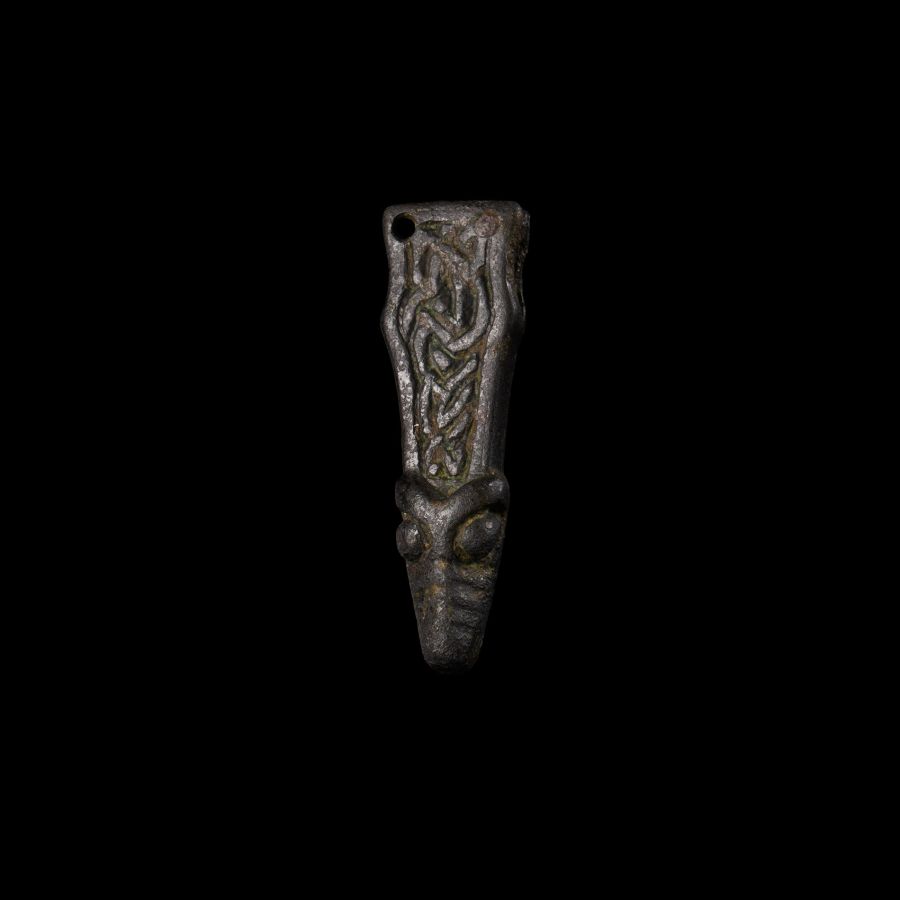
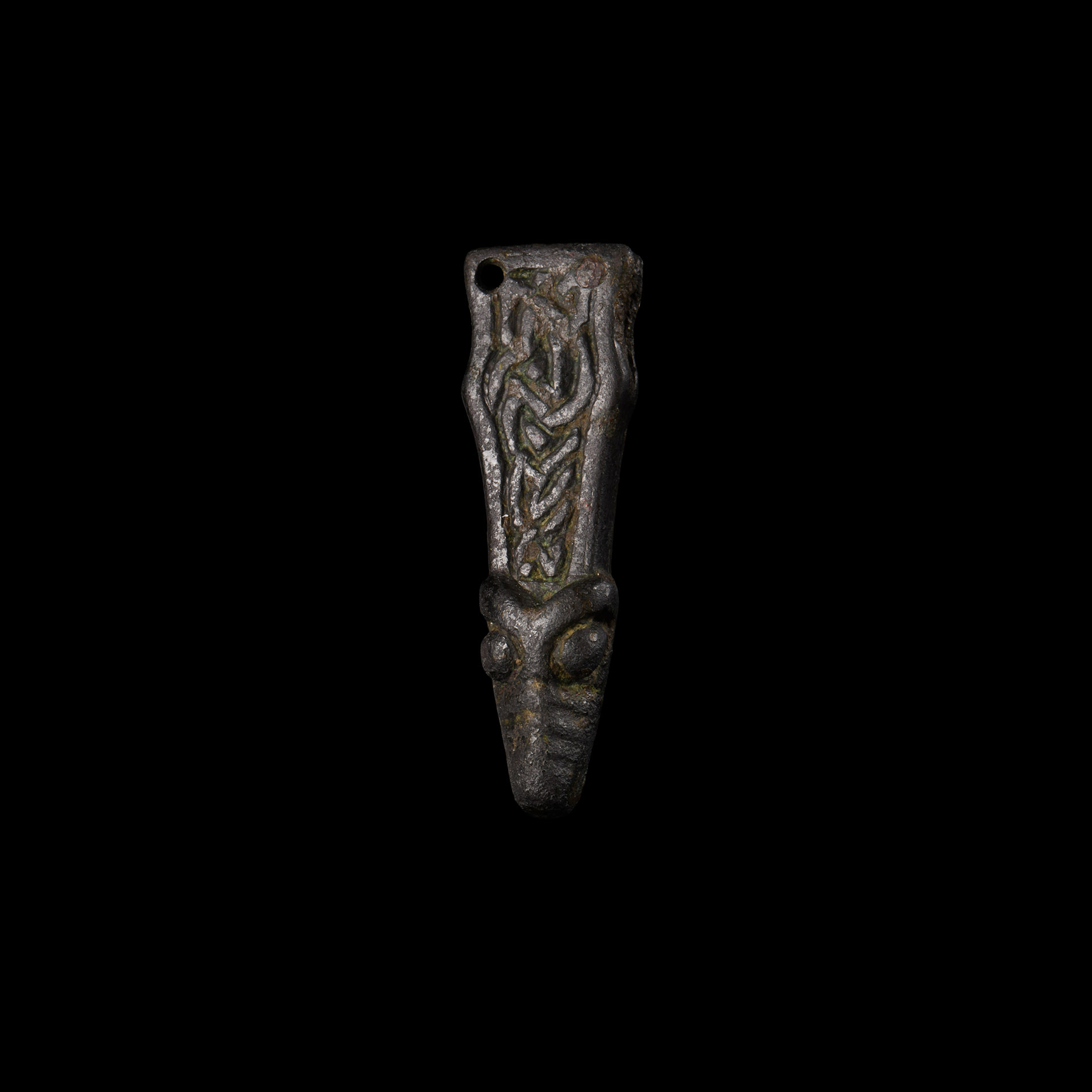
Anglo-Saxon Bronze Zoomorphic Strap End
9TH CENTURY A.D.
1 1/2 in. (8.44 grams, 37 mm).
Split along the upper edge of the plate; two slight flared lobes below the piercings for the attachment rivets; central panel ornamented with a length of tight interlaced knotwork and a zoomorphic terminal with triangular ears, bulbous eyes and a ribbed square snout. [No Reserve]
ProvenanceFound Sheffield, South Yorkshire, UK.
LiteratureCf. Webster, L & Backhouse, J., The Making of England. Anglo-Saxon Art and Culture AD 600-900, London, 1991, p.98, fig.69n.
FootnotesBoth the interlace and the animal-head are drawn from the 7th-8th century manuscript tradition. This is a standard 9th century typology, seeming a nice version of the Trewhiddle style, closely allied to the early 9th century 'Tiberius' group of manuscripts, characterised by exuberant animals which are the descendants of the winged creatures and other sprightly beasts common in 8th century metalworks.
CONDITIONTimeLine Auctions follows a vetting process to ensure the authenticity and legality of all items, reinforcing our commitment to integrity and responsible trading. Each antiquity, antique, and coin lot undergoes thorough examination by a vetting committee of at least ten external specialists, professional trade association members, scientists, and archaeologists: Our Vetting Process
AUCTIONS:
TimeLine is a leading auction house specialising in antiquities, ancient art, collectables, natural history, coins, medals, and books. Our auctions offer museums, collectors, historians, and enthusiasts the opportunity to acquire unique and historically significant pieces.
-
Saxon Iron Artefact Collection
Circa 6th-7th century A.D.Sold for (Inc. bp): £65
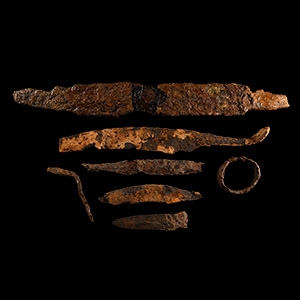
Comprising a straight cutting edge battle knife with a short tang; a shorter slender cutting edge battle knife with long tang; three small hunting knives; an iron ring and a possible javelin head. 708 grams total, 8.7-38 cm
UK gallery, early 2000s.
Battle knives are common in 6th -7th century Anglo-Saxon graves. They were, when not used, kept in their sheath and suspended from the belt by a detachable strap with a buckle. -
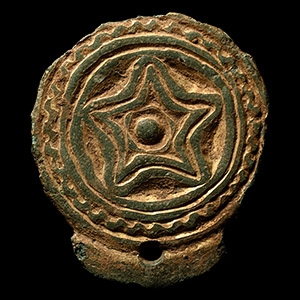
Anglo-Saxon Gilt Bronze Pendant with Star
Circa 6th century A.D.Sold for (Inc. bp): £156
Formed from a reused saucer brooch, discoid in plan with pierced lobe to apex for use as a pendant; decorated with a geometric scheme composed of a central raised boss enclosed by a five-point star, concentric circles and waves. 10.4 grams, 37 mm
Found Berkshire, UK. Accompanied by a copy of the British Museum's Portable Antiquities Scheme (PAS) report no.BERK-72DAE0. -
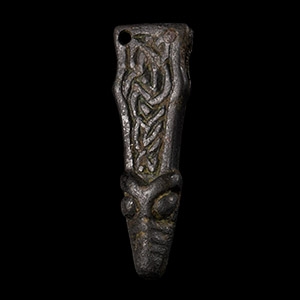
Anglo-Saxon Bronze Zoomorphic Strap End
9th century A.D.Sold for (Inc. bp): £182
Split along the upper edge of the plate; two slight flared lobes below the piercings for the attachment rivets; central panel ornamented with a length of tight interlaced knotwork and a zoomorphic terminal with triangular ears, bulbous eyes and a ribbed square snout. 8.44 grams, 37 mm
Found Sheffield, South Yorkshire, UK.
Both the interlace and the animal-head are drawn from the 7th-8th century manuscript tradition. This is a standard 9th century typology, seeming a nice version of the Trewhiddle style, closely allied to the early 9th century 'Tiberius' group of manuscripts, characterised by exuberant animals which are the descendants of the winged creatures and other sprightly beasts common in 8th century metalworks.
