
Loading, please wait...
LOT 1834
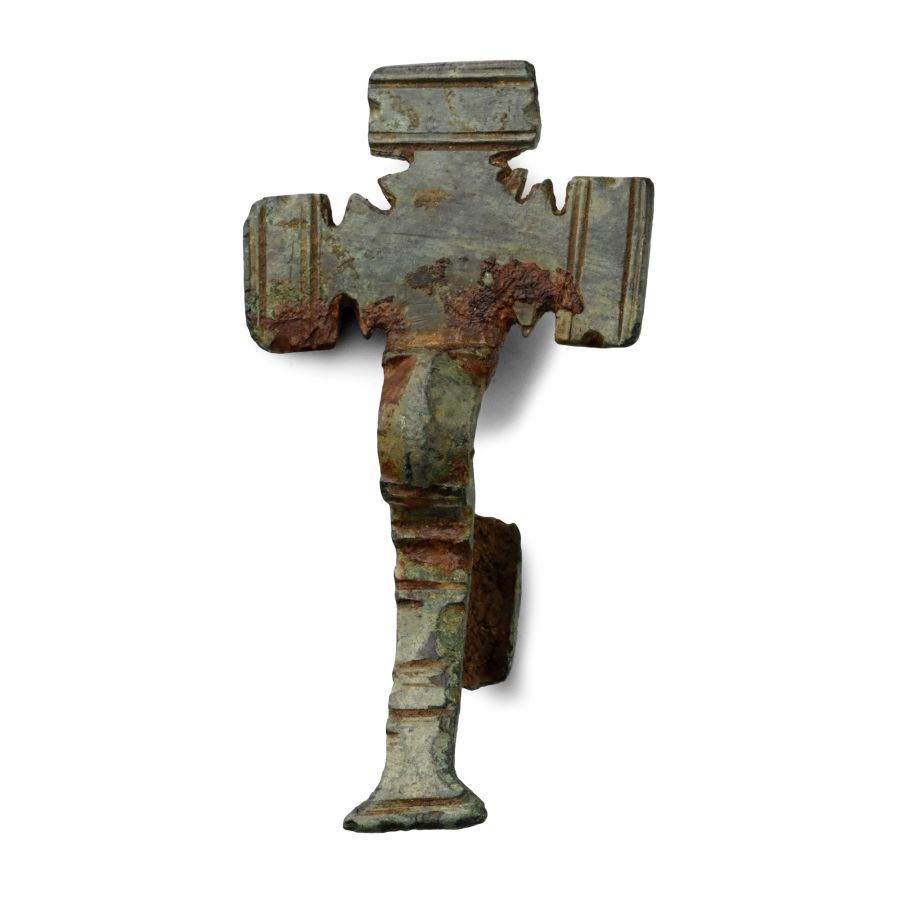
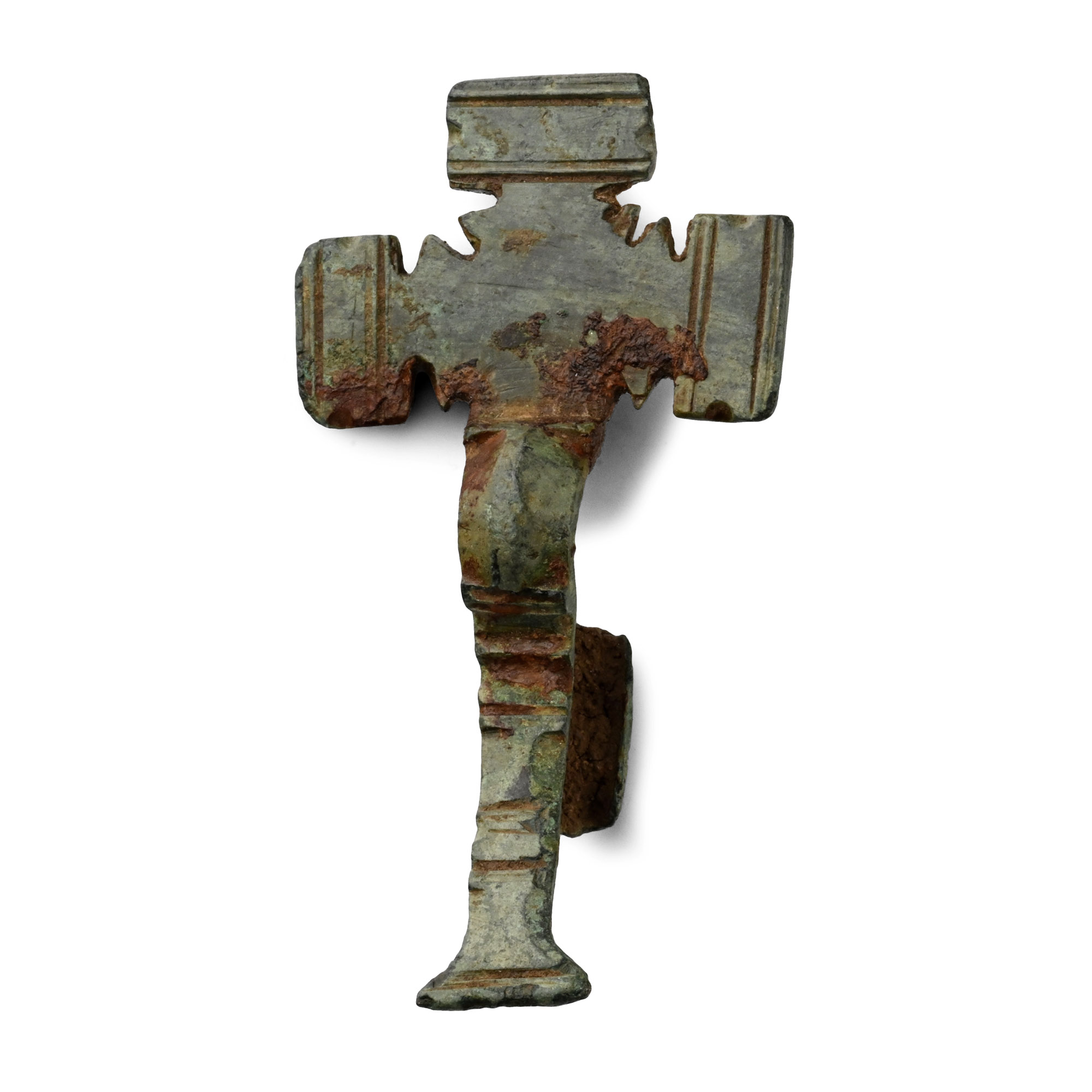
Anglo-Saxon Bronze Small Long Brooch
450-550 A.D.
2 3/8 in. (14.8 grams, 62 mm).
With three radiating rectangular knops on the headplate, shallow carinated bow, segmented footplate with trapezoidal foot; large catch and pin-lug to reverse. [No Reserve]
ProvenanceFound near Willingham, Cambridgeshire, UK, on Sunday 1st September 2024.
Accompanied by a copy of the British Museum's Portable Antiquities Scheme Report no.SF-0A5807.
This lot is accompanied by an illustrated lot declaration signed by the Head of the Antiquities Department, Dr Raffaele D'Amato.
See Penn, K. & Brugmann, B., EAA 119: Aspects of Anglo-Saxon Inhumation Burial Norwich, 2007; Martin, T., The Cruciform Brooch and Anglo-Saxon England Woodbridge, 2015.
FootnotesThe brooch is classified as Penn and Brugmann's SM2 type, small-long with trefoil headplate; most of its features can be paralleled from the cruciform brooch typology.
CONDITIONTimeLine Auctions follows a vetting process to ensure the authenticity and legality of all items, reinforcing our commitment to integrity and responsible trading. Each antiquity, antique, and coin lot undergoes thorough examination by a vetting committee of at least ten external specialists, professional trade association members, scientists, and archaeologists: Our Vetting Process
AUCTIONS:
TimeLine is a leading auction house specialising in antiquities, ancient art, collectables, natural history, coins, medals, and books. Our auctions offer museums, collectors, historians, and enthusiasts the opportunity to acquire unique and historically significant pieces.
-
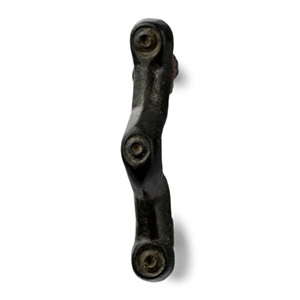
Anglo-Saxon Bronze Ansate 'Caterpillar' Brooch
8th century A.D.Sold for (Inc. bp): £39
Ansate type with U-section shank, three ring-and-dot motifs to the obverse, ferrous pin stub and catch to underside. 10.1 grams, 45 mm
Found North Yorkshire, UK. Ex UK collection. From the private collection of a Leicestershire, UK, gentleman. This lot is accompanied by an illustrated lot declaration signed by the Head of the Antiquities Department, Dr Raffaele D'Amato. -

Anglo-Saxon Gilt Bronze Button Brooch
5th-6th century A.D.Sold for (Inc. bp): £130
Class Ai; flange rim and circular frame enclosing a facing male mask with helmet detailing; pin-lug and catch to the reverse. 2.59 grams, 16 mm
Found East Anglia, UK. This lot is accompanied by an illustrated lot declaration signed by the Head of the Antiquities Department, Dr Raffaele D'Amato. -
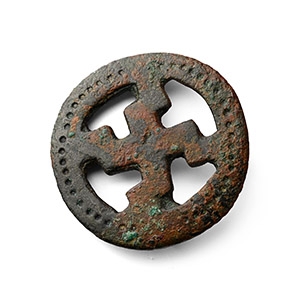
Anglo-Saxon Bronze Gammadion Disc Brooch
6th century A.D.Sold for (Inc. bp): £208
Disc brooch with four L-shaped voids spaced to form a reserved swastika motif, band of punched pellets to the rim, remains of the pin-lug and catchplate to the reverse. 20 grams, 41 mm
Found East Anglia, UK. This lot is accompanied by an illustrated lot declaration signed by the Head of the Antiquities Department, Dr Raffaele D'Amato.
The swastika, also known as a gammadion, was an ancient sun symbol that is commonly found in many cultures across the Northern hemisphere. In the Viking period it was associated with Thor and is commonly found on rune-stones and amulets connected to him.
