
Loading, please wait...
LOT 1498
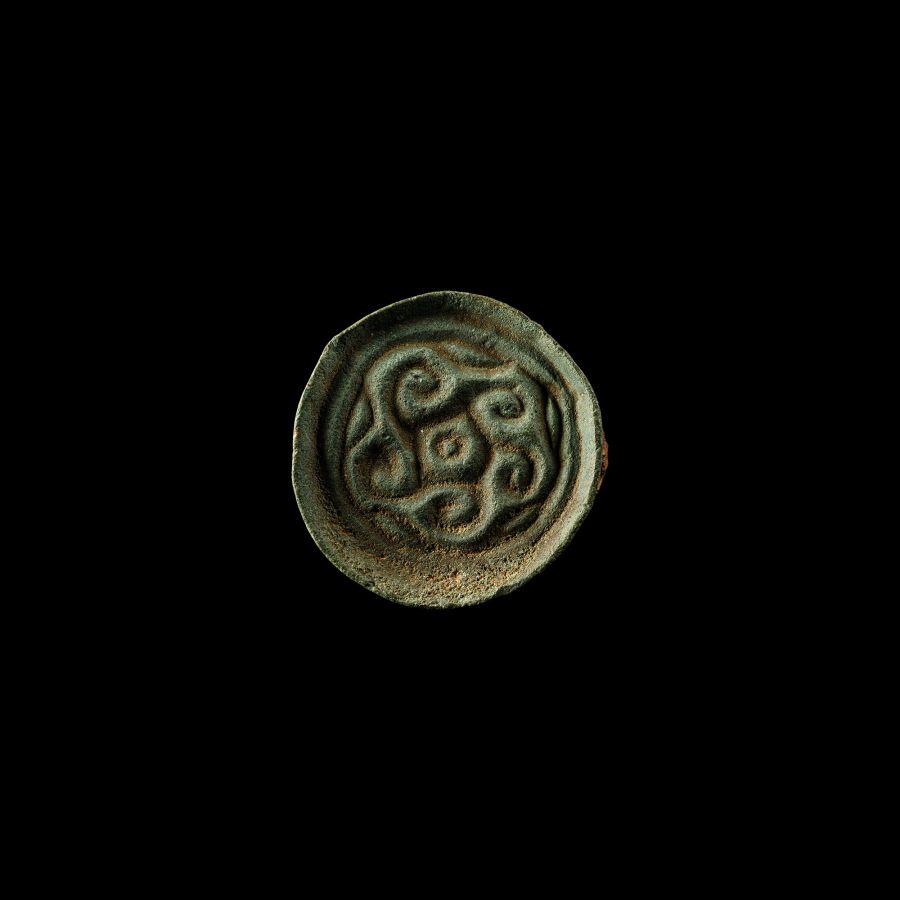
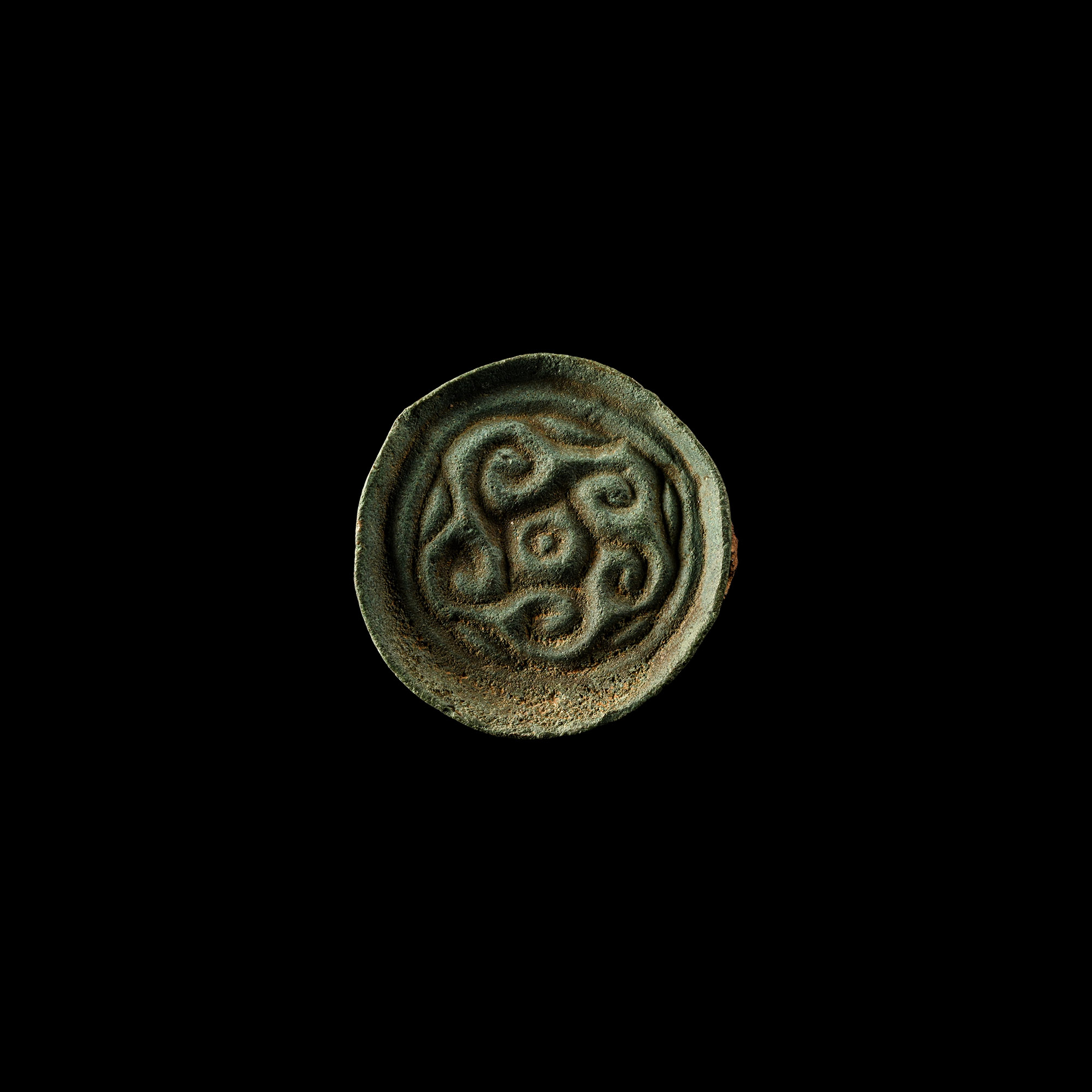
Anglo-Saxon Bronze Saucer Brooch
5TH-6TH CENTURY A.D.
1 in. (12 grams, 26 mm).
Decorated with five spirals emanating from a central ring-and-dot motif, enclosed within a circumferential border; remains of catchplate to reverse. [No Reserve]
ProvenanceFound Berkshire, UK.
Accompanied by a copy of the British Museum's Portable Antiquities Scheme (PAS) report no.BERK-A6EC93.
TimeLine Auctions follows a vetting process to ensure the authenticity and legality of all items, reinforcing our commitment to integrity and responsible trading. Each antiquity, antique, and coin lot undergoes thorough examination by a vetting committee of at least ten external specialists, professional trade association members, scientists, and archaeologists: Our Vetting Process
AUCTIONS:
TimeLine is a leading auction house specialising in antiquities, ancient art, collectables, natural history, coins, medals, and books. Our auctions offer museums, collectors, historians, and enthusiasts the opportunity to acquire unique and historically significant pieces.
-
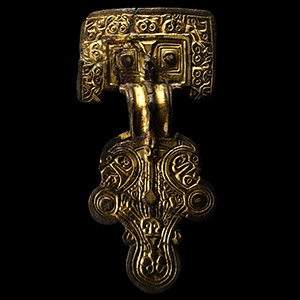
Published Anglo-Saxon Gilt Bronze Great Square-Headed Brooch
6th century A.D.Sold for (Inc. bp): £3,640
Of Hines's Group I with border of facing masks to the headplate, two discs within incised frames and raised mask between; shallow bow with three ribs, the median one with a central boss and extending to a small beast-head between the curled horse-head lappets; lozenge-shaped footplate with ropework border and facing bearded mask, lateral lobes and lobe finial with an inverted facing mask; applied silver-sheet detailing to the edges of the footplate; remains of pin-lugs and catch to the reverse. 114 grams, 14.5 cm
Found Scampton, Lincolnshire, UK. From the private collection of Alan Harrison, circa 2000. This lot has been checked against the Interpol Database of stolen works of art and is accompanied by search certificate no.11900-204376.
An exact parallel for the Scampton brooch is not known, as is typical for these hand-items made by lost-wax casting processes in one-piece moulds. The brooch falls within Hines's Group I and shares many features with an example from Bidford-on-Avon, Warwickshire (Hines, 1997, no.13) although the latter has a Style I panel on the headplate whereas the Scampton example features two raised discs within incised squares, a feature also found on finds from Duston (and Linton Heath (Hines, 1997, pl.11)). This brooch was recovered by a metal-detectorist in several pieces over a period of some years, and re-assembled. It was published by Leahy in his authoritative work on the Kingdom of Lindsey. -
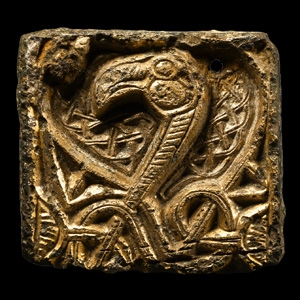
Anglo-Saxon Gilt Bronze Chip-Carved Beast Manuscript Mount
Circa 7th-8th century A.D.Sold for (Inc. bp): £3,380
With high-relief aviform head and wings and looped ornamental swags, knotwork panels in the field; two holes for mounting; possibly a book-mount, Hiberno-Saxon workmanship. 22.5 grams, 33 mm
Found East Anglia, UK. This lot has been checked against the Interpol Database of stolen works of art and is accompanied by search certificate number no.11884-204955. -
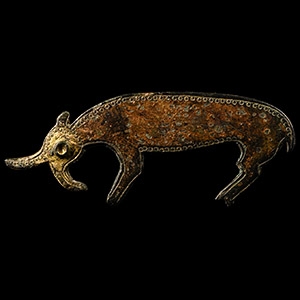
Anglo-Saxon Bronze Mythical Beast Shield Mount
Circa 6th-7th century A.D.Sold for (Inc. bp): £650
With punched outline to the body and legs, gilded head with open jaws and raised cell eye; attachment studs to the reverse. 10.2 grams, 60 mm
Found near Grimsby, UK, circa 2015.
A number of similar mounts, probably from shields or possibly saddles, have been found in England, notably the beast from grave 26 at Bergh Apton (Norfolk) where the animal depicted may be a bear.
