
Loading, please wait...
LOT 1371
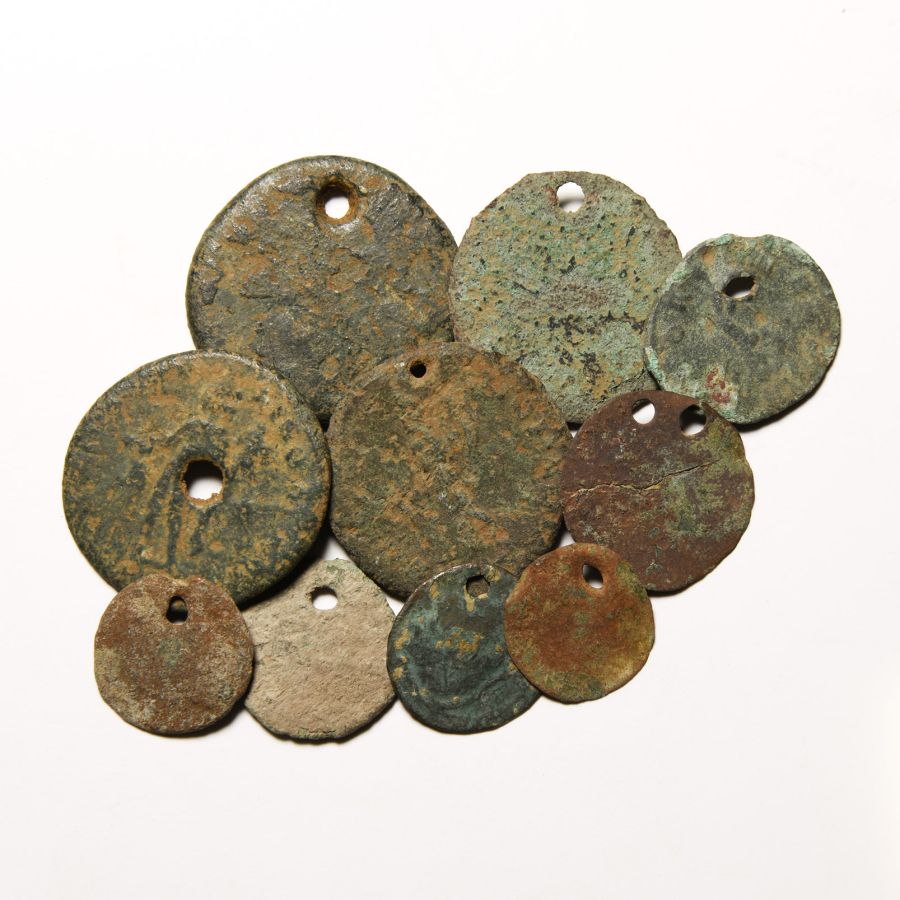
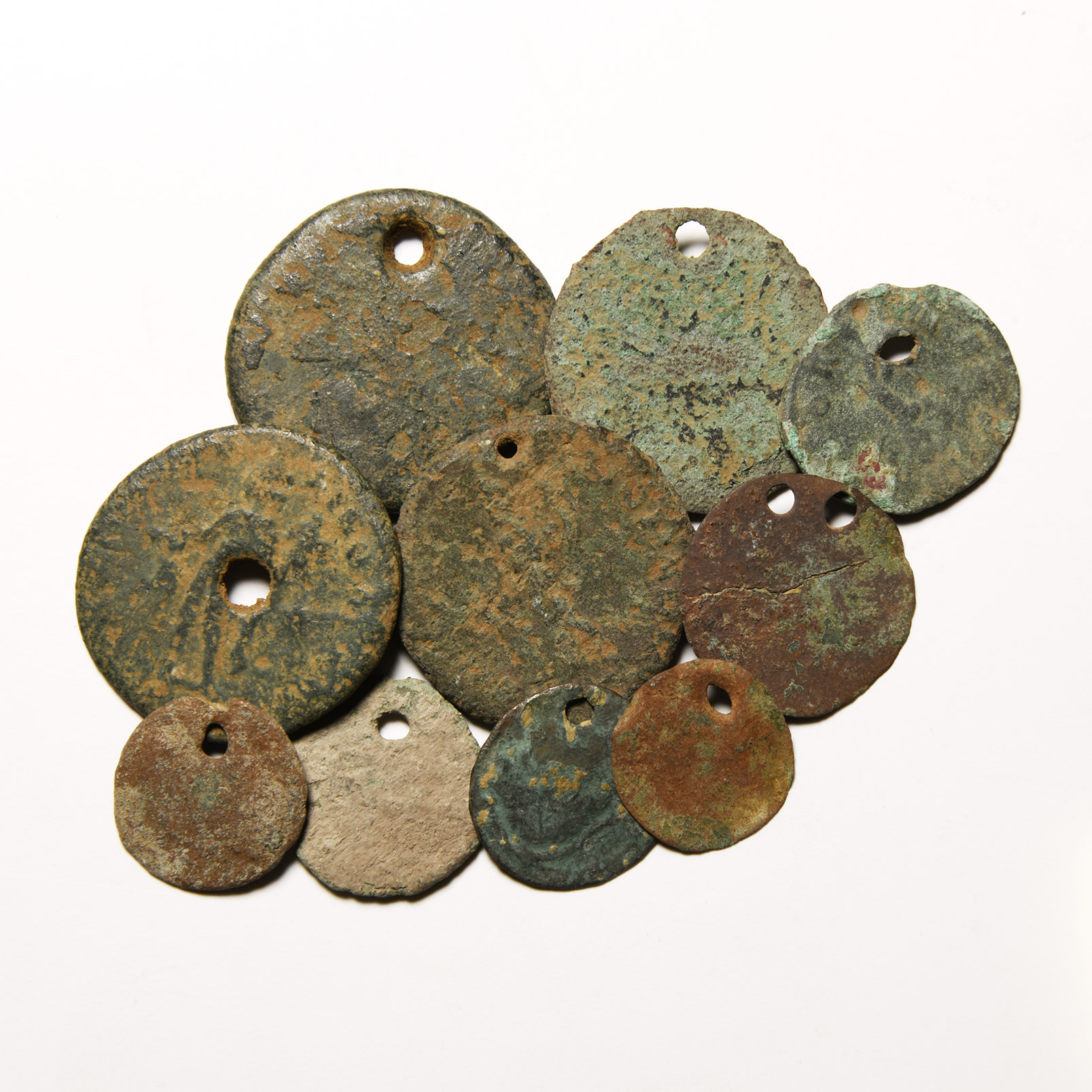
Anglo-Saxon Bronze Reused Roman Coin Collection
CIRCA 6TH CENTURY A.D.
5/8 - 1 in. (34.8 grams total, 15-26 mm).
Group comprising: bronze coins from the Roman Empire period (2nd-4th century A.D.); each pierced once or twice for suspension as jewellery pendants in the Anglo-Saxon period. [10, No Reserve]
ProvenanceFound Berkshire, UK.
CONDITIONTimeLine Auctions follows a vetting process to ensure the authenticity and legality of all items, reinforcing our commitment to integrity and responsible trading. Each antiquity, antique, and coin lot undergoes thorough examination by a vetting committee of at least ten external specialists, professional trade association members, scientists, and archaeologists: Our Vetting Process
AUCTIONS:
TimeLine is a leading auction house specialising in antiquities, ancient art, collectables, natural history, coins, medals, and books. Our auctions offer museums, collectors, historians, and enthusiasts the opportunity to acquire unique and historically significant pieces.
-
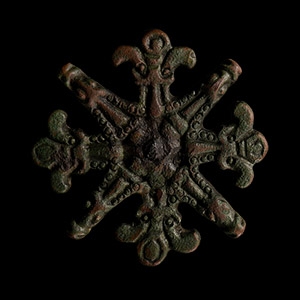
Anglo-Saxon Bronze Shield Mount with Animal Masks and Beast Heads
6th century A.D.Estimate: £800 - 1,000 (+bp*)
Opening Bid: £320
The eight arms arranged with alternating trefoil and tapering terminals, the trilobate arms formed as animal masks, the tapering arms as dragon-heads, all with stylised detailing in relief; punched circlets to the field; some remains of mounting lug to reverse centre. 68 grams, 54 mm
Found Norfolk, UK. From an East Anglian private collection. -
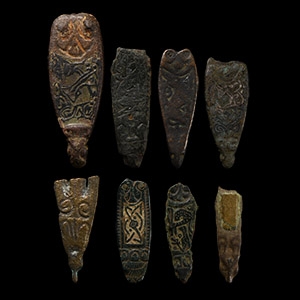
Saxon Bronze Strap End Collection
Circa 8th century A.D.Sold for (Inc. bp): £124
Comprising mainly Thomas's Class A Type 1, some with beast-head finial. 45 grams total, 30-49 mm
From the collection of a North American gentleman, formed in the 1990s. -
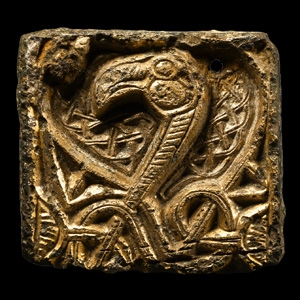
Anglo-Saxon Gilt Bronze Chip-Carved Beast Manuscript Mount
Circa 7th-8th century A.D.Sold for (Inc. bp): £3,380
With high-relief aviform head and wings and looped ornamental swags, knotwork panels in the field; two holes for mounting; possibly a book-mount, Hiberno-Saxon workmanship. 22.5 grams, 33 mm
Found East Anglia, UK. This lot has been checked against the Interpol Database of stolen works of art and is accompanied by search certificate number no.11884-204955.
