
Loading, please wait...
LOT 1535
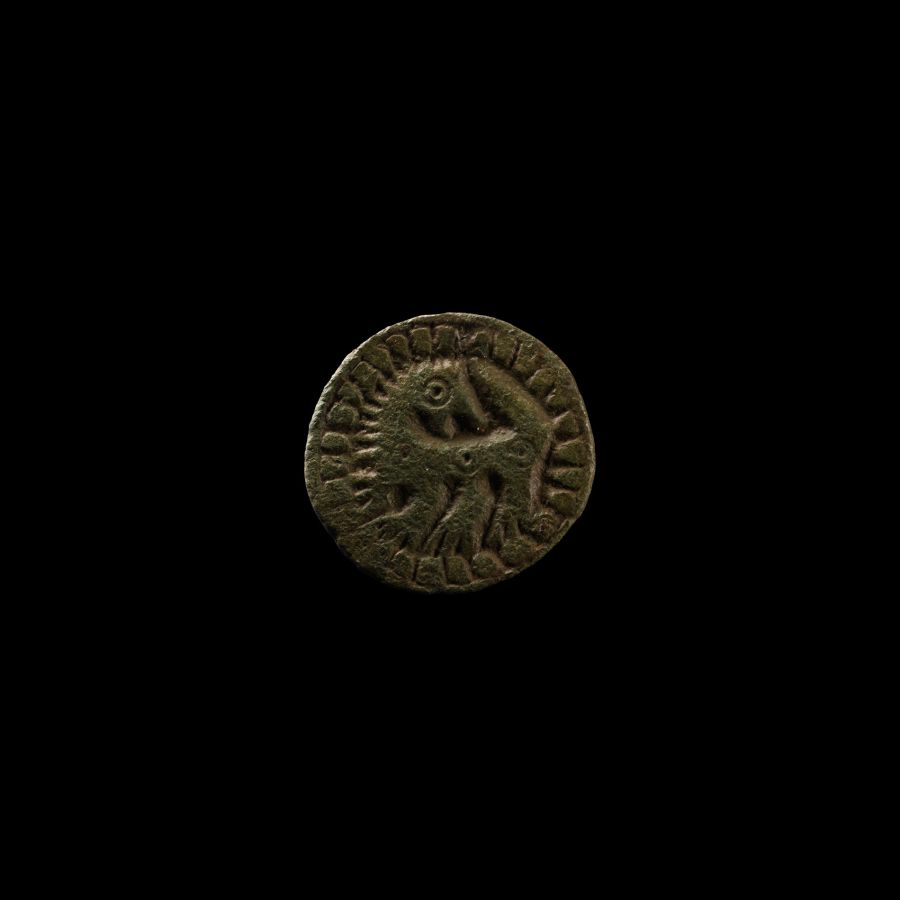
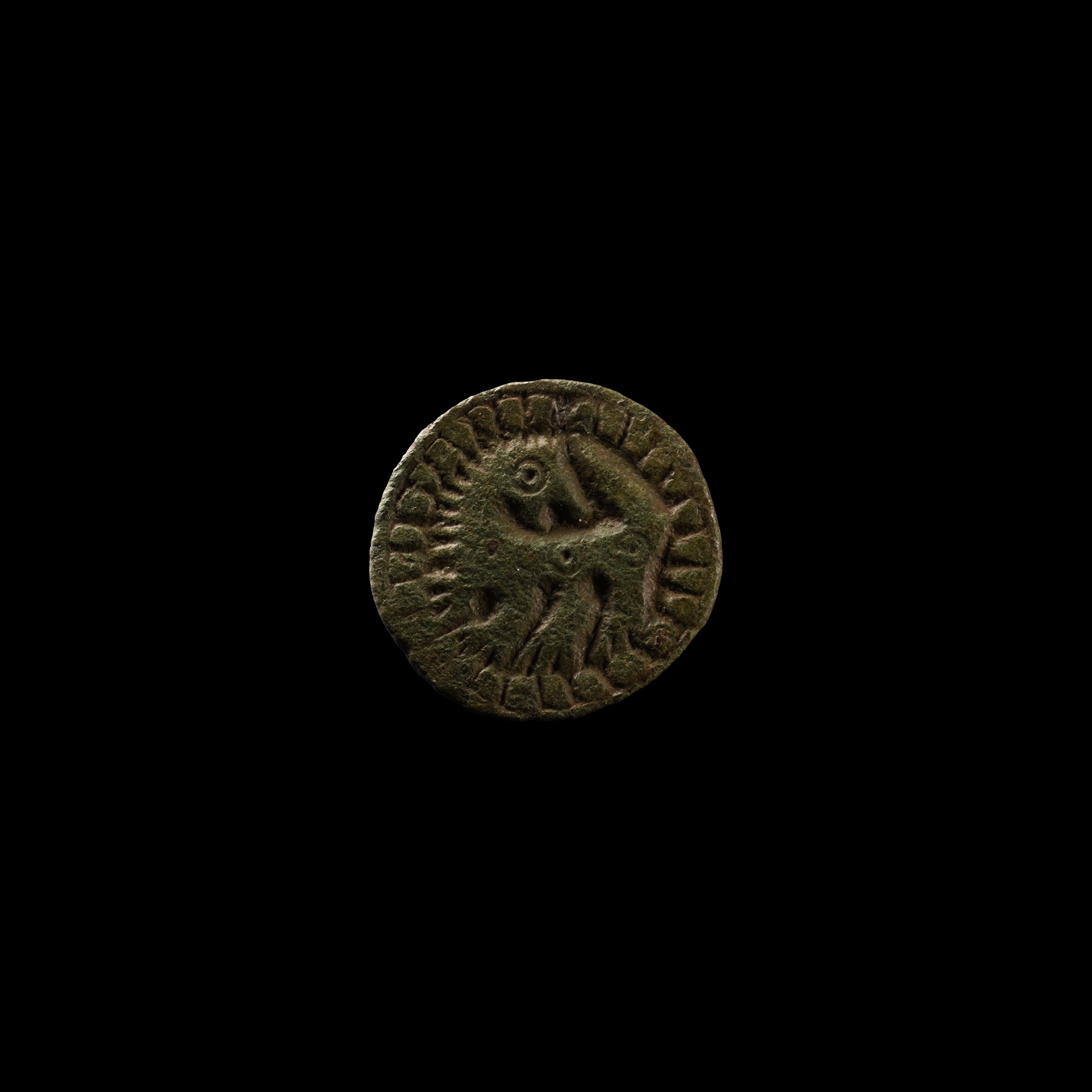
Anglo-Saxon Bronze Regardant Beast Brooch
8TH-9TH CENTURY A.D.
1 1/8 in. (8.2 grams, 29 mm).
Comprising a flat-section disc with reserved regardant beast within a pelletted border, pin-lug and catchplate to the reverse.
ProvenanceAcquired 1990s.
From an East Anglian private collection.
Cf. West, S., A Corpus of Anglo-Saxon Finds From Suffolk, East Anglian Archaeology 84, Ipswich, 1998, fig.15, item 6.
CONDITIONTimeLine Auctions follows a vetting process to ensure the authenticity and legality of all items, reinforcing our commitment to integrity and responsible trading. Each antiquity, antique, and coin lot undergoes thorough examination by a vetting committee of at least ten external specialists, professional trade association members, scientists, and archaeologists: Our Vetting Process
AUCTIONS:
TimeLine is a leading auction house specialising in antiquities, ancient art, collectables, natural history, coins, medals, and books. Our auctions offer museums, collectors, historians, and enthusiasts the opportunity to acquire unique and historically significant pieces.
-
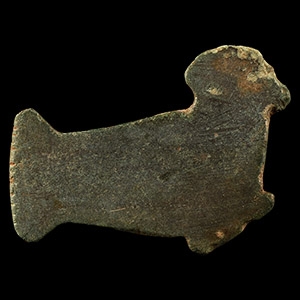
Anglo-Saxon Tinned Bronze Bird Brooch
5th-6th century A.D.Sold for (Inc. bp): £78
Displayed in profile facing right; remains of tinning; remains of pin lug and catchplate to reverse. 5.9 grams, 29 mm
Found Berkshire, UK. Accompanied by a copy of the British Museum's Portable Antiquities Scheme (PAS) report no.BERK-9B6095. -
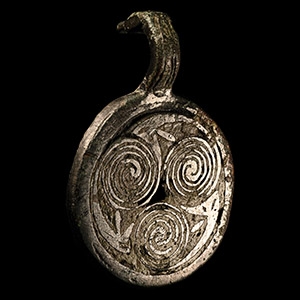
Large Anglo-Saxon Silvered Bronze Hanging Bowl Mount
Circa 6th-7th century A.D.Sold for (Inc. bp): £3,120
Discoid and hollow to the reverse with raised rim and shallow suspension hook with beast-head facetting; panel of three La Tène spirals and comma-leaf motifs, central void. 25.5 grams, 57 mm
Found near Grimsby, Lincolnshire, UK, circa 2010. This lot has been checked against the Interpol Database of stolen works of art and is accompanied by search certificate no.11893-204384.
Bowl mounts in groups of three are believed to have adorned the rim of bronze cauldrons which were used for the public dispensing of beer or mead at feasts. They are usually decorated in a manner which suggests that they were made in the north or northwest of Britain, and were either traded with the Anglo-Saxon kingdoms or, more likely, they formed part of the circulation of prestige goods among leading families in ritualised gift exchange. -
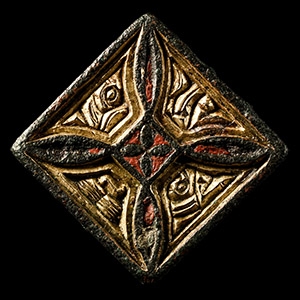
Anglo-Saxon Gilt-Bronze Cruciform Mount
Circa 6th century A.D.Sold for (Inc. bp): £3,380
With a mounting stud at each corner; parcel-gilt surface with central reserved square filled with red enamel; cruciform motif, a scaphoid cell at each corner with red enamel fill, four interstitial panels with chip-carved Style I ornament. 19.8 grams, 31 mm
Found near Lakenheath, Suffolk, UK, circa 2012. This lot has been checked against the Interpol Database of stolen works of art and is accompanied by search certificate no.11892-204383.
The use of enamel is unusual in early Anglo-Saxon contexts, except in parts of East Anglia where it may have been preferred as an alternative to garnet cloisonné.
