
Loading, please wait...
LOT 0299
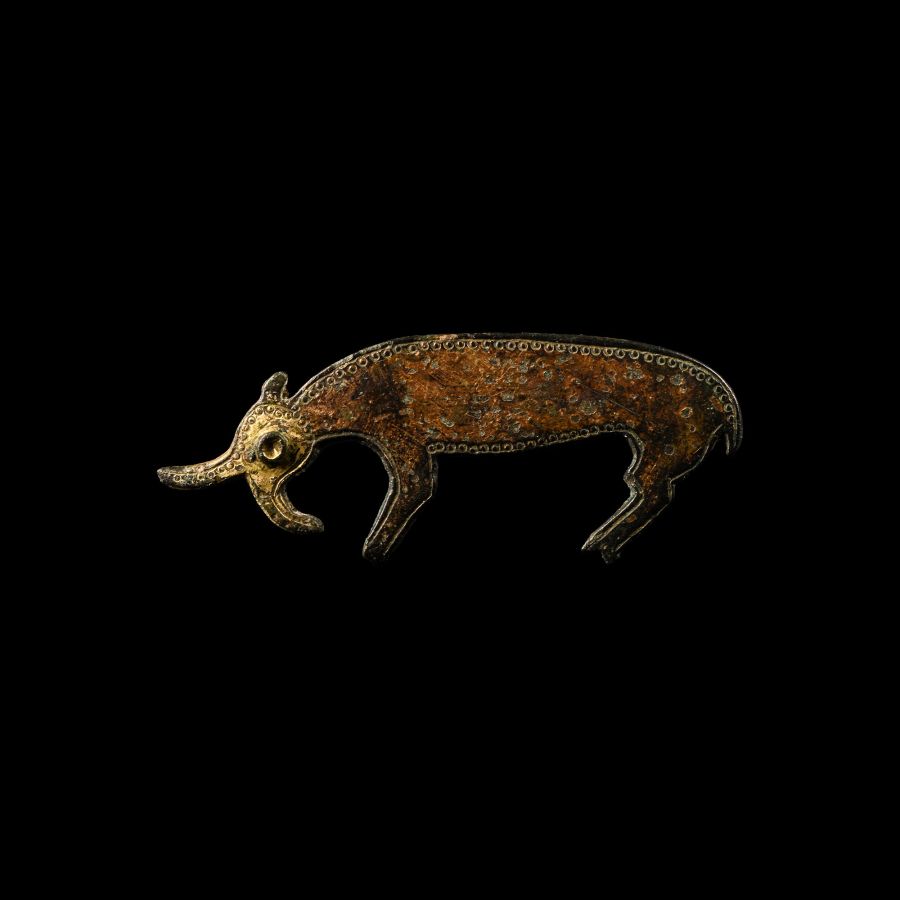
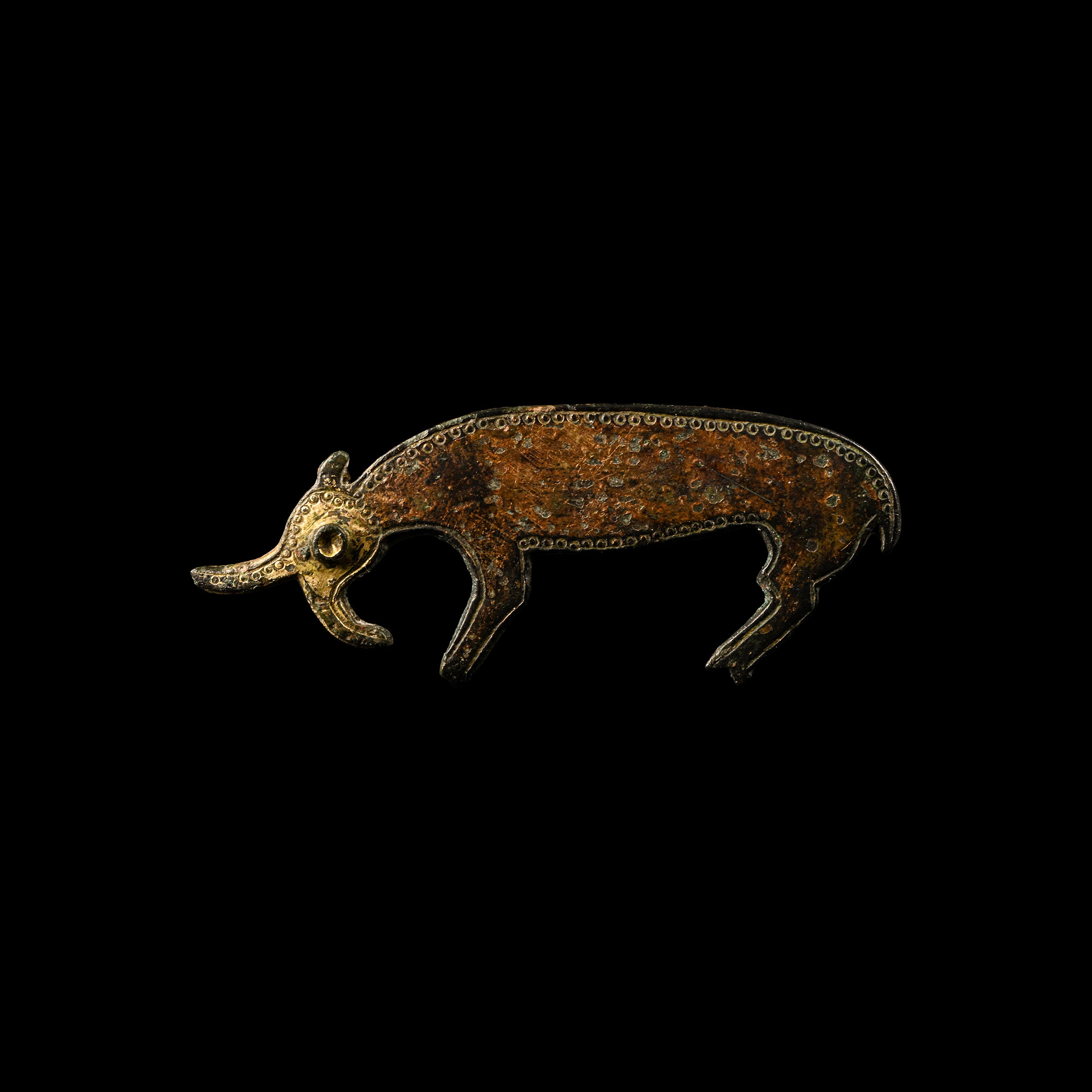
Anglo-Saxon Bronze Mythical Beast Shield Mount
CIRCA 6TH-7TH CENTURY A.D.
2 3/8 in. (10.2 grams, 60 mm).
With punched outline to the body and legs, gilded head with open jaws and raised cell eye; attachment studs to the reverse.
ProvenanceFound near Grimsby, UK, circa 2015.
LiteratureCf. Pollington, S., Kerr, L. & Hammond, B., Wayland's Work: Anglo-Saxon Art, Myth & Material Culture from the 4th to 7th century, Ely, 2010, p.360; Green, B., Rogerson, A., The Anglo-Saxon Cemetery at Bergh Apton, Norfolk: Catalogue, East Anglian Archaeology Reports. Gressenhall: Norfolk Archaeological Unit, 1978.
FootnotesA number of similar mounts, probably from shields or possibly saddles, have been found in England, notably the beast from grave 26 at Bergh Apton (Norfolk) where the animal depicted may be a bear.
CONDITIONTimeLine Auctions follows a vetting process to ensure the authenticity and legality of all items, reinforcing our commitment to integrity and responsible trading. Each antiquity, antique, and coin lot undergoes thorough examination by a vetting committee of at least ten external specialists, professional trade association members, scientists, and archaeologists: Our Vetting Process
AUCTIONS:
TimeLine is a leading auction house specialising in antiquities, ancient art, collectables, natural history, coins, medals, and books. Our auctions offer museums, collectors, historians, and enthusiasts the opportunity to acquire unique and historically significant pieces.
-
.jpg)
Anglo-Saxon Bronze Girdle Hanger Pair
6th century A.D.Sold for (Inc. bp): £468
Each with a suspension loop (one occluded) and decorative terminal, possibly formed as beast heads. 55 grams total, 13.2-13.5 cm
From a Norfolk excavation in the late 19th century. Ex property of a Nottingham gentleman by descent. -
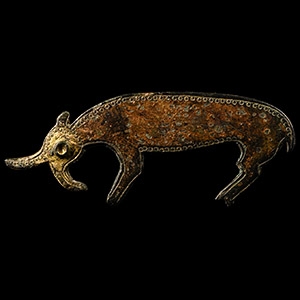
Anglo-Saxon Bronze Mythical Beast Shield Mount
Circa 6th-7th century A.D.Sold for (Inc. bp): £650
With punched outline to the body and legs, gilded head with open jaws and raised cell eye; attachment studs to the reverse. 10.2 grams, 60 mm
Found near Grimsby, UK, circa 2015.
A number of similar mounts, probably from shields or possibly saddles, have been found in England, notably the beast from grave 26 at Bergh Apton (Norfolk) where the animal depicted may be a bear. -
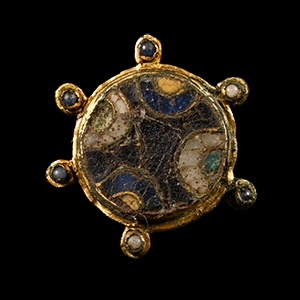
Late Anglo-Saxon Gilt Bronze Enamelled Brooch with Cross
Circa 11th century A.D.Sold for (Inc. bp): £650
With circular frame enclosing a cloisoné enamel cruciform design in shades of blue and white, six radiating lobes to the rim each with an enamel fill. 5.65 grams, 25 mm
Acquired 1990s. From an East Anglian private collection.
