
Loading, please wait...
LOT 1827
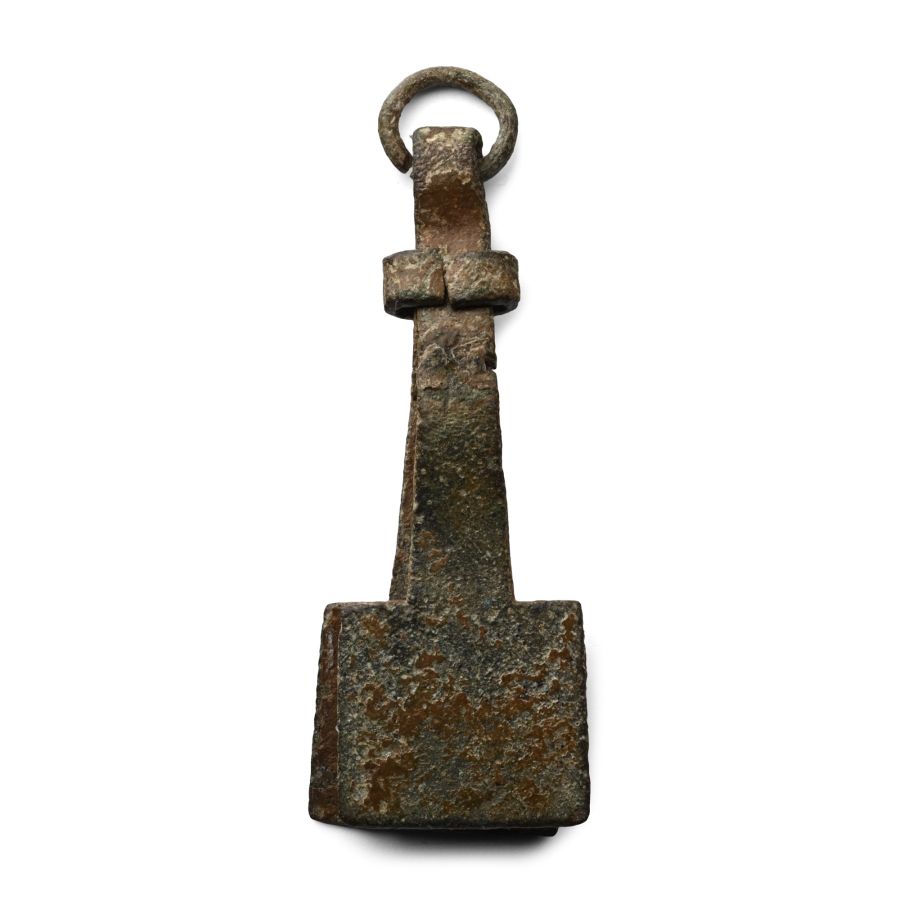
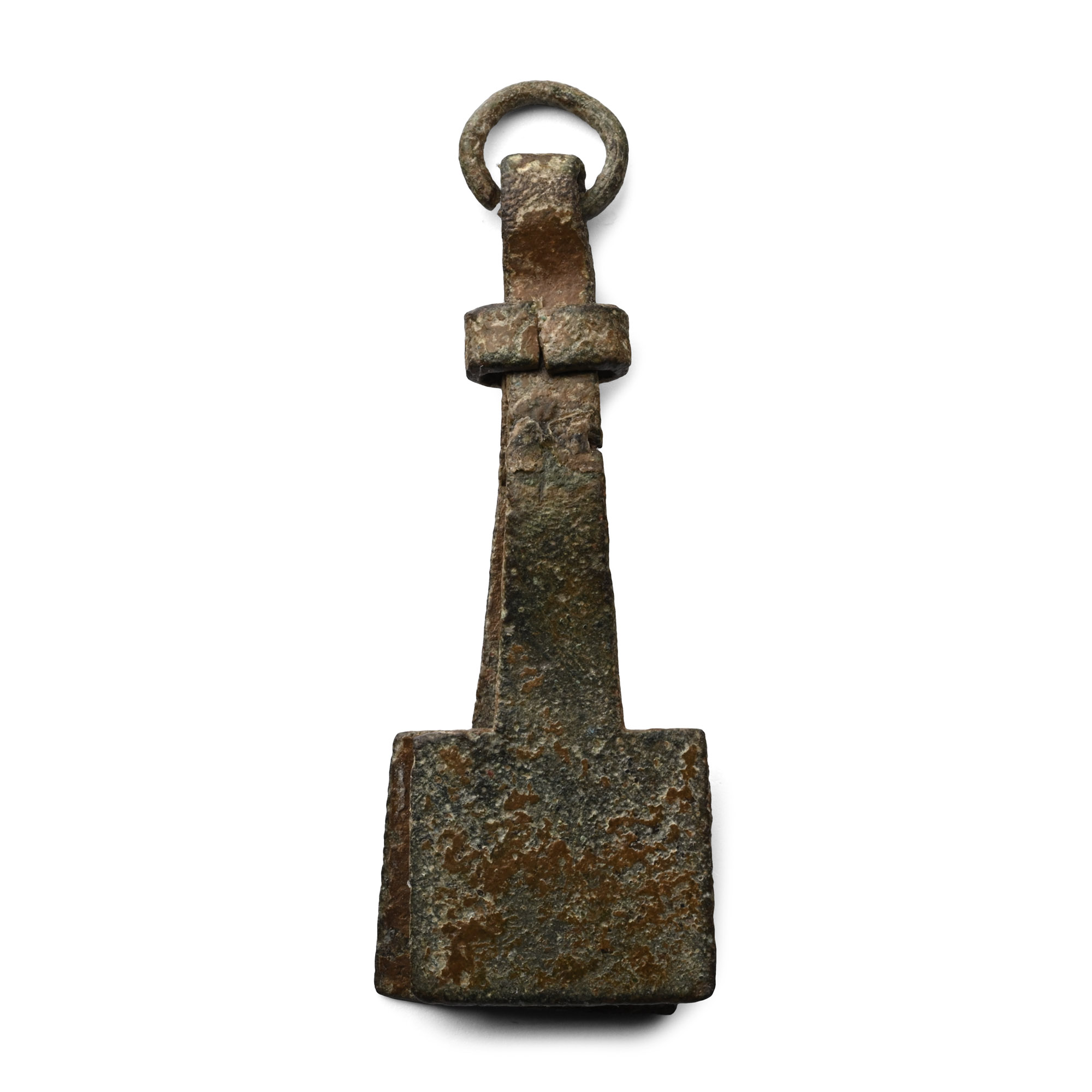
Anglo-Saxon Bronze Manuscript Page Holder
8TH-9TH CENTURY A.D.
2 1/8 in. (7.08 grams, 55 mm).
Formed as a pair of rectangular plates attached to a tweezer shank with loop and suspension ring, sliding hoop to secure; traces of mineralised fabric to one face [No Reserve]
ProvenanceFound Weston Colville, Cambridgeshire, UK.
This lot is accompanied by an illustrated lot declaration signed by the Head of the Antiquities Department, Dr Raffaele D'Amato.
See Webster, L. & Backhouse, J., The Making of England. Anglo-Saxon Art and Culture AD 600-900, London, 1991, for similar.
CONDITIONTimeLine Auctions follows a vetting process to ensure the authenticity and legality of all items, reinforcing our commitment to integrity and responsible trading. Each antiquity, antique, and coin lot undergoes thorough examination by a vetting committee of at least ten external specialists, professional trade association members, scientists, and archaeologists: Our Vetting Process
AUCTIONS:
TimeLine is a leading auction house specialising in antiquities, ancient art, collectables, natural history, coins, medals, and books. Our auctions offer museums, collectors, historians, and enthusiasts the opportunity to acquire unique and historically significant pieces.
-
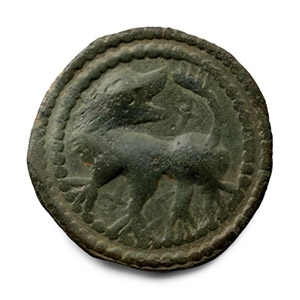
Anglo-Saxon Bronze Beast Facing Back Applied Brooch Face
6th-8th century A.D.Sold for (Inc. bp): £234
With two bands of beading to the border, low-relief repoussé image of a regardant beast in profile, small cross above the rump. 2.61 grams, 30 mm
Found Weston Colville, Cambridgeshire, UK. This lot is accompanied by an illustrated lot declaration signed by the Head of the Antiquities Department, Dr Raffaele D'Amato. -
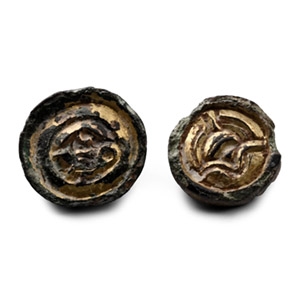
Anglo-Saxon Gilt Bronze Button Brooch Group
6th century A.D.Sold for (Inc. bp): £85
Comprising: Avent's Class L with flange to the rim, inner collar, central helmetted mask with scaphoid mouth, remains of pin lug and catchplate to reverse; Avent's Class L with flange to the rim, inner collar, central mask with central 'eye', remains of pin lug and catchplate to reverse. 5.03 grams total, 13-15 mm
Found East Anglia, UK. This lot is accompanied by an illustrated lot declaration signed by the Head of the Antiquities Department, Dr Raffaele D'Amato.
Brooches of Class L show a developed design in which the original mask has been transformed into a single 'eye' motif in a frame. -
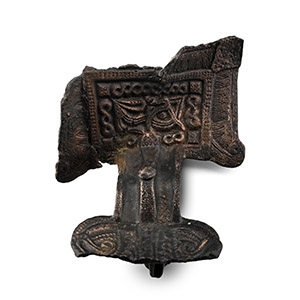
Anglo-Saxon Gilt Bronze Great Square-Headed Brooch
6th century A.D.Sold for (Inc. bp): £234
With rectangular headplate, shallow bow, foot absent; pin-lugs and catch to the reverse; the headplate with lozengiform panels to the upper corners and broad frame with ring-and-triangle stamped ornament; inner raised frame with opposed-triangle stamping, guilloche border with a raised square at each corner bearing punched pellet; high-relief Salin's Style I beast to the centre above the end of a vertical bar; broad, almost flat bow with lateral ribs and vertical bar, pierced by a stud to accept an applied disc (absent); lappets of Salin's Style I profile horse-heads flanking the junction of the bow with the footplate. 68.7 grams, 82 mm
Found Weston Colville, Cambridgeshire, UK. This lot is accompanied by an illustrated lot declaration signed by the Head of the Antiquities Department, Dr Raffaele D'Amato.
