
Loading, please wait...
LOT 1767
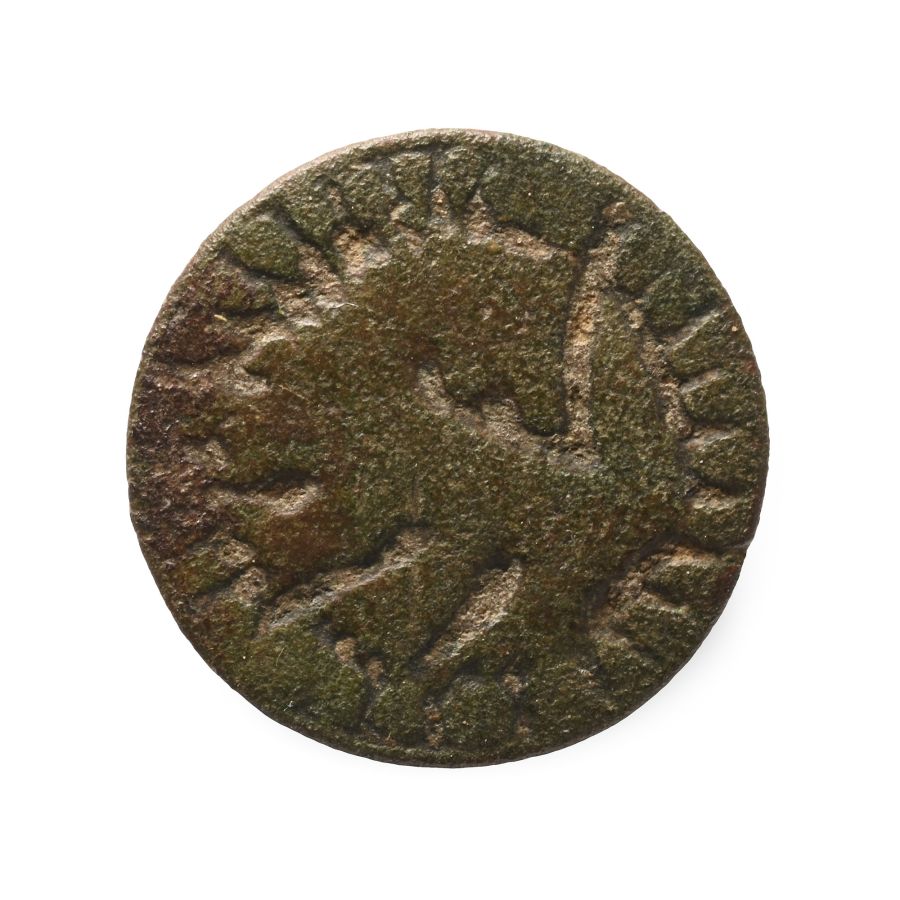
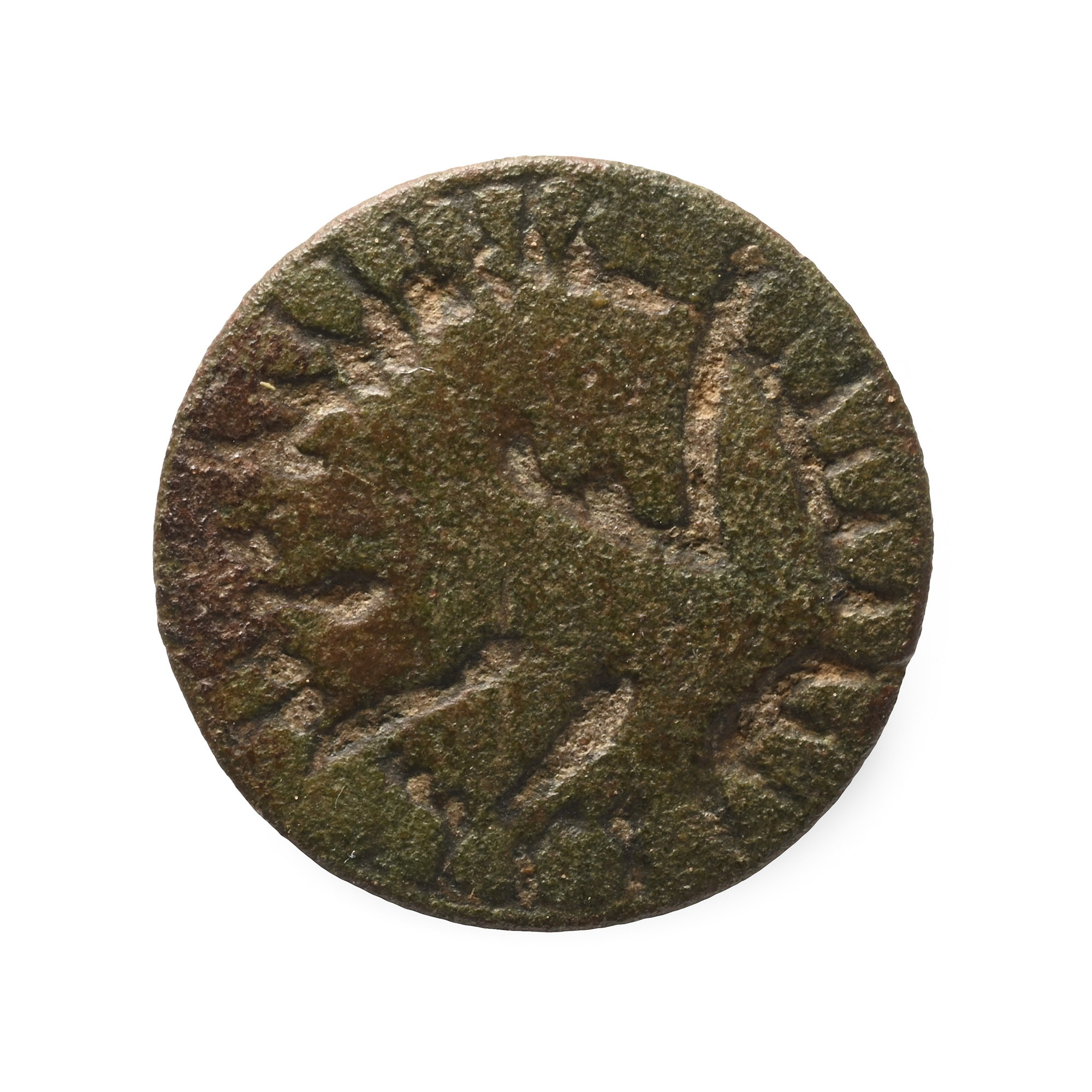
Anglo-Saxon Bronze Disc Brooch with Regardant Beast
10TH CENTURY A.D.
1 in. (8.09 grams, 28 mm).
Discoid in plan with low-relief regardant beast within a beaded border, lug and catch to reverse. [No Reserve]
ProvenanceFound Norfolk, UK.
LiteratureCf. West, S., A Corpus of Anglo-Saxon Finds From Suffolk, East Anglian Archaeology 84, Ipswich, 1998, pl.6(3).
CONDITIONTimeLine Auctions follows a vetting process to ensure the authenticity and legality of all items, reinforcing our commitment to integrity and responsible trading. Each antiquity, antique, and coin lot undergoes thorough examination by a vetting committee of at least ten external specialists, professional trade association members, scientists, and archaeologists: Our Vetting Process
AUCTIONS:
TimeLine is a leading auction house specialising in antiquities, ancient art, collectables, natural history, coins, medals, and books. Our auctions offer museums, collectors, historians, and enthusiasts the opportunity to acquire unique and historically significant pieces.
-
.jpg)
Anglo-Saxon Bronze Applied Disc Brooch
Circa 5th-6th century A.D.Sold for (Inc. bp): £293
Discoid in plan with pin-lug, chord, pin and catch to the reverse; applied rim secured by four domed rivets; low-relief hexafoil motif with interstitial ring-and-dot motifs, segmented border. 16.9 grams, 48 mm
Found Cambridgeshire, UK. Acquired on the UK art market in the 1980s. From the private collection of an Essex gentleman.
Applied brooches are a recognised form of early Anglo-Saxon costume, associated mostly with Saxon areas such as Sussex and the Thames valley. The majority of such brooches are made up from a plain backplate with the pin and catch attached, and a thin front plate with repoussé ornament. The present example appears to be formed as a decorative body with an applied rim; there is evidence for this construction technique in the form of two unassociated rims from a grave at Fairford (Gloucestershire) (MacGregor & Bolick, item 1.39). -
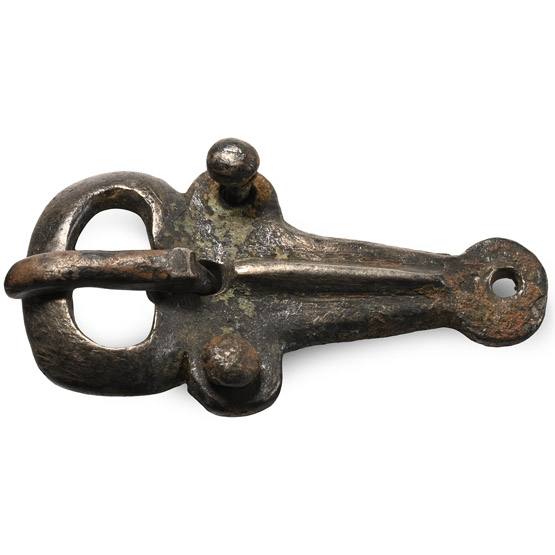
Saxon Silver Buckle
Circa 6th century A.D.Sold for (Inc. bp): £117
Triangular plate with integral loop, three mounting pins; narrow curved tongue. 19.5 grams, 54 mm
London, UK, collection, 1990s. -
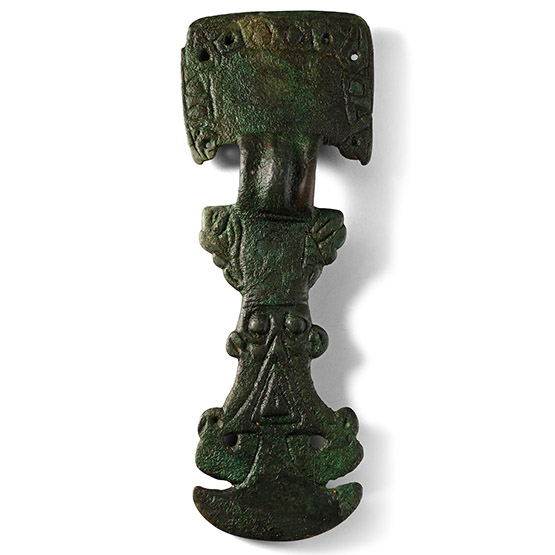
Large Anglo-Saxon Bronze Great Square-Headed Brooch
Late 5th-6th century A.D.Sold for (Inc. bp): £910
Comprising a rectangular headplate with openwork masks to the outer edge, imprint of fabric to the central panel; shallow bow with three vertical ribs; lappets below the bow, footplate developing to a triangular facing mask with domed eyes and concentric triangles, openwork finial with pelta-shaped panel; pin-lug and catch with ancient repair to the reverse. 72 grams, 13.9 cm
Found Seaham, Co Durham, UK. Property of a Durham private collector.
