
Loading, please wait...
LOT 1738
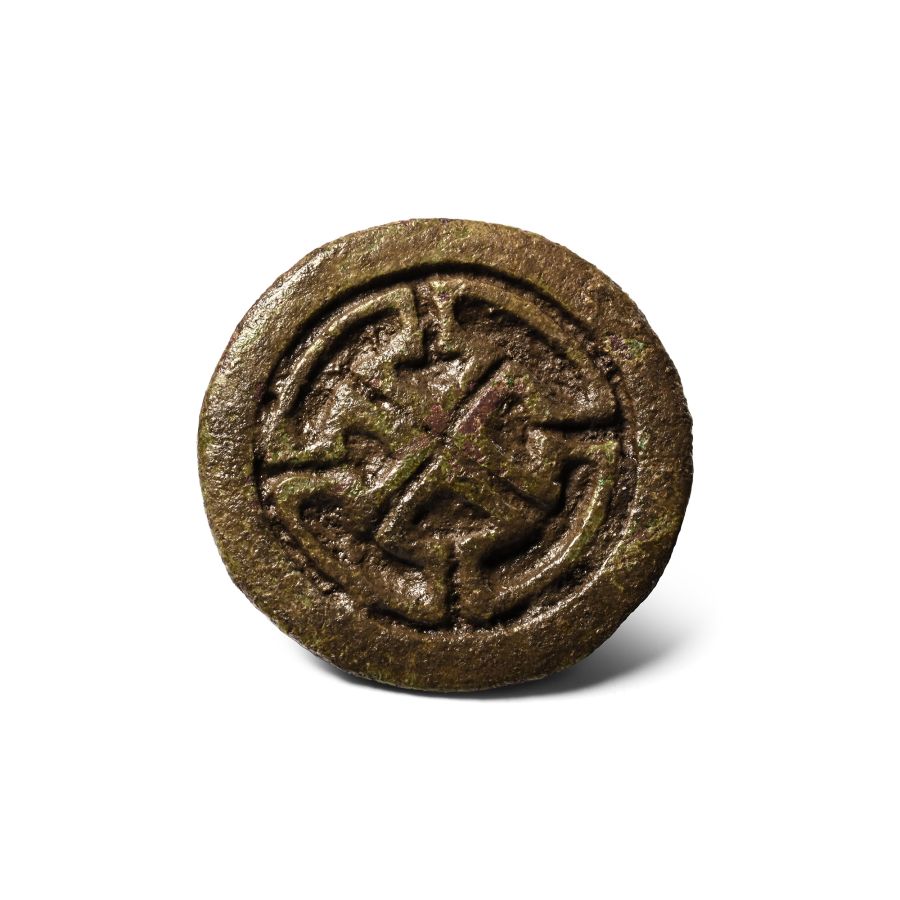
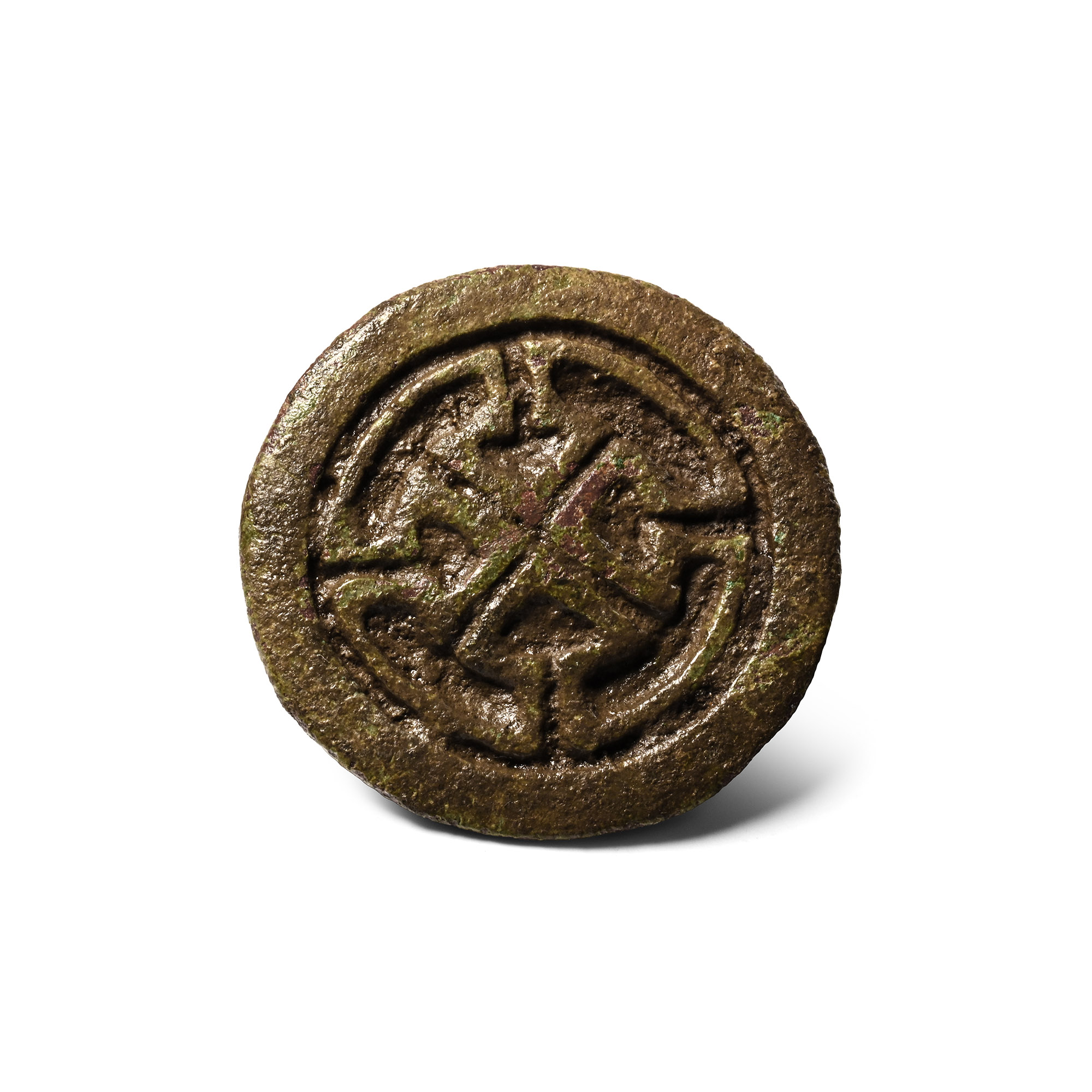
Anglo-Saxon Bronze Disc Brooch with Cruciform Axe Design
9TH-10TH CENTURY A.D.
1 1/8 in. (11 grams, 30.2 mm).
Discoid in plan with low-relief reserved cross design, shallows cells to accept enamel fill; pin-lug and catch to the reverse. [No Reserve]
ProvenanceFound whilst searching with a metal detector near Little Wibraham, South Cambridgeshire, UK, on Sunday 1st September 2024.
Accompanied by a copy of the British Museum's Portable Antiquities Scheme (PAS) report no.SF-0A4A60.
Weetch, R. Brooches in Late Anglo-Saxon England within a North West European Context Reading, PHD thesis, 2014.
CONDITIONTimeLine Auctions follows a vetting process to ensure the authenticity and legality of all items, reinforcing our commitment to integrity and responsible trading. Each antiquity, antique, and coin lot undergoes thorough examination by a vetting committee of at least ten external specialists, professional trade association members, scientists, and archaeologists: Our Vetting Process
AUCTIONS:
TimeLine is a leading auction house specialising in antiquities, ancient art, collectables, natural history, coins, medals, and books. Our auctions offer museums, collectors, historians, and enthusiasts the opportunity to acquire unique and historically significant pieces.
LOT 1738
Anglo-Saxon Bronze Disc Brooch with Cruciform Axe Design
Sold for (Inc. bp): £143
-
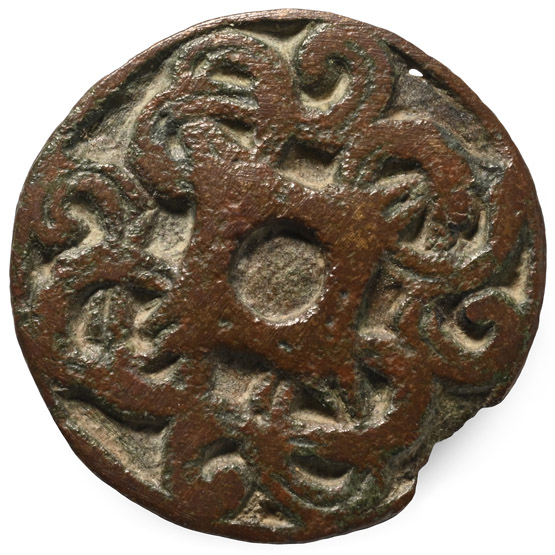
Anglo-Saxon Bronze Borre Style Disc Brooch
10th-11th century A.D.Sold for (Inc. bp): £33
With a central annular motif from which issue four bilinear tendrils, each ending in a coiled loop; a catchplate and remains of the lug to the reverse. 9.44 grams, 29 mm
Found Norfolk, UK. -
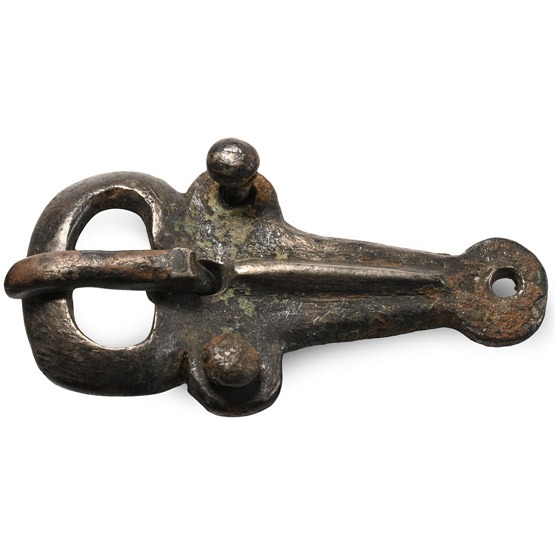
Saxon Silver Buckle
Circa 6th century A.D.Sold for (Inc. bp): £117
Triangular plate with integral loop, three mounting pins; narrow curved tongue. 19.5 grams, 54 mm
London, UK, collection, 1990s. -
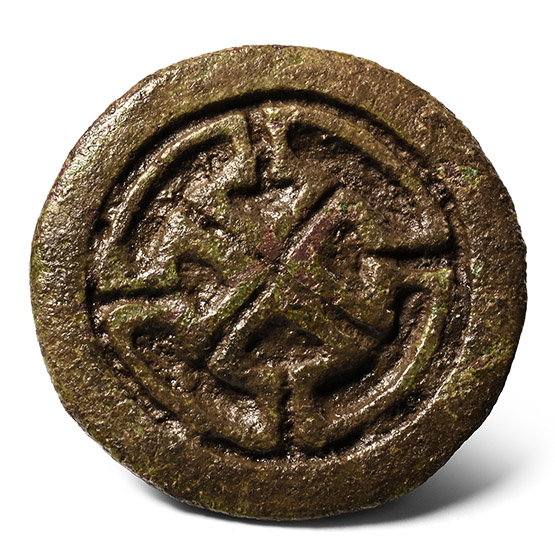
Anglo-Saxon Bronze Disc Brooch with Cruciform Axe Design
9th-10th century A.D.Sold for (Inc. bp): £143
Discoid in plan with low-relief reserved cross design, shallows cells to accept enamel fill; pin-lug and catch to the reverse. 11 grams, 30.2 mm
Found whilst searching with a metal detector near Little Wibraham, South Cambridgeshire, UK, on Sunday 1st September 2024. Accompanied by a copy of the British Museum's Portable Antiquities Scheme (PAS) report no.SF-0A4A60.
