
Loading, please wait...

LOT 1770
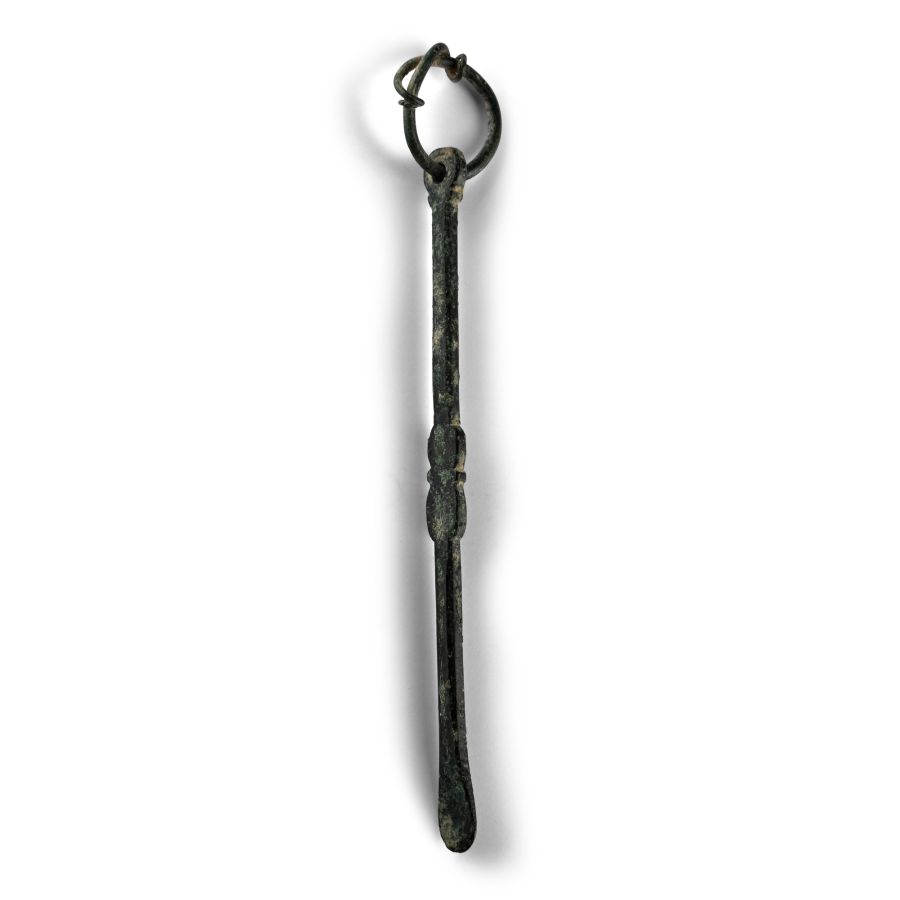
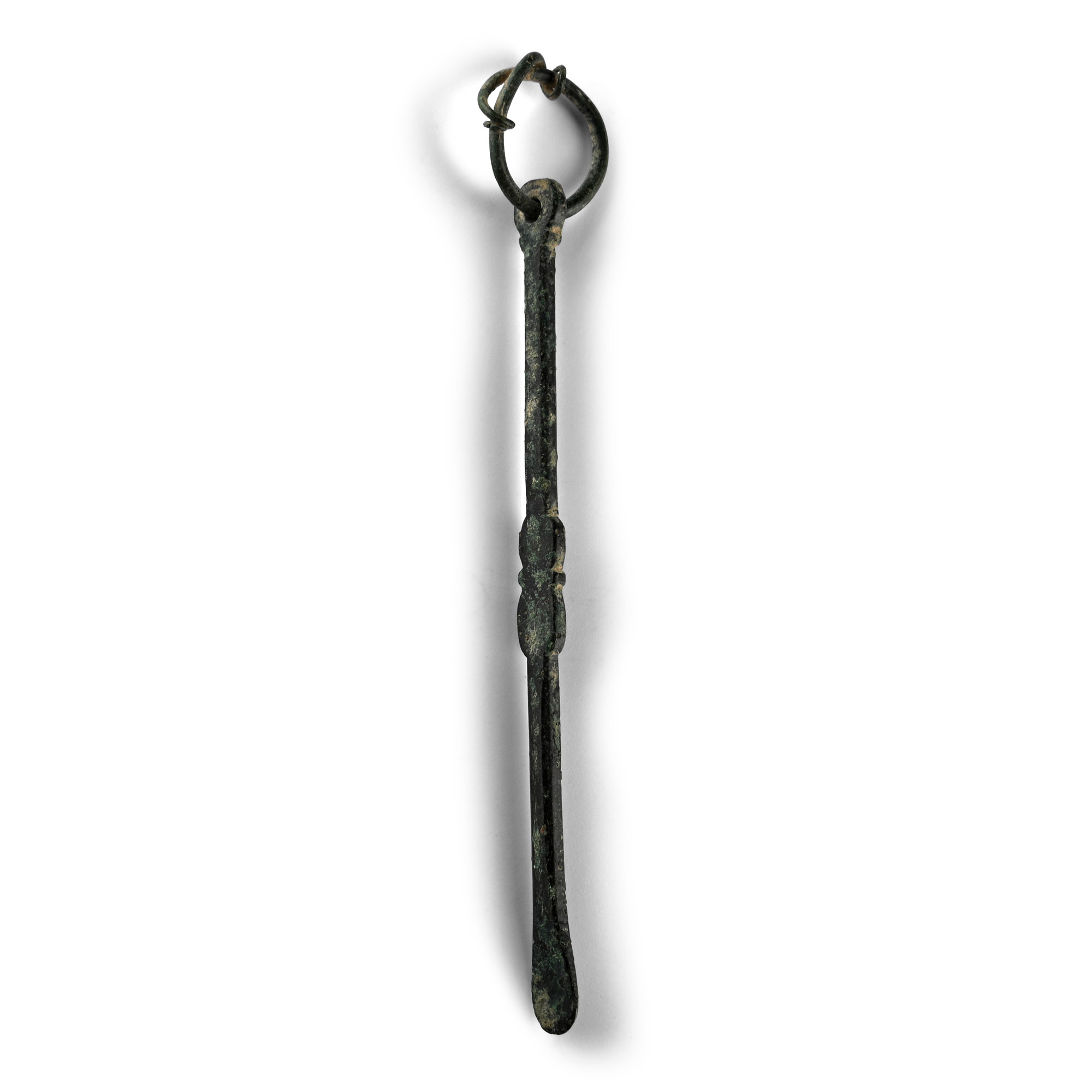
Anglo-Saxon Bronze Decorated Ligula
5TH-7TH CENTURY A.D.
3 1/2 in. (4.53 grams, 88 mm).
A square-section shank with median 'bowtie' plaque, flat bowl, pierced finial with wire suspension loop. [No Reserve]
ProvenanceFound Cambridgeshire, UK.
Property of a Cheshire, UK, gentleman.
This lot is accompanied by an illustrated lot declaration signed by the Head of the Antiquities Department, Dr Raffaele D'Amato.
Cf. Parfitt, K. & Anderson, T., Buckland Anglo-Saxon Cemetery Dover, Archaeology of Canterbury New Series vol. VI, Canterbury, 2012, fig.10.4 (f).
CONDITIONTimeLine Auctions follows a vetting process to ensure the authenticity and legality of all items, reinforcing our commitment to integrity and responsible trading. Each antiquity, antique, and coin lot undergoes thorough examination by a vetting committee of at least ten external specialists, professional trade association members, scientists, and archaeologists: Our Vetting Process
AUCTIONS:
TimeLine is a leading auction house specialising in antiquities, ancient art, collectables, natural history, coins, medals, and books. Our auctions offer museums, collectors, historians, and enthusiasts the opportunity to acquire unique and historically significant pieces.
-
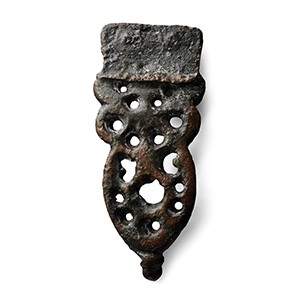
Late Anglo-Saxon Bronze Strap End
10th-11th century A.D.Sold for (Inc. bp): £39
Sub-triangular in plan with waisted profile, openwork centre with coiled tendrils, knop finial; plate to rear with attachment studs. 28 grams, 63 mm
Found UK, January 1991. From the collection of a gentleman from the South West of England, his collection established from the 1990s. This lot is accompanied by an illustrated lot declaration signed by the Head of the Antiquities Department, Dr Raffaele D'Amato. -
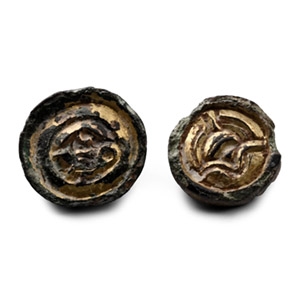
Anglo-Saxon Gilt Bronze Button Brooch Group
6th century A.D.Sold for (Inc. bp): £85
Comprising: Avent's Class L with flange to the rim, inner collar, central helmetted mask with scaphoid mouth, remains of pin lug and catchplate to reverse; Avent's Class L with flange to the rim, inner collar, central mask with central 'eye', remains of pin lug and catchplate to reverse. 5.03 grams total, 13-15 mm
Found East Anglia, UK. This lot is accompanied by an illustrated lot declaration signed by the Head of the Antiquities Department, Dr Raffaele D'Amato.
Brooches of Class L show a developed design in which the original mask has been transformed into a single 'eye' motif in a frame. -
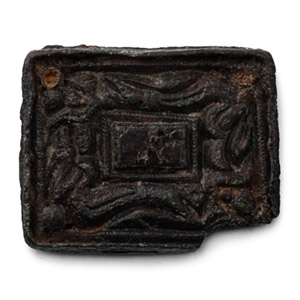
Anglo-Saxon Bronze Mount with Central Garnet
6th century A.D.Sold for (Inc. bp): £52
Rectangular in plan with raised rim and rivet to each corner; central cell with beaded border and inset garnet cloison, high-relief flanking zoomorphs in Salin's Style I. 9.06 grams, 32 mm
Found Weston Colville, Cambridgeshire, UK. This lot is accompanied by an illustrated lot declaration signed by the Head of the Antiquities Department, Dr Raffaele D'Amato.
