
Loading, please wait...
LOT 1865
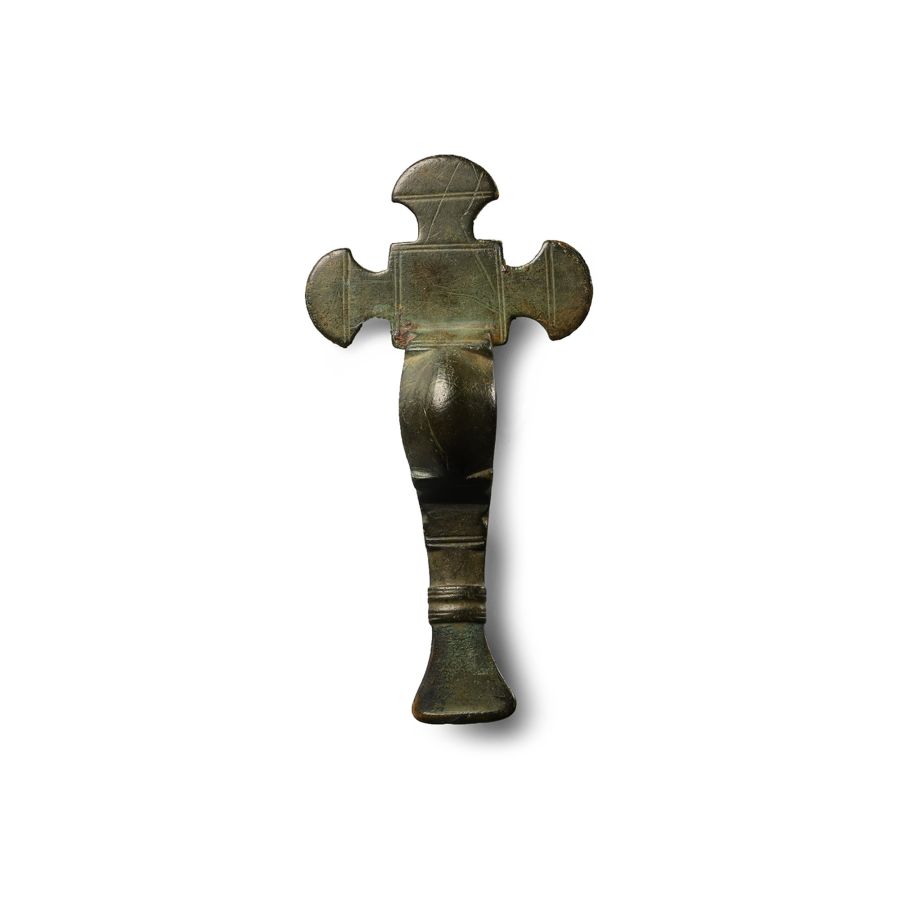
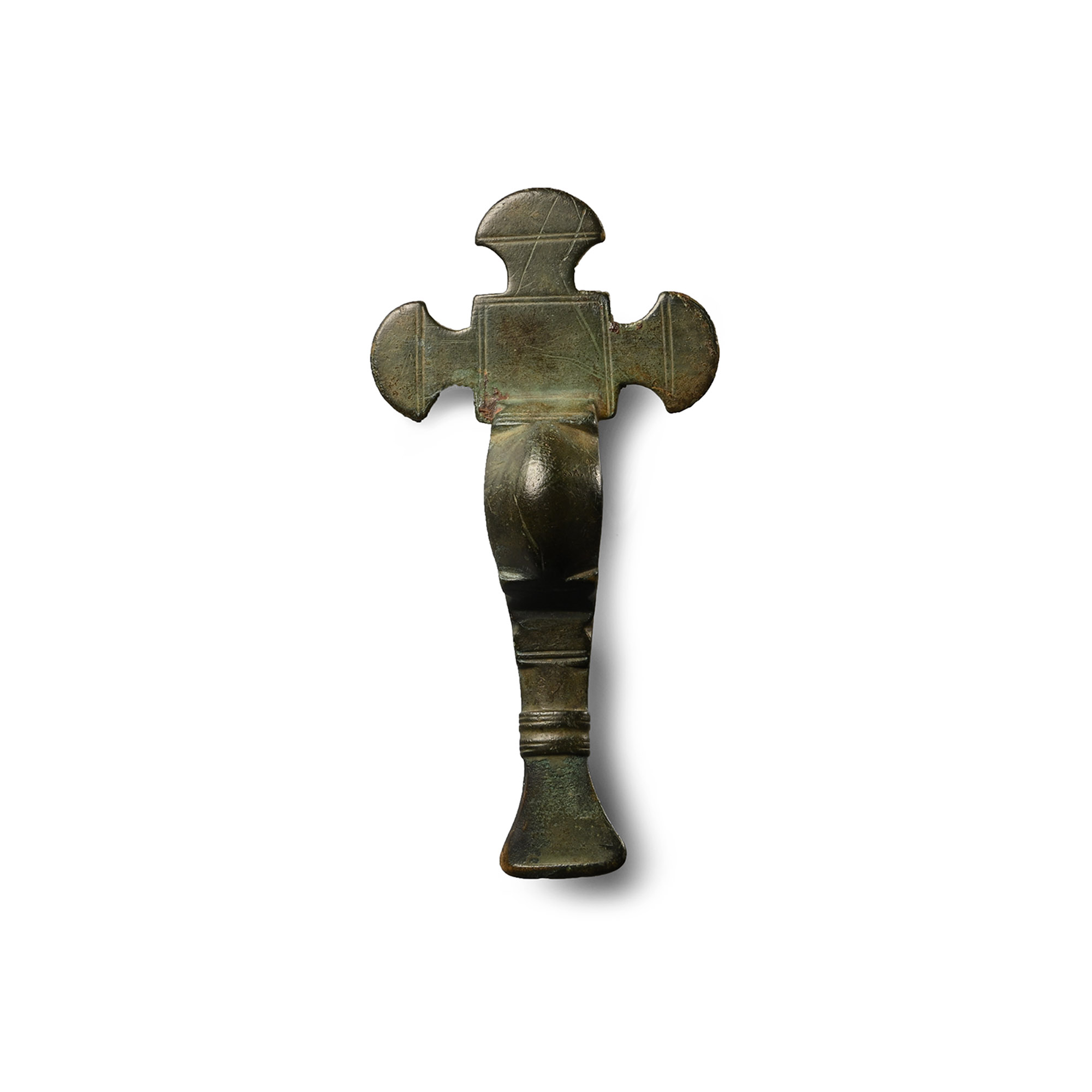
Anglo-Saxon Bronze Cruciform Bow Brooch
6TH CENTURY A.D.
3 1/2 in. (34 grams, 89 mm).
With square headplate and three pelta-shaped radiating plaques with incised linear detailing, deep bow with chamfered ends, footplate with transverse ribbed collars, trapezoidal finial, pin-lug and catchplate to the reverse. [No Reserve]
ProvenanceFound Lincolnshire, UK, prior to a Time Team dig on an important Iron Age and Roman site.
Ex Kelway collection; formed between 1975 and 2015.
Property of a Californian, USA, collector.
This lot is accompanied by an illustrated lot declaration signed by the Head of the Antiquities Department, Dr Raffaele D’Amato.
Recorded with the Portable Antiquities Scheme with reference number LIN-5411D2; accompanied by a print out of the PAS report.
LiteratureCf. MacGregor, A. & Bolick, E., A Summary Catalogue of the Anglo-Saxon Collections (Non-Ferrous Metals), Oxford, 1993, item 15.55.
CONDITIONTimeLine Auctions follows a vetting process to ensure the authenticity and legality of all items, reinforcing our commitment to integrity and responsible trading. Each antiquity, antique, and coin lot undergoes thorough examination by a vetting committee of at least ten external specialists, professional trade association members, scientists, and archaeologists: Our Vetting Process
AUCTIONS:
TimeLine is a leading auction house specialising in antiquities, ancient art, collectables, natural history, coins, medals, and books. Our auctions offer museums, collectors, historians, and enthusiasts the opportunity to acquire unique and historically significant pieces.
-
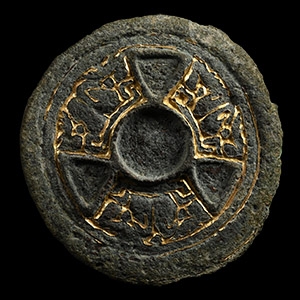
Anglo-Saxon Gilt Bronze Keystone Type Brooch
530-570 A.D.Sold for (Inc. bp): £390
Single-piece disc brooch with broad rim, inner band and segmented tondo with three triangular cells to accept inserts and three panels of Salin's Style I ornament; remains of gilt surface. 10.11 grams, 38 mm
Found West Ashton, Wiltshire, UK, by Mr William Michael Puddy with eyes-only whilst walking his dog, in the summer, before 1st September 2006. Property of a Wiltshire lady, by descent from her late father. Accompanied by a copy of the Devizes Museum item entry form dated 1st September 2006 and signed by the finder and curator. Accompanied by a copy of the British Museum's Portable Antiquities Scheme (PAS) report no.WILT-F561A1. Accompanied by a copy of an an article about the circumstances of finding etc. titled Treasure Trove, by Jo Watkins. This lot is accompanied by an illustrated lot declaration signed by the Head of the Antiquities Department, Dr Raffaele D’Amato.
The triangular cells were originally set with glass or garnet inserts. -
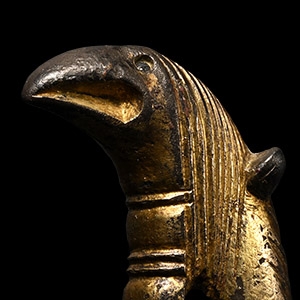
Hiberno-Saxon Gilt Bird-Headed Finial
6th-7th century A.D.Estimate: £4,000 - 6,000 (+bp*)
Opening Bid: £2,000
A zoomorphic mount with enigmatic zoomorphic ornament, ellipsoid in section with hollow rear and slot, holes for attachment curved end; the rear of the body formed with transverse twisted ribs above two panels of fine parallel lines parted at the median with D-shaped lugs projecting above; below, beneath the lateral slot, horizontal ribs and balusters with scooped edge and two holes for attachment, the scooped finial with two impressed sockets forming a beast-head; above, the forward end of the shank forming a curved beak with lateral recesses; socket eyes above, one with glass fill; mounted on a custom-made stand. 26.12 grams, 38 mm (43.6 grams total, 71 mm including stand)
with ArtAncient Ltd. Private collection, London, UK. This lot has been checked against the Interpol Database of stolen works of art and is accompanied by a search certificate number no.12438-226862. This lot has been cleared against the Art Loss Register database, and is accompanied by an illustrated lot declaration signed by the Head of the Antiquities Department, Dr Raffaele D’Amato.
The item is enigmatic and intriguing. In many respects it resembles a drinking horn finial, particularly the class of such items found in Irish and Hiberno-Saxon contexts (Youngs, items 53, 54). However, the profile of the hollow rear is elliptical rather than circular, and the lateral slots are clearly intended to accept some form of projection. The most likely interpretation is that the piece was custom-made to fit a drinking horn with carved and reserved ornament, part of which would fit into the slots. The form of the piece is superficially that of an eagle or raven-head with sturdy raptor's beak. However, behind the head are placed two small projecting ears and the sides bear a long mane, both reminiscent of a horse. Other interpretations include such elements as a boar, a caterpillar, and a rat. It seems likely that the animal is a hybrid of a mammal and bird of prey: in this case, it must be a gryphon and was possibly inspired by classical forms. -
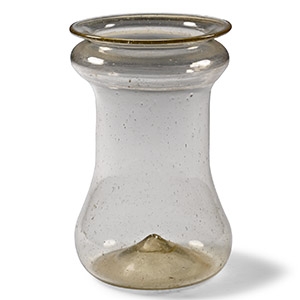
Rhenish Saxon Colourless Glass Beaker
6th-7th century A.D.Sold for (Inc. bp): £481
With pontil base and tubular long neck, expanding at the top, flat rim. 29.8 grams, 80 mm
Ex Sussex, UK, collection, 1980-1990s. This lot is accompanied by an illustrated lot declaration signed by the Head of the Antiquities Department, Dr Raffaele D’Amato.
