
Loading, please wait...
LOT 2101
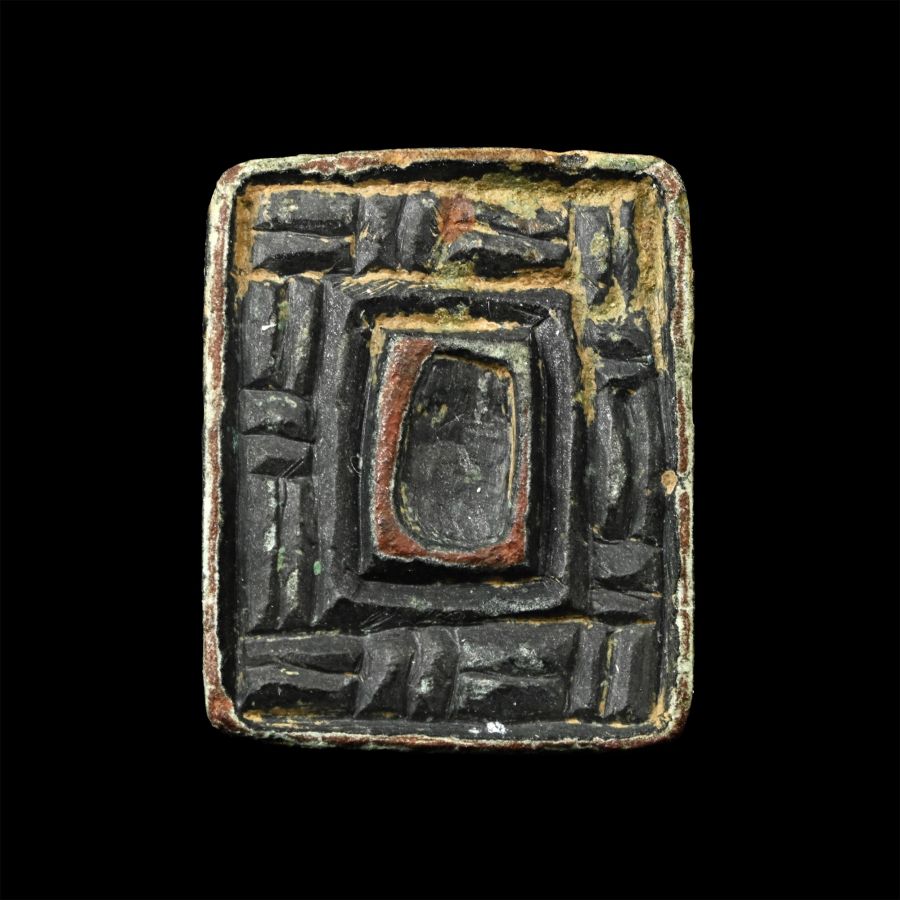
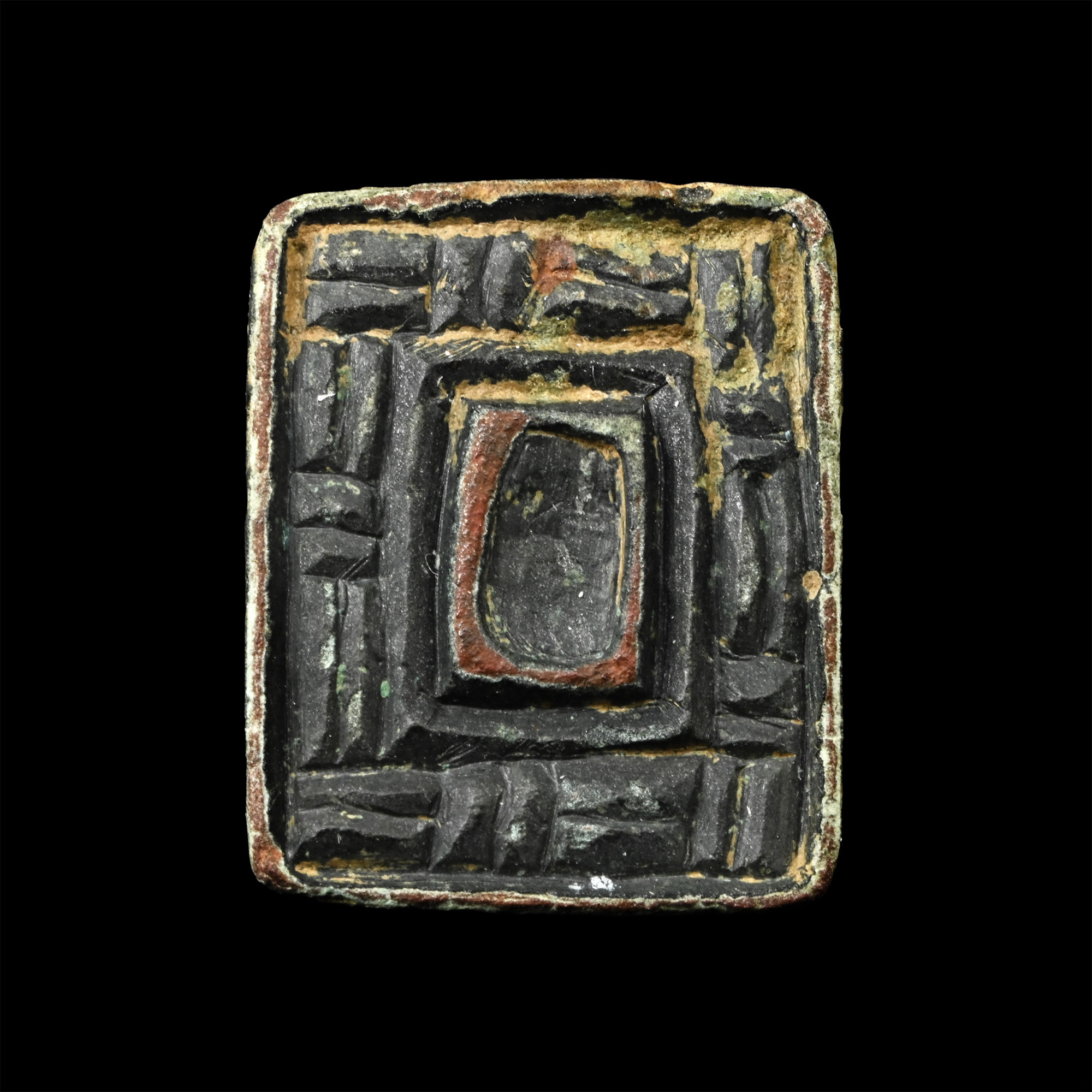
Anglo-Saxon Bronze Chip-Carved Mount
5TH-6TH CENTURY A.D.
7/8 in. (6.63 grams, 22 mm).
Rectangular in plan with raised rim, raised 'basketwork' design surrounding a central rectangular cell; remains of ferrous stud to reverse. [No Reserve]
ProvenanceFrom a UK collection formed in the 1980s.
Property of an Essex, UK, gentleman.
Cf. West, S., A Corpus of Anglo-Saxon Finds From Suffolk, East Anglian Archaeology 84, Ipswich, 1998, fig.52 (11.1).
FootnotesThe design is based on Salin's Style I where overlapping and intersecting parallel lines form the body of an animal.
CONDITIONTimeLine Auctions follows a vetting process to ensure the authenticity and legality of all items, reinforcing our commitment to integrity and responsible trading. Each antiquity, antique, and coin lot undergoes thorough examination by a vetting committee of at least ten external specialists, professional trade association members, scientists, and archaeologists: Our Vetting Process
AUCTIONS:
TimeLine is a leading auction house specialising in antiquities, ancient art, collectables, natural history, coins, medals, and books. Our auctions offer museums, collectors, historians, and enthusiasts the opportunity to acquire unique and historically significant pieces.
LOT 2101
Anglo-Saxon Bronze Chip-Carved Mount
Estimate £50 - 70€58 - 81 (for guidance only)$68 - 95 (for guidance only)
Opening Bid
£5 (EUR 6; USD 7) +BP*
-
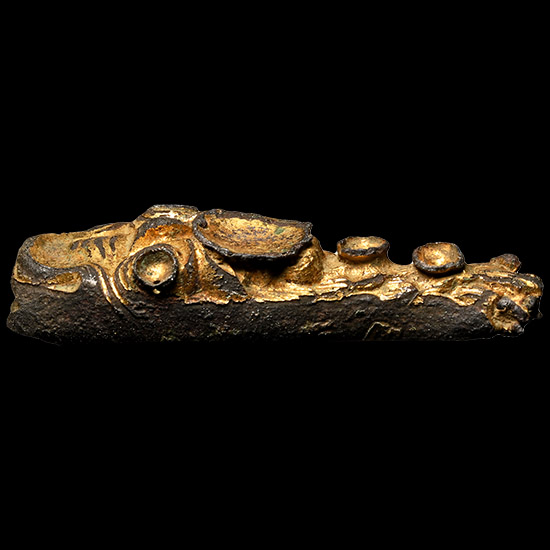
Anglo-Saxon Gilt-Bronze Zoomorphic Terminal
Circa 800-1100 A.D.Estimate: £300 - 400 (+bp*)
Opening Bid: £150
Formed as a tapering stylised animal head pointing down with a short, blunt snout with wide nostrils and bulging eyes, a shallow concave depression behind the eyes with two further smaller depressions on the neck; the reverse with an evenly stamped hexagonal decoration. 1.97 grams, 26 mm
Found whilst searching with a metal detector in Wymondham, Norfolk, UK. Property of a Kent gentleman, a specialist medieval collector. Accompanied by a copy of the British Museum's Portable Antiquities Scheme (PAS) report no.KENT-947019. -
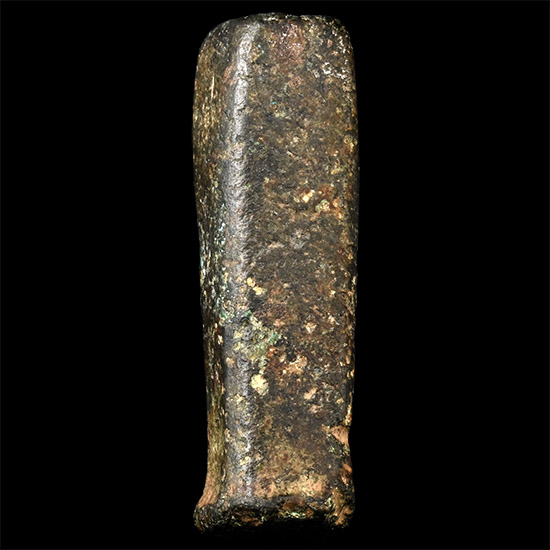
Anglo-Saxon Bronze Die with Dove and Cross
7th-8th century A.D. or laterEstimate: £100 - 140 (+bp*)
Opening Bid: £50
Square-section shank with clubbed upper face; incuse motif of a perching bird supporting a cross, possibly St John the Evangelist. 23 grams, 35 mm
From a UK collection formed in the 1980s. Property of an Essex, UK, gentleman. -
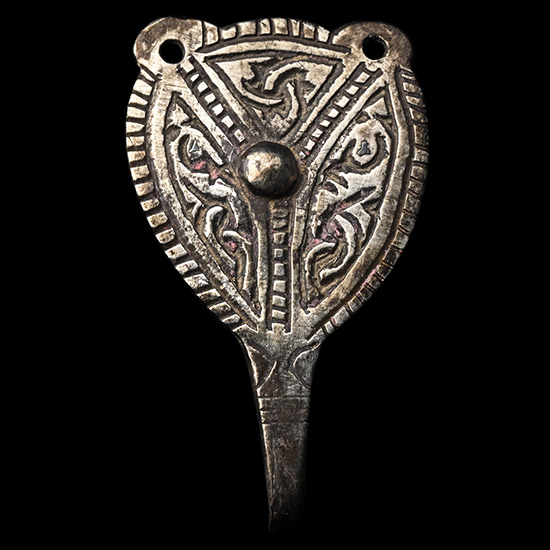
Anglo-Saxon Silver Hooked Tag with Niello Inlaid Interlaced Panels
Circa 800-950 A.D.Estimate: £500 - 700 (+bp*)
Opening Bid: £250
Of Read's Class D, Type 1, piriform in plan with convex, rounded edges narrowing to a point at the integral hook, rectangular in cross-section and tapering to a recurved tip; at the shoulders, two pierced lugs forming attachment points and a central dome-headed rivet; obverse decorated with engraved Trewhiddle style motifs - a central hatched tribrach motif dividing the plate into three panels with pointed three-part knot above and lateral lenticular panels with Trewhiddle plant tendrils; peripheral hatched border running each side of the attachment loops and around the plate to the base of the hook; upper section of the hook with two engraved lateral arcs; the sharp tip of the integral hook absent. 3.8 grams, 38 mm
Found near Lewes, East Sussex, UK, on 7th September 2025; declared as potential Treasure under the Treasure Act with Treasure reference no.2025T1455, subsequently disclaimed and returned to the finder. Accompanied by a copy of the British Museum's Portable Antiquities Scheme (PAS) report no.SUSS-71D76C.
The engraved recesses of the decorative design would have contained black niello inlay, of which only one small triangular area survives on the left of the plate. The reverse of the plate is plain, with the flattened shank of the rivet projecting from the centre of the plate. The metal surfaces have a dark grey silvery patina. The 'hooked tag' fastener functioned by connecting with a matching eye section (see Read, 2008, no.108) or via a simple metal ring sewn into the fabric (ibid., fig.9). Examples of Class D hooked tags have been found in Birka, Sweden, in a 10th-century male burial, positioned at each knee with woollen twill textile remains on the reverses suggesting they were used to secure leg wrappings. The Bayeux tapestry also shows both Normans and Anglo-Saxons with horizontal banding on the legs, which have been interpreted as leg wrappings. (ibid.24). Other possible functions have been for securing purses or bags, suggested by a hoard of Anglo-Saxon coins found at Tetney, Lincs, which also contained a pair of single sharp, hooked clasps (ibid.24). This form of hooked tag fits Read (2008) Class D type 1 with two or more rounded knops for attachment at the end of the plate opposite to the hook (p.27). The hatched tribrach design with interstices filled with interlace is paralleled by a copper-alloy hooked tag in Read, no.113; and, for an example with a central boss/domed rivet, see: no. 12. Most hooked tags are copper-alloy, but silver examples of this form with niello decoration that have been submitted through the treasure process include: 2019T687 (SUR-19BC54), also with Trewhiddle style zoomorphic decoration separated by a tribach form and 2016T608 (KENT-076AE5), also with Trewhiddle style ornament in three fields. The Trewhiddle style decoration provides a date of the ninth to early tenth centuries for this object.
