
Loading, please wait...
LOT 1267
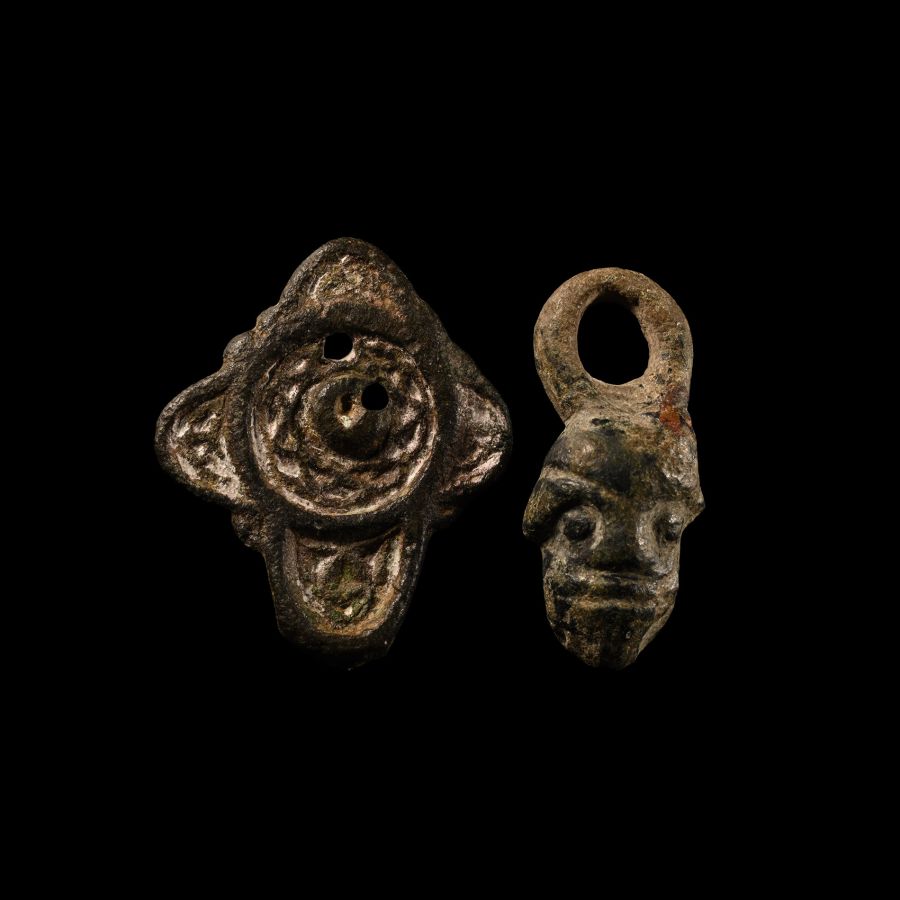
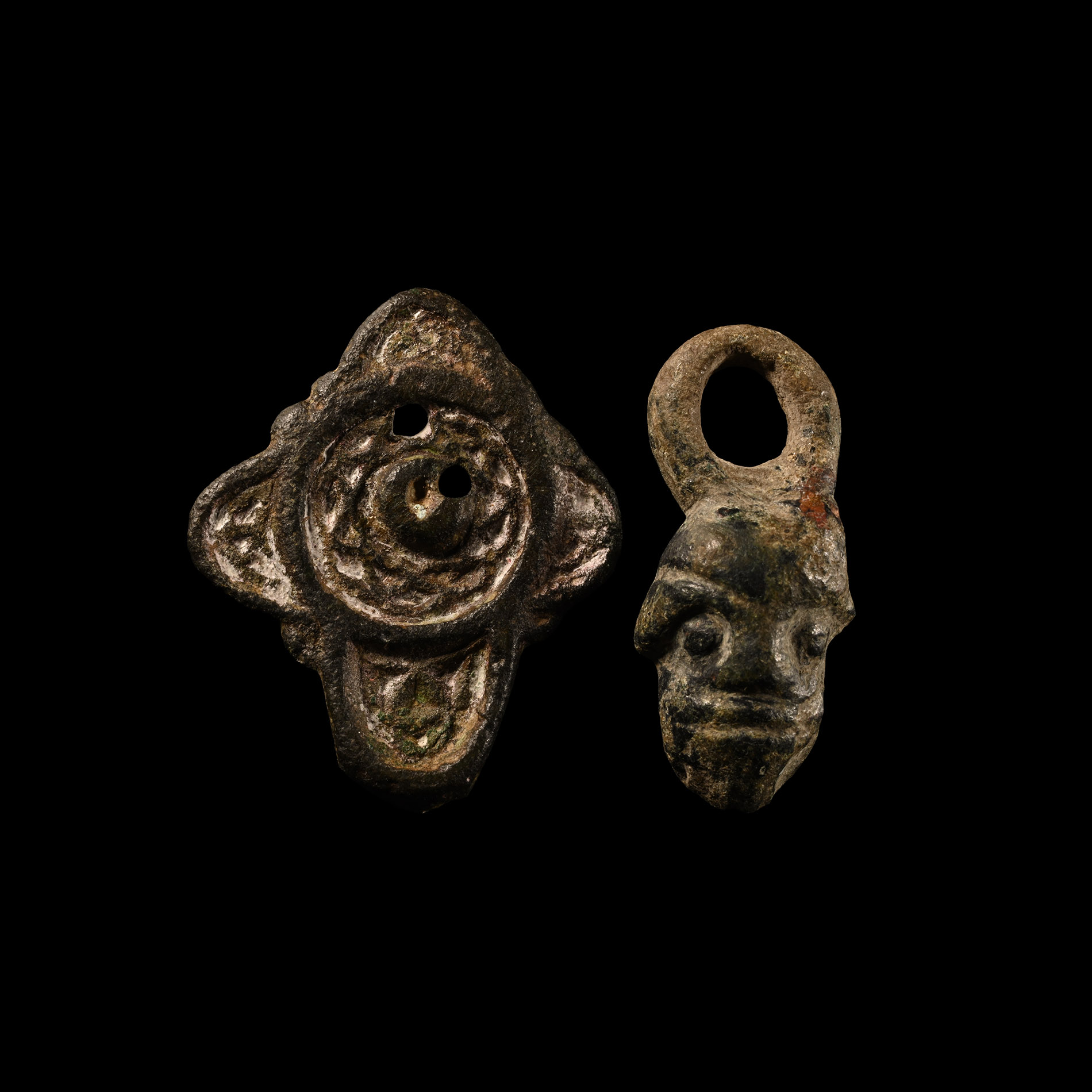
Anglo-Saxon Bronze Artefact Group
CIRCA 6TH CENTURY A.D.
1 - 1 1/8 in. (14.2 grams total, 27-29 mm).
Comprising: a pendant formed as a stylised bearded face, large loop above; a cruciform mount with five recessed panels with interlace; pierced through twice. [2, No Reserve]
ProvenanceFrom a 1990s English collection.
Property of an Essex gentleman.
TimeLine Auctions follows a vetting process to ensure the authenticity and legality of all items, reinforcing our commitment to integrity and responsible trading. Each antiquity, antique, and coin lot undergoes thorough examination by a vetting committee of at least ten external specialists, professional trade association members, scientists, and archaeologists: Our Vetting Process
AUCTIONS:
TimeLine is a leading auction house specialising in antiquities, ancient art, collectables, natural history, coins, medals, and books. Our auctions offer museums, collectors, historians, and enthusiasts the opportunity to acquire unique and historically significant pieces.
-
Anglo-Saxon Bronze Artefact Group
Circa 6th century A.D.Sold for (Inc. bp): £39
Comprising: a pendant formed as a stylised bearded face, large loop above; a cruciform mount with five recessed panels with interlace; pierced through twice. 14.2 grams total, 27-29 mm
From a 1990s English collection. Property of an Essex gentleman. -
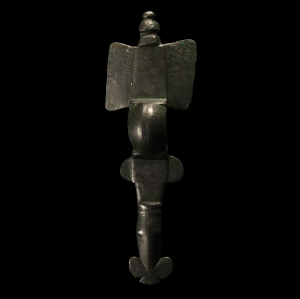
Large Anglo-Saxon Bronze Cruciform Bow Brooch
Late 5th-early 6th century A.D.Estimate: £180 - 240 (+bp*)
Opening Bid: £100
Of Martin's Type 3.2.4 (Holywell Row) featuring a trapezoidal headplate with lateral trapezoidal panels, domed knop above; deep bow with facetted ends, T-shaped footplate with lateral lappets, horse-head finial with discoid nostrils; complete ferrous pin and catchplate to the reverse, hollowed reverse to the horse-head. 71 grams, 13.5 cm
Acquired circa 1995. From an East Anglian private collection.
The Holywell Row type in Martin's analysis extends from the northern shore of the Thames Estuary as far as Yorkshire, but with a cluster in the Cambridge area. The edges of the headplate show the faintest traces of punched detailing, if this is not the result of the original clean-up when the brooch was taken from its mould; similar marks can be discerned on the footplate below the junction with the bow. The finial shows little zoomorphic detailing but the nostrils are characteristic of the type. The presence of the pin is remarkable. -
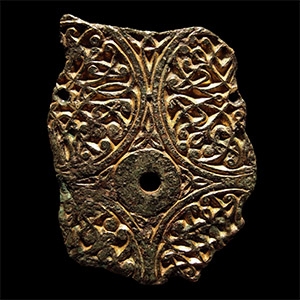
Anglo-Saxon Gilt Chip-Carved Bronze Mount
Later 8th-9th century A.D.Sold for (Inc. bp): £3,900
Irregular fragment from a bronze casket mount formed with four discoid panels each filled with dense regularly-displayed foliage and tendrils with lobe finials; central pierced disc with triquetra motifs in the spandrels; accompanied by a custom-made display stand. 13.1 grams, 44 mm (50.4 grams total, 71 mm high including stand)
Found Saxmundham, Suffolk, in the 1980s. From the collection of Dirk Kennis, Belgium.
Details of the decoration recall later 8th century items, such as the lobed tendrils and triquetra motifs on the Franks Casket; the regular disposition of elements recalls a shrine mount from Peterborough (Hammond, 1.12-d) and disc-headed pins (Hammond, 1.10-g, h). Recorded, studied, and determined by the Secretary of State’s Expert Adviser as an object of cultural interest. The Reviewing Committee on the Export of Works of Art and Objects of Cultural Interest (RCEWA) considered an application to export this object. The Committee concluded that the object satisfied the third Waverley criterion and is therefore currently not exportable.
