
Loading, please wait...
LOT 1780
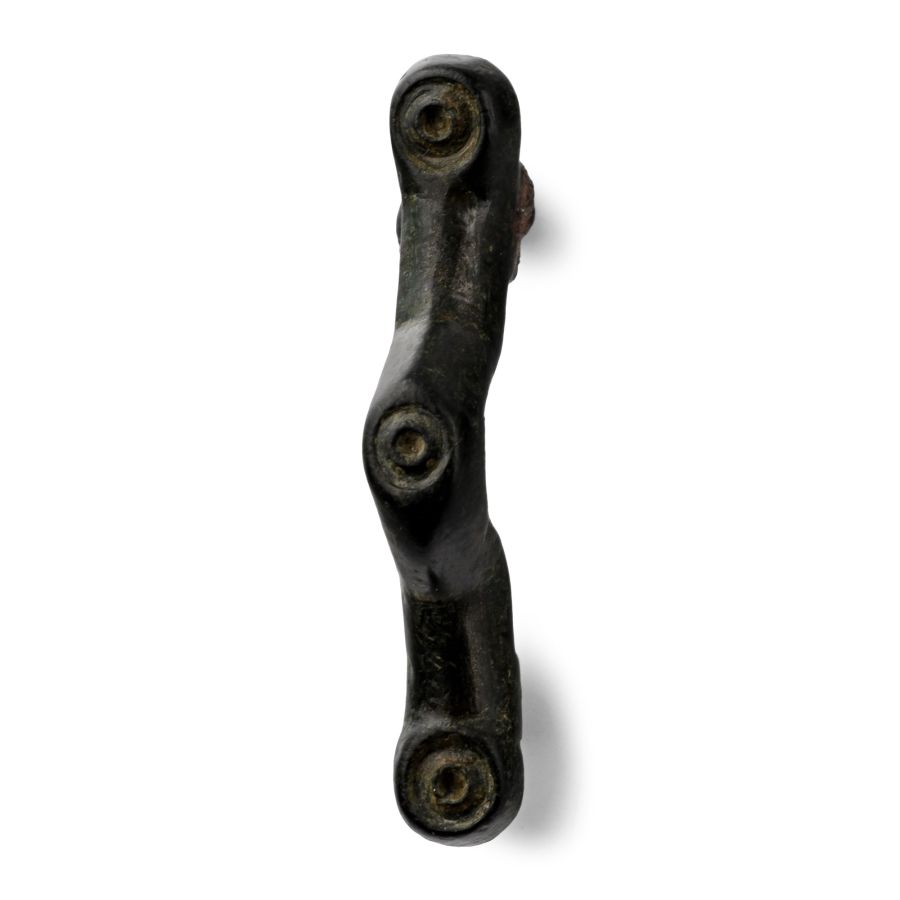
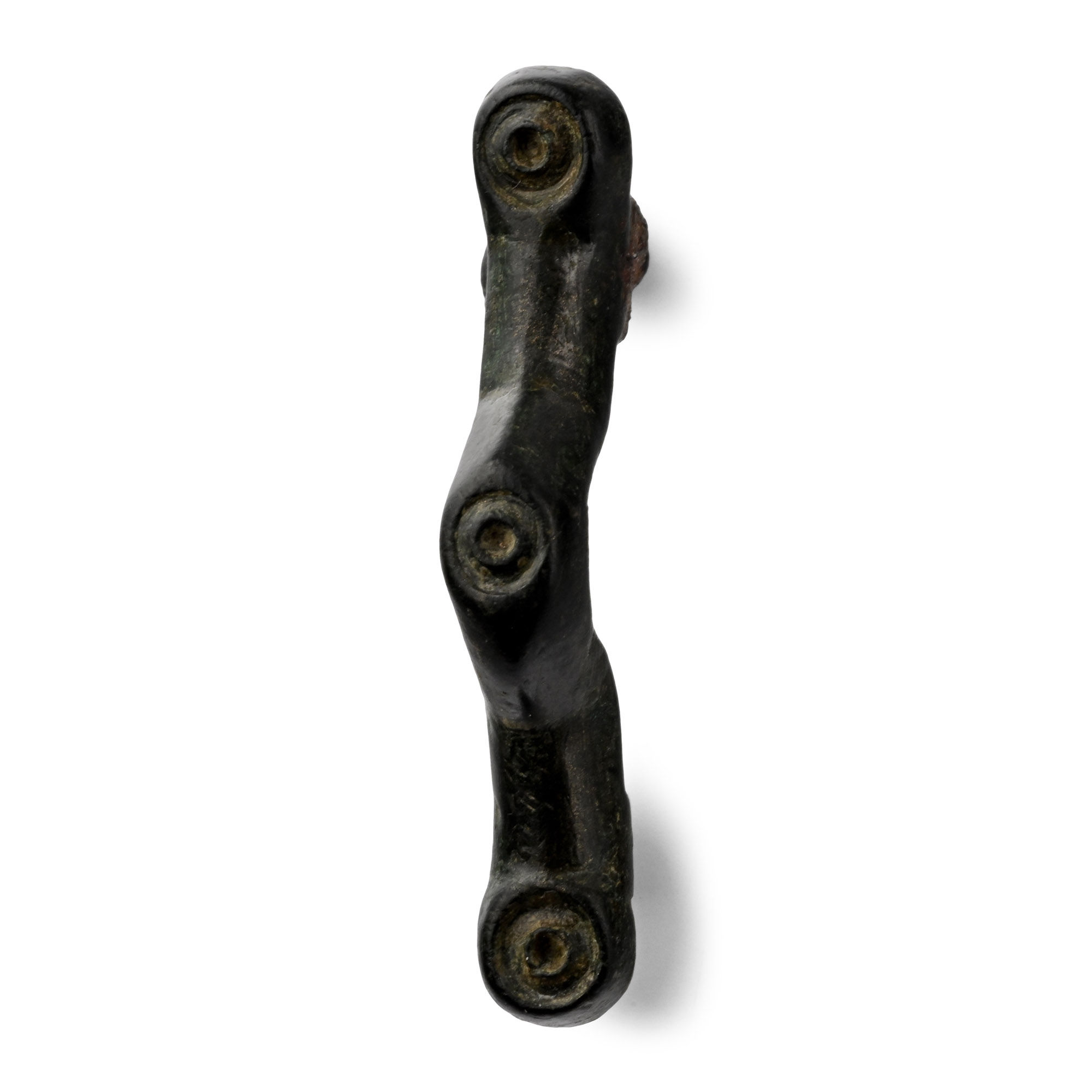
Anglo-Saxon Bronze Ansate 'Caterpillar' Brooch
8TH CENTURY A.D.
1 3/4 in. (10.1 grams, 45 mm).
Ansate type with U-section shank, three ring-and-dot motifs to the obverse, ferrous pin stub and catch to underside. [No Reserve]
ProvenanceFound North Yorkshire, UK.
Ex UK collection.
From the private collection of a Leicestershire, UK, gentleman.
This lot is accompanied by an illustrated lot declaration signed by the Head of the Antiquities Department, Dr Raffaele D'Amato.
TimeLine Auctions follows a vetting process to ensure the authenticity and legality of all items, reinforcing our commitment to integrity and responsible trading. Each antiquity, antique, and coin lot undergoes thorough examination by a vetting committee of at least ten external specialists, professional trade association members, scientists, and archaeologists: Our Vetting Process
AUCTIONS:
TimeLine is a leading auction house specialising in antiquities, ancient art, collectables, natural history, coins, medals, and books. Our auctions offer museums, collectors, historians, and enthusiasts the opportunity to acquire unique and historically significant pieces.
-
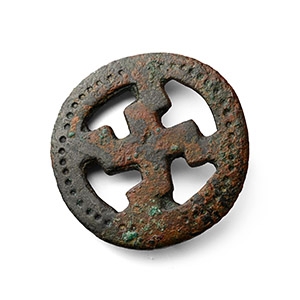
Anglo-Saxon Bronze Gammadion Disc Brooch
6th century A.D.Sold for (Inc. bp): £208
Disc brooch with four L-shaped voids spaced to form a reserved swastika motif, band of punched pellets to the rim, remains of the pin-lug and catchplate to the reverse. 20 grams, 41 mm
Found East Anglia, UK. This lot is accompanied by an illustrated lot declaration signed by the Head of the Antiquities Department, Dr Raffaele D'Amato.
The swastika, also known as a gammadion, was an ancient sun symbol that is commonly found in many cultures across the Northern hemisphere. In the Viking period it was associated with Thor and is commonly found on rune-stones and amulets connected to him. -
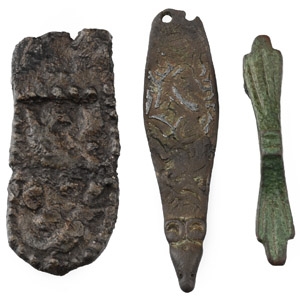
Anglo-Saxon Bronze and Lead Artefact Groop
6th-10th century A.D.Sold for (Inc. bp): £20
Comprising of tongue-shaped belt buckle with low-relief zoomorphic decoration and pelletted border; leaf-shaped strap end with zoomorphic head finial and interlaced design to one side; mount with raised centre and a pair of ribbed arms. 25 grams total, 44-55 mm
Acquired on the UK art market in the early 2000s. This lot is accompanied by an illustrated lot declaration signed by the Head of the Antiquities Department, Dr Raffaele D'Amato. -
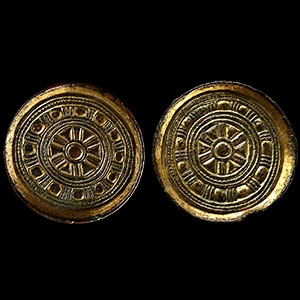
Anglo-Saxon Gilt Bronze Saucer Brooch Pair
5th-6th century A.D.Sold for (Inc. bp): £1,820
Matched pair, each with an upturned rim; concentric bands of pellets and segmented circles; pin-lug and catch to the reverse. 50 grams total, 41-42 mm
Found near Evesham, Worcestershire, UK, in 1992. This lot has been checked against the Interpol Database of stolen works of art and is accompanied by search certificate number no.12778-239464. This lot has been cleared against the Art Loss Register database, and is accompanied by an illustrated lot declaration signed by the Head of the Antiquities Department, Dr Raffaele D'Amato.
Saucer brooches are a female Saxon fashion, contemporary with the Anglian penannular and cruciform types, normally worn at the shoulders to secure a tubular dress.
