
Loading, please wait...

LOT 1749
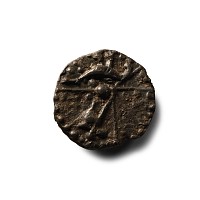
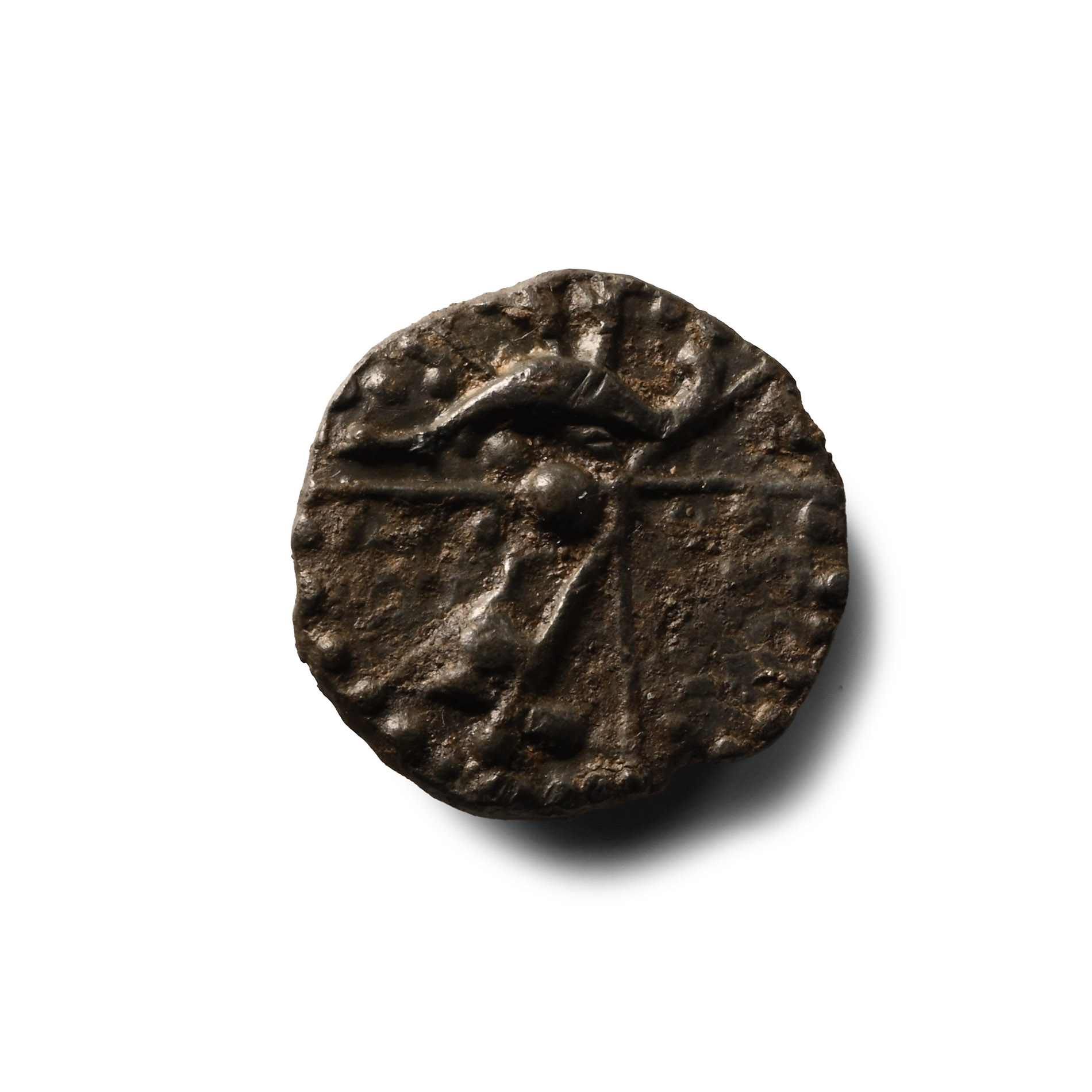
Anglo-Saxon Agnus Dei Type Pewter Brooch
CIRCA LATE 10TH-EARLY 11TH CENTURY A.D.
7/8 in. (6.68 grams, 23.65 mm).
A rare nummular brooch with pierced lugs to the reverse; low-relief design comprising a pelletted border and cross, quadruped supporting a processional cross. [No Reserve]
ProvenanceFound Lincolnshire, UK.
From a Lincolnshire, UK, collection.
Ex Paul Moore collection, 1990s-2000s.
Accompanied by a Paul Moore display card.
See British Museum accession no. 1951,0206.1, for a more elaborate form of nummular brooch.
CONDITIONTimeLine Auctions follows a vetting process to ensure the authenticity and legality of all items, reinforcing our commitment to integrity and responsible trading. Each antiquity, antique, and coin lot undergoes thorough examination by a vetting committee of at least ten external specialists, professional trade association members, scientists, and archaeologists: Our Vetting Process
AUCTIONS:
TimeLine is a leading auction house specialising in antiquities, ancient art, collectables, natural history, coins, medals, and books. Our auctions offer museums, collectors, historians, and enthusiasts the opportunity to acquire unique and historically significant pieces.
-
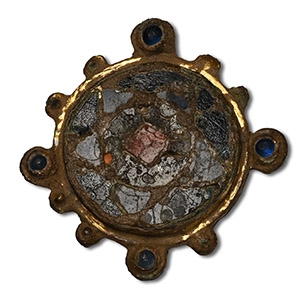
Late Saxon Enamelled Gilt Bronze Brooch
Circa 11th century A.D.Sold for (Inc. bp): £260
With circular frame enclosing a cloisonné enamel cinquefoil design in shades of blue and red, radiating lobes to the rim, each with an enamel fill. 6.29 grams, 29 mm
Acquired on the European art market since the early 2000s. From the private Northern Ireland collection of R.M. -
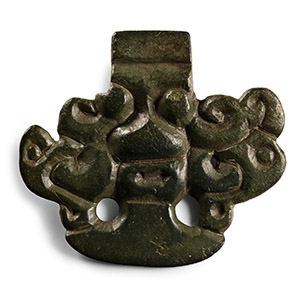
Anglo-Saxon Bronze Cruciform Brooch Terminal with Face Mask
Circa 6th century A.D.Sold for (Inc. bp): £85
Formed as a T-shaped finial from a florid cruciform brooch, with facing mask and pellet eyes, lateral bird-head lappets, pelta-shaped panel below; attachment lug to reverse and old collector's inked number '84.144'. 7.8 grams, 33 mm
Found UK. From an important old Mayfair collection. From a Leicestershire, UK, collection. -
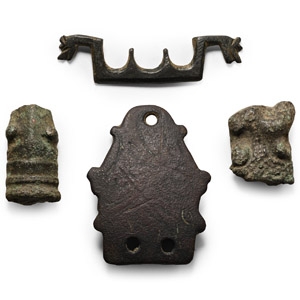
Saxon and Viking Bronze Artefact Group
6th-11th century A.D.Sold for (Inc. bp): £27
Comprising: a stirrup mount; two fragments of footplate, each from a cruciform brooch; bronze fitting (from a harp?) with addorsed beast-heads. 45 grams total, 23-50 mm
Acquired on the UK art market before 2000. Property of an Essex, UK, gentleman.
