
Loading, please wait...
LOT 1406
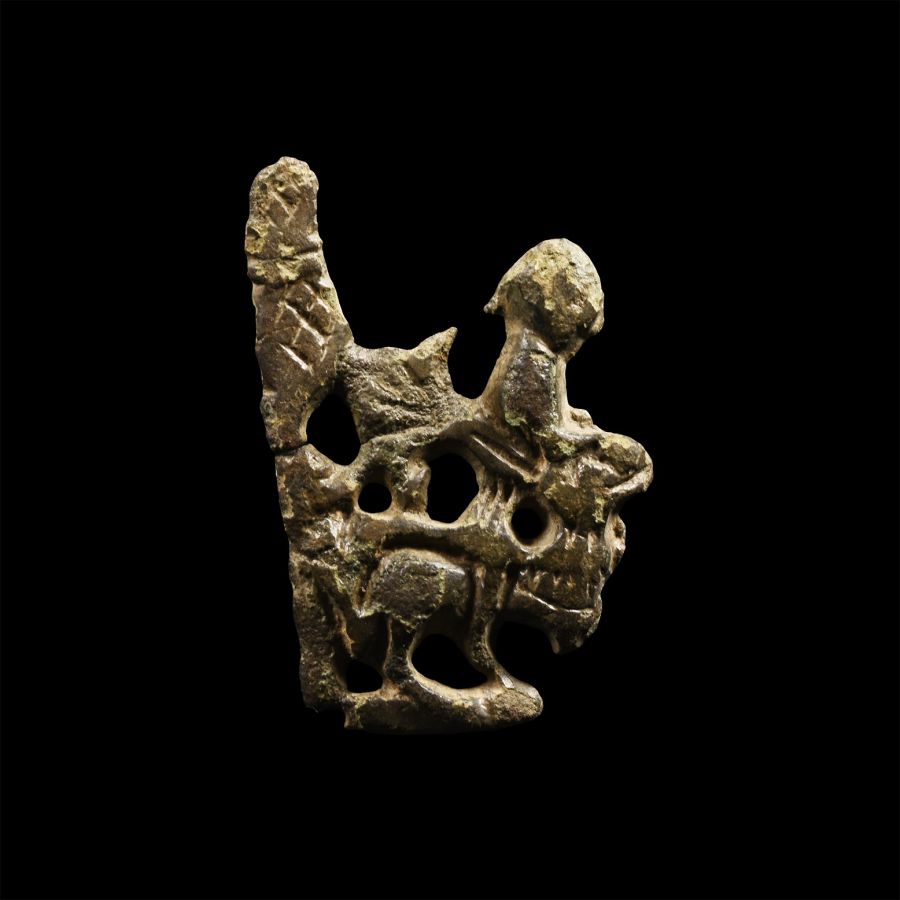
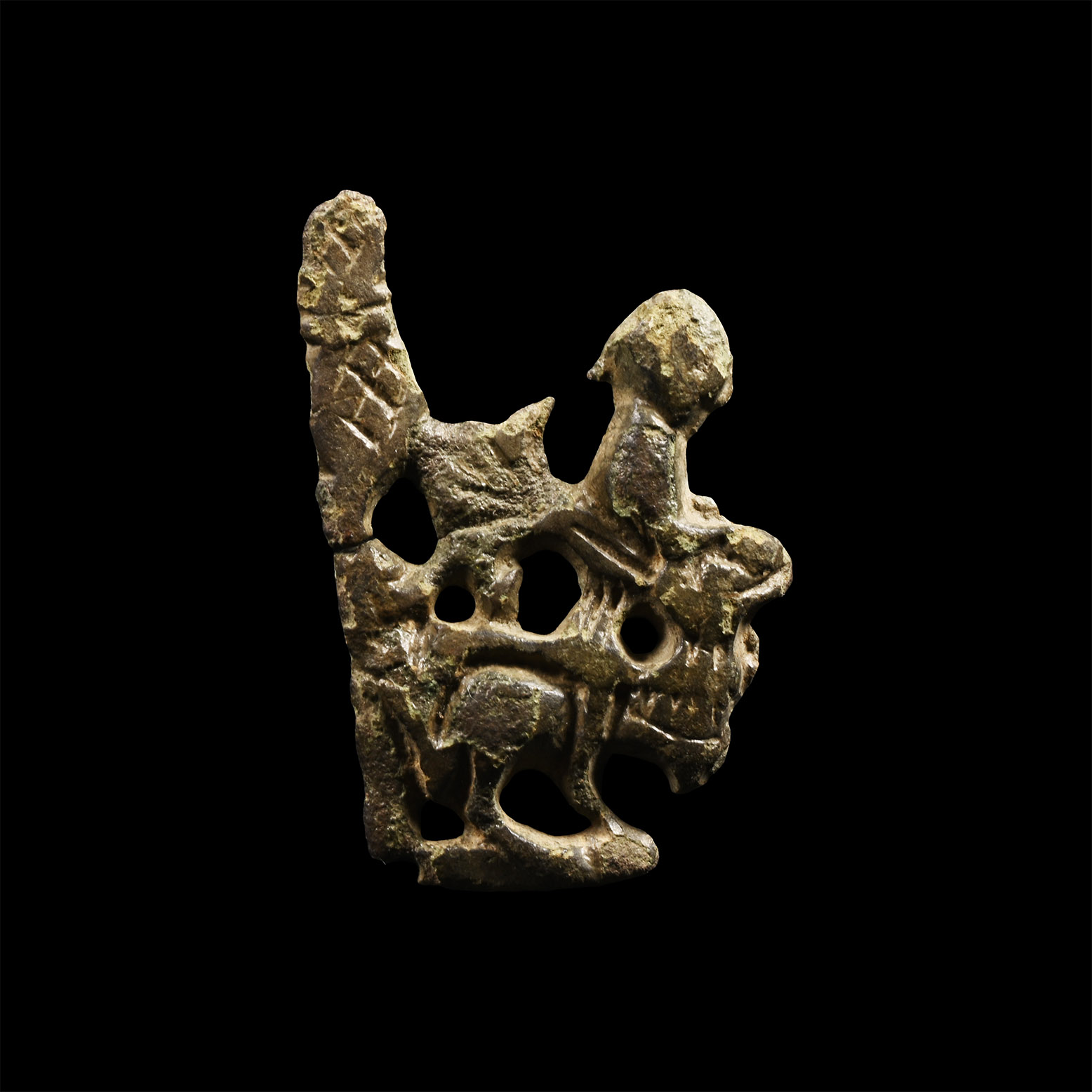
Anglo-Norman 'Thames' Bronze Dagger Chape
CIRCA 12TH CENTURY A.D.
1 1/2 in. (8.05 grams, 39 mm).
Openwork dagger sheath fitting, L-shaped border with figure of a mounted knight in a helm amid foliage; attachment points in the corner of the border. [No Reserve]
ProvenanceFound on the Thames foreshore, London, UK, circa mid 1980s.
Property of an Essex collector.
Similar to a find recorded with the PAS under reference BERK-2C6116.
CONDITIONTimeLine Auctions follows a vetting process to ensure the authenticity and legality of all items, reinforcing our commitment to integrity and responsible trading. Each antiquity, antique, and coin lot undergoes thorough examination by a vetting committee of at least ten external specialists, professional trade association members, scientists, and archaeologists: Our Vetting Process
AUCTIONS:
TimeLine is a leading auction house specialising in antiquities, ancient art, collectables, natural history, coins, medals, and books. Our auctions offer museums, collectors, historians, and enthusiasts the opportunity to acquire unique and historically significant pieces.
-
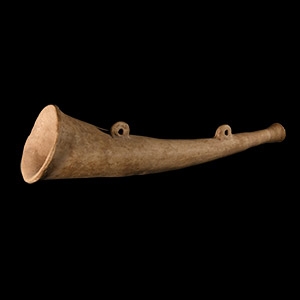
Medieval Terracotta Pilgrim's Horn
Circa 15th century A.D.Sold for (Inc. bp): £312
Formed with a slightly curved profile and with suspension loops; buff-coloured. 298 grams, 26.5 cm
Acquired 1990s-early 2000s. East Anglian private collection.
Apart from badges as souvenirs of visits to various saints’ shrines, pilgrims might also bear away with them various noise-making items such as horns, whistles, rattles and bells. The miniature horn-shaped lead whistles known from London and Salisbury bear various inscriptions including bla me [blow me] and ave maria. In the contemporary ‘morality’ play Mankind (c.1465-70) of East Anglian provenance, the character Nought says I kan pype in a Walsyngham wystyll, which suggests that such souvenir whistles were available from the shrine of Our Lady of Walsingham too, and that already such ‘tourist’ trinkets were regarded as a proverbial type of worthlessness, ‘not worth a whistle’, indeed. -
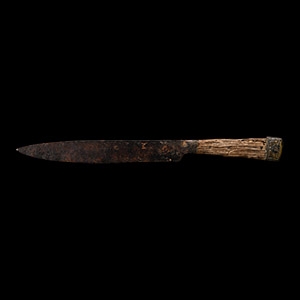
Medieval Iron Knife with Bronze Pommel
Early to mid-15th century A.D.Estimate: £150 - 200 (+bp*)
Opening Bid: £80
Comprising a single cutting edge and scale tang; bifacial pommel engraved with a foliate motif within a border. 46 grams, 20.5 cm
Acquired 1960s-1990s. Late Alison Barker collection, a retired London barrister.
Knife handles were made of wood, horn, bone or metal. Wood, a cheap, readily available and easily worked material, was by far the most common and most of the species used are both hard and flexible. -
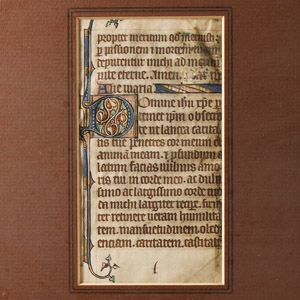
Medieval Framed Vellum Illuminated Manuscript Page
England, 14th century A.D.Sold for (Inc. bp): £4,420
Vellum manuscript page with illuminated capital in blue, green, coral and liquid gold and dense blackletter text with decorative bands in blue, white and liquid gold; Latin prayer beginning 'Domine ihu xpe' (Lord Jesus Christ) ... ut lancea caritatis tue penetres cor meum (so that the spear of your love may penetrate my heart); below, 18th century printed image of the ruins of Crowland Abbey; both in a glazed wooden frame with a burgundy reveal. 1.25 kg, 45 x 31 cm
From a Blackheath, London, UK, deceased estate. Property of a Suffolk, UK, gentleman.
