
Loading, please wait...
LOT 1454
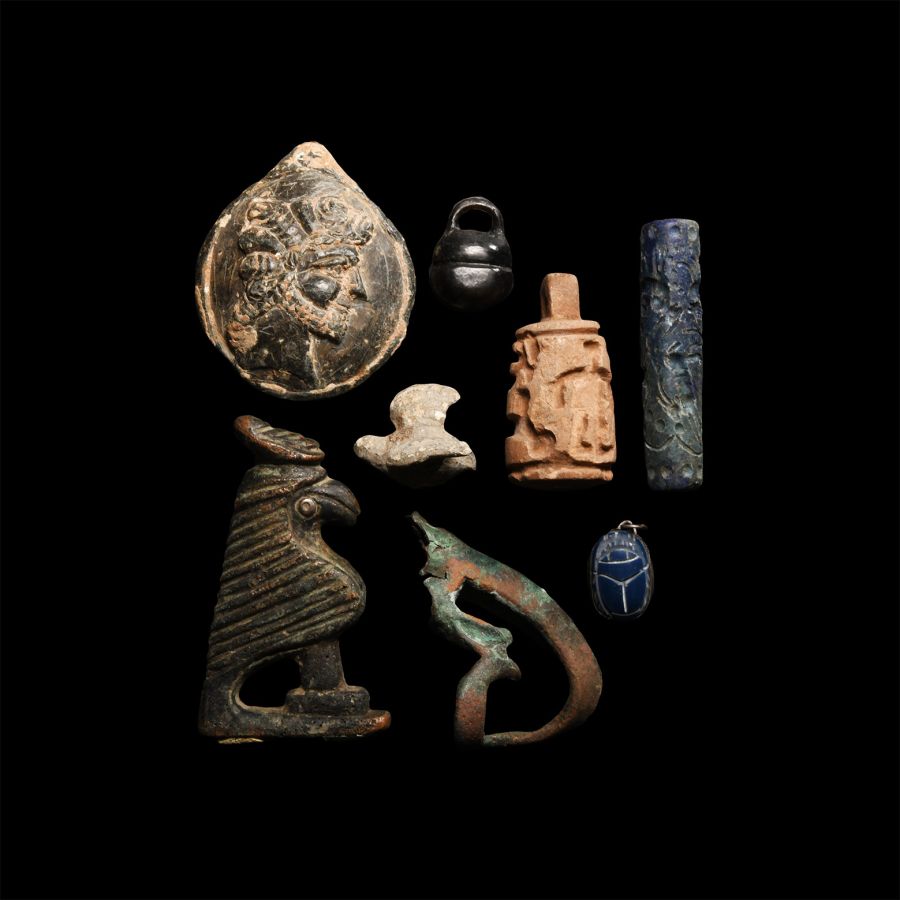
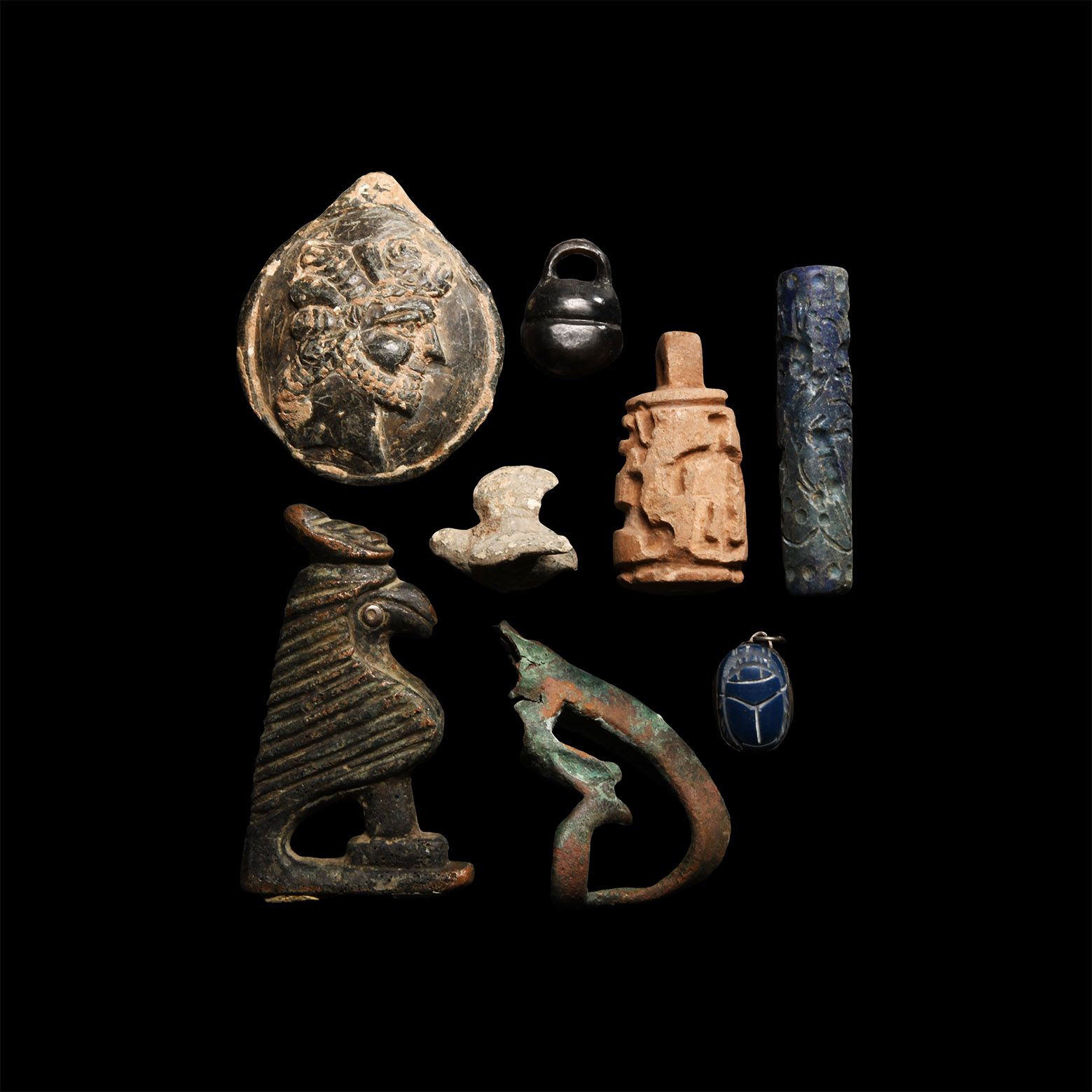
Ancient Style Object Group
20TH CENTURY A.D.
1 - 3 3/8 in. (507 grams total, 27-85mm).
A mixed group of archaistic items including a lapis lazuli cylinder seal, glazed composition scarab in white metal setting and other items. [8, No Reserve]
ProvenanceAcquired 1990s.
Ex French collection.
TimeLine Auctions follows a vetting process to ensure the authenticity and legality of all items, reinforcing our commitment to integrity and responsible trading. Each antiquity, antique, and coin lot undergoes thorough examination by a vetting committee of at least ten external specialists, professional trade association members, scientists, and archaeologists: Our Vetting Process
AUCTIONS:
TimeLine is a leading auction house specialising in antiquities, ancient art, collectables, natural history, coins, medals, and books. Our auctions offer museums, collectors, historians, and enthusiasts the opportunity to acquire unique and historically significant pieces.
-
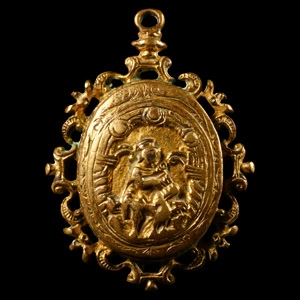
Gilt Reliquary Pendant
17th century A.D.Sold for (Inc. bp): £293
A gilt copper-alloy reliquary pendant of oval form, front face portraying the lamb with cross and flag symbolising Christ crucified, the relic visible between the openwork, solid reverse plate depicting the Virgin and Child seated beneath an arch; openwork flourishes to the frame circumference; integral suspension loop. 34.76 grams, 56 mm
Acquired early 2000s. Property of a Birmingham, UK, collector. Property of an Essex, UK, gentleman. -
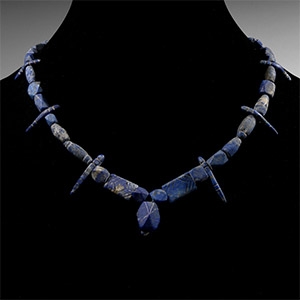
Bactrian Style Lapis Lazuli Bead Necklace
20th century A.D.Sold for (Inc. bp): £33
A string of graduated lapis lazuli beads of various types, including examples with incised geometric ornament. 43 grams, 68 cm long
Acquired 1980-2015. Ex Abelita family collection. -
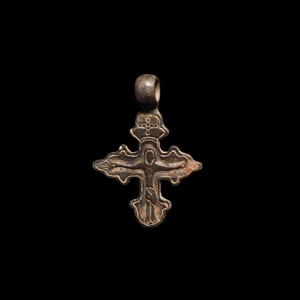
Post Medieval Silver Cross Pendant
17th-19th century A.D.Sold for (Inc. bp): £57
A silver cruciform pendant bearing the figure of Christ on the cross with elaborate arms in low-relief, a cross composed of pellets above, simple detailing to the hands, feet and loin cloth worn by Christ, suspension loop above. 6.9 grams, 38 mm
Fine condition.
Acquired on the UK art market in the late 1990s. Property of a UK gentleman.
