
Loading, please wait...
_900x900.jpg "Anatolian Obsidian Idol")
_200x200.jpg "Anatolian Obsidian Idol")
_900x900.jpg "Anatolian Obsidian Idol")
_200x200.jpg "Anatolian Obsidian Idol")
.jpg "Anatolian Obsidian Idol")
.jpg "Anatolian Obsidian Idol")
LOT 0271
Anatolian Obsidian Idol
5TH-4TH MILLENNIUM B.C.
1 3/4 in. (48.4 grams, 46 mm).
Squat and rounded in profile with hands resting on the knees.
ProvenancePrivate collection, Austria.
Private collection, Europe.
TimeLine Auctions follows a vetting process to ensure the authenticity and legality of all items, reinforcing our commitment to integrity and responsible trading. Each antiquity, antique, and coin lot undergoes thorough examination by a vetting committee of at least ten external specialists, professional trade association members, scientists, and archaeologists: Our Vetting Process
AUCTIONS:
TimeLine is a leading auction house specialising in antiquities, ancient art, collectables, natural history, coins, medals, and books. Our auctions offer museums, collectors, historians, and enthusiasts the opportunity to acquire unique and historically significant pieces.
LOT 0271
Anatolian Obsidian Idol
Estimate £1,000 - 1,400€1,160 - 1,620 (for guidance only)$1,350 - 1,890 (for guidance only)
-
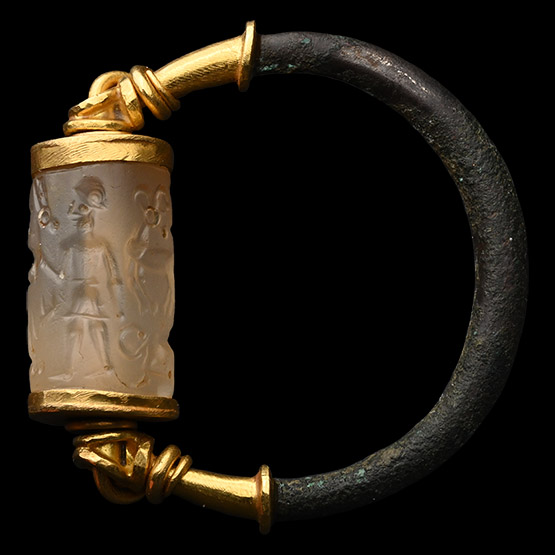
Mitanni Cylinder Seal with Animals in Gold Mounting
Circa 1500-1300 B.C.Sold for (Inc. bp): £4,680
Chalcedony cylinder seal with ancient bronze ring depicting a deer, a sphinx, an ibex, a scorpion and two profile male figures; set into a later gold mounting. 16.40 grams, 39.56 mm overall, 23.03 x 31.30 mm internal diameter (approximate size British Z+6, USA 15 1/4, Europe 36.34, Japan 34)
Ex Manfred Schwarz, acquired on the German art market before 1970. Private collection, England. This lot has been checked against the Interpol Database of stolen works of art and is accompanied by search certificate number no.13144-249540. -
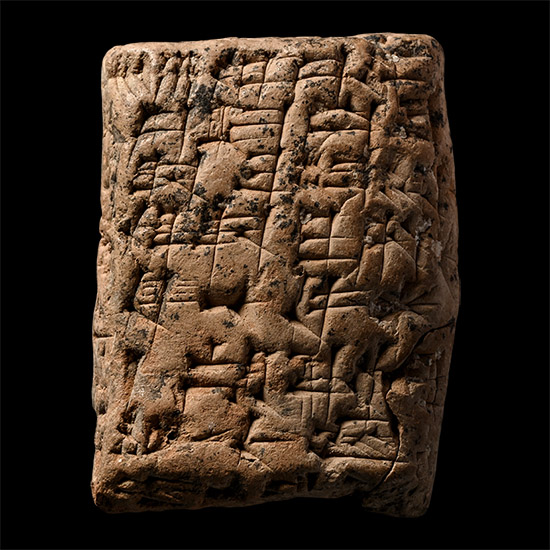
Old Babylonian Terracotta Cuneiform Tablet for The Sale of a Palm Grove during the Reign of Sumu-el
1894-1866 B.C.Sold for (Inc. bp): £1,690
A pillow-shaped tablet, with cuneiform text to the broad faces and an edge, reading: '36 sar of orchard, planted with palm trees, next to Batuli and next to Kutanum, Sin-pilah bought from Bedi-el. He paid its full price 10... of silver. He swore in the name of the king that in the future no one would dispute. Before ... Before Sîn Dayan In front of Naqimum In front of Damu In front of Munakum In the month of Kislimu, the 4th year of the priest of Nanna.' 39 grams, 47 mm
Ex private collection. with Bonhams, Antiquities, London, 21 October 1999, no.260 (Part). Private central European collection. Accompanied by copies of the relevant Bonhams catalogue pages. This lot has been checked against the Interpol Database of stolen works of art and is accompanied by search certificate number no.12244-219769. -
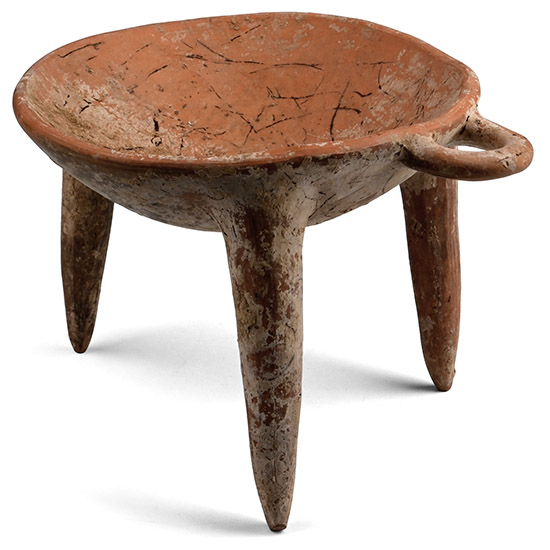
Western Asiatic Pottery Raised Tripod Dish
1st millennium B.C.Sold for (Inc. bp): £117
Shallow discoid bowl with three slender slanting legs, loop handle below rim. 635 grams, 19.5 cm wide
From the collection of a gentleman, 1988-2000s.
