
Loading, please wait...
LOT 0269
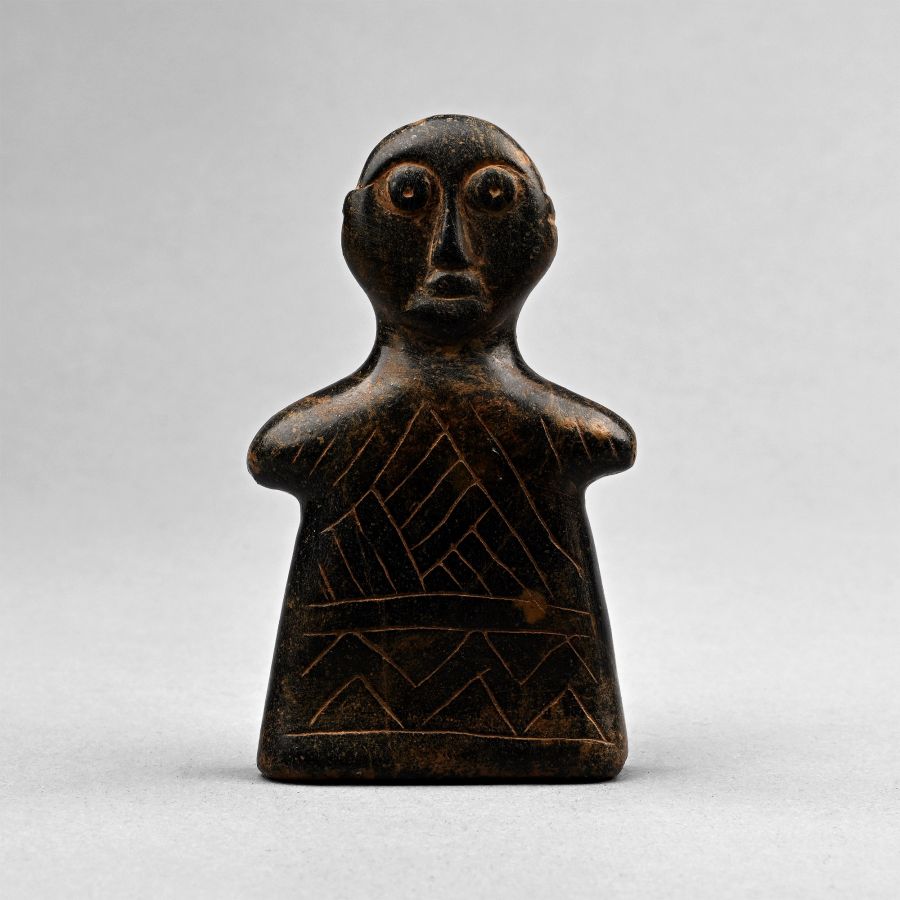
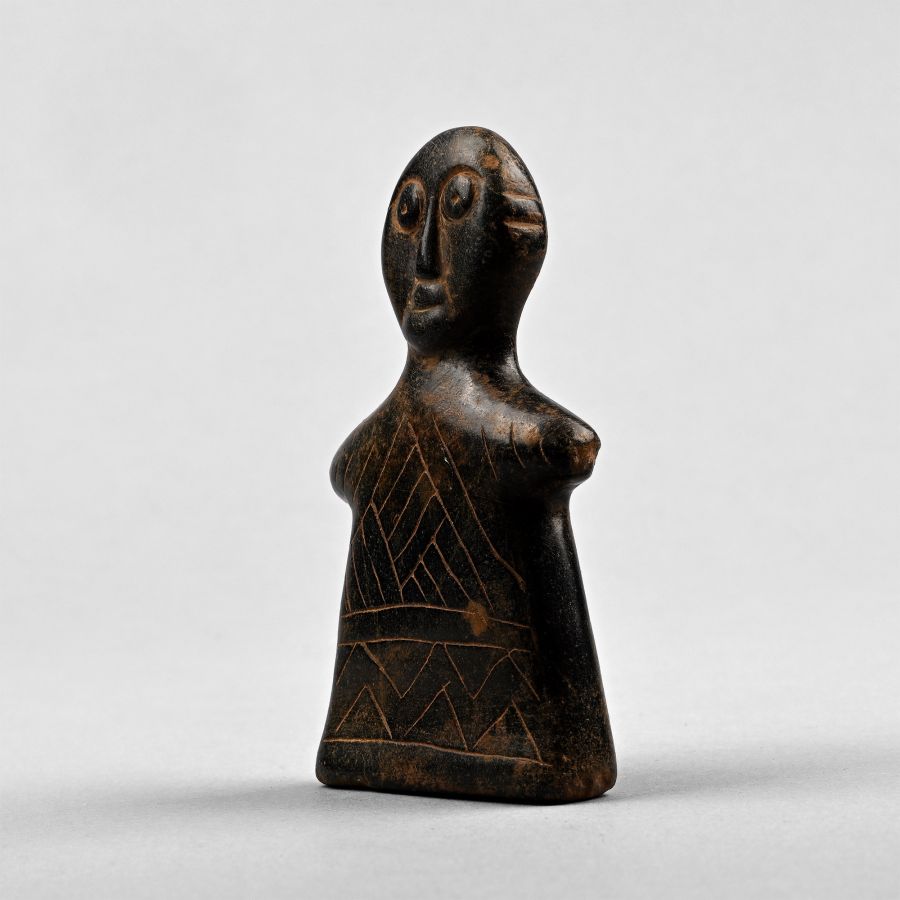
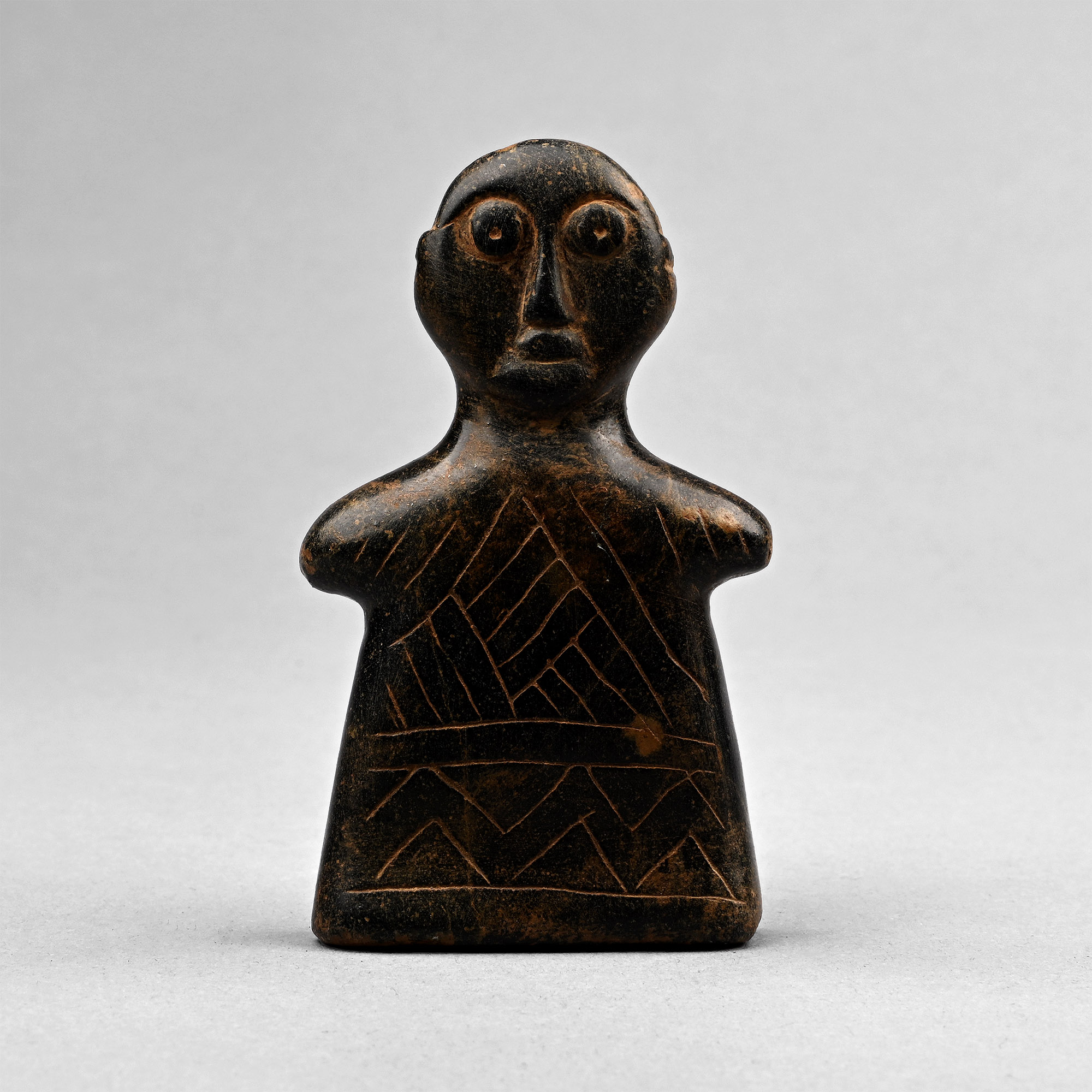
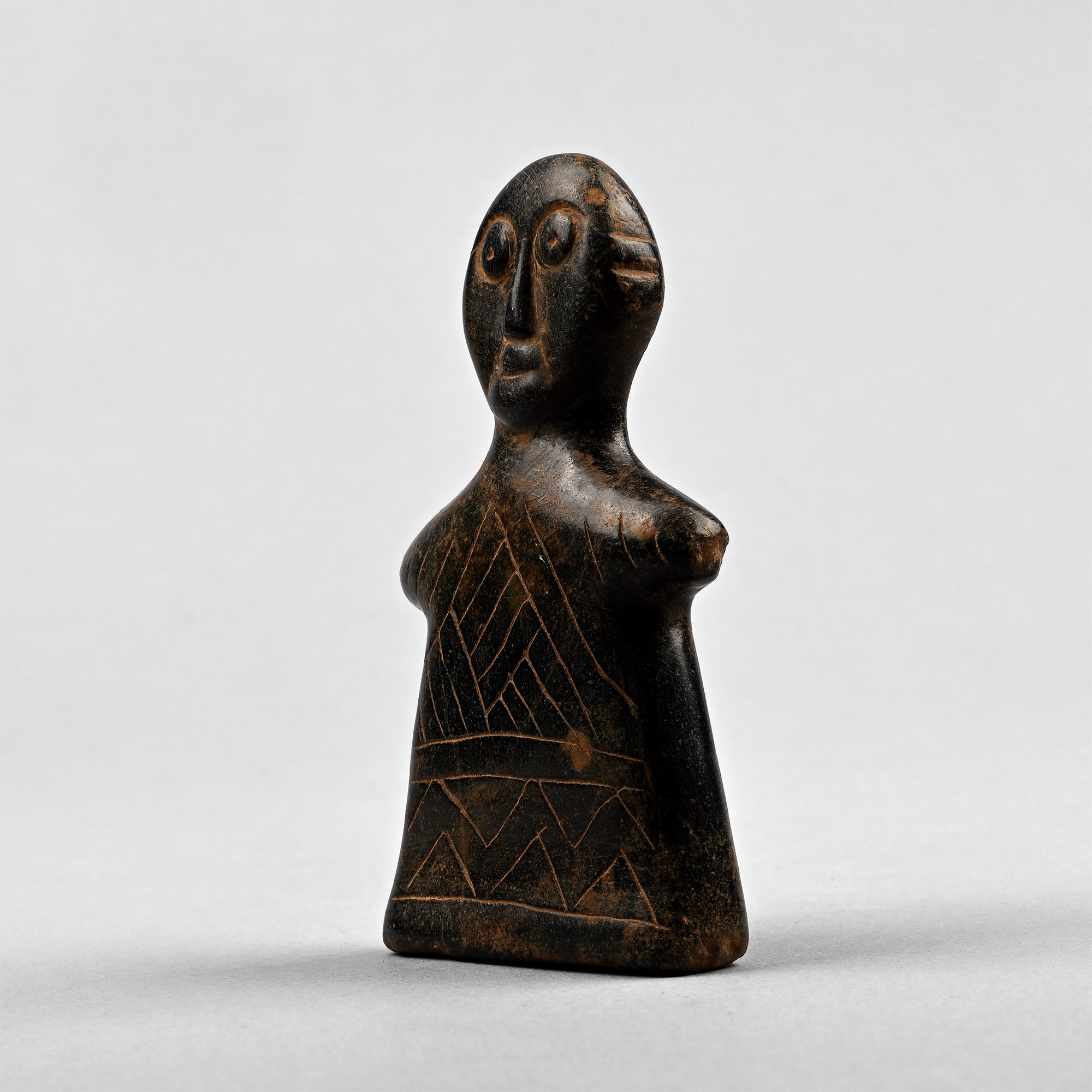
Anatolian Black Stone Idol
3RD MILLENNIUM B.C.
4 in. (156 grams, 10.1 cm).
Carved in the half-round with hatched detailing to the tunic and belt, discoid head with reserved annulet eyes and trapezoidal nose, lateral stub ears.
ProvenanceEx Swiss collection, 1980s.
Private collection, 1994.
Private collection, since the late 1990s.
This lot has been checked against the Interpol Database of stolen works of art and is accompanied by a search certificate number no.12874-241677.
Cf. for a similar idol Atakuman, Ç., ‘Figurines of the Anatolian Early Bronze Age: The assemblage from Koçumbeli-Ankara’ in Anatolian Studies, 67, Ankara, 2017, pp.85-108, fig.5.
CONDITIONTimeLine Auctions follows a vetting process to ensure the authenticity and legality of all items, reinforcing our commitment to integrity and responsible trading. Each antiquity, antique, and coin lot undergoes thorough examination by a vetting committee of at least ten external specialists, professional trade association members, scientists, and archaeologists: Our Vetting Process
AUCTIONS:
TimeLine is a leading auction house specialising in antiquities, ancient art, collectables, natural history, coins, medals, and books. Our auctions offer museums, collectors, historians, and enthusiasts the opportunity to acquire unique and historically significant pieces.
LOT 0269
Anatolian Black Stone Idol
Estimate £2,500 - 3,500€2,900 - 4,060 (for guidance only)$3,380 - 4,730 (for guidance only)
-
.jpg)
Sasanian Chalcedony Stamp Seal
5th-7th century A.D.Estimate: £300 - 400 (+bp*)
Opening Bid: £150
Plano-conves in section with suspension hole, incuse image of two nude men holding three spears in their outstretched hands, dog below. 35.8 grams, 32 mm
Private collection, England. -
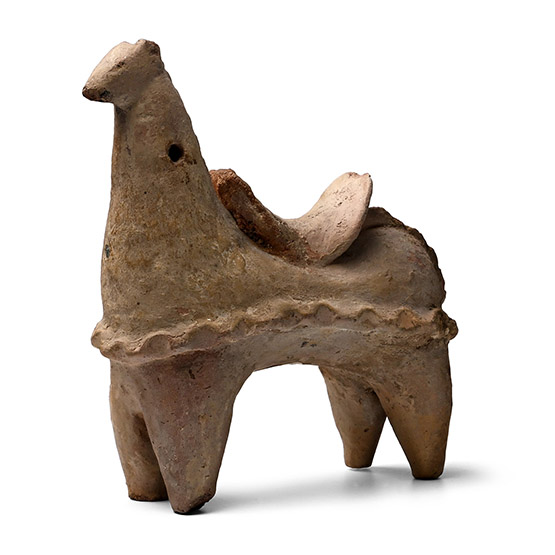
Western Asiatic Terracotta Animal with Saddle
1st millennium B.C.Estimate: £400 - 600 (+bp*)
Opening Bid: £200
Modelled in the round with crimped band to the flanks, scooped saddle, applied mane detailing; pierced at the neck to accept reins, with old label to the underside: 'YAZDANI 242C LONDON'. 770 grams, 18 cm high
UK collection, 1990s. Acquired on the UK art market, before 2000. Private collection, Mr M.V., a London-based businessman. -
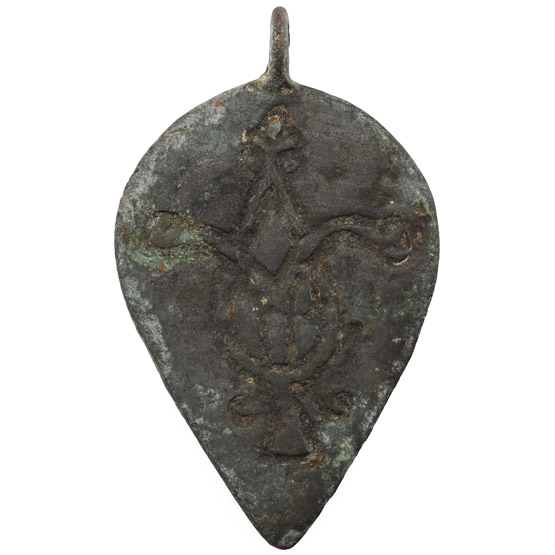
Western Asiatic Bronze Bifacial Pendant with Inscription
12th-14th century A.D.Estimate: £100 - 140 (+bp*)
Opening Bid: £50
Teardrop-shaped with integral loop, obverse with lobed plant motif, reverse with seven lines of Arabic script. 12.7 grams, 51 mm
Ex Abelita family collection, 1980s-2000s.
