
Loading, please wait...
LOT 0219
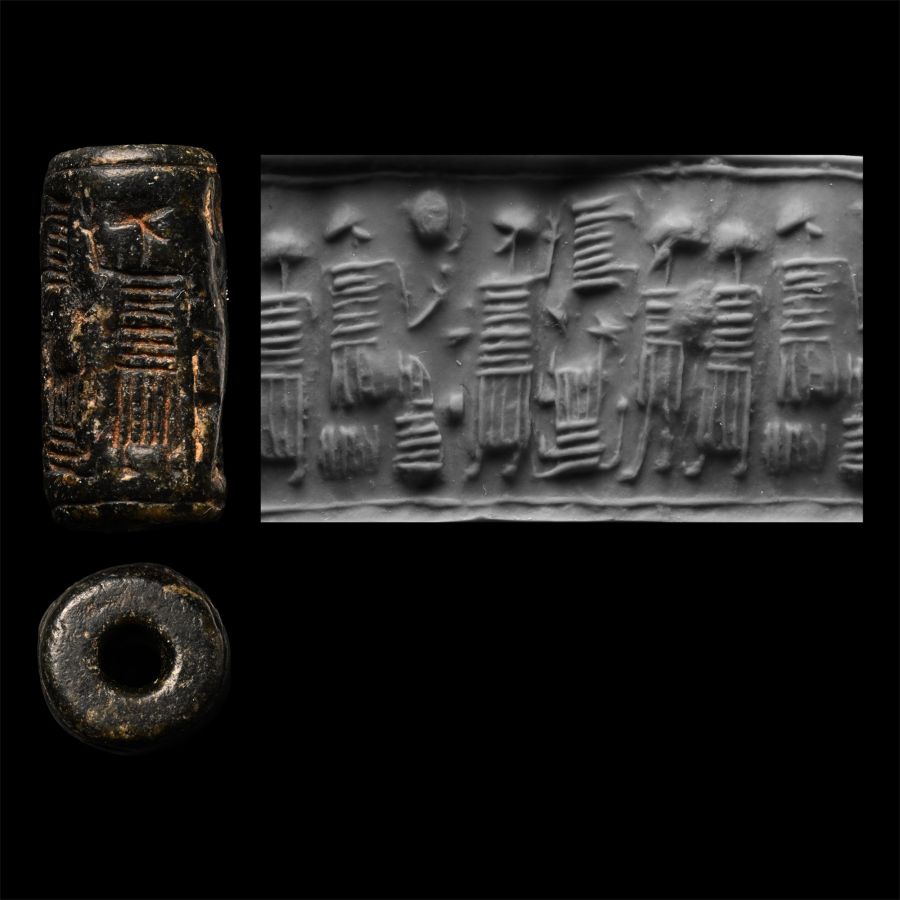
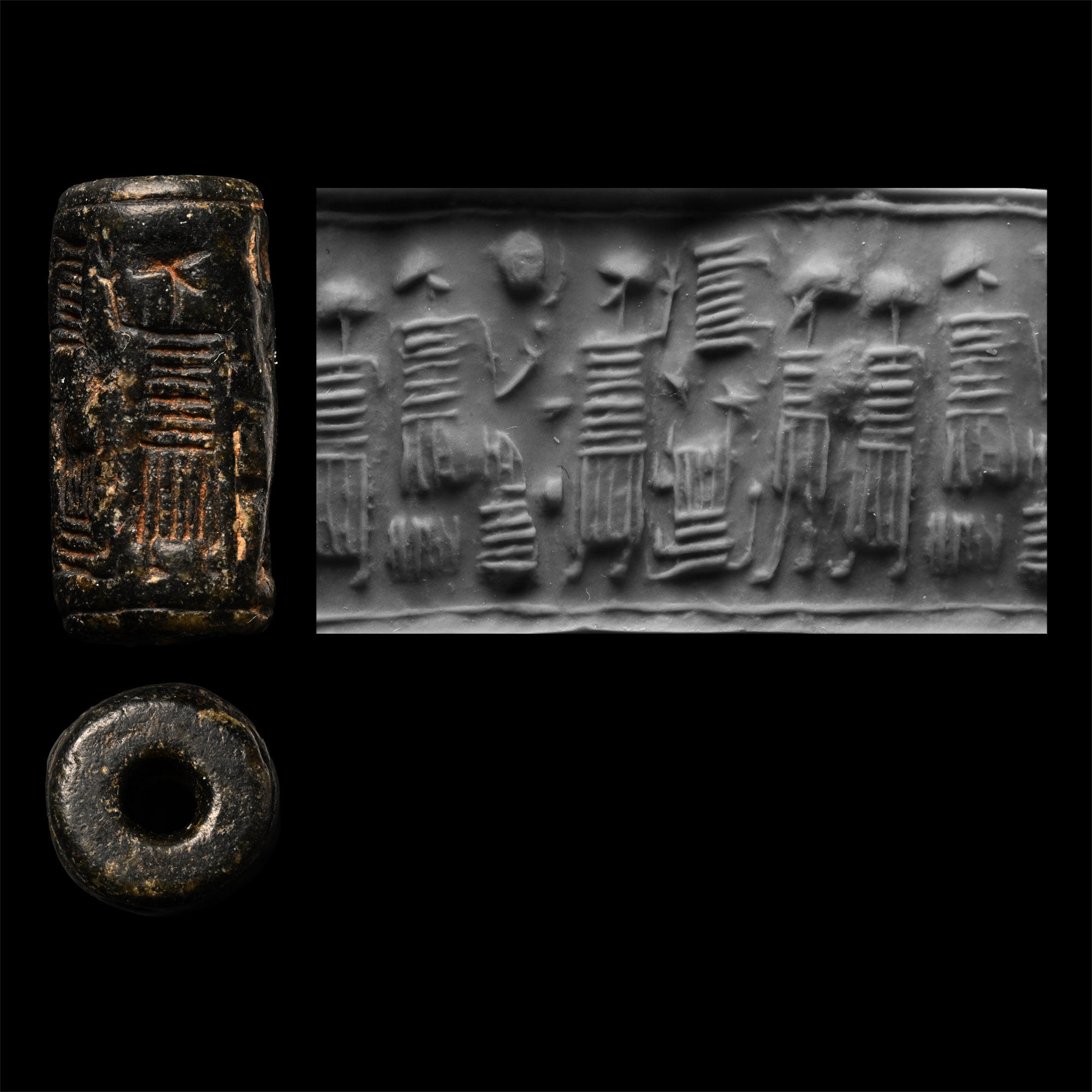
Anatolian Black Stone Cylinder Seal with Seated Figure Holding Cup Facing a Standing Figure
CIRCA 2000 B.C.
1/4 - 1 in. (8.02 grams total, 8.1-25 mm).
Cylinder with cord and bead handles; accompanied by a copy of an old scholarly note, typed and signed by W.G. Lambert, late Professor of Assyriology, University of Birmingham, 1970-1993, which states: 'Cylinder Seal of Black Stone. 25 x 13 mm, condition good. Seated figure holding up cup facing standing figure with one arm raised high, ball-staff between them, solar disc above; two further standing human figures, and two sideways quadrupeds, tête bêche to each other. The design is placed between upper and lower rules. North-Syrian or Anatolian, c. 2000 B.C.'; accompanied by a museum-quality impression. [No Reserve]
ProvenanceUK private collection, acquired 1980-1983.
Accompanied by a copy of a scholarly note, typed and signed by Professor Wilfrid George Lambert in November 1988.
This lot has been cleared against the Art Loss Register database, and is accompanied by an illustrated lot declaration signed by the Head of the Antiquities Department, Dr Raffaele D'Amato.
TimeLine Auctions follows a vetting process to ensure the authenticity and legality of all items, reinforcing our commitment to integrity and responsible trading. Each antiquity, antique, and coin lot undergoes thorough examination by a vetting committee of at least ten external specialists, professional trade association members, scientists, and archaeologists: Our Vetting Process
AUCTIONS:
TimeLine is a leading auction house specialising in antiquities, ancient art, collectables, natural history, coins, medals, and books. Our auctions offer museums, collectors, historians, and enthusiasts the opportunity to acquire unique and historically significant pieces.
LOT 0219
Anatolian Black Stone Cylinder Seal with Seated Figure Holding Cup Facing a Standing Figure
Sold for (Inc. bp): £312
-

Western Asiatic Terracotta Storage Jar with Procession of Ibexes
Circa 1st millennium B.C.Sold for (Inc. bp): £390
Globular with flared rim, horizontal painted bands to the shoulder and equator, wavy line beneath and frieze of ibexes above. 768 grams, 15.7 cm high
From a collection acquired on the UK art market from various auction houses and collections mostly before 2000. From an important Cambridgeshire estate; thence by descent. This lot has been cleared against the Art Loss Register database, and is accompanied by an illustrated lot declaration signed by the Head of the Antiquities Department, Dr Raffaele D'Amato.
The images of the ibex attested as the most ancient figures date back to the discovery of the beakers of Susa ca. 4000 B.C. There are several such beakers in the museums, all coming from the excavations of the prehistoric levels of Susa (later on becoming the Elamite Shushan, modern Shush, Iran). The ibex is portrayed in a non-naturalistic way, with the use of simple shapes, such as triangles. The horns of the goat arch back over itself, forming a circle over its body. The beakers of Susa have the following elements in common: the large ibex image, with exaggerated horns, and figures of wavy lines symbolising water and rain. -
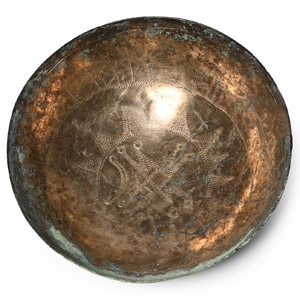
Sasanian Decorated Bronze Bowl
3rd-7th century A.D.Estimate: £200 - 300 (+bp*)
Opening Bid: £100
Hemispherical bowl with a decorative frieze to the inner rim, central solar motif surrounding a stylised cross motif. 118 grams, 14.3 cm
Acquired 1980-2015. Ex Abelita family collection. This lot has been cleared against the Art Loss Register database, and is accompanied by an illustrated lot declaration signed by the Head of the Antiquities Department, Dr Raffaele D'Amato. -
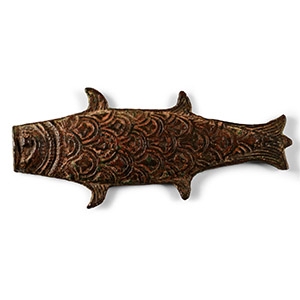
Western Asiatic Bronze Cosmetic Fish Palette
12th century A.D.Estimate: £150 - 200 (+bp*)
Opening Bid: £75
Formed as a shallow fish-shaped dish with scale and gill detailing to the underside; remains of pigment to upper face. 20.7 grams, 86 mm
Ex London, UK, gallery, 1971-early 2000s. London, UK, collection. This lot has been cleared against the Art Loss Register database, and is accompanied by an illustrated lot declaration signed by the Head of the Antiquities Department, Dr Raffaele D'Amato.
