
Loading, please wait...
LOT 0256
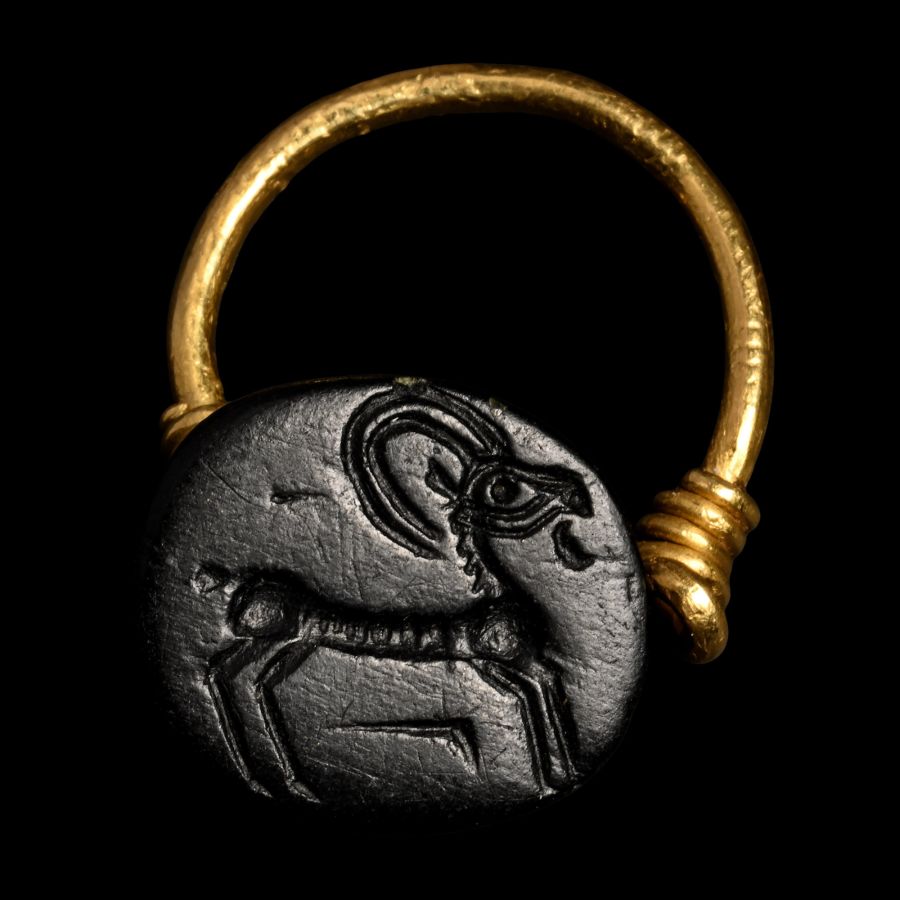
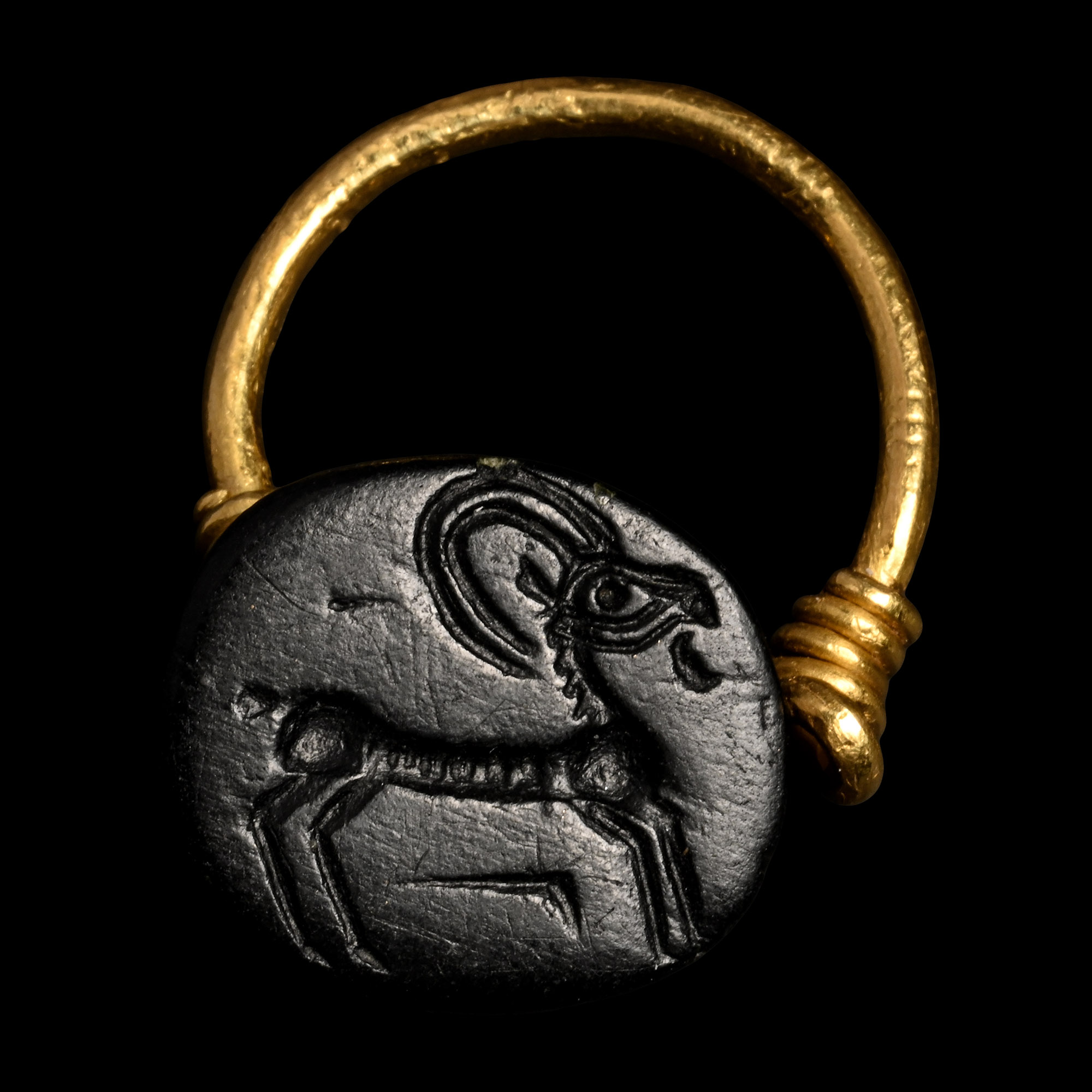
Anatolian Black Steatite Gemstone in Gold Ring
2ND-1ST MILLENNIUM B.C.
1 1/4 in. (8.66 grams, 31.12 mm overall, 19.63 mm internal diameter (approximate size British Q, USA 8, Europe 17.49, Japan 16)).
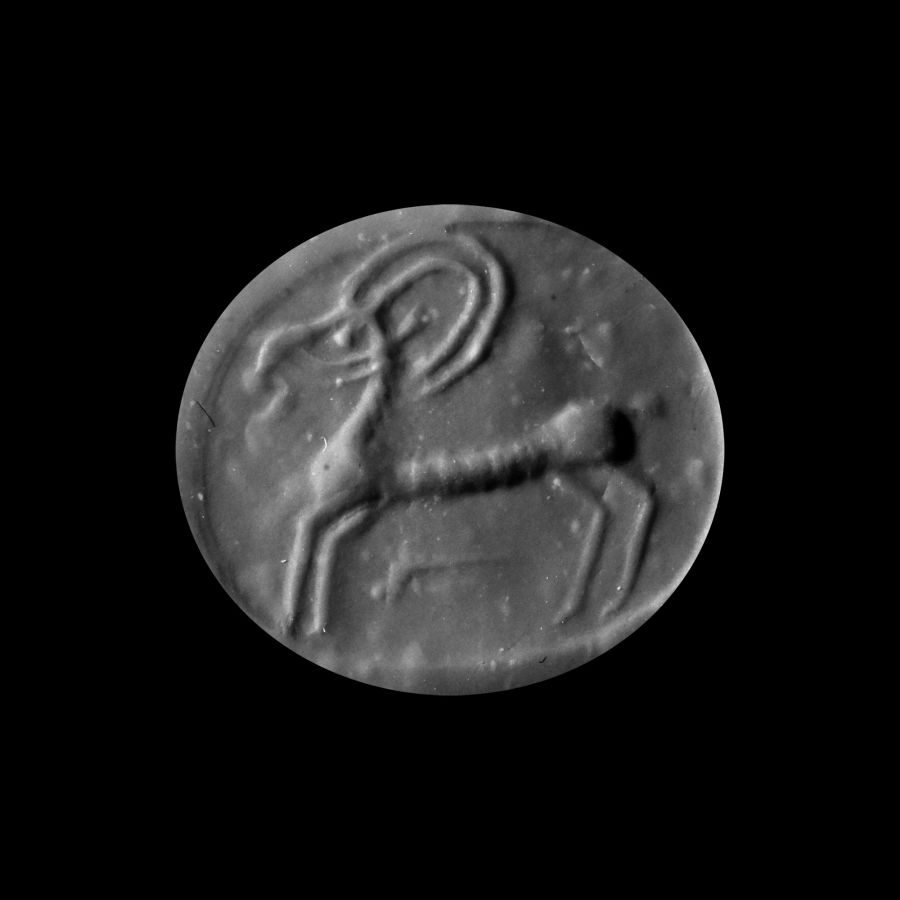
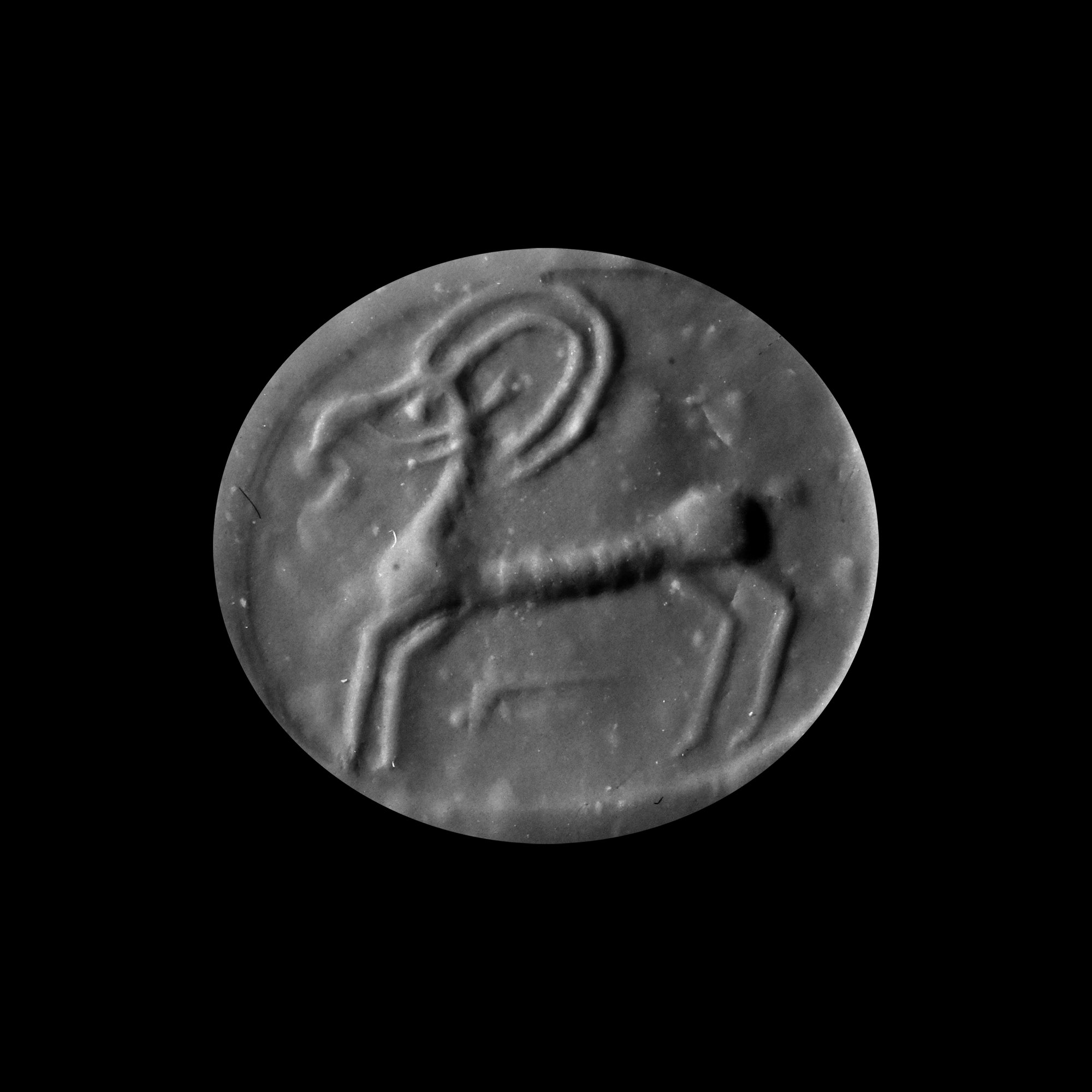
Discoid plano-convex stamp-seal with transverse piercing, incuse profile image of an ibex with angular motif below the flank; set into a later sympathetic gold swivel ring; supplied with a museum-quality impression.
Provenancewith Gorny and Mosch, Munich, 12 December 2019, no.657 (Part).
Private collection, England.
Cf. Chadour, A.B., Rings. The Alice and Louis Koch Collection, volume I, Leeds, 1994, item 39, for type.
CONDITIONTimeLine Auctions follows a vetting process to ensure the authenticity and legality of all items, reinforcing our commitment to integrity and responsible trading. Each antiquity, antique, and coin lot undergoes thorough examination by a vetting committee of at least ten external specialists, professional trade association members, scientists, and archaeologists: Our Vetting Process
AUCTIONS:
TimeLine is a leading auction house specialising in antiquities, ancient art, collectables, natural history, coins, medals, and books. Our auctions offer museums, collectors, historians, and enthusiasts the opportunity to acquire unique and historically significant pieces.
-
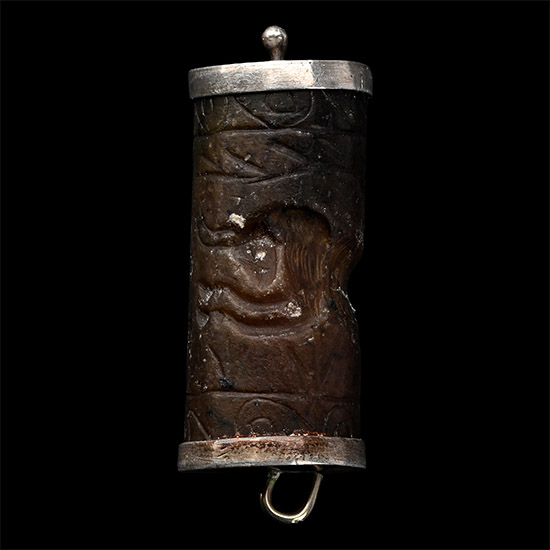
Early Achaemenid Stone Cylinder Seal with Later Silver Casing
600-500 B.C. or laterSold for (Inc. bp): £468
With incuse frieze depicting a leaping bull between tendrils, wave pattern to borders, set into a later silver casing with pendant loop. 19.79 grams, 43 mm
Acquired on the USA art market. Private collection, England. -
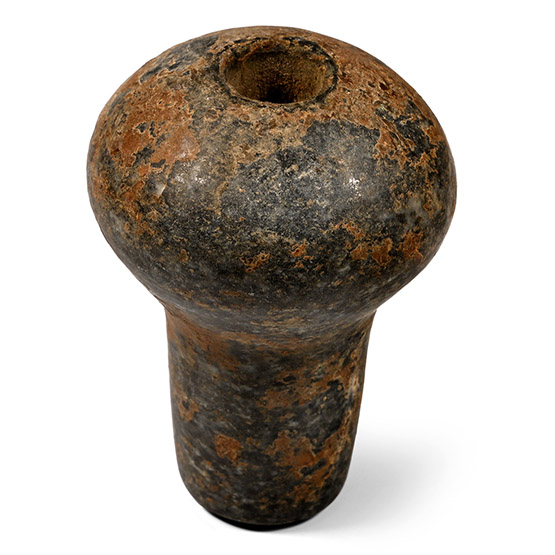
Western Asiatic Stone Macehead
3rd millennium B.C.Sold for (Inc. bp): £117
With plain globular body and circular short shaft. 310 grams, 83 mm
Ex London, UK, collection, 1990-2000s.
The mace in the Middle East was of great importance, and widely used in fighting activities at the end of the 4th millennium B.C. Many maces of simple spherical or pear-shaped profile have been found there, and they were quickly utilised by the military commanders as symbol of power and rank; limestone maces are still attested in the Marlik culture of 14th-10th century B.C. -
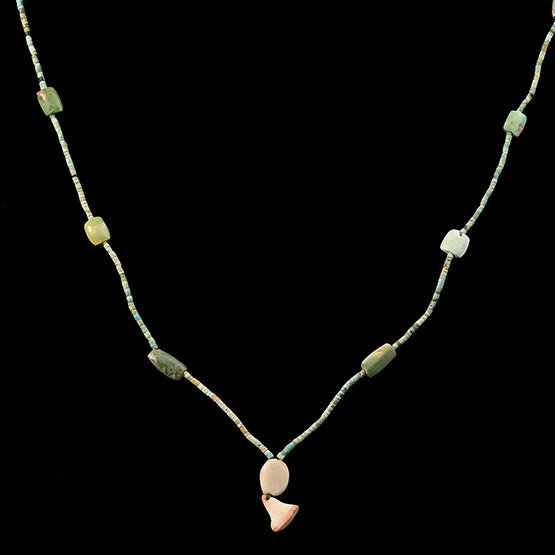
Bactrian Turquoise Bead Necklace
1st millennium B.C.Sold for (Inc. bp): £130
Restrung designer group of turquoise-coloured seed beads with fan-shaped, lentoid and other beads. 4.57 grams, 56.5 cm
Ex Jack Ogden and Faustus Gallery, Mayfair, London, UK, 1980s-1990s, and latterly a London gentleman's collection.
