Loading, please wait...

An Exceptional Western Asiatic Banded Agate Bead with Gold Caps An Exceptional Western Asiatic Banded Agate Bead with Gold Caps An Exceptional Western Asiatic Banded Agate Bead with Gold Caps An Exceptional Western Asiatic Banded Agate Bead with Gold Caps An Exceptional Western Asiatic Banded Agate Bead with Gold Caps An Exceptional Western Asiatic Banded Agate Bead with Gold Caps
Use mousewheel to zoom in and out, click to enlarge
Details

LOT 1468

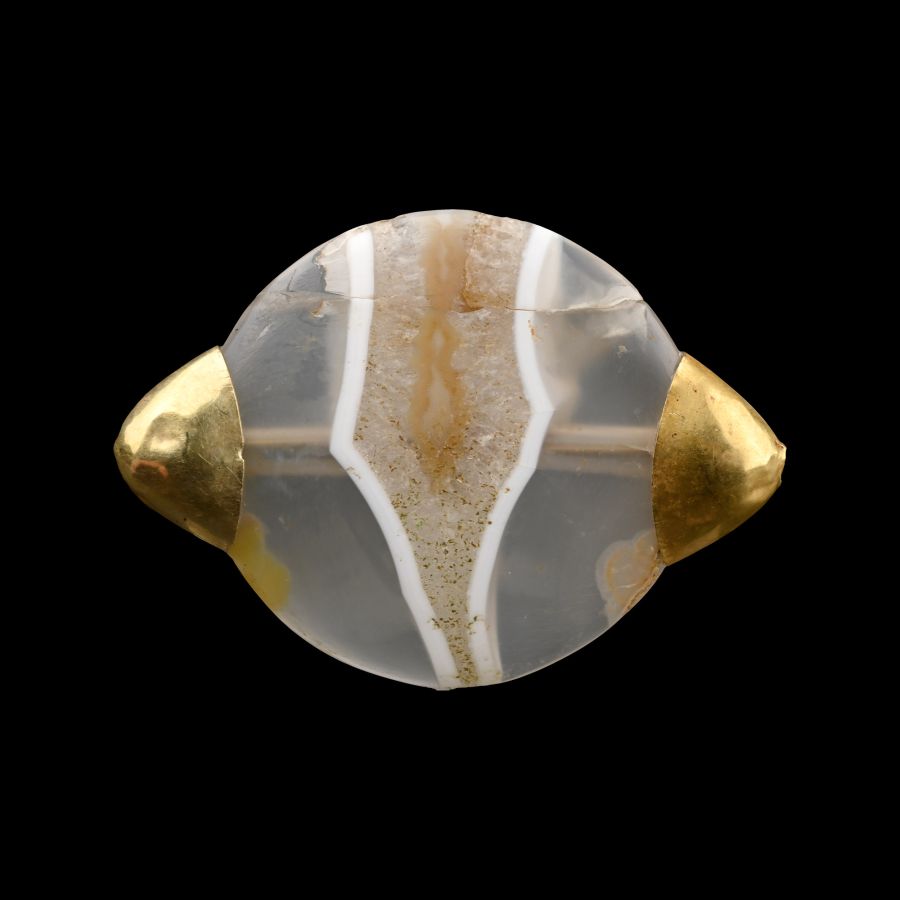
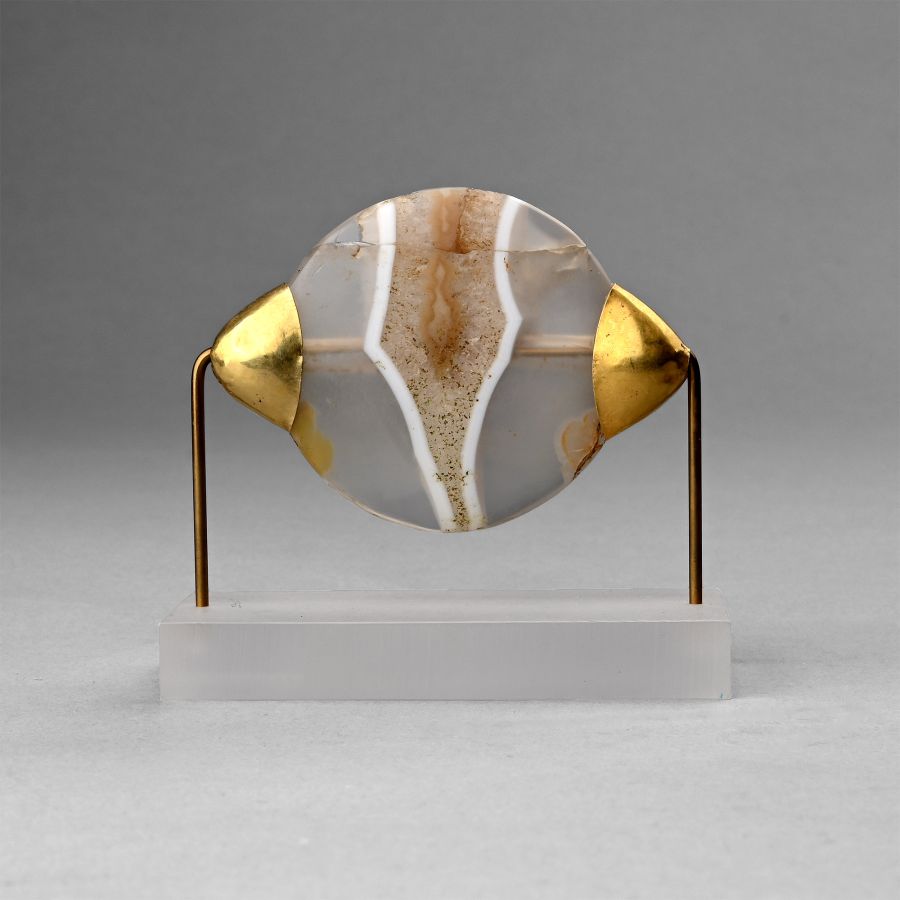
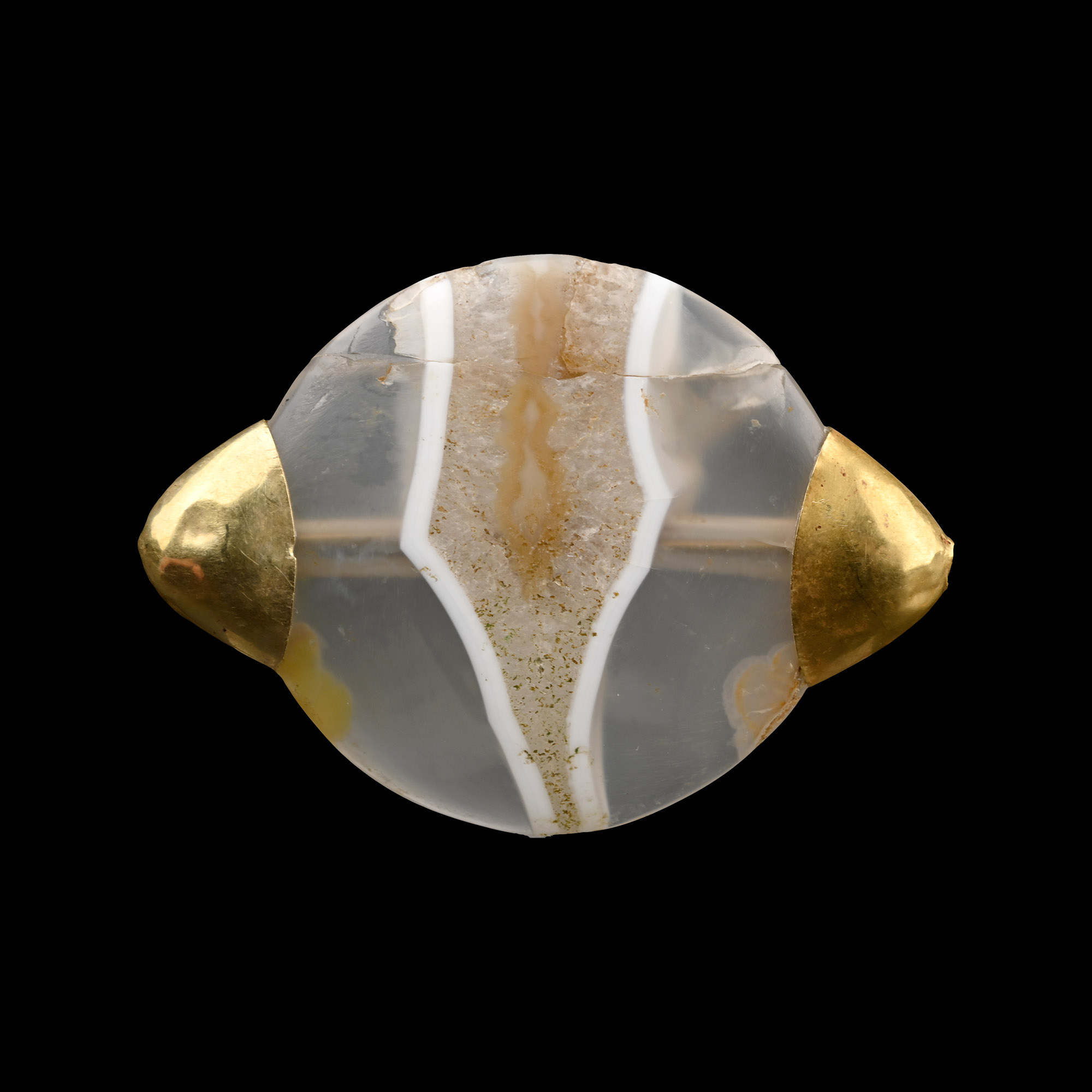
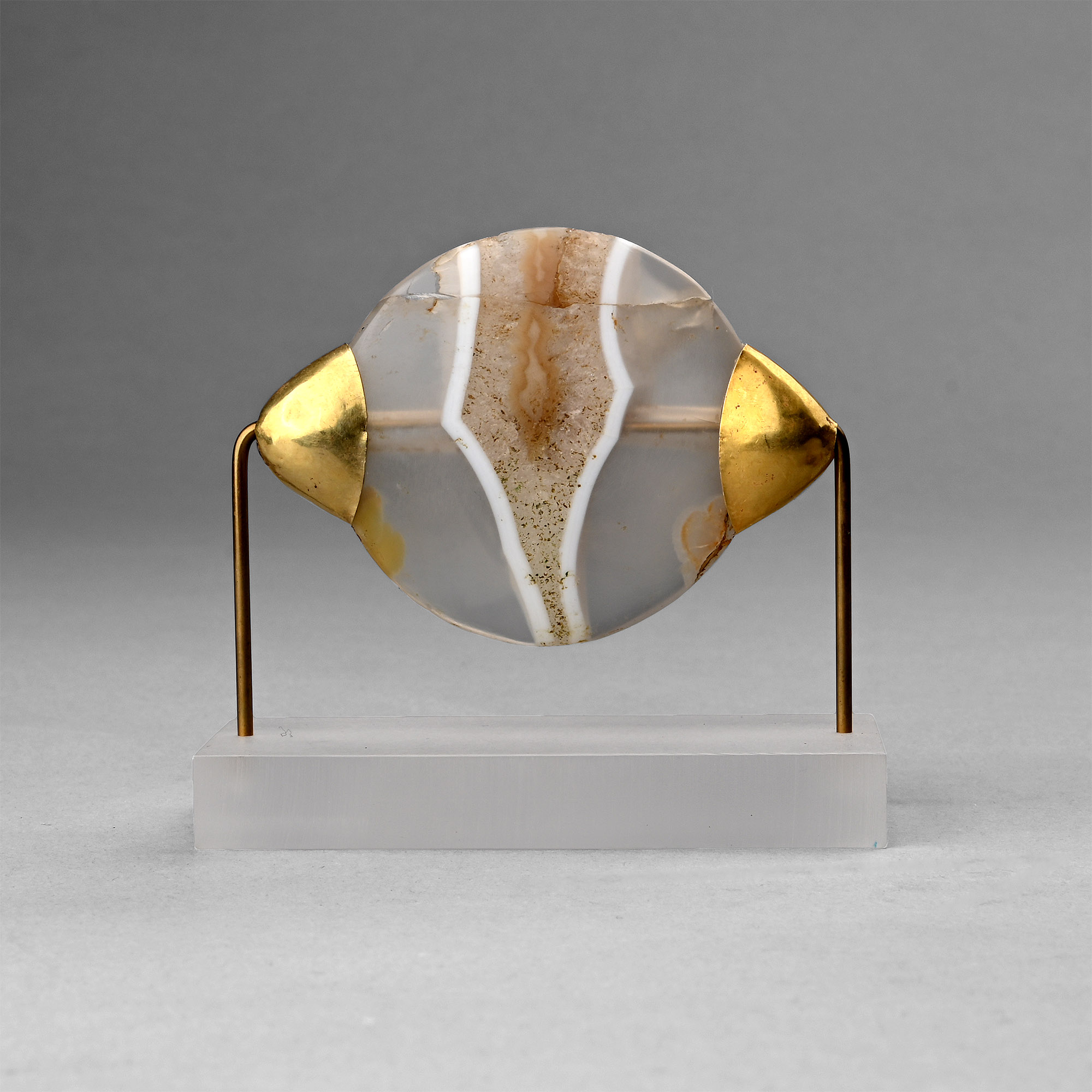
An Exceptional Western Asiatic Banded Agate Bead with Gold Caps

2ND-1ST MILLENNIUM B.C.

3 1/4 in. (88 grams total, 84 mm wide including stand).

Discoid in plan and pierced transversely with D-shaped gold caps to each end; mounted on a custom-made stand.

Provenance

Private collection, acquired on the UK art market, 2000.
Private collection, Switzerland.

This lot has been checked against the Interpol Database of stolen works of art and is accompanied by a search certificate number no.12877-241681.

CONDITION
VETTING:

TimeLine Auctions follows a vetting process to ensure the authenticity and legality of all items, reinforcing our commitment to integrity and responsible trading. Each antiquity, antique, and coin lot undergoes thorough examination by a vetting committee of at least ten external specialists, professional trade association members, scientists, and archaeologists: Our Vetting Process


AUCTIONS:

TimeLine is a leading auction house specialising in antiquities, ancient art, collectables, natural history, coins, medals, and books. Our auctions offer museums, collectors, historians, and enthusiasts the opportunity to acquire unique and historically significant pieces.

LOT 1468

An Exceptional Western Asiatic Banded Agate Bead with Gold Caps

Estimate £2,000 - 3,000€2,320 - 3,480 (for guidance only)$2,700 - 4,050 (for guidance only)

Print page

RELATED LOTS
  • Mesopotamian Terracotta Cuneiform Tablet
    Mesopotamian Terracotta Cuneiform Tablet
    2nd millennium B.C.

    Sold for (Inc. bp): £975

    A discoid tablet with cuneiform text covering one side, the other side divided into three sections, with one section containing cuneiform text. 42.9 grams, 45 mm


    From the private collection of a European gentleman (1942-2024), formed since the 1970s.

    Lot Details

  • Elamite Schist Stamp Seal with Married Couple
    Elamite Schist Stamp Seal with Married Couple
    2nd millennium B.C.

    Sold for (Inc. bp): £78

    Discoid in plan with concentric rings and knop handle to reverse; incuse image of two figures embracing, objects in the field; supplied with a museum-quality impression. 14.22 grams, 31.83 mm


    From the private collection of a European gentleman (1942-2024), formed since the 1970s.

    Lot Details

  • Akkadian Bronze Bowl for King Manishtushu
    Akkadian Bronze Bowl for King Manishtushu
    2270–2255 B.C.

    Estimate: £40,000 - 60,000 (‡+bp*)

    Opening Bid: £20,000

    Hemispherical in profile with a thin rim; inscribed rectangular panel with three fields, two each with a glyph and the right field with five cuneiform characters referencing King Manishtushu. 273 grams, 13.5 cm


    Private collection, London, UK. Swiss private family collection. Believed to be from the same ownership as the bronze bowl sold at Sotheby’s, London, 21 April 1975, no.238. Accompanied by a copy of an Art Loss Register certificate, no.99066. This lot has been checked against the Interpol Database of stolen works of art and is accompanied by search certificate number no.13197-249183.

    Manishtushu (Akkadian: Man-iš-tušu), son of Sargon of Akkad and brother and successor of Rimush, reigned as king of the Akkadian Empire c. 2270-2255 BC (Middle Chronology). His reign is known primarily from royal inscriptions, administrative texts, and later king lists. Manishtushu consolidated imperial control following internal revolts suppressed under Rimush and pursued military campaigns in both southern Mesopotamia and the Persian Gulf region, notably leading an expedition across the sea, probably to Magan (modern Oman), to secure supplies of diorite and metals for monumental construction. He is particularly associated with extensive land purchases in northern Babylonia, recorded on inscribed stone monuments, which provide rare insight into Akkadian legal and economic practices. These texts suggest a deliberate policy of royal acquisition and redistribution of land, possibly to strengthen central authority. Manishtushu also undertook significant building projects, including temple works at Nippur and elsewhere, dedicating offerings to major deities such as Enlil. His reign ended violently, and later tradition suggests he was assassinated in a palace conspiracy, after which he was succeeded by his son Naram-Sin, under whom the empire reached its greatest territorial extent.

    Lot Details

Stay up-to-date with the latest from TimeLine Auctions by joining our mailing list