
Loading, please wait...
LOT 1034
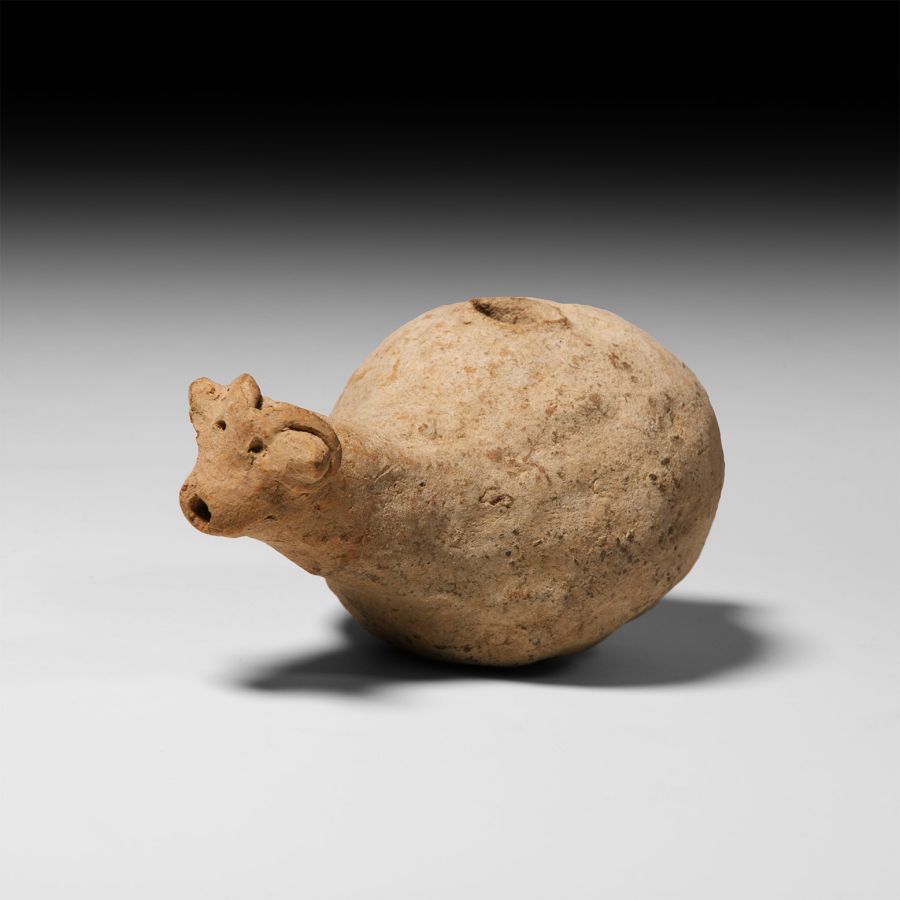
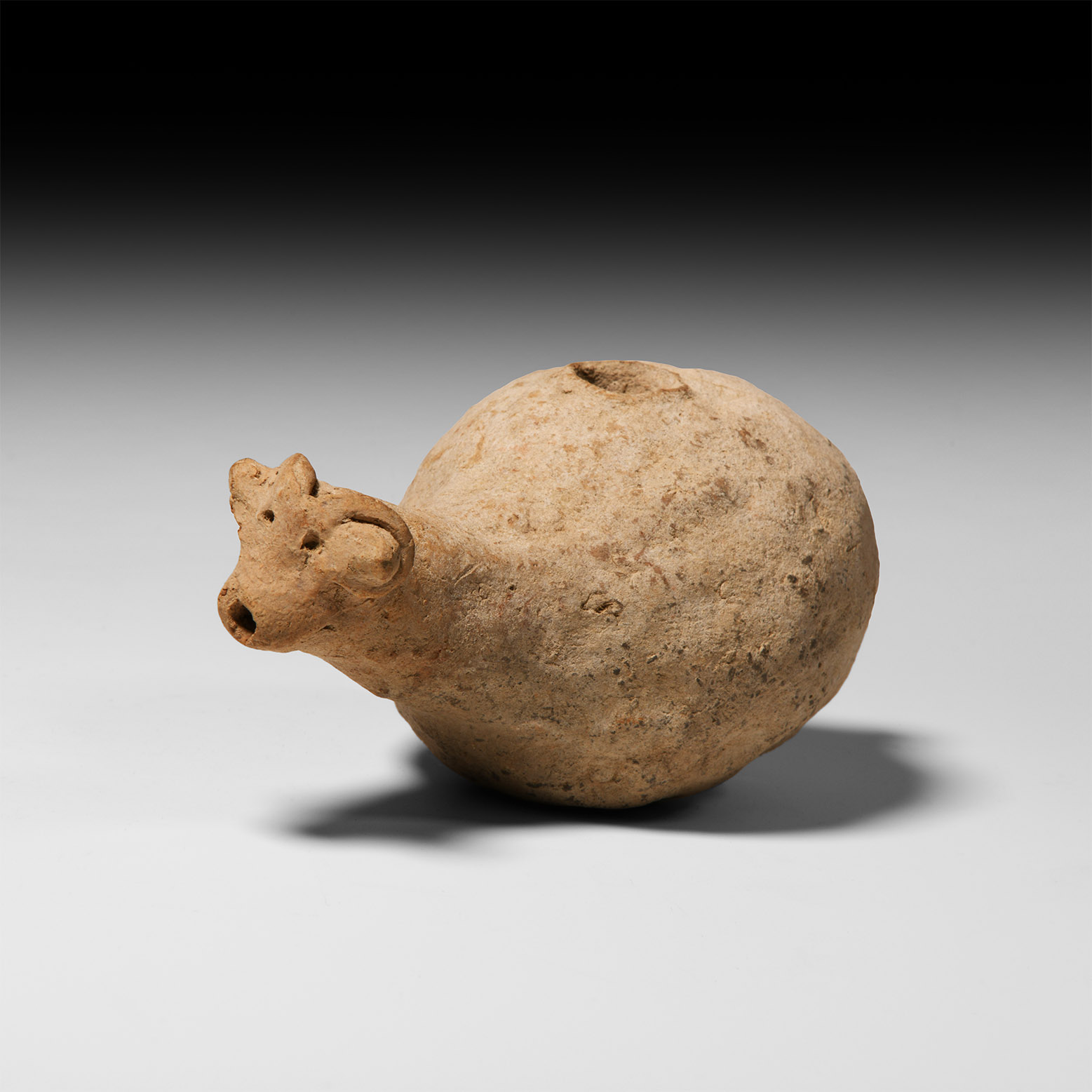
Amlash Zoomorphic Terracotta Vessel
2ND-1ST MILLENNIUM B.C.
5 3/4 in. (248 grams, 14.7 cm wide).
A red terracotta vessel in the form of a stylised sheep, composed of an ovoid body with integral tail, shallow neck to the vessel opening and animal's neck and head with horns curled around its ears, pricked eyes and muzzle formed as pouring spout.
ProvenanceAcquired 1970s-1990s.
Ex Pars Gallery, Mayfair, London, UK.
From a specialist collection of pottery.
Vessels of this type likely served a ceremonial function and were often ritually deposited in graves.
CONDITIONTimeLine Auctions follows a vetting process to ensure the authenticity and legality of all items, reinforcing our commitment to integrity and responsible trading. Each antiquity, antique, and coin lot undergoes thorough examination by a vetting committee of at least ten external specialists, professional trade association members, scientists, and archaeologists: Our Vetting Process
AUCTIONS:
TimeLine is a leading auction house specialising in antiquities, ancient art, collectables, natural history, coins, medals, and books. Our auctions offer museums, collectors, historians, and enthusiasts the opportunity to acquire unique and historically significant pieces.
LOT 1034
Amlash Zoomorphic Terracotta Vessel
Estimate £180 - 240€210 - 280 (for guidance only)$240 - 320 (for guidance only)
-
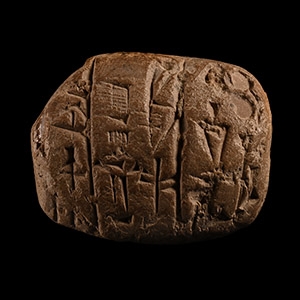
Paleo-Akkadian Cuneiform Tablet Relating to Barley from Lugalnitazi
Circa 2300 B.C.Sold for (Inc. bp): £416
A broadly pillow-shaped clay tablet bearing cuneiform text to one face, a Paleo-Akkadian receipt (from Adab?): barley from Lugalnitazi received by the men of the kitchens. 20.1 grams, 36 mm wide
Specialised collection of cuneiform texts, the property of a London gentleman and housed in London before 1992. Thence by descent to family members. Examined by Professor Wilfrid George Lambert FBA (1926-2011), historian, archaeologist, and specialist in Assyriology and Near Eastern archaeology, in the late 1980s and early 1990s. The collection is exceptional for the variety of types, including some very rare and well preserved examples. -
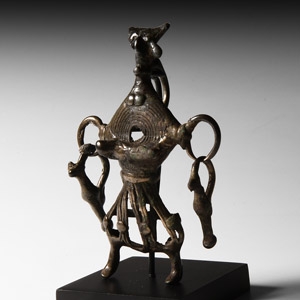
Amlash Figure of Fertility
Circa 13th-12th century B.C.Sold for (Inc. bp): £635
A copper-alloy fertility figure with openwork decoration, loop arms suspending pendants formed as slender figurative horned animals; suspension loop to reverse and cage-style torso; accompanied by a custom-made display stand. 47 grams, 91 mm (78 grams total, 10 cm including stand)
Fine condition.
Acquired before 1983.mj Ex London gallery, 1990s. -
.jpg)
Nishapur Blue-Glazed Dish Collection
12th-13th century A.D.Estimate: £500 - 700 (+bp*)
Opening Bid: £200
A trio of wheel-thrown dishes, each with a shallow foot: a turquoise-glazed example with helical motif around the rim, roundels and central interlace motif to the bowl; a second turquoise-glazed bowl decorated with dark amorphous patches to the rim and an interlace-style motif to the bowl; a dark blue-glazed bowl with black strips to rim, three nodules to bowl, concentric roundels framing an interlace design; iridescent surfaces. 599 grams total, 14.5-15.5 cm wide
Fine condition, minor abrasions and nicks.
Private California collection, USA. With Artemis Gallery, Colorado, USA. Private collection of Professor Kenneth Graham, London, UK. Accompanied by a certificate of authenticity from Artemis Gallery.
