
Loading, please wait...
LOT 1174
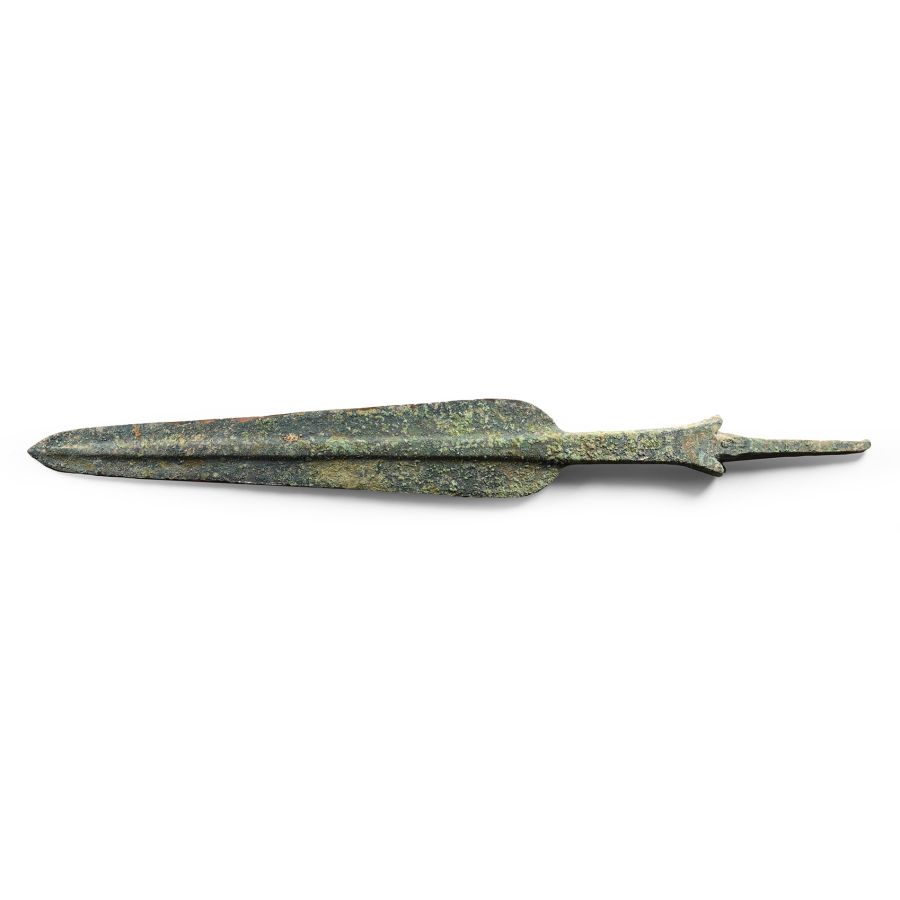
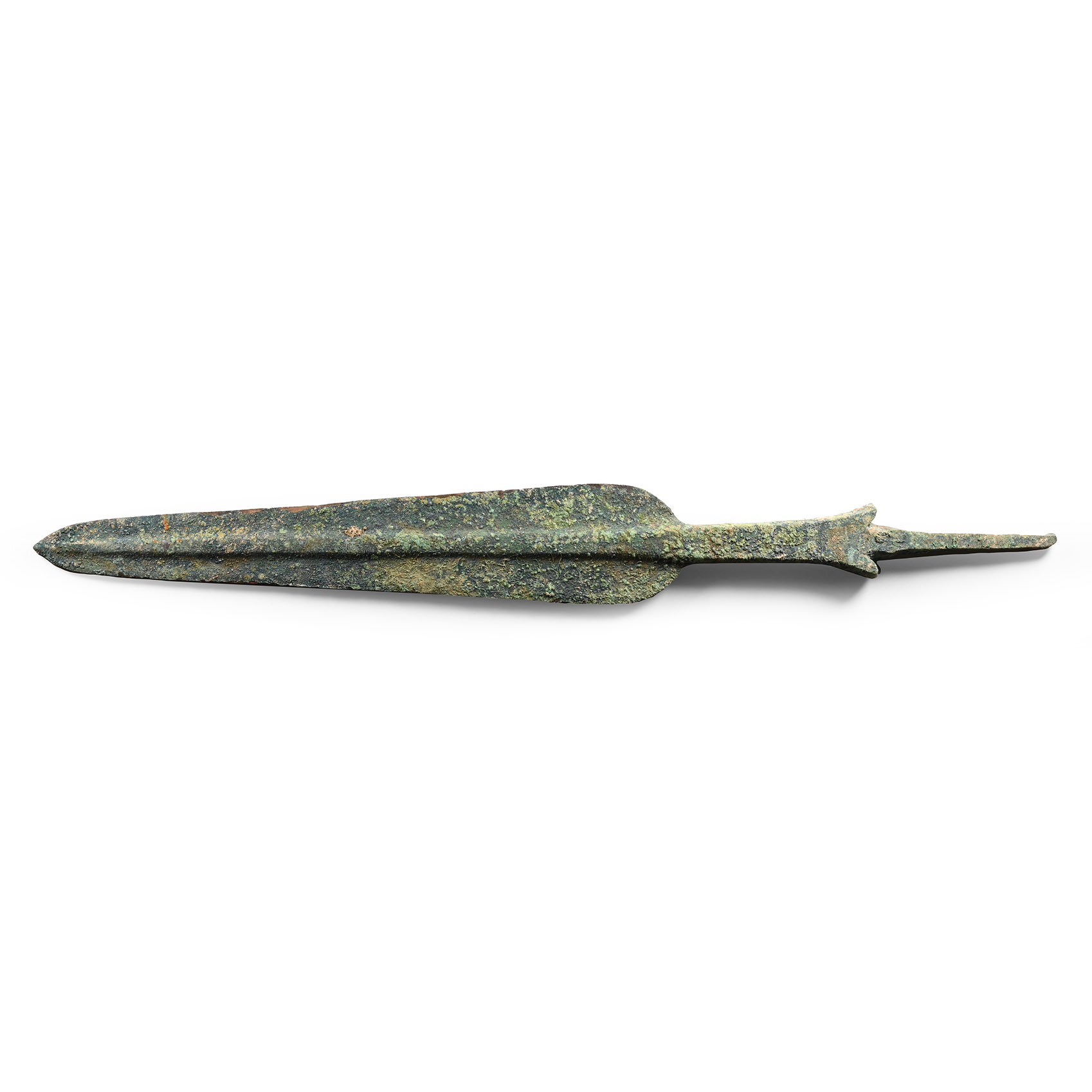
Amlash Type Bronze Spearhead
12TH-11TH CENTURY B.C.
15 in. (313 grams, 38 cm).
With a long ovate blade and curved shoulders, broad midrib and a rectangular sectioned tang, a reinforced shaft opening to reveal the tang and rounded shoulders.
ProvenanceAcquired 1980-2015.
Ex Abelita family collection.
See Khorasani, M.M., Arms and Armour from Iran. The Bronze Age to the End of the Qajar Period, Tübingen, 2006, s. cat 280, for type.
FootnotesThe weapon belongs to the type 1 of the spear-head classification of Khorasani, mainly originating from Marlik or Amlash areas. Similar pieces have been dated by Stutzinger to 1200-1100 B.C.
CONDITIONTimeLine Auctions follows a vetting process to ensure the authenticity and legality of all items, reinforcing our commitment to integrity and responsible trading. Each antiquity, antique, and coin lot undergoes thorough examination by a vetting committee of at least ten external specialists, professional trade association members, scientists, and archaeologists: Our Vetting Process
AUCTIONS:
TimeLine is a leading auction house specialising in antiquities, ancient art, collectables, natural history, coins, medals, and books. Our auctions offer museums, collectors, historians, and enthusiasts the opportunity to acquire unique and historically significant pieces.
-
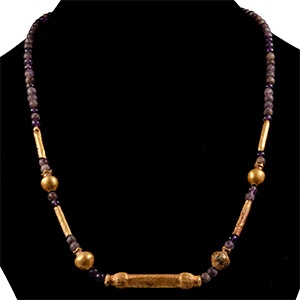
Mesopotamian Amethyst and Gold Bead Necklace
1st millennium B.C.Sold for (Inc. bp): £2,600
Restrung group of spherical amethyst beads with gold-clad tubular and pomegranate beads, centrepiece a square-section hatched gold bar with ribbed bulb finials. 37 grams, 58 cm
Collected from 1970-1999. From the collection of the late Mr S.M., London, UK. This lot has been checked against the Interpol Database of stolen works of art and is accompanied by a search certificate number no.12269-221973. -
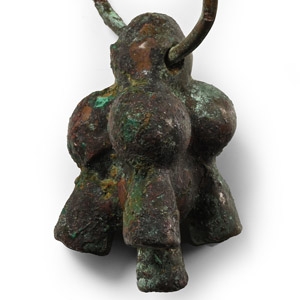
Luristan Bronze Pendant
9th-7th century B.C.Sold for (Inc. bp): £7
Comprising a cluster of four spheres with flared legs below, pierced to accept a bronze suspension loop. 45.5 grams, 58 mm
UK private collection before 2000. Acquired on the UK art market. Property of a London gentleman. -
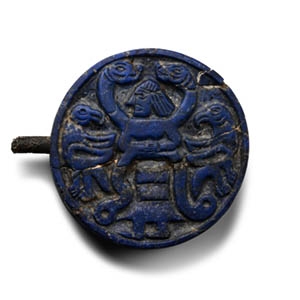
Bactrian Lapis Lazuli Pin Head with Figures
3rd millennium B.C.Sold for (Inc. bp): £2,600
Drum-shaped in profile with running guilloche to the rim, obverse with low-relief figure of a crouching man between addorsed gryphons; reverse with crouching anguiped between lion-heads and regardant birds. 43.6 grams, 50 mm
with Gallery Rosen Ancient Art, Tel Aviv, 1968. with a London, UK gallery, 1971-early 2000s. Accompanied by a copy of the original 1968 invoice. This lot has been checked against the Interpol Database of stolen works of art and is accompanied by a search certificate number no.12407-225342.
