
Loading, please wait...
LOT 1376
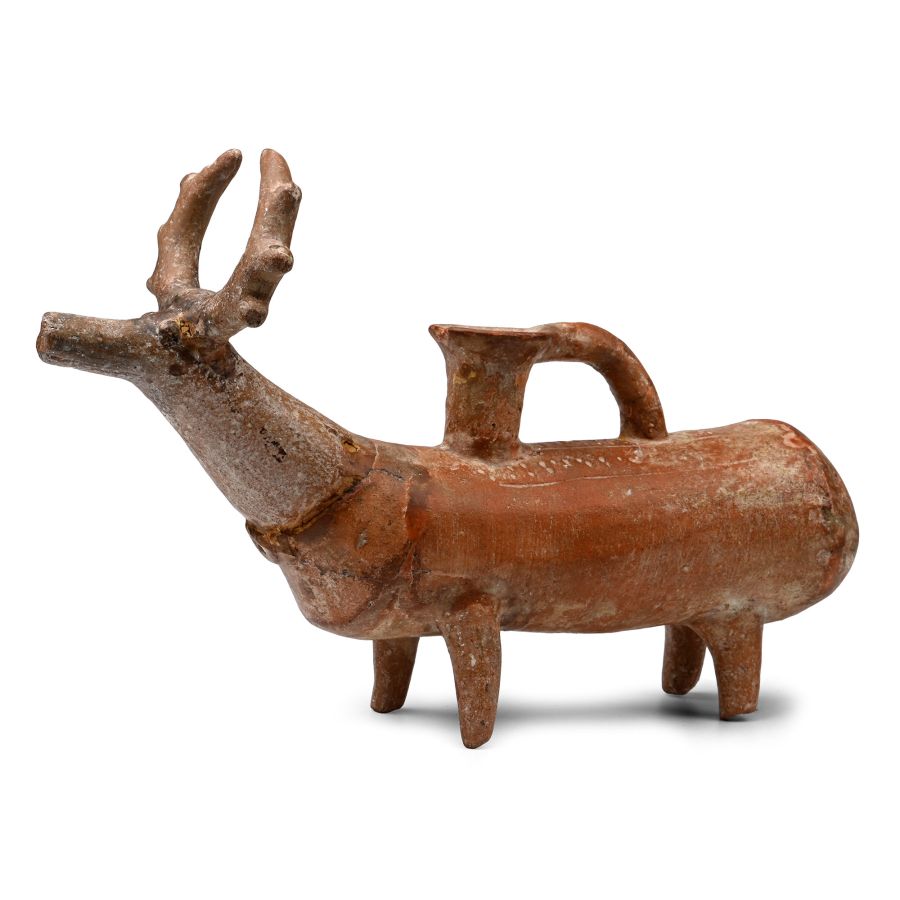
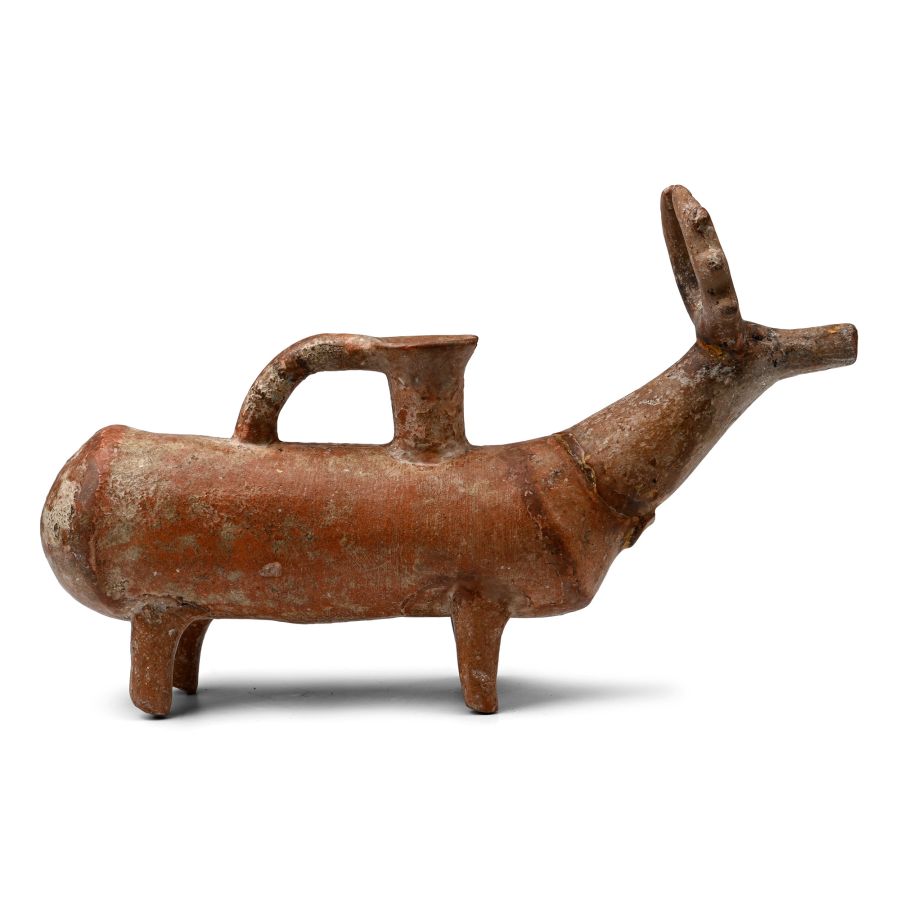
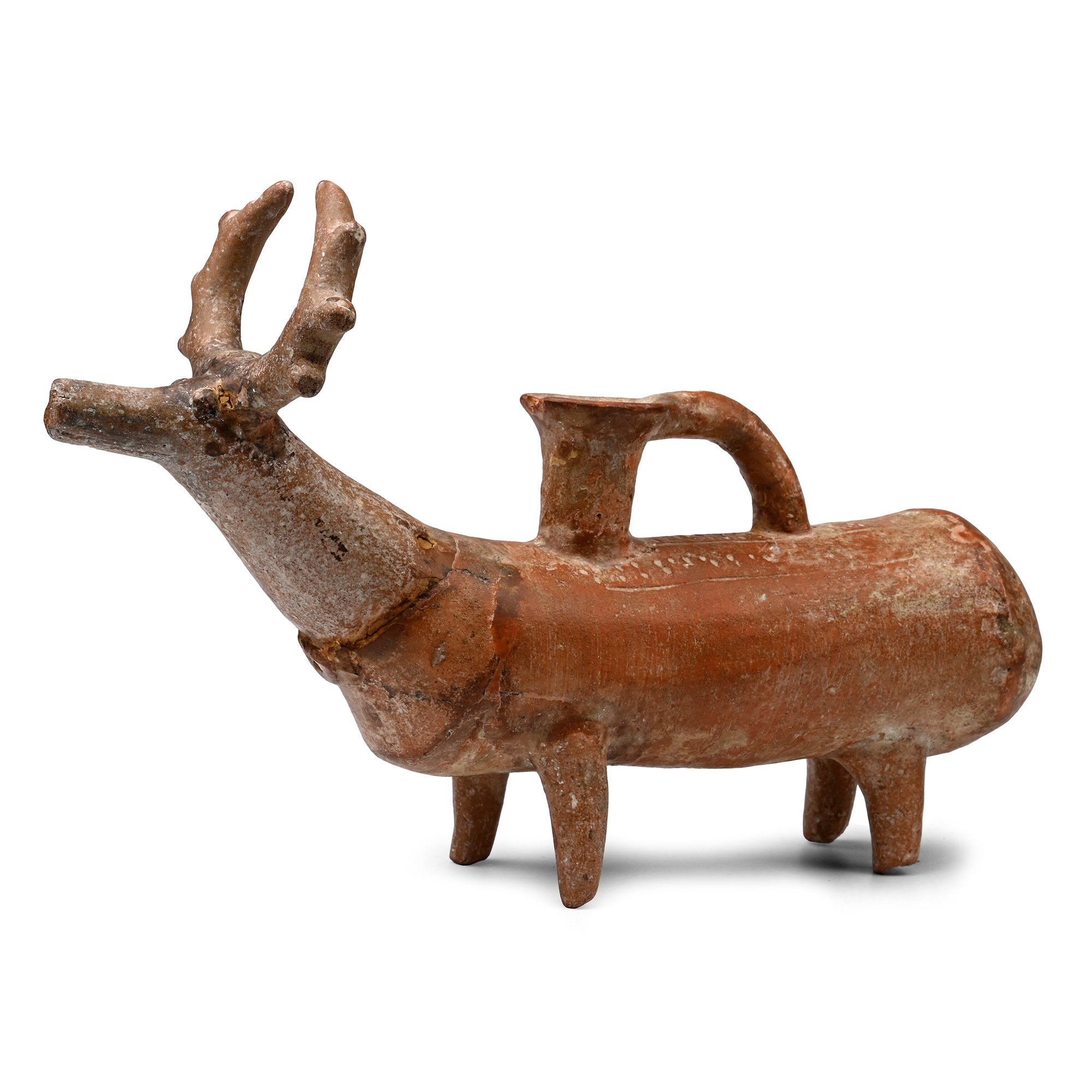
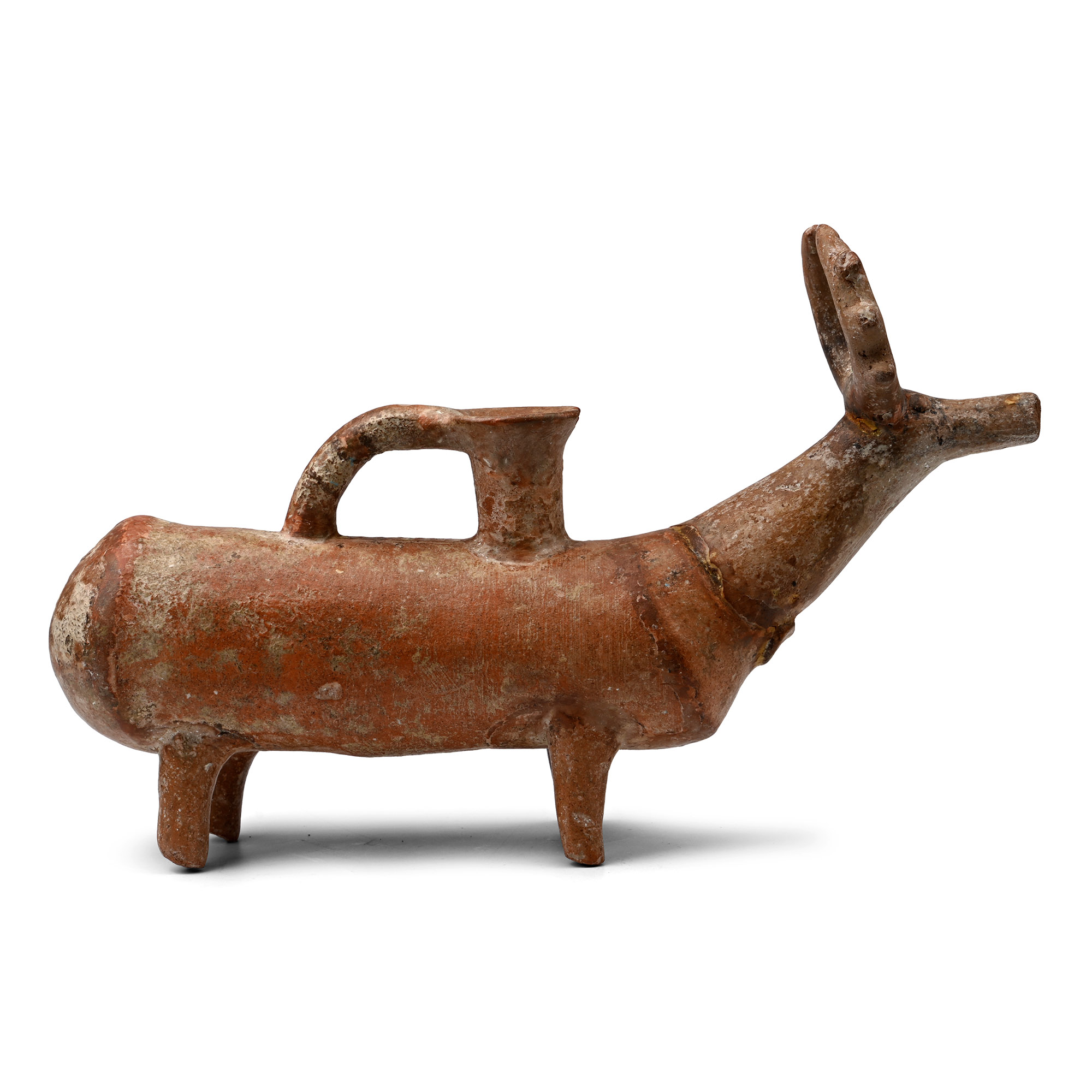
Amlash Terracotta Stag Rhyton
1ST MILLENNIUM B.C.
12 in. (841 grams, 30.5 cm).
Comprising a tubular body with a domed rump and four stub legs, an angled neck to accept a separate neck and head with applied domed eyes and antlers with lateral spurs; a trumpet-shaped filler tube to the upper face and a strap handle to the rear; impressed longitudinal lines; and a pouring hole at the throat.
Provenancewith a London, UK gallery, 1971-early 2000s.
Accompanied by an original thermoluminescence analysis report and photograph by Oxford Authentication with sample no.281z20 dated 16 June 1981.
TimeLine Auctions follows a vetting process to ensure the authenticity and legality of all items, reinforcing our commitment to integrity and responsible trading. Each antiquity, antique, and coin lot undergoes thorough examination by a vetting committee of at least ten external specialists, professional trade association members, scientists, and archaeologists: Our Vetting Process
AUCTIONS:
TimeLine is a leading auction house specialising in antiquities, ancient art, collectables, natural history, coins, medals, and books. Our auctions offer museums, collectors, historians, and enthusiasts the opportunity to acquire unique and historically significant pieces.
-
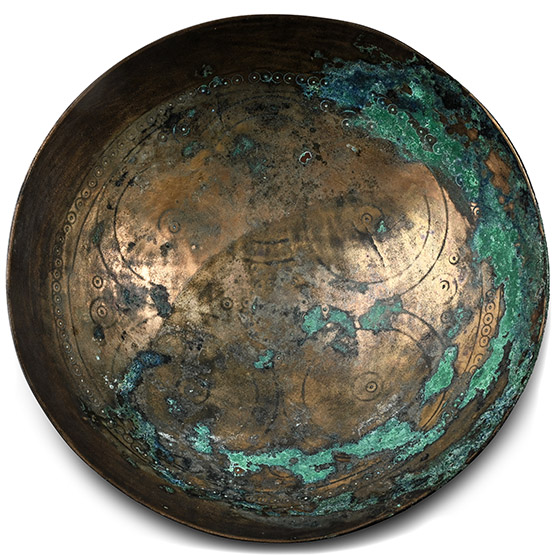
Qaznavid Decorated Bronze Bowl
12th century A.D.Sold for (Inc. bp): £390
Hemispherical in profile with incised design of concentric rings to the inner face. 205 grams, 15.7 cm
Ex 'S' collection, London, UK, 1970s-1990s. -
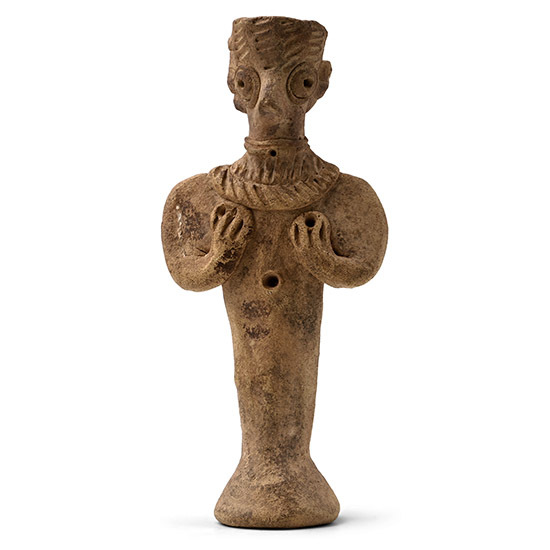
Syro-Hittite Terracotta Idol
2nd millennium B.C.Estimate: £1,200 - 1,700 (‡+bp*)
Opening Bid: £600
Modelled in the round with columnar body and flared base, arms bent and hands placed flat on the chest holding the nipples, herringbone pattern to the collar, hatched headdress, socket to rear of head. 102 grams, 14.5 cm
Collection T. Arakji, Hamburg, Germany. Private collection, Switzerland, acquired in 1994; thence by descent. -
.jpg)
Western Asiatic Stone Stamp Seal with Engraved Design
1st millennium B.C.Estimate: £400 - 600 (+bp*)
Opening Bid: £200
Bell-shaped with scooped sidewall and pierced lug; engraved with addorsed bull and lion beneath a crescent; accompanied by a museum-quality impression. 6.89 grams, 26 mm
Acquired before 1983. Ex London gallery, 1990s. Private collection, London, UK.
