
Loading, please wait...



LOT 1356
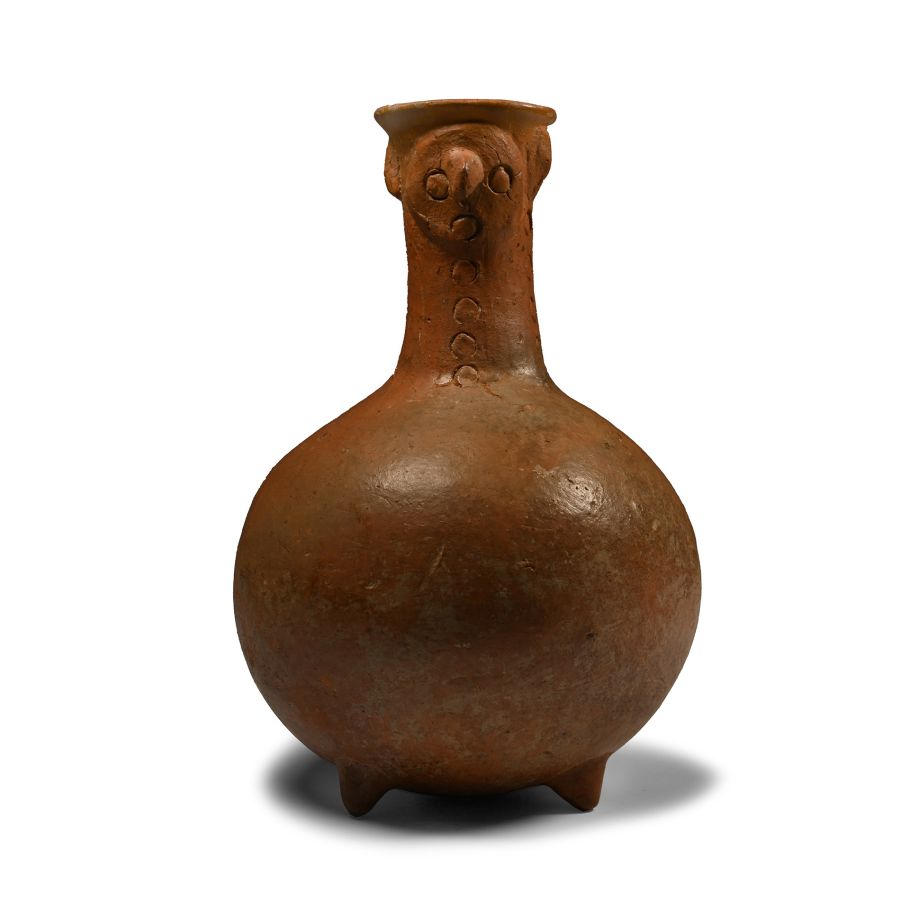
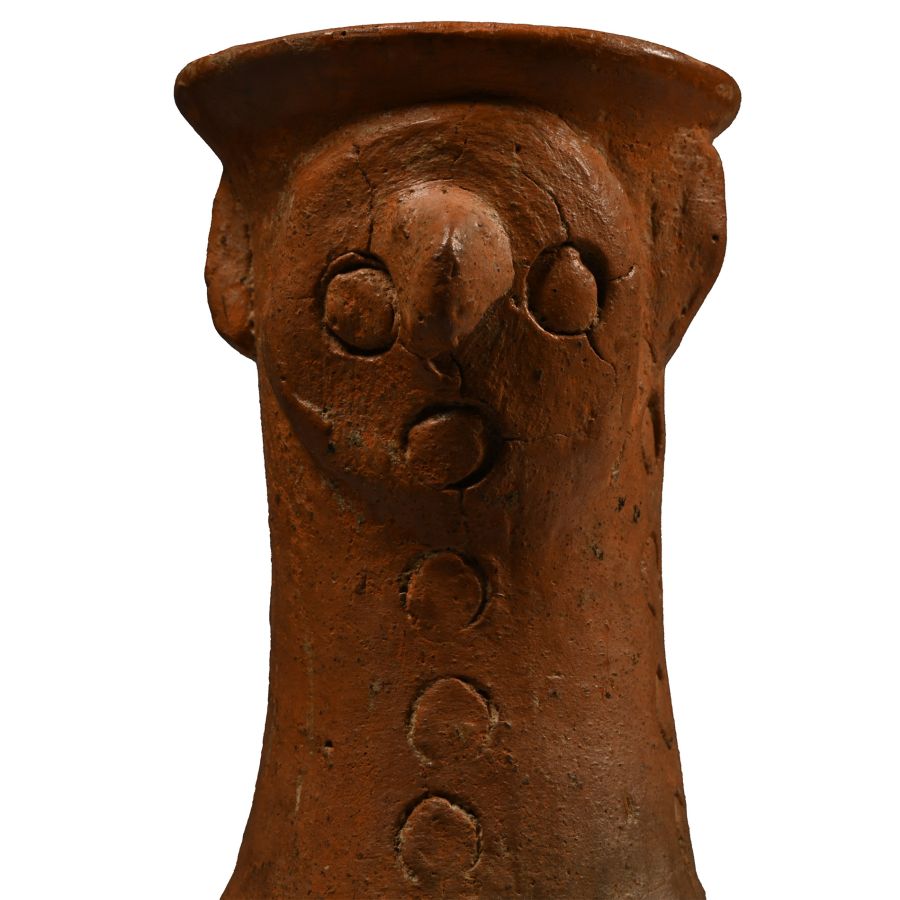
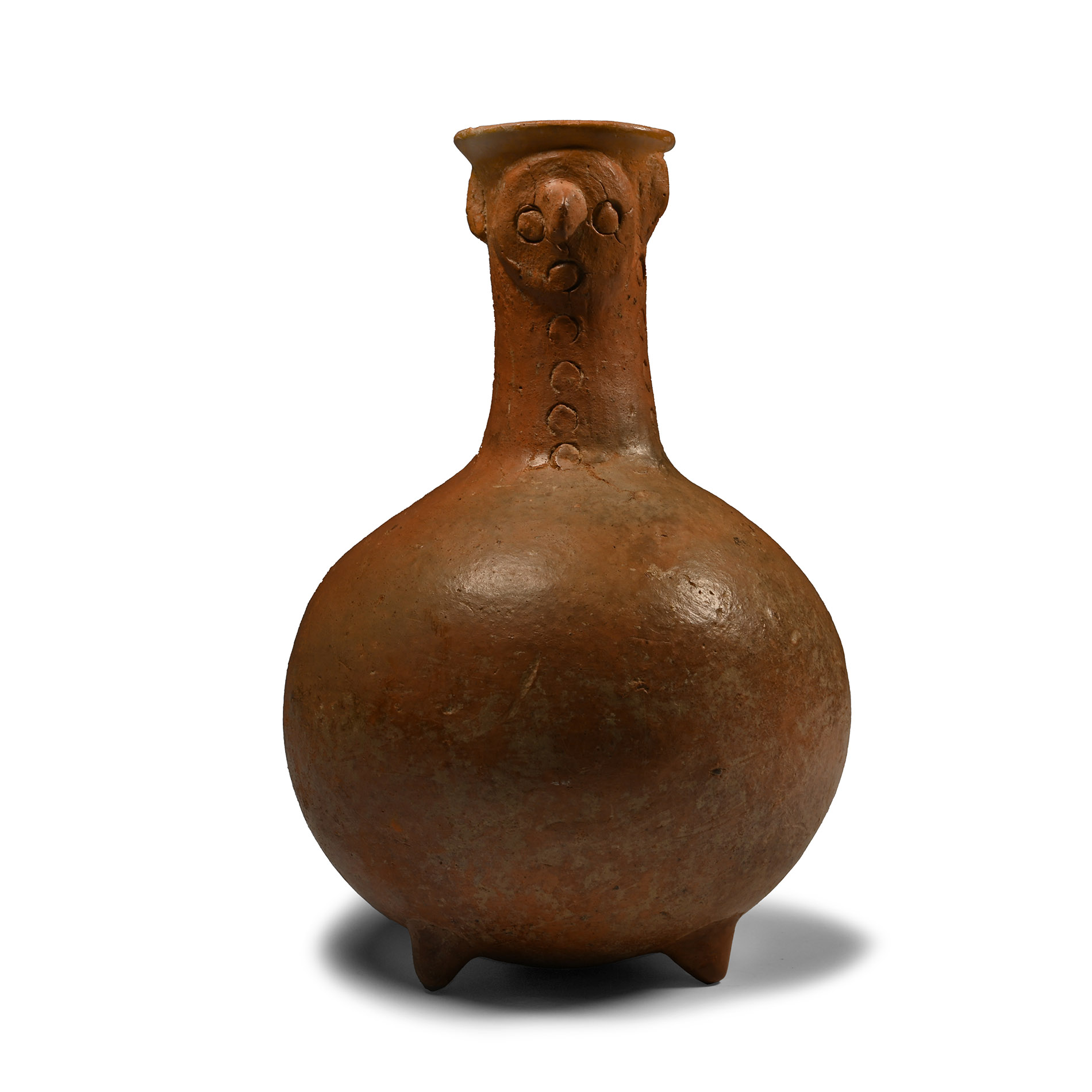
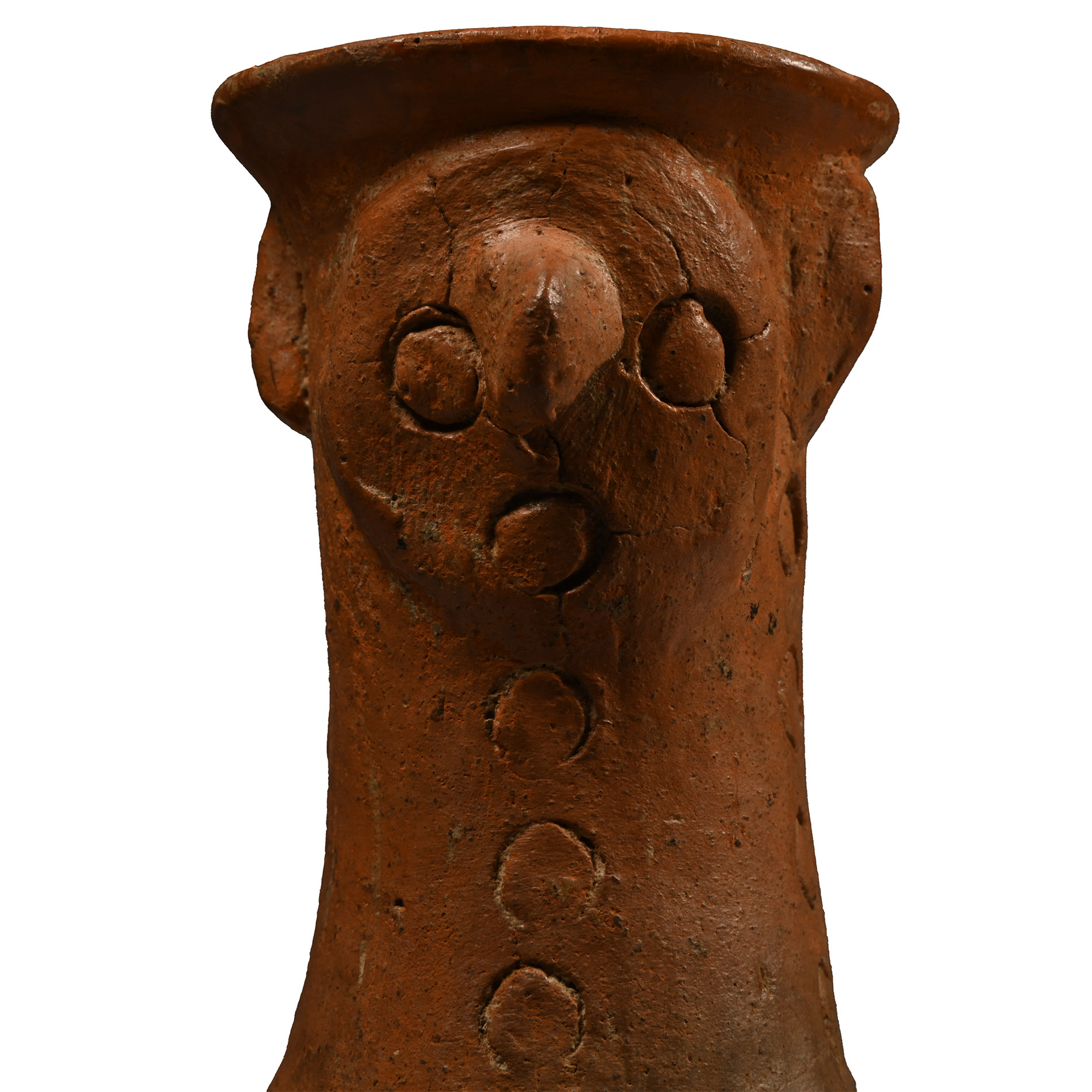
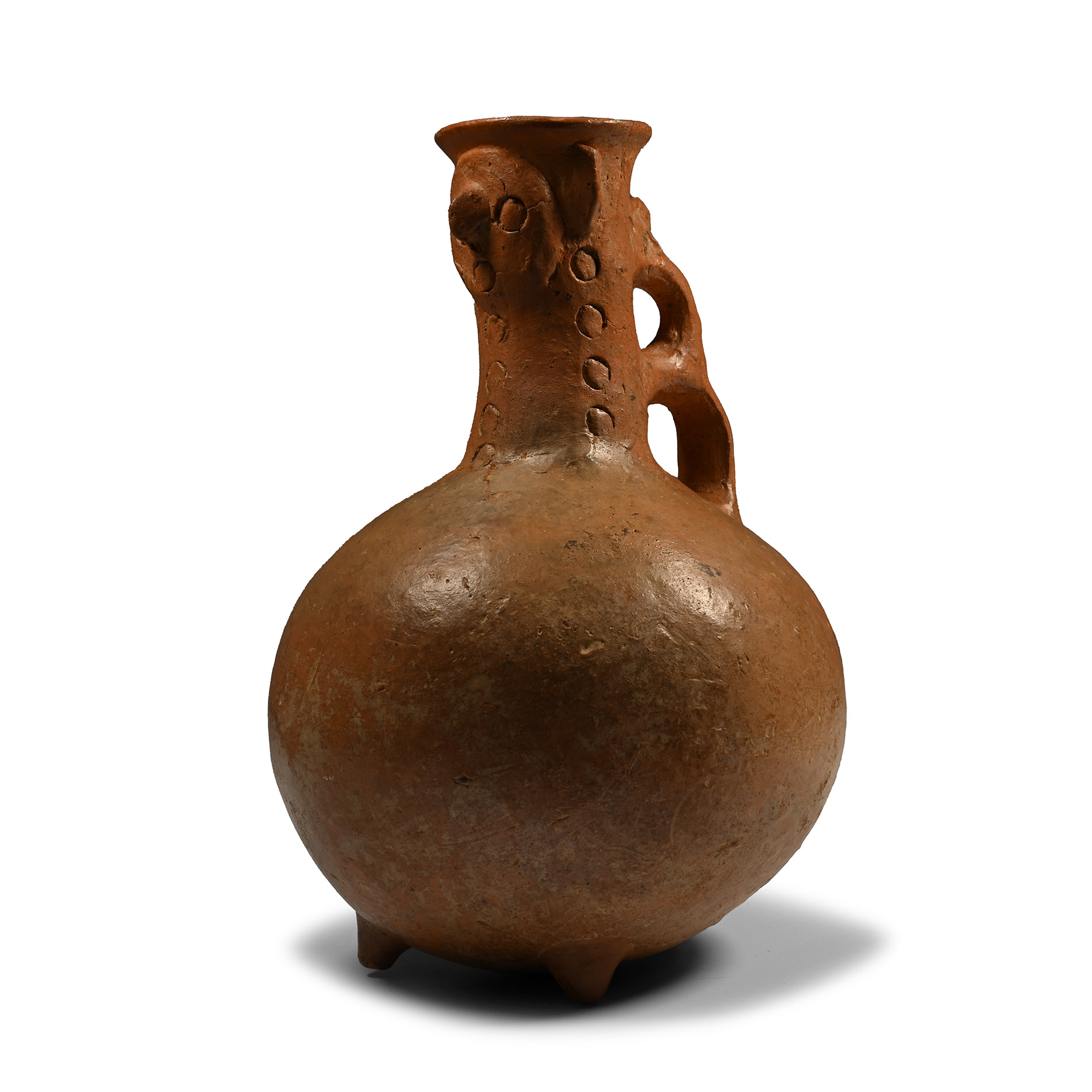
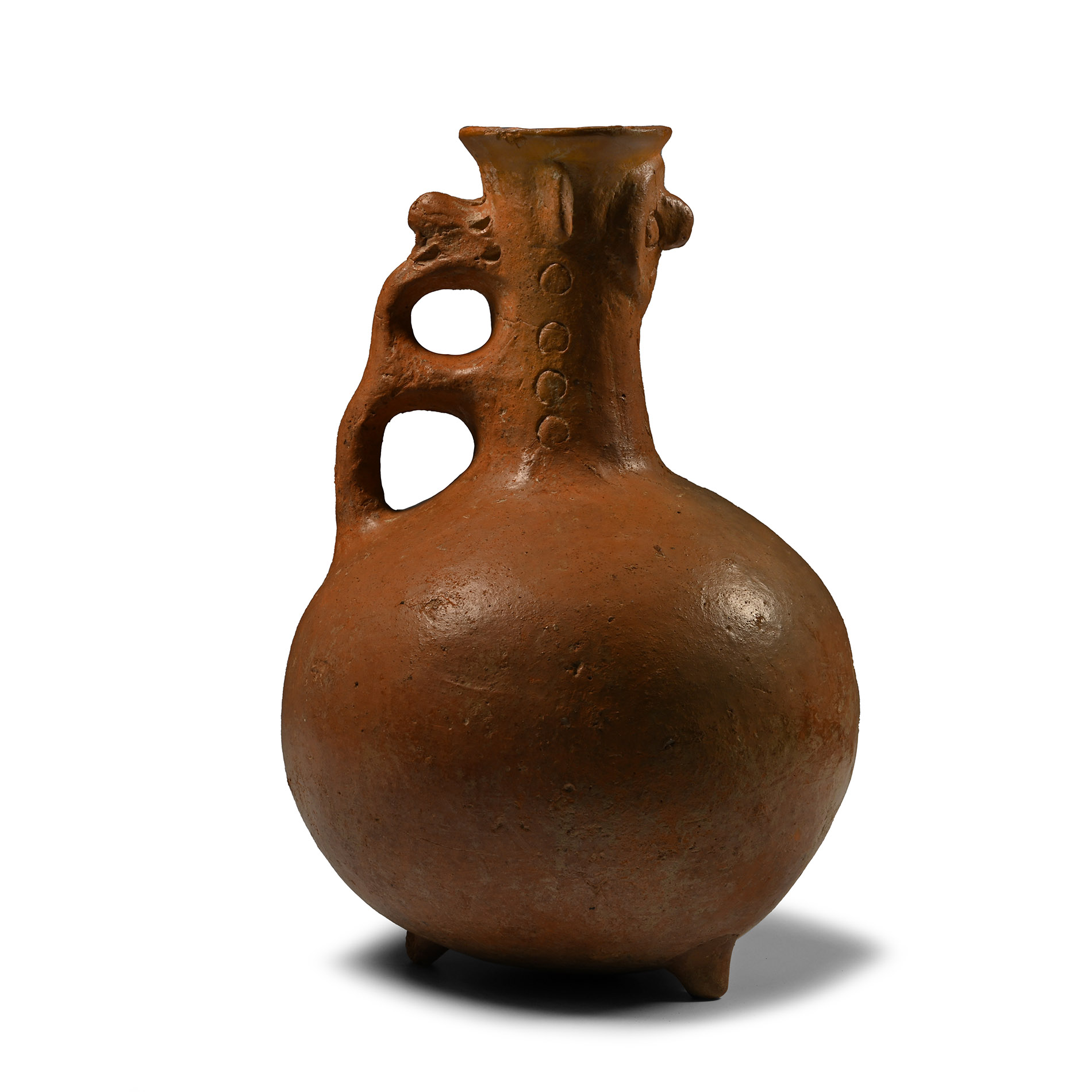
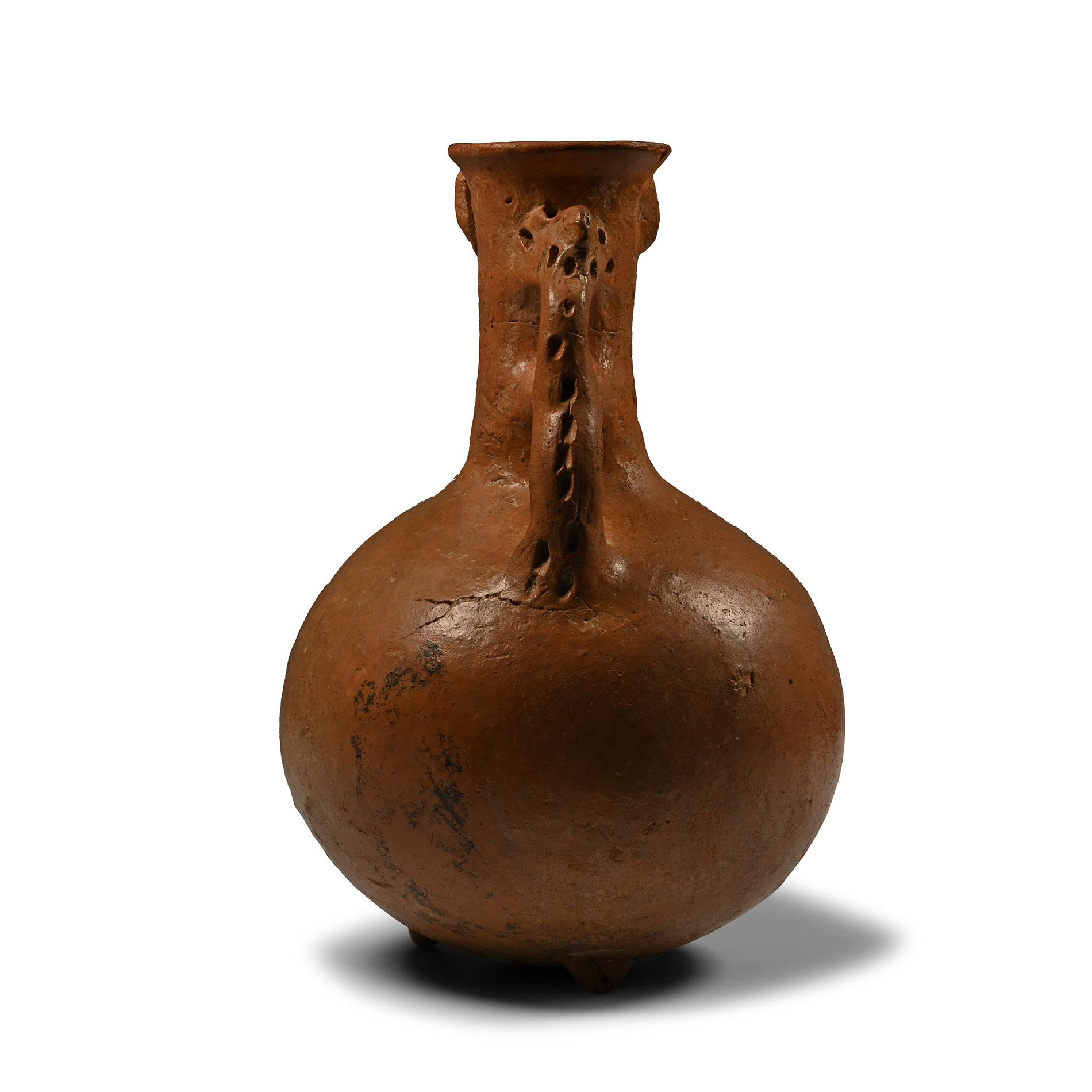
Amlash Terracotta Single-Handled Jug with Head Attachment
10TH-8TH CENTURY B.C.
8 1/8 in. (723 grams, 20.6 cm).
Comprising a rounded body resting on three stub legs; funicular mouth and short neck; beneath the rim a mask with pinched nose and two pointed ears, impressed circular eyes and mouth; three vertical decorative strips impressed with the same tool as formed the eyes and mouth; tiered strap handle with two finger-grips to the outer face and impressed detailing running from the neck to the shoulder; rim and one foot partly restored.
ProvenanceEx Zackary, Los Angeles, 1960s.
Thereafter London art market, 1992.
Accompanied by a copy of an Art Loss Register certificate no.S00079639.
TimeLine Auctions follows a vetting process to ensure the authenticity and legality of all items, reinforcing our commitment to integrity and responsible trading. Each antiquity, antique, and coin lot undergoes thorough examination by a vetting committee of at least ten external specialists, professional trade association members, scientists, and archaeologists: Our Vetting Process
AUCTIONS:
TimeLine is a leading auction house specialising in antiquities, ancient art, collectables, natural history, coins, medals, and books. Our auctions offer museums, collectors, historians, and enthusiasts the opportunity to acquire unique and historically significant pieces.
LOT 1356
Amlash Terracotta Single-Handled Jug with Head Attachment
Estimate £700 - 900€810 - 1,040 (for guidance only)$950 - 1,220 (for guidance only)
-
.jpg)
Sasanian Gold Pendant with Three Registers
6th-7th century A.D.Estimate: £800 - 1,000 (‡+bp*)
Opening Bid: £400
Ovoid in plan with loop to the narrow end, repoussé pellets to the rim, star-and-crescent motifs, and ropework borders. 3.47 grams, 45 mm
Acquired by a Swiss family in the mid-1980s to late 1990s, thence by descent. Private collection, Switzerland, since the late 1990s. -
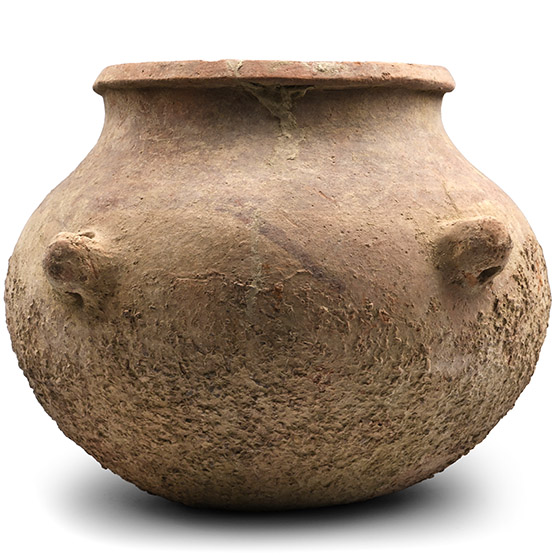
Large Western Asiatic Pottery Hanging Storage Vessel
1st millennium B.C.Sold for (Inc. bp): £117
Squat and bulbous in profile with a low neck and chamefered rim; four lugs to the shoulder, each pierced vertically for attachment of a cord. 2.3 kg, 27.5 cm wide
From the collection of a gentleman, 1988-2000s. -
Mesopotamian Stone Vessel
1st millennium B.C.Estimate: £100 - 140 (+bp*)
Opening Bid: £50
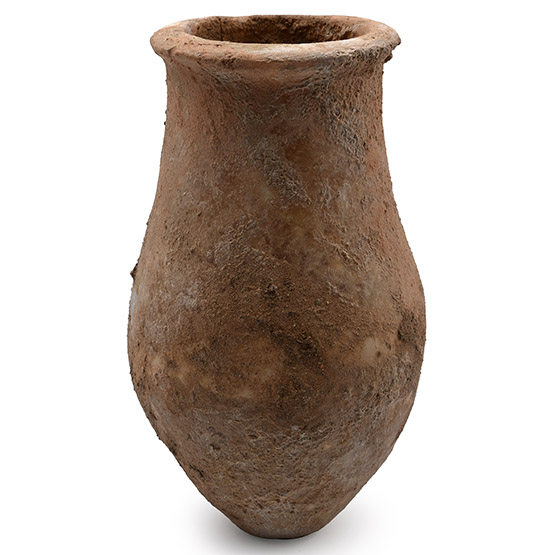
Piriform in profile with rounded base, everted rim. 676 grams, 13.7 cm
From a collection formed before 1990. Ex Mayfair, London, UK, gallery, 2000s.
