
Loading, please wait...
LOT 1246
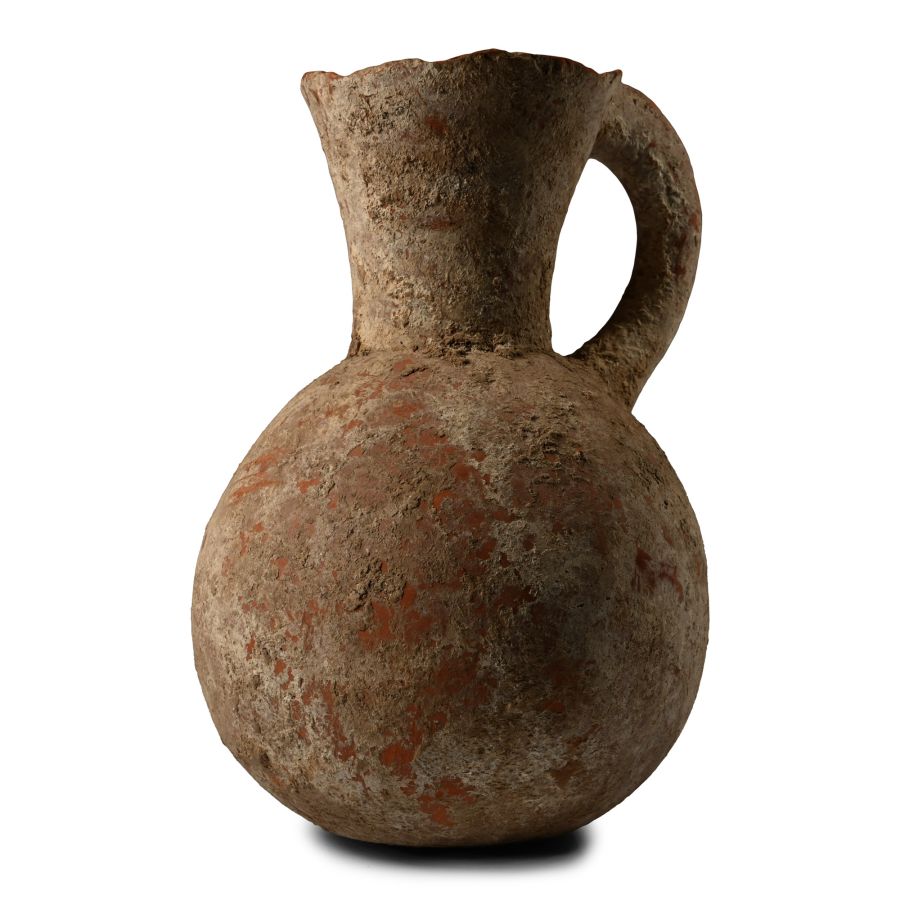
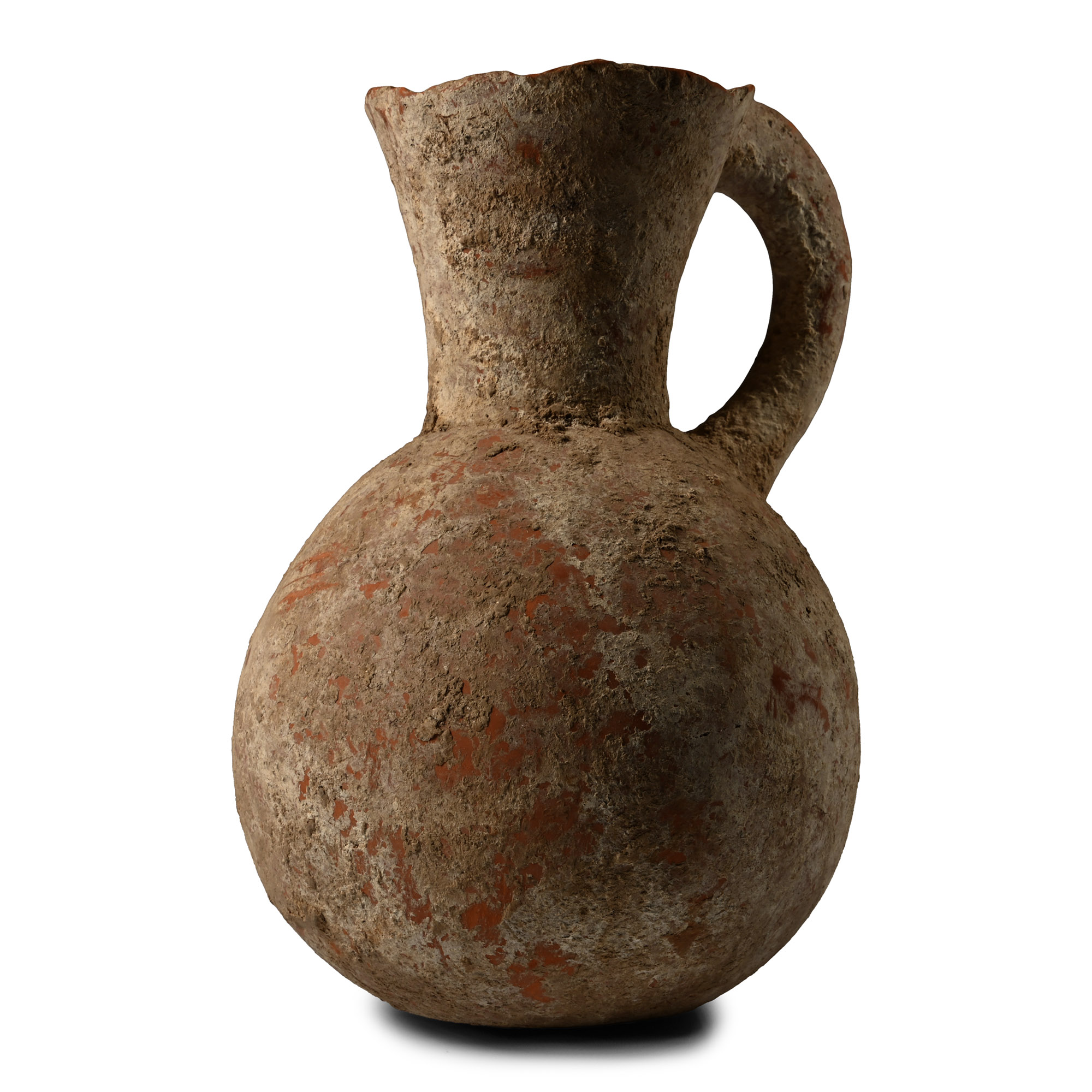
Amlash Terracotta Pitcher
1ST MILLENNIUM B.C.
7 1/4 in. (678 grams, 18.5 cm).
Finely moulded reddish-orange pitcher with a wide, globular body, funicular neck and mouth, single handle with vestigial animal head knob at the top, extending from just below the rim to the shoulder; surface accretion. [No Reserve]
ProvenanceFrom a UK private collection.
Ex London, UK, gallery.
Ex TimesAncient, Bristol, UK.
Accompanied by a copy of a previous catalogue entry.
This lot has been cleared against the Art Loss Register database, and is accompanied by an illustrated lot declaration signed by the Head of the Antiquities Department, Dr Raffaele D'Amato.
TimeLine Auctions follows a vetting process to ensure the authenticity and legality of all items, reinforcing our commitment to integrity and responsible trading. Each antiquity, antique, and coin lot undergoes thorough examination by a vetting committee of at least ten external specialists, professional trade association members, scientists, and archaeologists: Our Vetting Process
AUCTIONS:
TimeLine is a leading auction house specialising in antiquities, ancient art, collectables, natural history, coins, medals, and books. Our auctions offer museums, collectors, historians, and enthusiasts the opportunity to acquire unique and historically significant pieces.
-
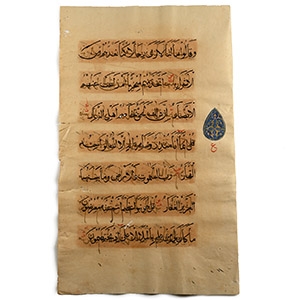
Large Format 'The Enlightenment' Quran Manuscript Page
Ottoman, early 19th century A.D.Sold for (Inc. bp): £104
Manuscript leaf with text from Surah 42, 'Ash Shurah' ('The Enlightenment'); ovate painted blue panel with tendril ornament. 23 grams, 43.5 x 26 cm
Acquired on the UK art market. Scottish private collection. This lot has been cleared against the Art Loss Register database, and is accompanied by an illustrated lot declaration signed by the Head of the Antiquities Department, Dr Raffaele D'Amato. -
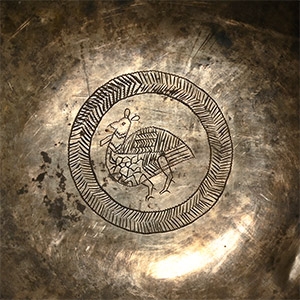
Sasanian Silver Bowl with Incised Bird
3rd-7th century A.D.Estimate: £1,800 - 2,400 (+bp*)
Opening Bid: £1,000
Hemispherical in section with rolled rim, incised ring below rim with ring-and-dot motifs, fluted body; central tondo with punched and later engraved wreath enclosing a perching bird. 356 grams, 16.5 cm
Acquired before 1983. Ex London gallery, 1990s. This lot has been checked against the Interpol Database of stolen works of art and is accompanied by a search certificate number no.12544-231943. This lot has been cleared against the Art Loss Register database, and is accompanied by an illustrated lot declaration signed by the Head of the Antiquities Department, Dr Raffaele D'Amato. -
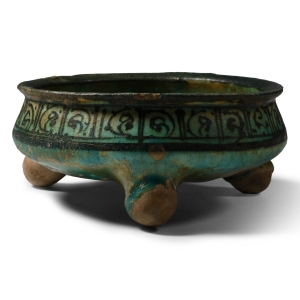
Kushan Blue-Glazed Decorated Bowl
Late 12th–early 13th century A.D.Sold for (Inc. bp): £468
Squat turquoise-glazed dish with three bun feet, carinated profile, flared rim, painted band of arabesque panels to the shoulder and scrolled tendril motif to the centre. 250 grams, 12.5 cm
Ex London, UK, gallery, 1971-early 2000s. London, UK, collection. This lot has been cleared against the Art Loss Register database, and is accompanied by an illustrated lot declaration signed by the Head of the Antiquities Department, Dr Raffaele D'Amato.
