
Loading, please wait...
LOT 0292
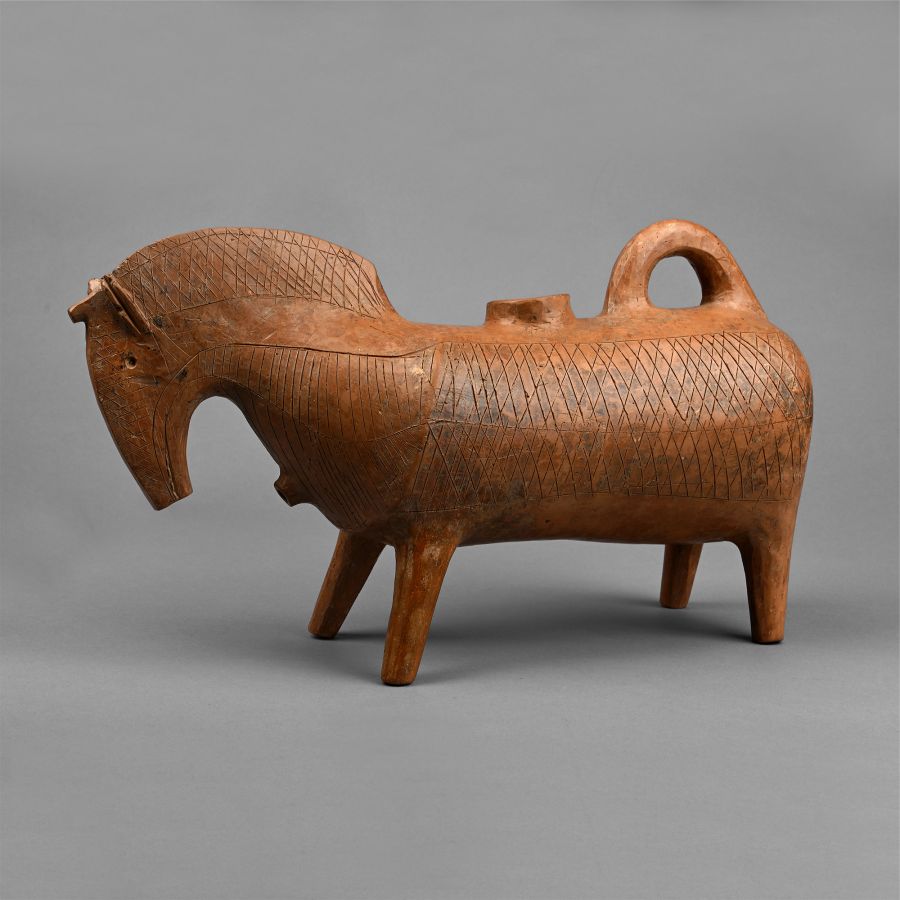
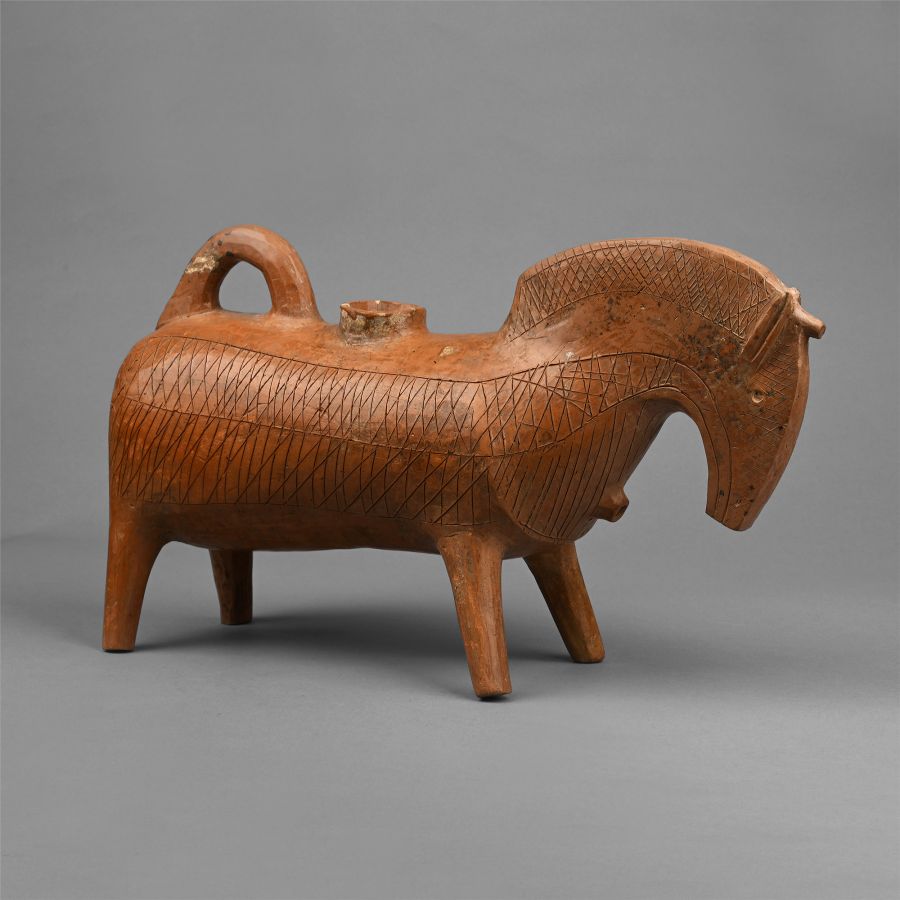
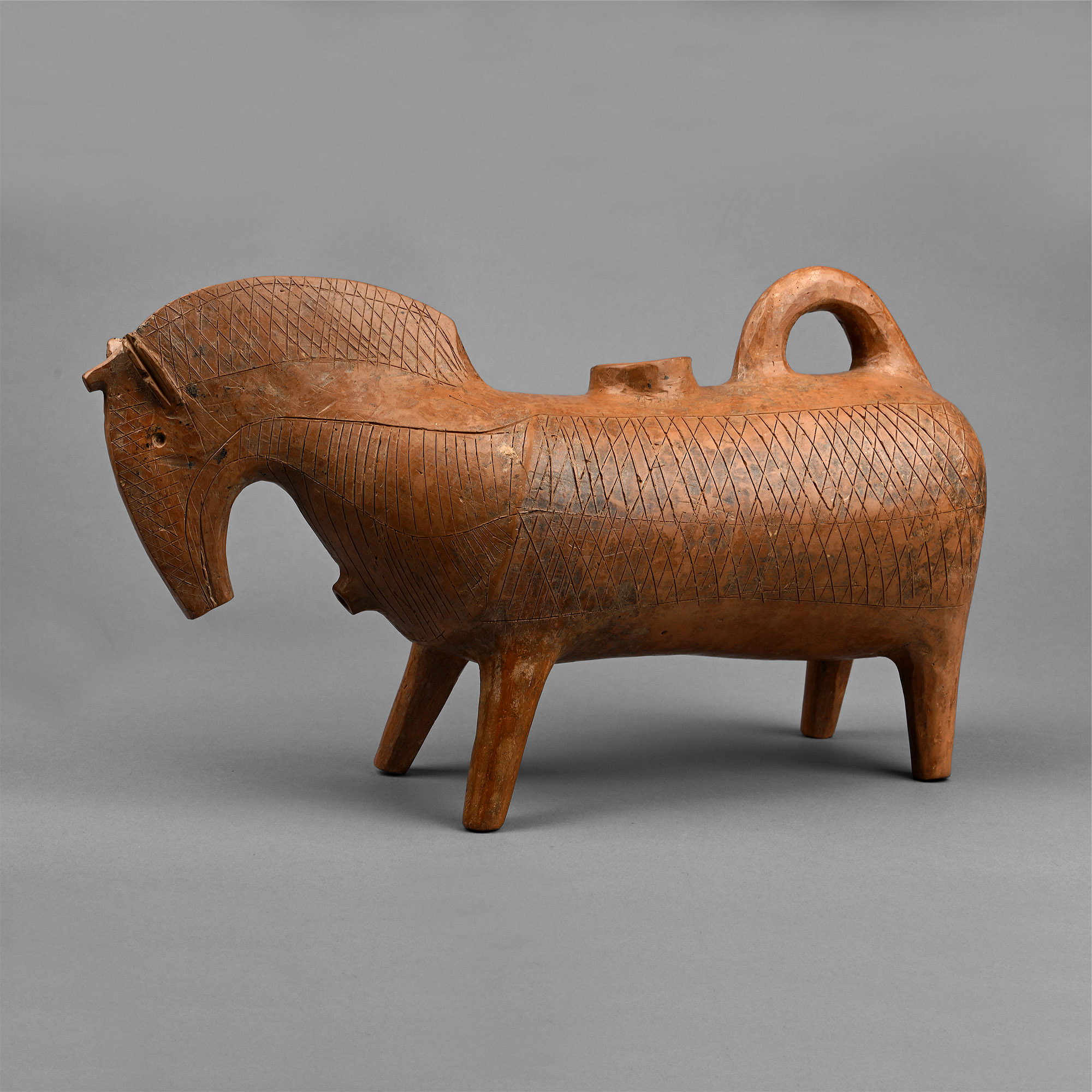
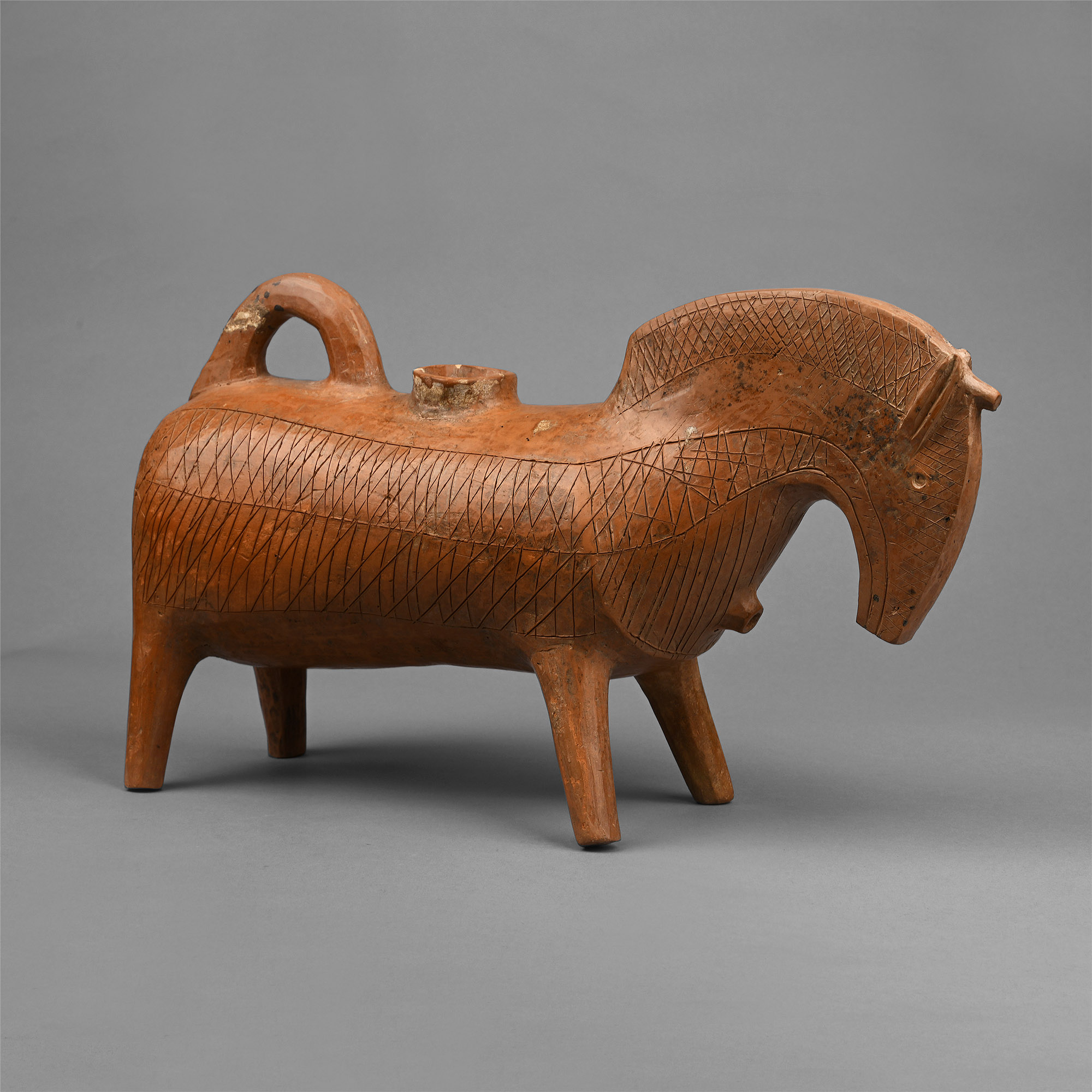
Amlash Terracotta Horse Rhyton
10TH CENTURY B.C.
14 1/2 in. (2.1 kg, 37 cm).
Hollow-formed rhyton with four splayed legs, curved neck with tall mane, loop handle forming the tail; filler hole to the middle of the back, spout to the chest; incised hatched bands to the mane and flank.
ProvenanceSakae Art Gallery, Nagoya, Japan, 1982.
with Aaron Gallery, acquired from the above.
Accompanied by thermoluminescence analysis report no.N121q65 by Oxford Authentication.
This lot has been checked against the Interpol Database of stolen works of art and is accompanied by search certificate number no.12822-241329.
Cf. for a Parthian pottery horse vessel of similar typology, Christie’s, Antiquities, 1st October 2015, catalogue, London, 2015, no.50, p.35.
FootnotesAmlash terracotta rhytons, significant objects of this culture, are ancient Near Eastern terracotta vessels, dating back to around 1000 BC, often in the shape of animals, particularly zebu bulls. Rhytons were used for holding and drinking wine or other liquids, and characterised by their detailed animal forms and often featuring incised details.
CONDITIONTimeLine Auctions follows a vetting process to ensure the authenticity and legality of all items, reinforcing our commitment to integrity and responsible trading. Each antiquity, antique, and coin lot undergoes thorough examination by a vetting committee of at least ten external specialists, professional trade association members, scientists, and archaeologists: Our Vetting Process
AUCTIONS:
TimeLine is a leading auction house specialising in antiquities, ancient art, collectables, natural history, coins, medals, and books. Our auctions offer museums, collectors, historians, and enthusiasts the opportunity to acquire unique and historically significant pieces.
LOT 0292
Amlash Terracotta Horse Rhyton
Estimate £6,000 - 8,000€6,960 - 9,280 (for guidance only)$8,100 - 10,800 (for guidance only)
-
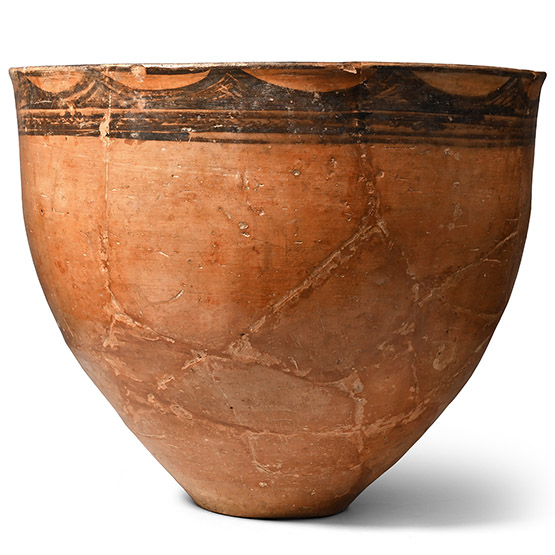
Large Western Asiatic Pottery Jar
Circa 3000 B.C.Estimate: £500 - 700 (+bp*)
Opening Bid: £200
Comprising a broad body with slightly flared rim and rounded body tapering to a narrow base; painted multilinear band below the rim with scoops above; repaired. 5 kg, 33.5 cm
with Mahboubian Gallery, London, UK, 1974. Private collection, London, UK. -
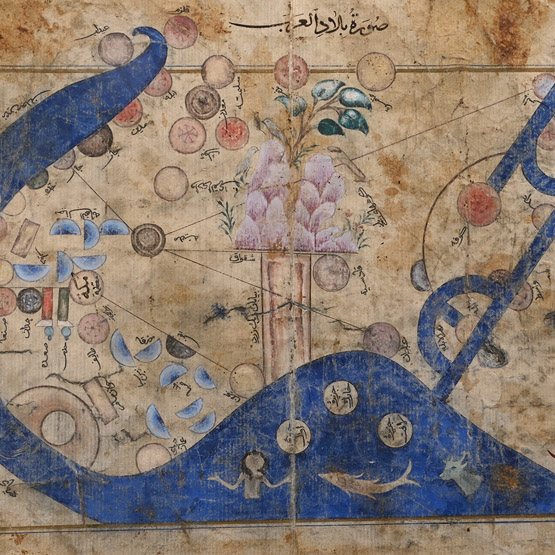
Ottoman Painted Miniature Map
20th century A.D.Sold for (Inc. bp): £780
Plan-view map of a peninsula, the river indicated in dark blue with a fish, bather and ox; calligraphic captions. 34 grams, 33.5 x 23.5 cm
Private collection, UK. -
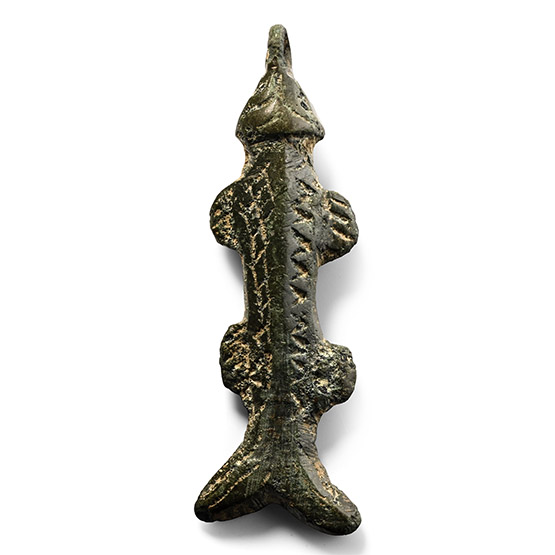
Phoenician Bronze Fish Pendant
Circa 1200-300 B.C.Sold for (Inc. bp): £221
Modelled in the round with impressed herringbone and lozengiform scale detailing; suspension ring at the mouth. 27.2 grams, 71 mm
UK private collection before 2000. Acquired on the UK art market. Private collection, London, UK.
