
Loading, please wait...



LOT 1237
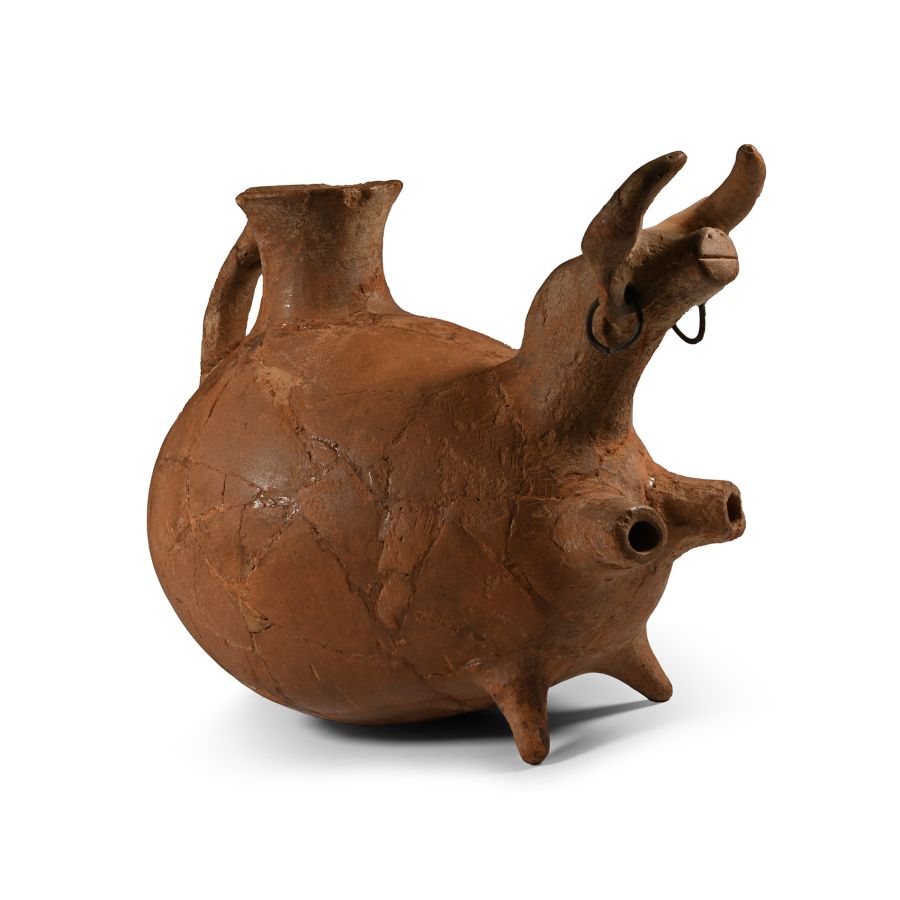
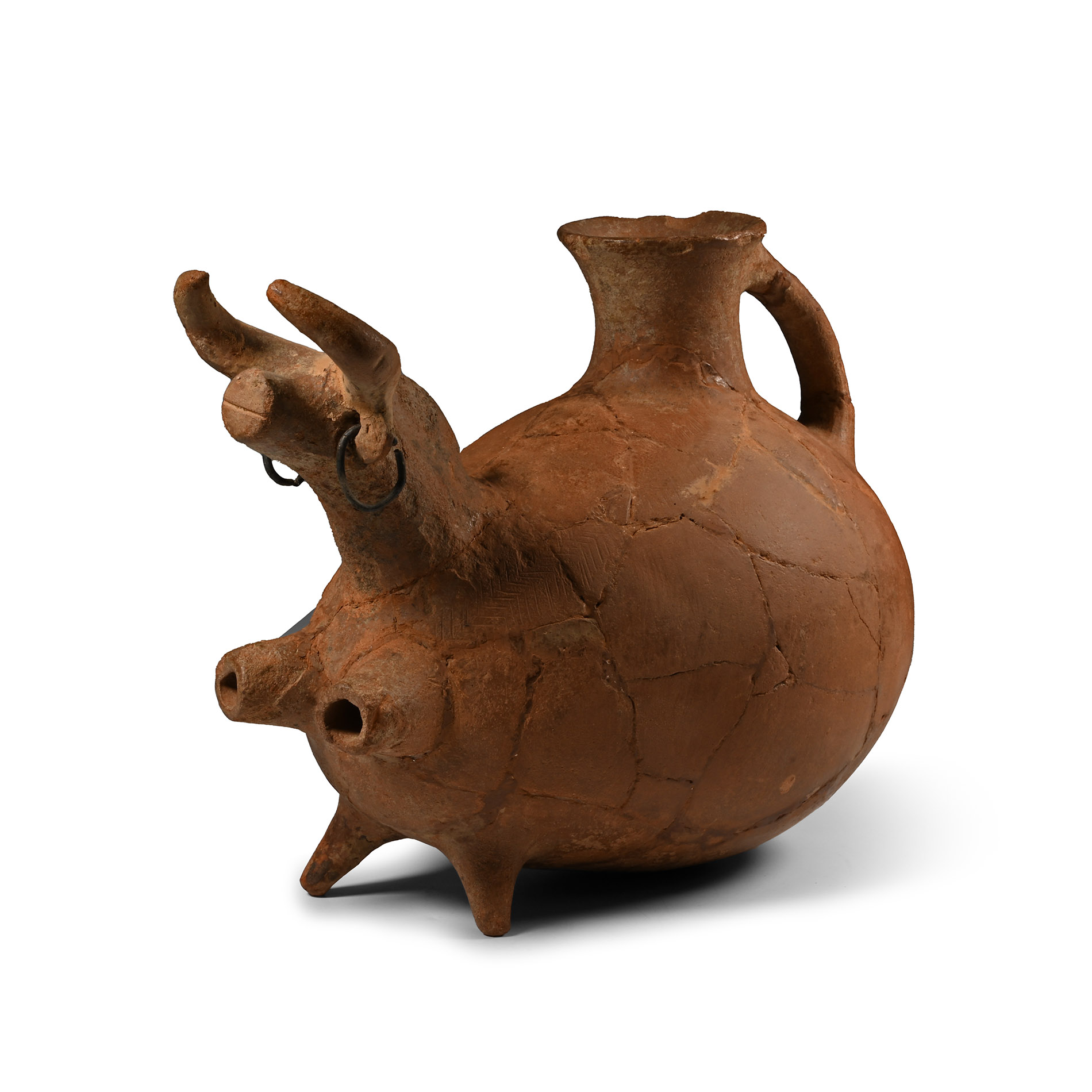
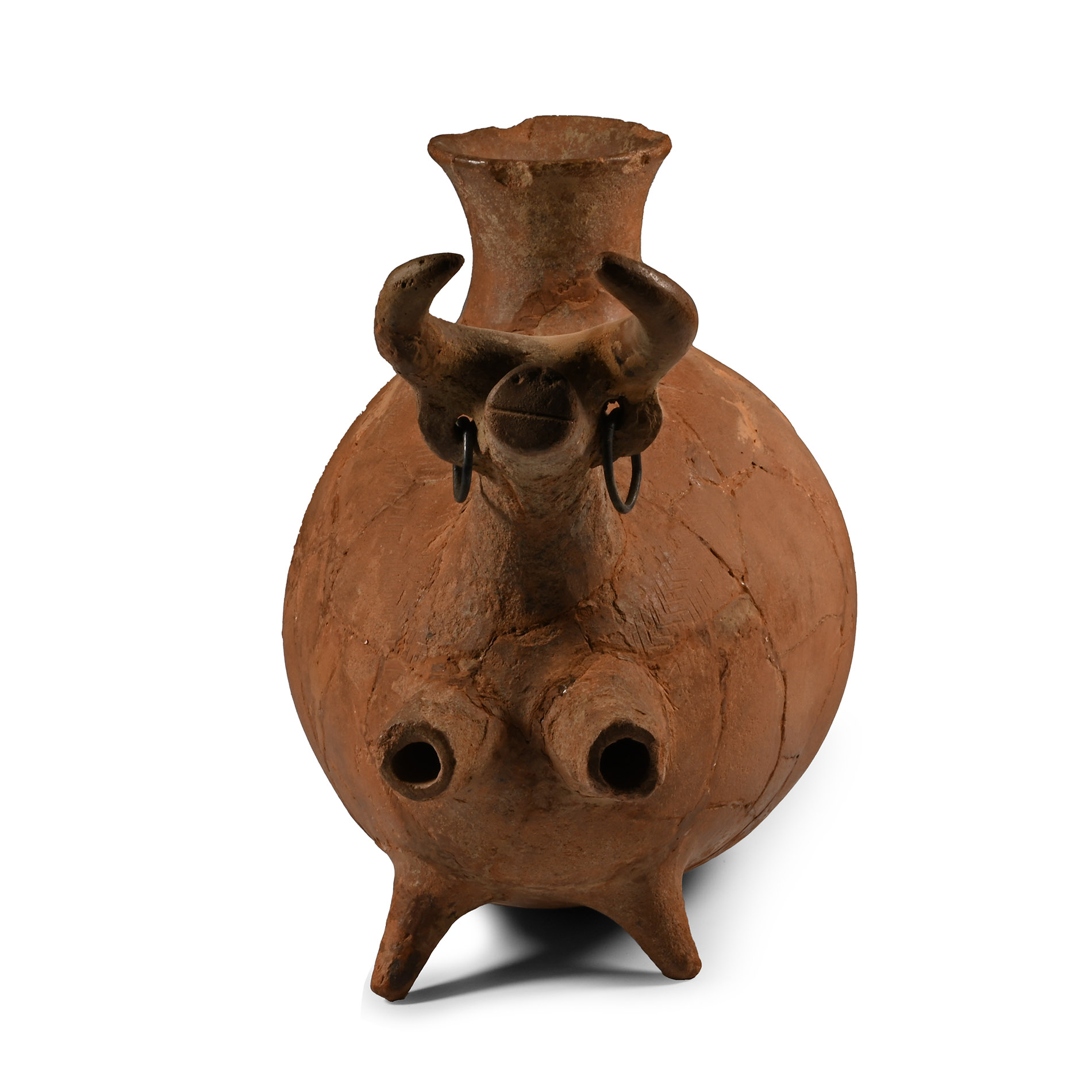
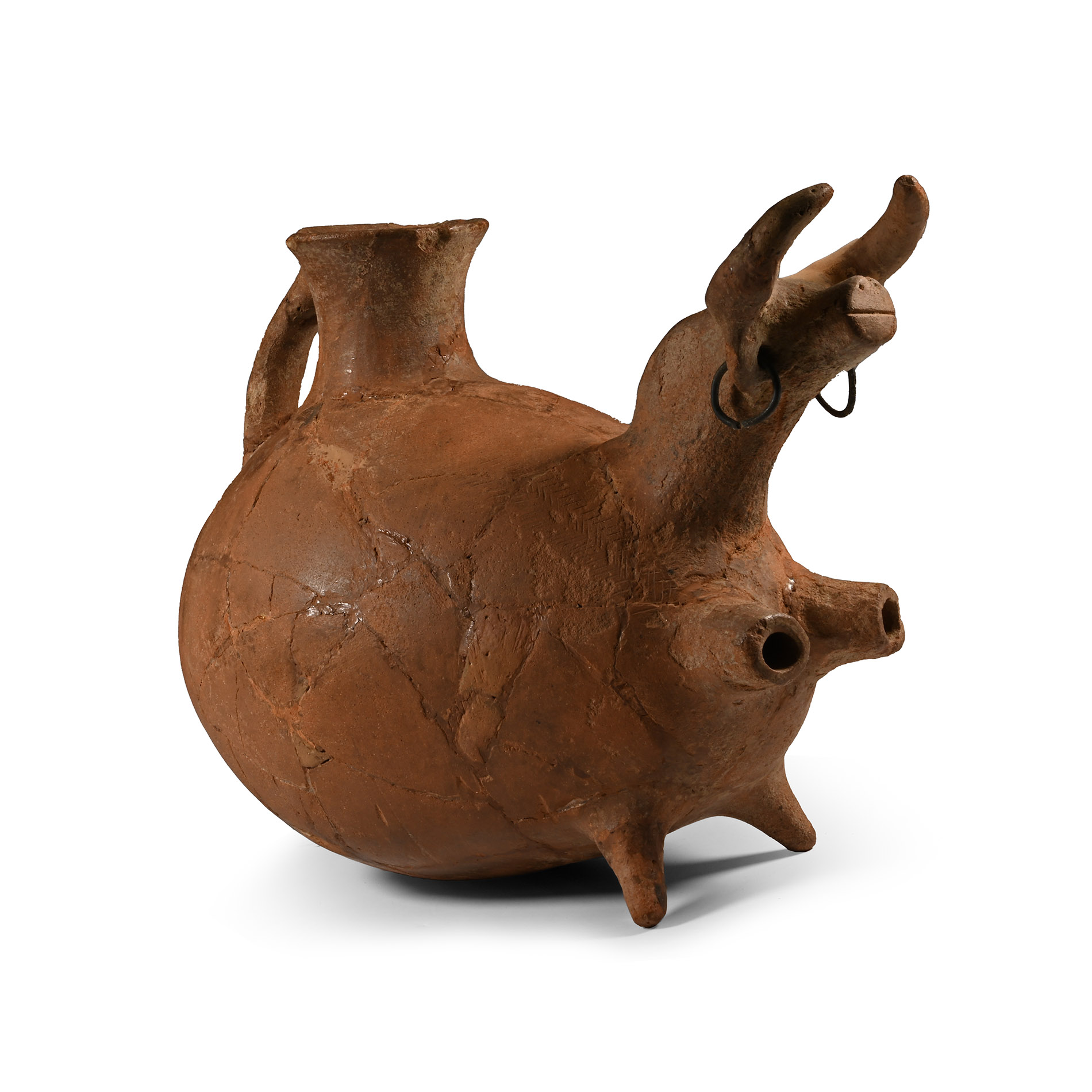
Amlash Terracotta Bull Rhyton
1ST MILLENNIUM B.C. AND LATER
11 5/8 in. (1.7 kg, 29.5 cm).
Comprising a bulbous body with three stub legs, vertical filler spout with strap handle to the rear, bull-head finials on an arched neck with exaggerated horns and bronze rings to the ears; two short divergent spouts to the chest; with museum-style restoration.
ProvenanceEx London, UK, gallery, 1971-early 2000s.
London, UK, collection.
This lot has been checked against the Interpol Database of stolen works of art and is accompanied by search certificate number no.12259-218637.
See Ebbinghaus, S., (ed.), Animal-Shaped Vessels From The Ancient World: Feasting With Gods, Heroes and Kings, Cambridge Massachusetts, 2019, for similar.
CONDITIONTimeLine Auctions follows a vetting process to ensure the authenticity and legality of all items, reinforcing our commitment to integrity and responsible trading. Each antiquity, antique, and coin lot undergoes thorough examination by a vetting committee of at least ten external specialists, professional trade association members, scientists, and archaeologists: Our Vetting Process
AUCTIONS:
TimeLine is a leading auction house specialising in antiquities, ancient art, collectables, natural history, coins, medals, and books. Our auctions offer museums, collectors, historians, and enthusiasts the opportunity to acquire unique and historically significant pieces.
LOT 1237
Amlash Terracotta Bull Rhyton
Estimate £2,000 - 3,000€2,320 - 3,480 (for guidance only)$2,700 - 4,050 (for guidance only)
-
Mixed Ancient Necklace Bead Group
1st millennium B.C. and laterSold for (Inc. bp): £416
Comprising a quantity of beads in lapis lazuli, glass and faience, including some long tubular beads and a shell bead. 58 grams total, 1-30 mm
From a bead collection formed in the 1990s. -
Achaemenid Silver Bracelet Pair
Circa 6th century B.C.Sold for (Inc. bp): £169
Group of two penannular bracelets, each a round-section bar with clubbed ends. 44 grams total, 58 mm each
From the collection of a London antiquarian, formed since the 1980s. -
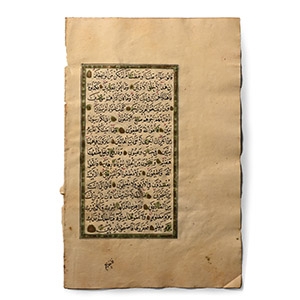
Western Asiatic Illuminated Quran Manuscript Page
18th-19th century A.D.Sold for (Inc. bp): £13
Loose paper leaf with handwritten text in dense Naskh script, fifteen lines of dense black ink text to each side in a rectangular border with liquid gold fill, red diacritics and liquid gold rings as punctuation. 2 grams, 12.5 x 19.5 cm
Ex M. Cummings collection, UK, 1990s.
