
Loading, please wait...
LOT 1307
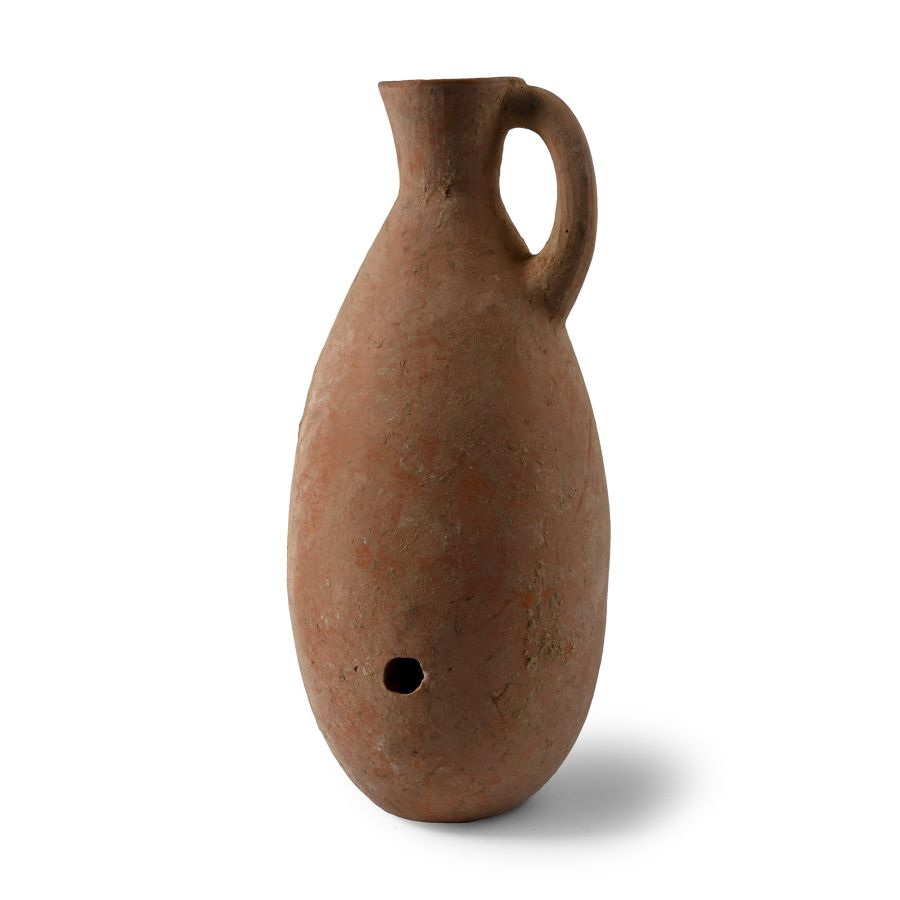
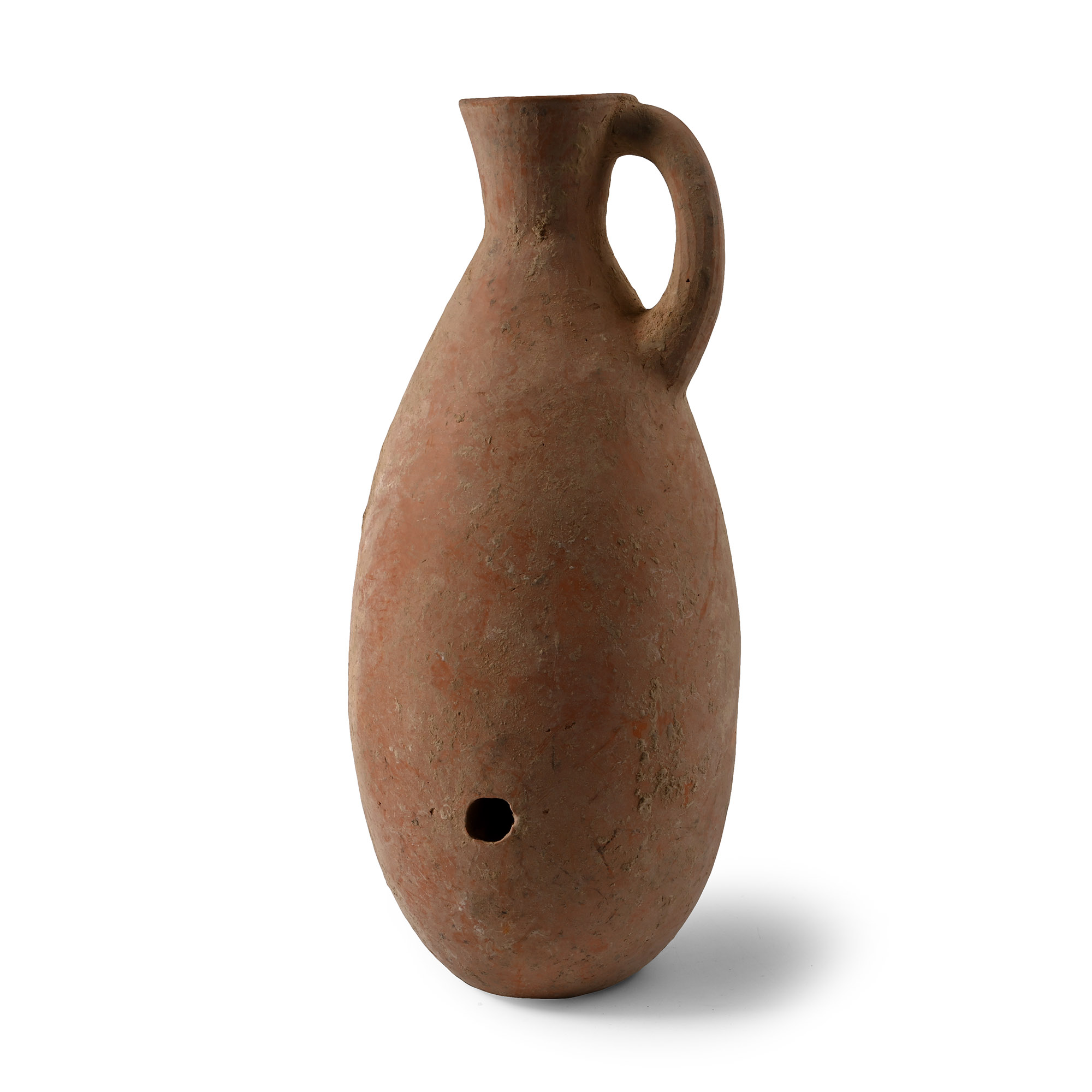
Amlash Tall Terracotta Jug
1ST MILLENNIUM B.C.
9 1/4 in. (545 grams, 23.5 cm).
An elongated ovoid body with a flat base and trumpet-shaped neck, with a handle to the rear.
ProvenanceAcquired on the UK art market before 2000.
Property of an Essex, UK, gentleman.
TimeLine Auctions follows a vetting process to ensure the authenticity and legality of all items, reinforcing our commitment to integrity and responsible trading. Each antiquity, antique, and coin lot undergoes thorough examination by a vetting committee of at least ten external specialists, professional trade association members, scientists, and archaeologists: Our Vetting Process
AUCTIONS:
TimeLine is a leading auction house specialising in antiquities, ancient art, collectables, natural history, coins, medals, and books. Our auctions offer museums, collectors, historians, and enthusiasts the opportunity to acquire unique and historically significant pieces.
LOT 1307
Amlash Tall Terracotta Jug
Estimate £80 - 100€93 - 116 (for guidance only)$108 - 135 (for guidance only)
-
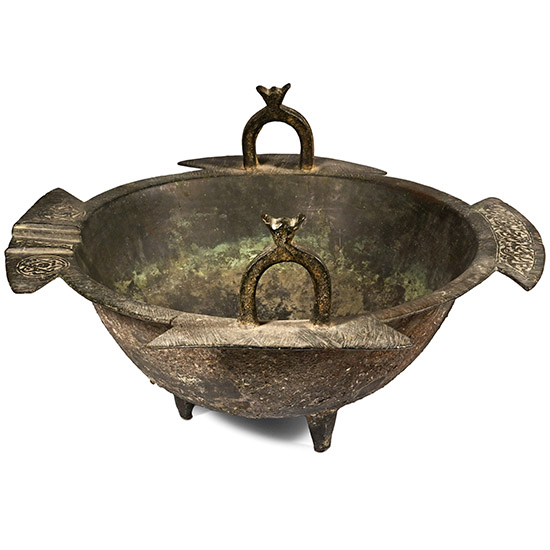
Khorasan Bronze Cauldron Made by Muhammad Bin Husayn
12th-13th century A.D.Sold for (Inc. bp): £374
With a deep hemispherical bowl and three stub feet, two lateral trapezoidal flanges to the rim, each with an arched handle; similar flange to forward edge with reserved panel of scrolled foliage; to the rear, flange with shallow median socket decorated with scrolled tendrils, two lateral discs each with a star of intersecting triangles; signed by Muhammad Bin Husayn. 5.75 kg, 43.5 cm
with Christie's, South Kensington, Art & Textiles of The Islamic & Indian Worlds, 8 April 2011, no.150. Private collection, UK. -
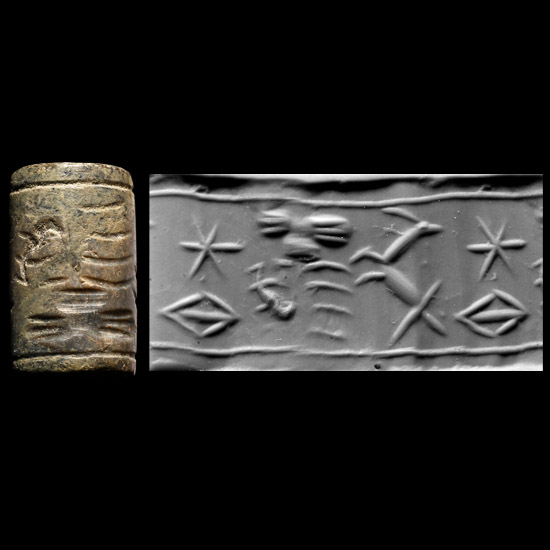
Syrian Steatite Cylinder Seal
Circa 1300 B.C.Sold for (Inc. bp): £130
A small cylinder seal showing a beast looking back, a winged sun and a flying duck, star and eye motifs as fillers; supplied with a museum-quality impression. 3.36 grams, 18 mm
From the private collection of a European gentleman (1942-2024), formed since the 1970s. Accompanied by a previous typed catalogue slip with collection no.59. -
.jpg)
Western Asiatic Stone Cylinder Seal Group
4th-1st millennium B.C.Sold for (Inc. bp): £176
Comprising: frieze with three robed figures flanking a hatched column; two ibexes contending with looped necks, standing bird behind; deeply cut linear image of rearing ibexes; shallow-cut image of a hero with raised arm fending off a winged gryphon, star in the field; frieze with facing hero wrestling two rearing beasts; each supplied with a museum-quality impression. 28.7 grams total, 18-32 mm
From the private collection of a European gentleman (1942-2024), formed since the 1970s.
