
Loading, please wait...
LOT 2074
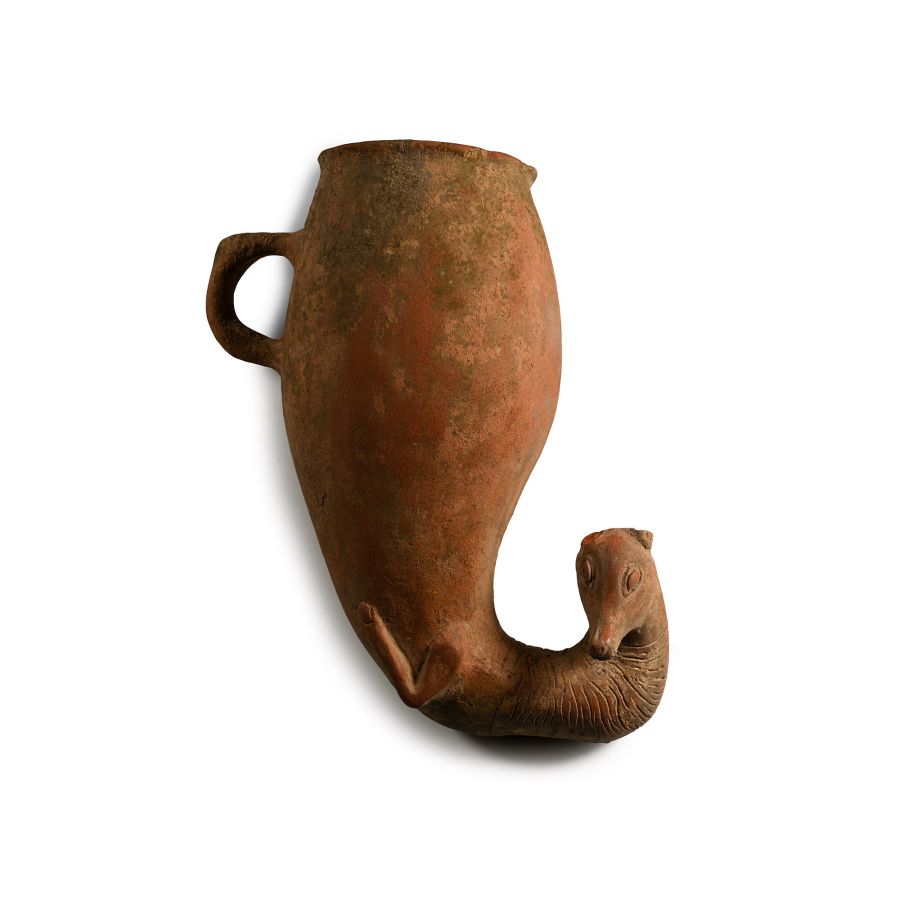
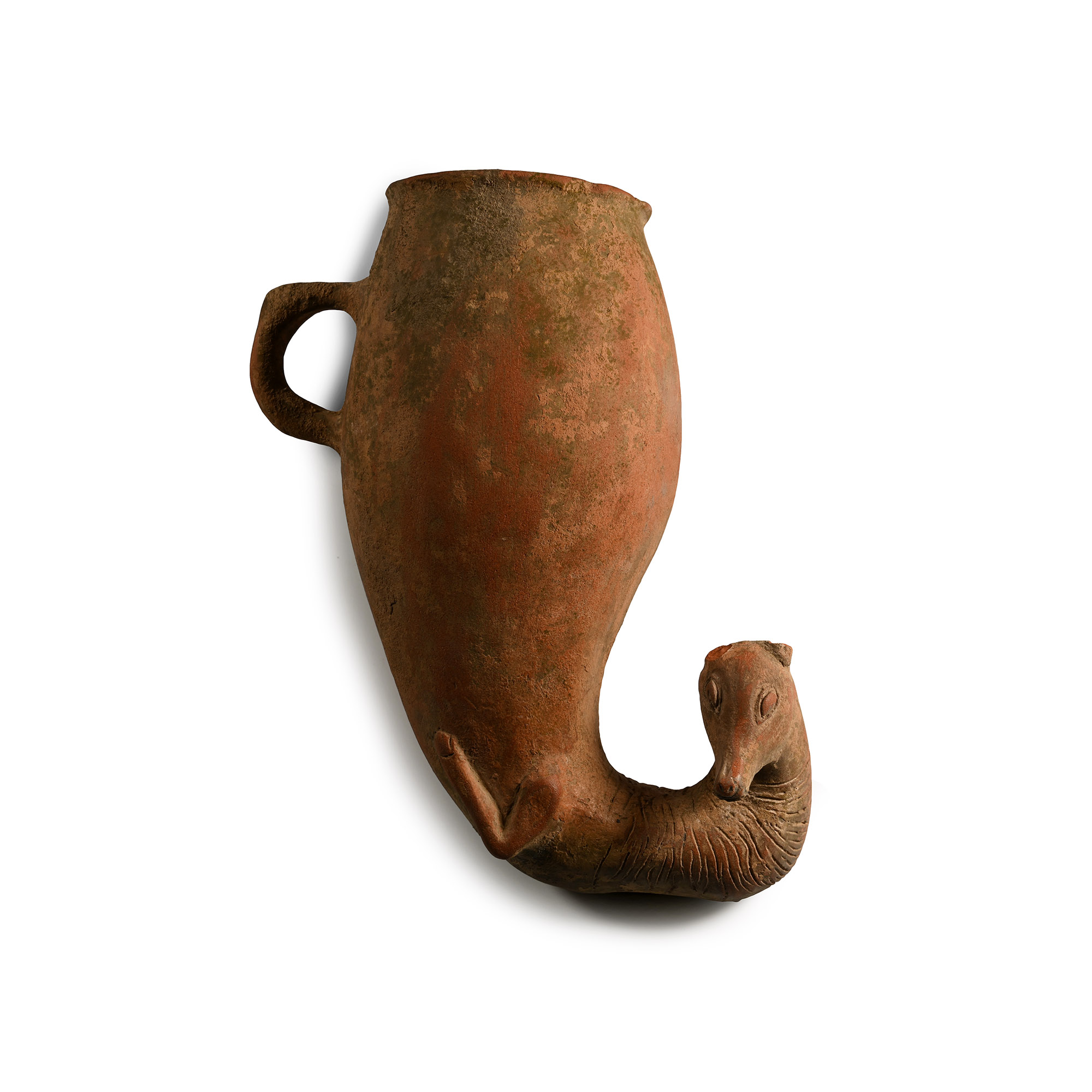
Amlash Style Terracotta Rhyton
20TH CENTURY A.D.
9 in. (776 grams, 23 cm).
Bulbous in form with everted rim and loop handle, developing to a an equine head turned to one side and with forelegs held flat against the flank; ears absent. [No Reserve]
ProvenanceFrom a West Country, UK, collection, 1990s.
This lot is accompanied by an illustrated lot declaration signed by the Head of the Antiquities Department, Dr Raffaele D’Amato.
TimeLine Auctions follows a vetting process to ensure the authenticity and legality of all items, reinforcing our commitment to integrity and responsible trading. Each antiquity, antique, and coin lot undergoes thorough examination by a vetting committee of at least ten external specialists, professional trade association members, scientists, and archaeologists: Our Vetting Process
AUCTIONS:
TimeLine is a leading auction house specialising in antiquities, ancient art, collectables, natural history, coins, medals, and books. Our auctions offer museums, collectors, historians, and enthusiasts the opportunity to acquire unique and historically significant pieces.
-
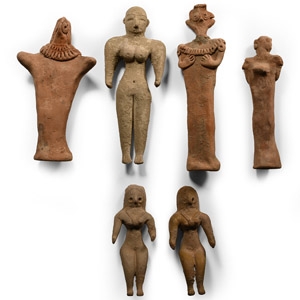
Ceramic Fertility Figure Group
20th century A.D.Sold for (Inc. bp): £59
Mixed group of figurines in various styles and poses; after the antique. 635 grams total, 11.4-18.5 cm
Ex London art market 1990s. From a London, UK, collection. This lot is accompanied by an illustrated lot declaration signed by the Head of the Antiquities Department, Dr Raffaele D’Amato. -
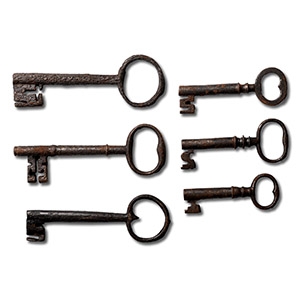
Post Medieval Iron Door Key Collection
18th-20th century A.D.Sold for (Inc. bp): £46
Comprising six loop-handled keys, three with balustered shanks. 100 grams total, 55-89 mm
Found on various UK sites since 1974. Property of an Essex collector. This lot is accompanied by an illustrated lot declaration signed by the Head of the Antiquities Department, Dr Raffaele D’Amato. -
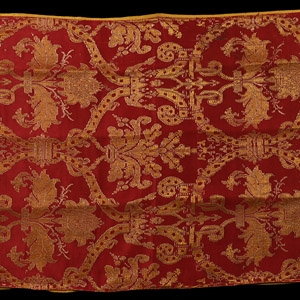
Tudor Period Embroidered Fragment
Late 16th century A.D.Sold for (Inc. bp): £247
Rectangular swatch of red and gold fabric with embroidered vegetal motifs. 188 grams, 55 x 132 cm
Private collection, Chateau de Frechou, France. Daguerre Societe de Ventes Volontaires, 21 March 2016, no.9 [Part]. This lot is accompanied by an illustrated lot declaration signed by the Head of the Antiquities Department, Dr Raffaele D’Amato.
