
Loading, please wait...
LOT 1165
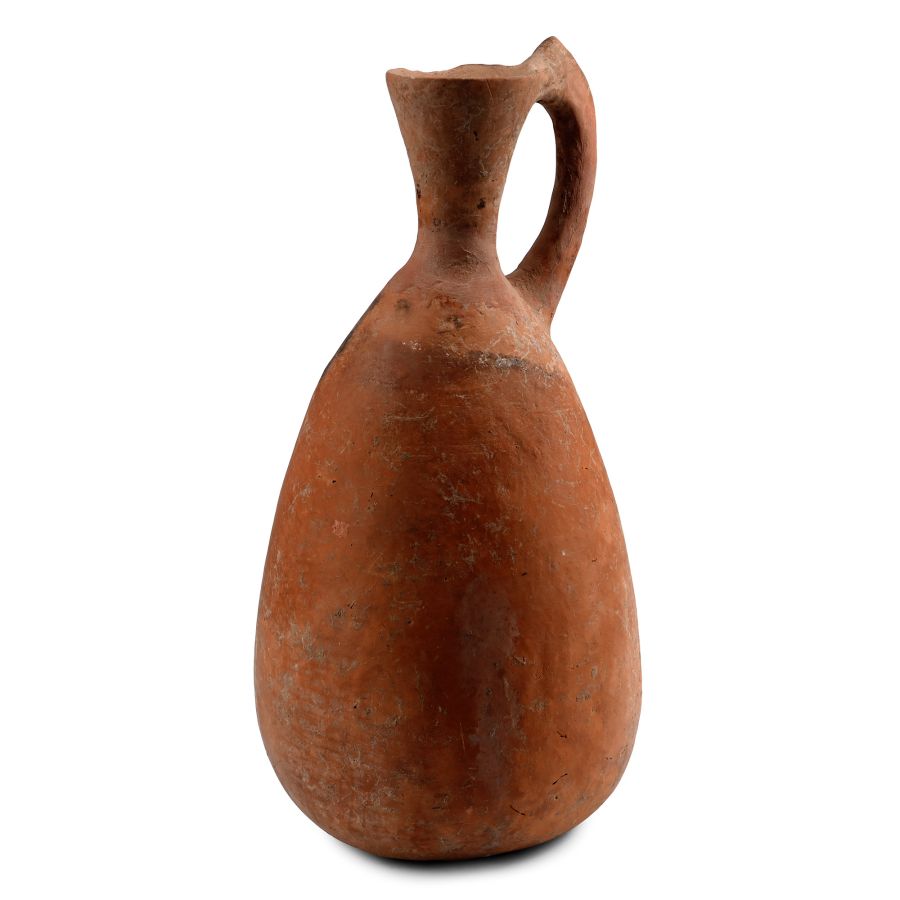
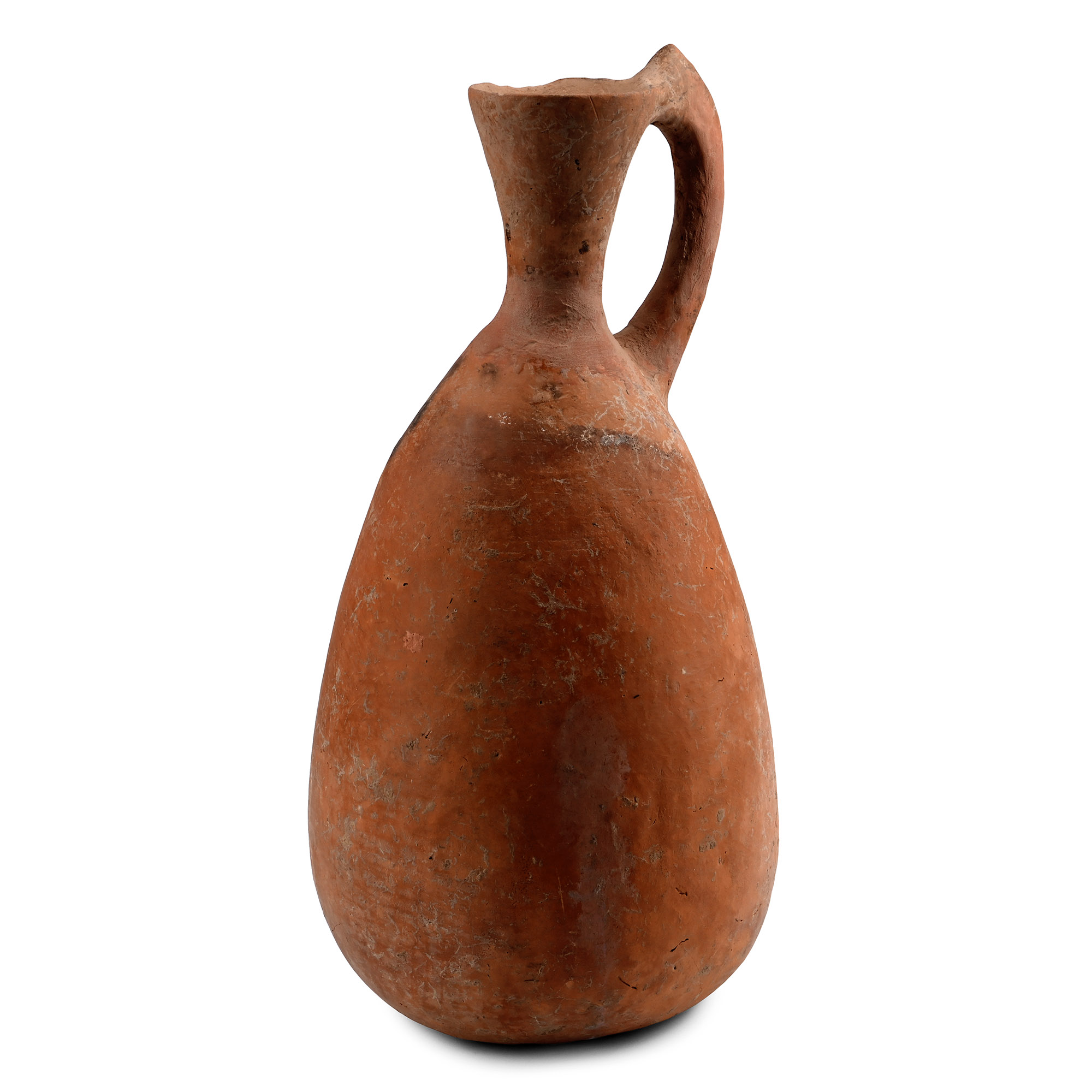
Amlash Pottery Jug with Zoomorphic Handle
1ST MILLENNIUM B.C.
10 1/2 in. (756 grams, 26.8 cm).
Comprising a tall conical body and broad base with funicular mouth and loop handle.
ProvenanceFrom the collection of a gentleman, 1988-2000s.
CONDITIONTimeLine Auctions follows a vetting process to ensure the authenticity and legality of all items, reinforcing our commitment to integrity and responsible trading. Each antiquity, antique, and coin lot undergoes thorough examination by a vetting committee of at least ten external specialists, professional trade association members, scientists, and archaeologists: Our Vetting Process
AUCTIONS:
TimeLine is a leading auction house specialising in antiquities, ancient art, collectables, natural history, coins, medals, and books. Our auctions offer museums, collectors, historians, and enthusiasts the opportunity to acquire unique and historically significant pieces.
-
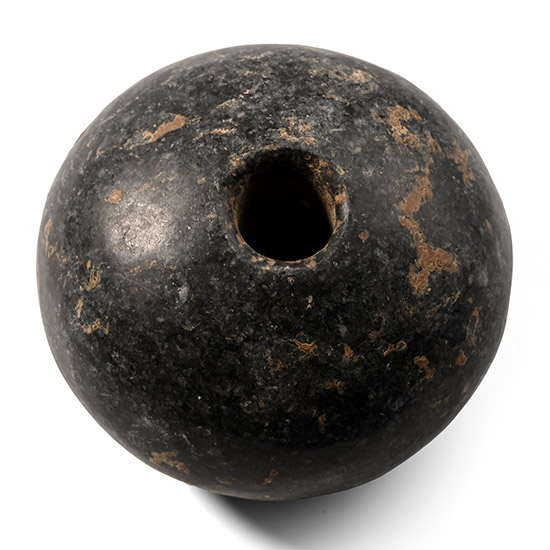
Western Asiatic Polished Stone Macehead
3rd-2nd millennium B.C.Sold for (Inc. bp): £195
Donut-shaped, oblate in profile and drilled vertically to accommodate a wooden shaft. 556 grams, 80 mm
From the collection of North West London, UK, gentleman, early 2000s. -
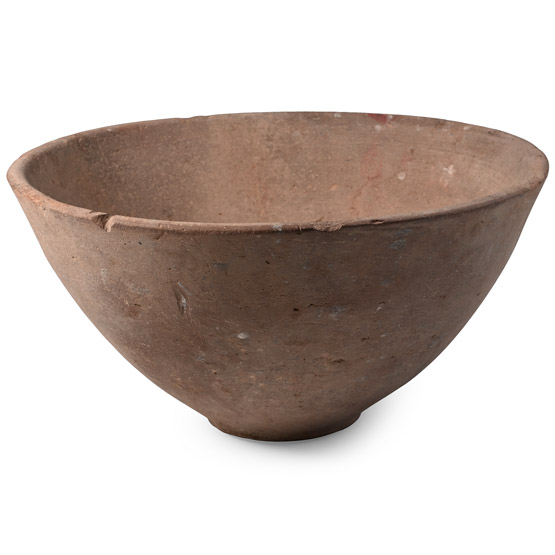
Mesopotamian Pink Stone Bowl
2nd-1st millennium B.C.Sold for (Inc. bp): £208
Conical in profile with flattened round base. 2.03 kg, 22.5 cm wide
Ex London, UK, collection, 1988-1990s. -
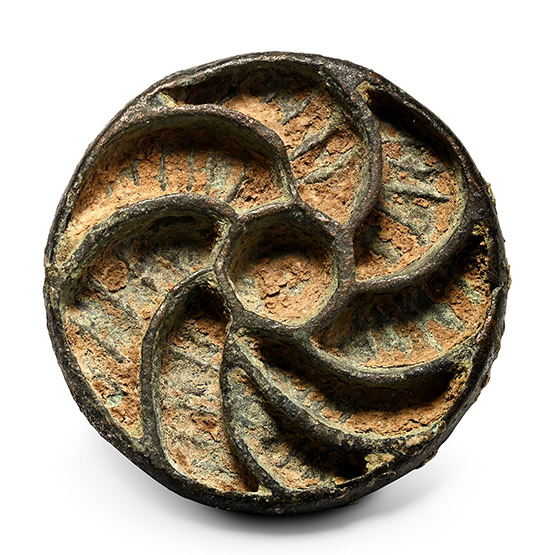
West Central Asian Bronze Stamp Seal with Sun-Whorl
Circa 2300-2000 B.C.Sold for (Inc. bp): £91
Discoid stamp seal with segmented face; accompanied by an old scholarly note, typed and signed by W.G. Lambert, late Professor of Assyriology, University of Birmingham, 1970-1993, which states: 'Stamp Seal of Bronze. 39x39x12 mm. This is round with flat compartmented face and flat back on which is mounted a broad handle of inverted U-shape. The design consists of a central circle from which eight curving bands spread to the edge, creating a whorl, the bands being hatched. This comes from west central Asia and dates to c. 2300-2000 B.C. It is in very good condition and the hatching on the base of the compartments is unusual.' 24.5 grams, 39 mm
Acquired in the late 1980s-early 1990s. Ex property of a West London businessman. Academically researched and catalogued by the late Professor Lambert in the early 1990s.
