Loading, please wait...

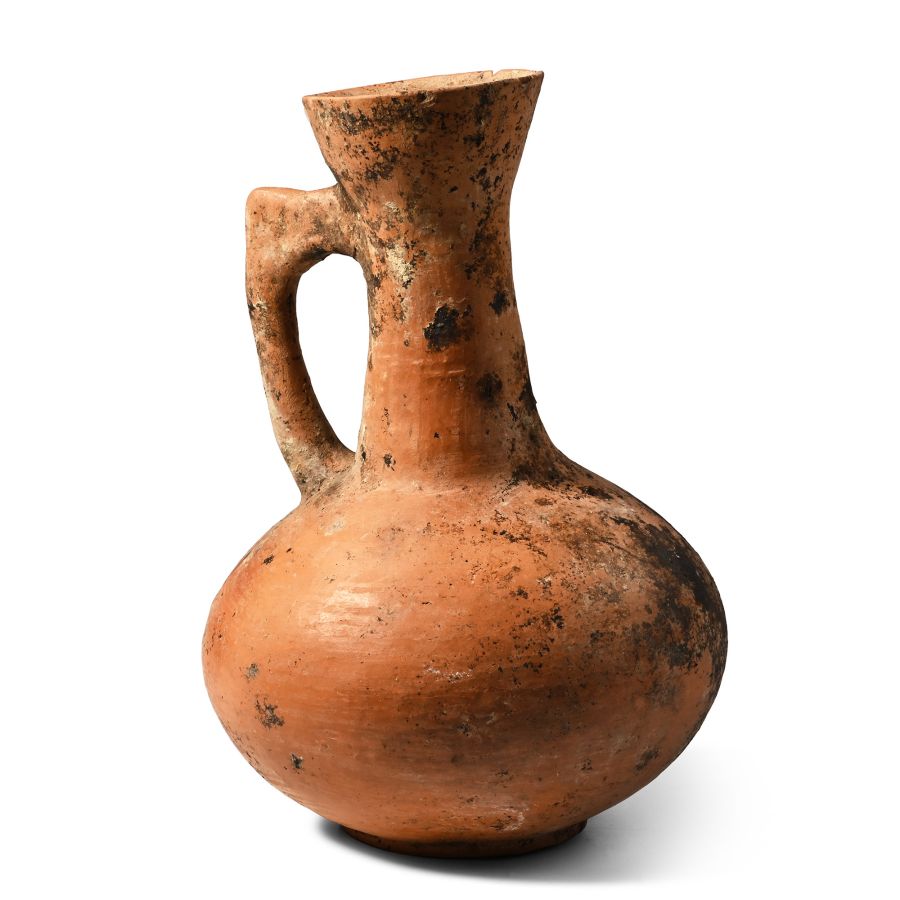
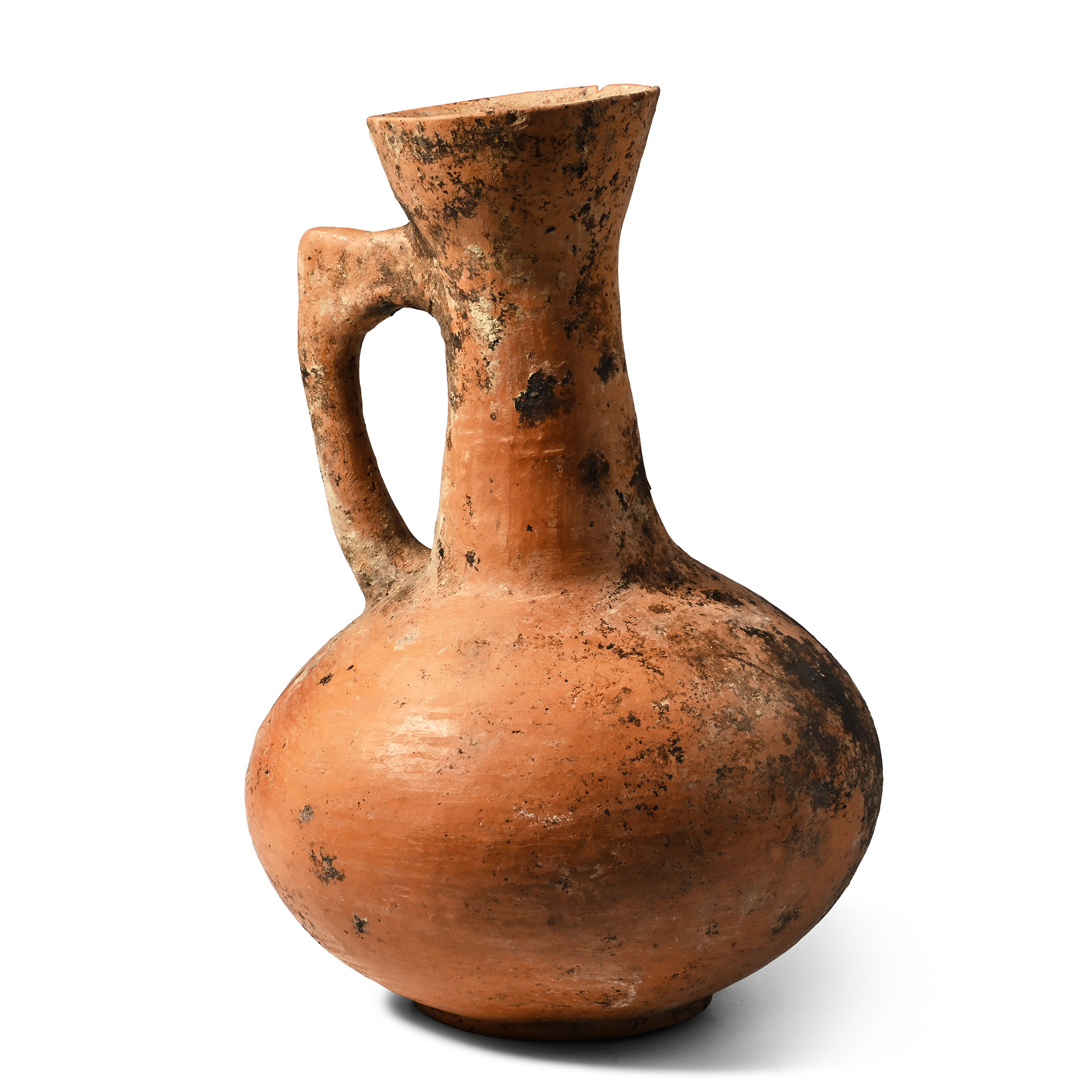
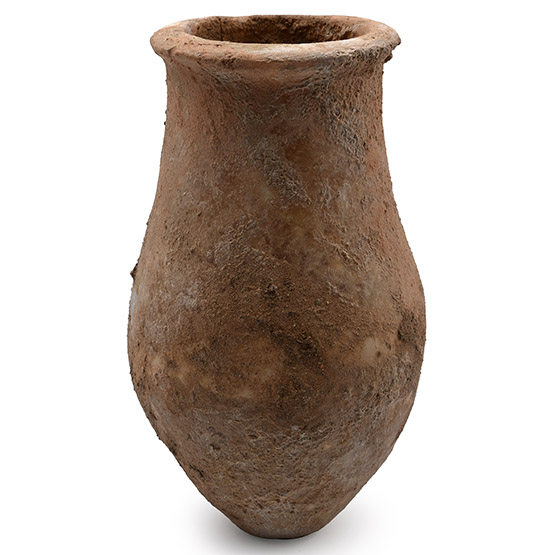
Amlash Pottery Jug with Zoomorphic Handle Amlash Pottery Jug with Zoomorphic Handle Amlash Pottery Jug with Zoomorphic Handle
Use mousewheel to zoom in and out, click to enlarge
Details

LOT 1182

Amlash Pottery Jug with Zoomorphic Handle

10TH-8TH CENTURY B.C.

7 1/2 in. (435 grams, 19 cm).

Comprising a squat body and basal ring. tall tubular neck with trumpet-shaped mouth, strap handle with spur to the upper face.

Provenance

From the collection of a gentleman, 1988-2000s.

CONDITION
VETTING:

TimeLine Auctions follows a vetting process to ensure the authenticity and legality of all items, reinforcing our commitment to integrity and responsible trading. Each antiquity, antique, and coin lot undergoes thorough examination by a vetting committee of at least ten external specialists, professional trade association members, scientists, and archaeologists: Our Vetting Process


AUCTIONS:

TimeLine is a leading auction house specialising in antiquities, ancient art, collectables, natural history, coins, medals, and books. Our auctions offer museums, collectors, historians, and enthusiasts the opportunity to acquire unique and historically significant pieces.

LOT 1182

Amlash Pottery Jug with Zoomorphic Handle

Sold for (Inc. bp): £143

Print page

RELATED LOTS
  • Early Proto-Elamite Silver Horned Bull Pendant
    An Extremely Rare Example
    Early Proto-Elamite Silver Horned Bull Pendant
    3100-2900 B.C.

    Estimate: £20,000 - 30,000 (+bp*)

    Opening Bid: £10,000

    Representing an exquisite bull figure standing with his head turned dramatically to the left, depicted with large curled horns and inlaid white stone eyes, formed from thin hammered silver sheet in repoussé, depicting the bull as a hollow pendant, with the interior filled with natural bitumen; traces of an original suspension loop on the shoulder. 54.5 grams, 70 mm wide


    with Mahboubian Gallery, New York, acquired prior to 1969. Accompanied by an academic report by Dr Raffaele D’Amato. This lot has been checked against the Interpol Database of stolen works of art and is accompanied by search certificate number no.13140-249434.

    Objects of this type are understood to be ritual or votive pendants, produced not for everyday wear but primarily for dedication in temple contexts. Bulls, goats, rams and other herd animals with horns were thematically abundant in the Ancient Near East, especially around the Iranian plateau circumscribed by the Zagros and Elbruz Mountains and multiple deserts. There are representations of bulls as pendants or votive statuettes (Mahboubian,1997, pp.59, 213, 224, 225, 225, 235, 240), vessel stands (Mahboubian, 1997, pp.40-41), vessel protomes and rhytons from Mesopotamia to Caucasus.

    Lot Details

  • Western Asiatic Stone Vessel
    Western Asiatic Stone Vessel
    2nd-1st millennium B.C.

    Estimate: £150 - 200 (+bp*)

    Opening Bid: £75

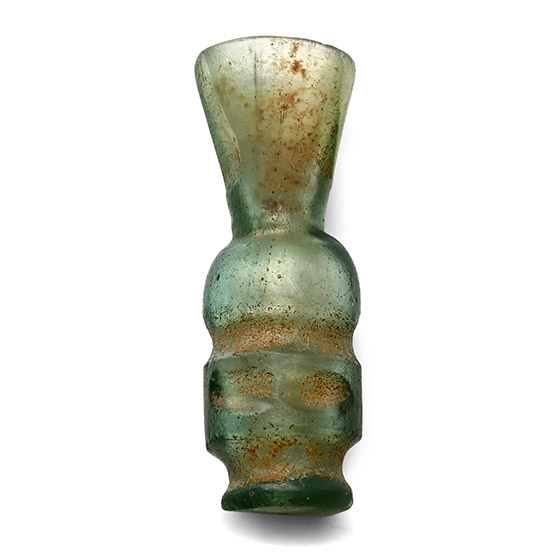
    With a broad squat body with carination and a flat rim to the mouth; basal ring. 396 grams, 11.6 cm wide


    Ex London, UK, collection, 1988-1990s.

    Lot Details

  • Syrian Stone Cylinder Seal with Storm God and Fertility Goddess
    Syrian Stone Cylinder Seal with Storm God and Fertility Goddess
    Circa 1800-1700 B.C.

    Sold for (Inc. bp): £715

    With standing figures and animals, accompanied by a copy of an old scholarly note, typed and signed by W.G. Lambert, late Professor of Assyriology, University of Birmingham, 1970-1993, which states: 'Cylinder Seal of Hematite, 21.5 x 11 mm. The design is made up of two parts. The main scene shows two facing deities. On the left stand the Storm God, Hadad or Teshup, wearing a short kilt and a spiked helmet. A long plait of hair falls down his back. In his raised right hand he holds a mace, in the left a long spear and a bow(?). On the right stands a goddess, nude, having thrown back her cloke, and standing above a bull. This goddess is either Anat or Ashtart, goddess or fertility. There are four fillers in the main scene, two discs, a human hand and an unidentified item. The minor scene consists of a row of three walking humans, the first with one hand raised, below two facing birds. The whole engraing is set between lines, one above one below. This seal in Syrian, c. 1800-1700 B.C. and is a typical example of the interest which the Syrian engravers put into their seals. It is somewhat worn, but the whole of the design is clear, having been cut deeply in the original stone.'; accompanied by a museum quality impression and pair of red stone beads. 6.58 grams, 21 mm


    Anonymous French sale. Private collection, London, UK. Accompanied by a copy of an old scholarly note, typed and signed by W.G. Lambert, late Professor of Assyriology, University of Birmingham, 1970-1993.

    Lot Details

Stay up-to-date with the latest from TimeLine Auctions by joining our mailing list